- Genomic analysis requiring 1.8TB completed on server with just 448GB
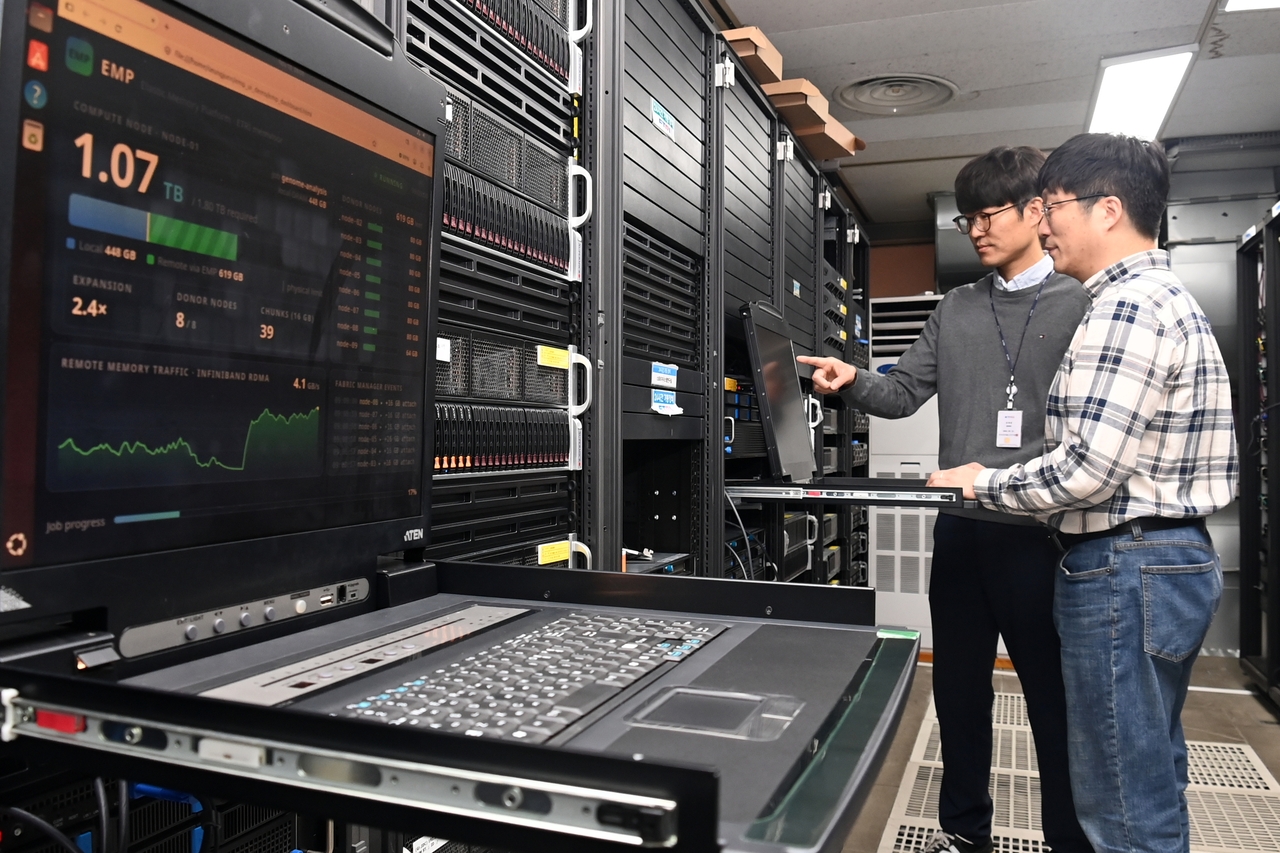
As AI expansion deepens memory shortages in data centers, South Korean researchers have developed technology that lets servers share unused memory with one another.
The Electronics and Telecommunications Research Institute (ETRI) announced Thursday that it has deployed its in-house data center memory-sharing software, Elastic Memory Platform (EMP), on a 500-node high-performance computing (HPC) cluster at the Center for Advanced Research Computing (CARC) at the University of Southern California (USC).
EMP addresses data center memory shortages through software. It connects memory scattered across multiple servers via an ultra-high-speed network, pooling them as a single shared resource. A server running low on memory can draw on idle memory from other servers to carry out large-scale computing tasks.
The research team successfully ran a genomic analysis workload requiring about 1.8TB of memory on a server with only 448GB of its own.
Although the server's onboard memory amounted to roughly one-quarter of the total capacity needed, the team bridged the gap by tapping idle memory from other servers over an InfiniBand high-speed network.
Notably, the technology works without any modification to the source code of existing applications.
The team has also completed integration between EMP and SLURM, a widely used job scheduler in the HPC field, allowing researchers to submit jobs in the usual way while drawing on expanded memory as needed.
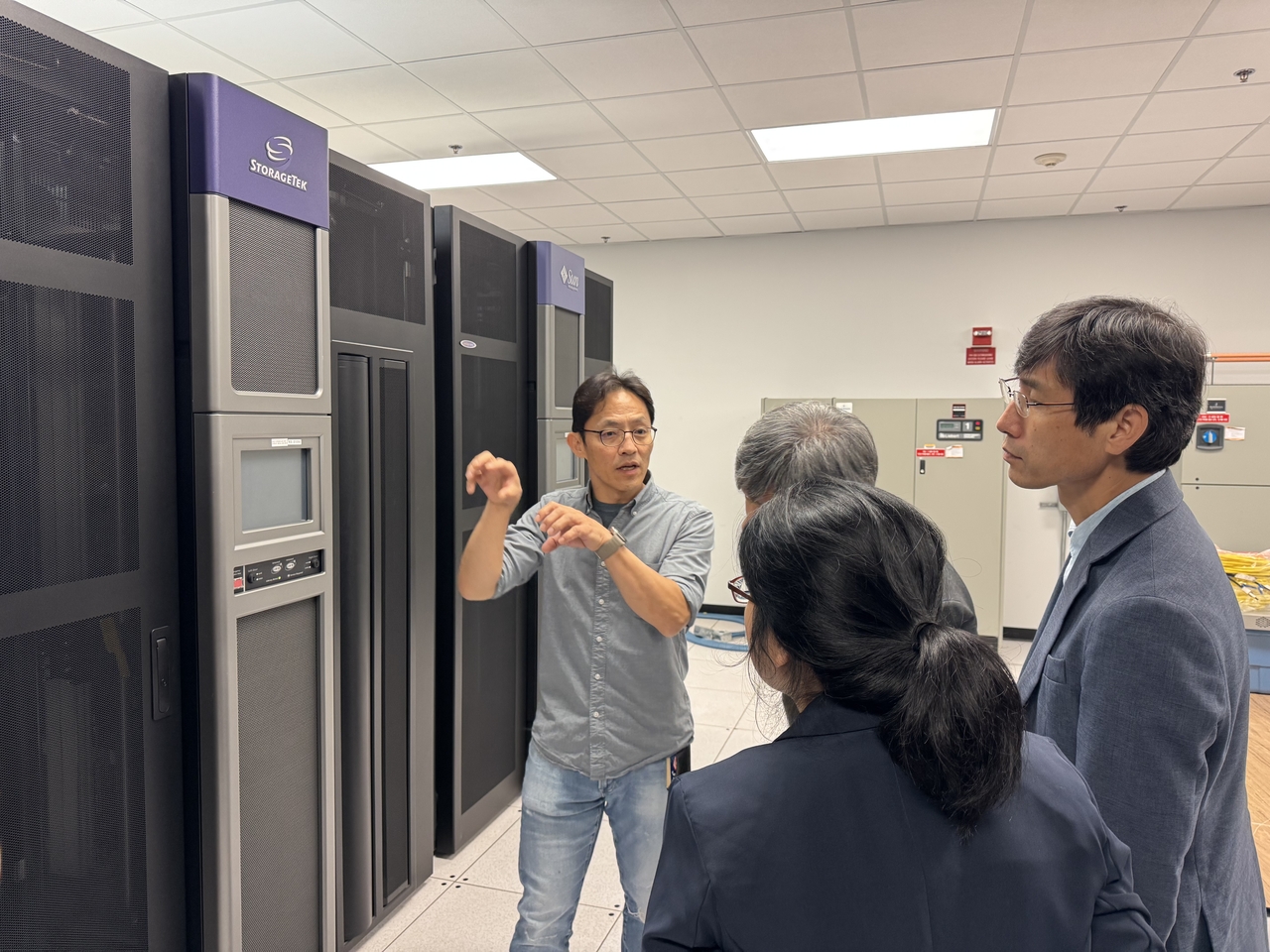
The team is also working to integrate EMP with Open OnDemand, a web-based HPC user interface.
In performance tests using biotech applications specified by USC CARC, EMP achieved up to 2.3 times higher performance per unit of memory compared with conventional systems.
ETRI plans to expand the scope of its demonstration in collaboration with USC researchers from computational biology, earth and environmental sciences, and the medical school, targeting applications including genomic assembly, metagenomics analysis, protein analysis and weather forecasting.
The institute also intends to roll out the technology at domestic HPC centers, universities and research institutions, and is exploring commercialization opportunities particularly in AI data centers, where memory demand is surging.
Ko Gwang-won, head of ETRI's AI Data Center Research Division, said EMP "overcomes the memory capacity limits of individual servers by sharing idle memory across existing servers, enabling large-scale computing." Ko added that ETRI would "build on the validation experience gained at a large-scale US data center to develop this into core system software that improves resource utilization efficiency in domestic AI data centers."
nbgkoo@heraldcorp.com