Films, games to receive most-favored-nation treatment under summit deal
Non-discrimination principle to apply to content pre-screening
K-pop concerts, K-drama broadcasts still uncertain
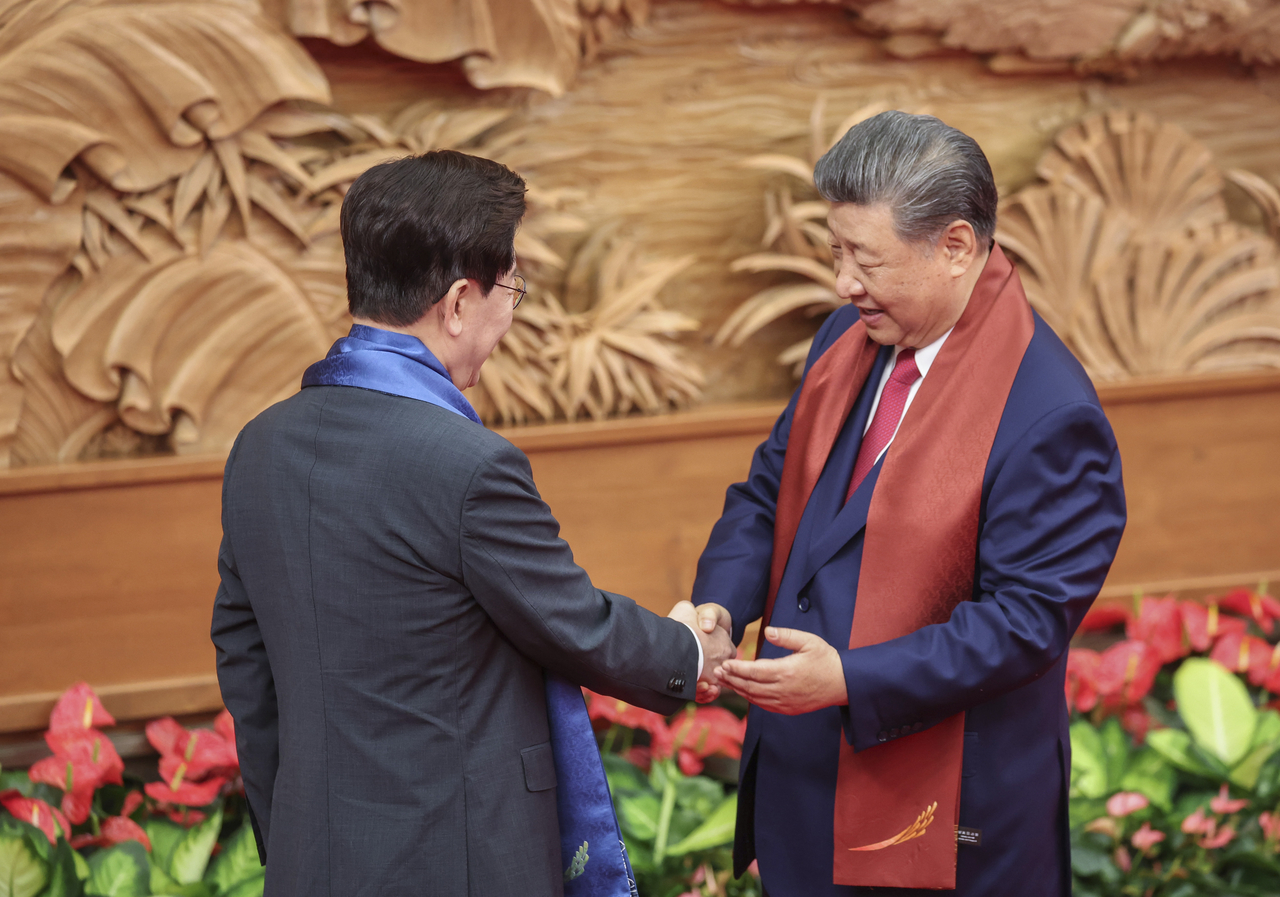
Hopes are growing that China's decade-long informal ban on hallyu content may be easing, after South Korea and China agreed at a bilateral summit to expand cultural exchanges. Chinese-language media highlighted China's pledge to extend most-favored-nation treatment to South Korea in the film and gaming sectors, raising the possibility of renewed access for Korean content in the Chinese market. Some analysts, however, urge caution, noting that additional steps will be needed before Korean artists can actually perform in China or Korean dramas air there.
Chinese-language outlets including Singapore's Lianhe Zaobao and Hong Kong's Sing Tao Daily focused Wednesday on the potential for a new chapter in cultural ties between the two countries, following the summit between President Lee Jae Myung and Chinese President Xi Jinping in Shenzhen, Guangdong province.
Lianhe Zaobao reported that Xi expressed willingness at the summit to gradually expand cultural exchanges and that China had pledged most-favored-nation treatment for South Korea in the film and gaming sectors — signs, the paper said, that the hallyu restrictions could be substantively relaxed.
Sing Tao Daily similarly read the agreement — reached in follow-up negotiations on services and investment under the Korea-China free trade agreement — to apply a non-discrimination principle to pre-screening of cultural content such as films and online games as a signal that the ban is loosening.
China has in effect blocked Korean popular culture content from its market since Seoul's 2016 decision to deploy the Terminal High Altitude Area Defense system, known as THAAD. Beijing has never officially acknowledged the existence of such a ban.
For that reason, analysts have raised the possibility that the market could open in practice — through eased screening and approval procedures for Korean content or expanded co-production arrangements — without any formal declaration lifting the restrictions.
Still, some observers caution that the agreement does not amount to an immediate return of Korean content to the Chinese market.
Taiwan's Central News Agency noted that while the deal prohibits nationality-based discrimination against Korean content, it does not guarantee that individual works will pass review or receive approval. Particularly absent from the agreement, the agency pointed out, are any explicit provisions allowing Korean artists to resume concerts in China or permitting Korean dramas to broadcast there.
On a more positive note, the two countries agreed to expand their co-production cooperation — previously centered on films — to cover drama series, animation, entertainment programs and documentaries.
Chinese experts said the summit carries significance beyond cultural exchanges, as it could drive broader institutional expansion of economic cooperation between the two countries.
Zhan Debin, a professor at the Korean Peninsula Research Center of Shanghai University of International Business and Economics, told China's state-run Global Times that the cooperation "will expand from goods trade to the institutional opening of services, investment and related rules, providing a more stable and predictable market environment for businesses in both countries."
sjy@heraldcorp.com