Local governments to bear 36.74 trillion won of 39.17 trillion won in payroll costs over five years
Tobacco excise tax revenue — the main source of national support — has stagnated
National Assembly Budget Office recommends enshrining national share in law, overhauling funding
Local governments will bear more than 94% of firefighter payroll costs by 2031 if the current fire department fiscal system remains unchanged, according to a new analysis. Closing the gap through national funding would require up to 7 trillion won ($5.26 billion) in additional spending per year on average.
A report published Thursday by the National Assembly Budget Office, titled "Fire Department Fiscal Conditions and Future Challenges: Focusing on the National-Local Cost-Sharing Structure for Personnel Expenses," projects that firefighter payroll costs will rise from 6.94 trillion won next year to 8.78 trillion won in 2031 — an average annual increase of 6.1% — if the current system is maintained.
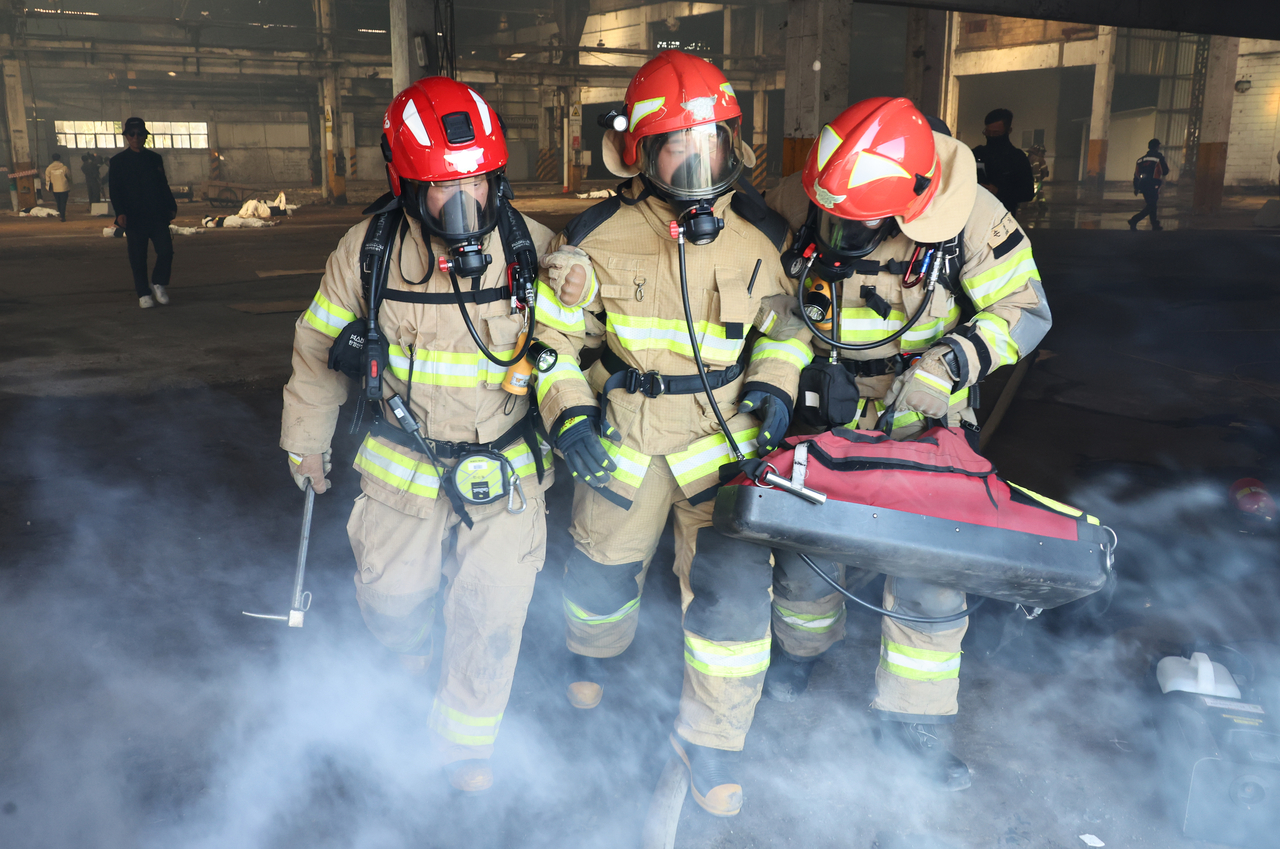
The fiscal burden from rising payroll costs will fall overwhelmingly on local governments. Revenue from the tobacco excise tax — the primary source of national support for firefighter salaries — has stagnated at around 2 trillion won a year, causing the national government's share to shrink from 6.8% in 2028 to 5.7% in 2031.
As a result, the local share of payroll costs will climb from 6.52 trillion won next year to 8.28 trillion won in 2031, a 6.2% average annual increase, with local governments covering 94.3% of total payroll by 2031. Over the five years from 2027 to 2031, cumulative local payroll spending is projected to reach 36.74 trillion won — 93.8% of the total projected payroll of 39.17 trillion won over the same period.
Firefighters were reclassified as national civil servants in 2020 to narrow regional disparities in fire services and strengthen the central government's responsibility for disaster response, yet the local fiscal burden for their salaries has grown rather than eased.
The national government currently contributes an amount equal to 25% of tobacco excise tax revenue through the fire safety grant — a figure that has remained around 500 billion won — leaving cities and provinces to cover the shortfall through general account transfers. The local share of payroll costs rose from 87.8% in 2021 to 91.6% this year.
Rising payroll costs have also squeezed the share of the budget available for equipment, vehicles and firefighter safety programs.
While firefighter payroll grew at an average annual rate of 7.0% between 2021 and 2026, project spending growth was limited to 0.4%. Payroll's share of total fire department budgets across cities and provinces rose from 69.5% in 2021 to 75.8% this year, while the project spending share fell from 30.5% to 24.2%.
The budget office estimated the additional fiscal cost under three scenarios drawn from pending National Assembly bills: the national government covering 100%, 80% or 50% of the payroll shortfall — defined as total payroll minus the amounts covered by the fire safety grant and the local resource facility tax, currently funded through general account transfers from cities and provinces.
If the national government were to cover the entire shortfall starting next year, the additional cost would total 35.25 trillion won over five years through 2031, or an average of 7.05 trillion won per year. Covering 80% of the shortfall would require an average of 5.64 trillion won per year, while covering 50% would require an average of 3.52 trillion won per year.
Under these scenarios, the national government's share of total firefighter payroll in 2031 would rise to 96.6%, 78.4% and 51.2%, respectively, shifting the primary funding responsibility from local governments to the central government.
The budget office said the scope and ratio of national and local payroll contributions should be determined based on the legal nature of fire service responsibilities, and that a phased path toward a higher national share should be written into law.
It also said that because the fire safety grant — tied to tobacco excise tax revenue — is insufficient to keep pace with growing payroll costs, the government should develop a fiscal support mechanism to cushion the impact of revenue fluctuations, such as compensating for grant shortfalls through the national general account.
In addition, the budget office said institutional safeguards are needed to ensure that an expanded national payroll contribution translates into greater funding for fire department programs. Because a higher national contribution automatically reduces general account transfers from cities and provinces under the current system, it recommended exploring measures such as setting a minimum floor for project account transfers so that savings from reduced local payroll burdens are reinvested in fire services.
y2k@heraldcorp.com