50 billion won added for gig and freelance worker support
18.17 billion won for AI cheating crackdown at national certification exams; 6.43 billion won increase in Korea Workers' Compensation and Welfare Service payroll
Panel orders talks on shifting some future-response fund projects to general accounts
The National Assembly's Climate, Energy, Environment and Labor Committee approved a 716.42 billion won ($538 million) increase to the Ministry of Employment and Labor's 2027 budget proposal, adding 50 billion won to support gig workers, platform workers and freelancers who have gone unpaid, about 18.2 billion won to combat cheating using AI and other advanced devices at national certification exams, and roughly 6.4 billion won to cover staffing costs at the Korea Workers' Compensation and Welfare Service, which has been struggling with a labor shortage.
The committee held a full committee meeting Thursday afternoon and voted on next year's budget proposals for the Ministry of Employment and Labor, the Ministry of Climate, Environment and Energy, and the Korea Meteorological Administration, according to the National Assembly. Across five funds — including the ministry's general account and the employment insurance fund — the panel increased spending by a total of 729.2 billion won and cut 12.78 billion won. The ruling and opposition parties held four sessions of the budget and fund review subcommittee ahead of the full committee meeting to examine adjustments by project.
50 billion won added for unpaid gig and platform workers
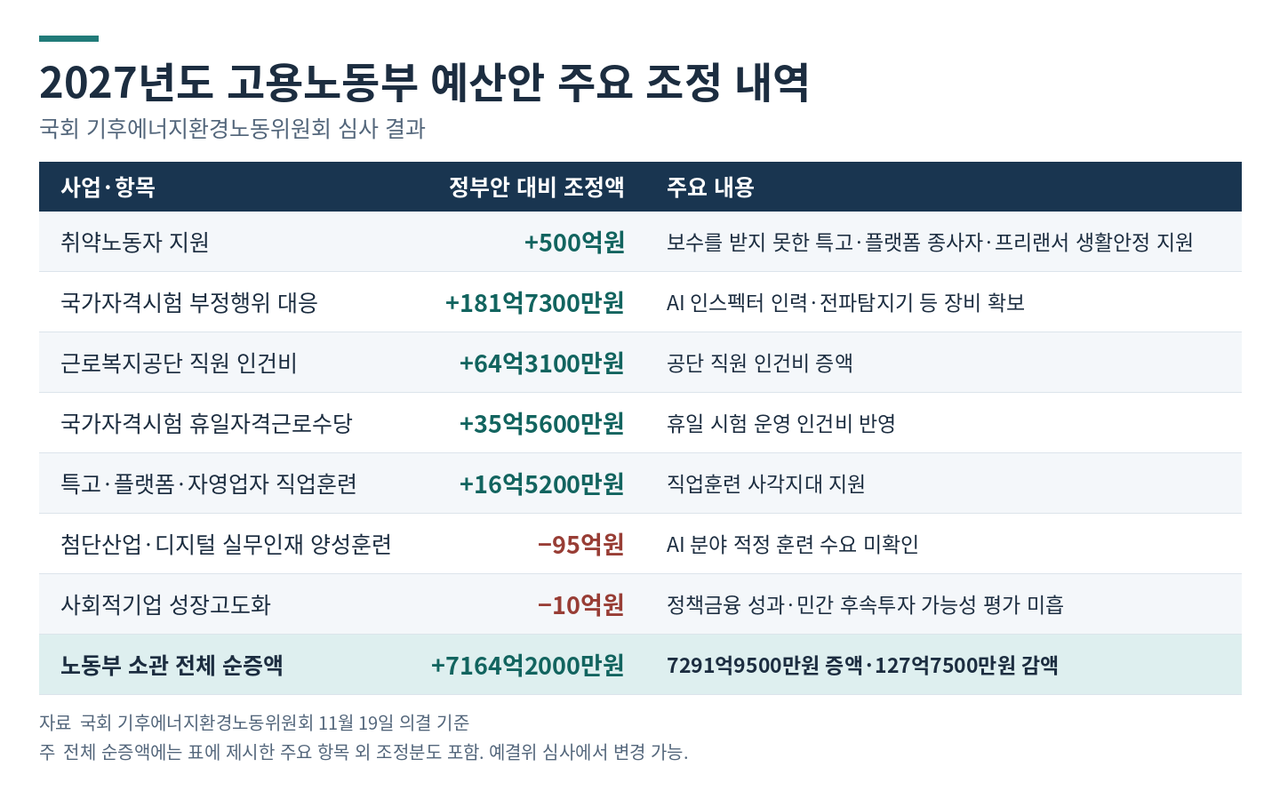
The committee added 50 billion won to a vulnerable-worker support project aimed at helping gig workers, platform workers and freelancers who have not received pay. A People Power Party request to increase by 500 million won the budget for building a management system for labor service providers was also reflected. An additional 1.65 billion won was allocated to vocational training programs for platform workers, gig workers and the self-employed. The committee also added 300 million won to cover preparatory costs for the tentatively named "K-Labor Welfare Chamber," an organization the government is working to establish in support of platform workers and freelancers.
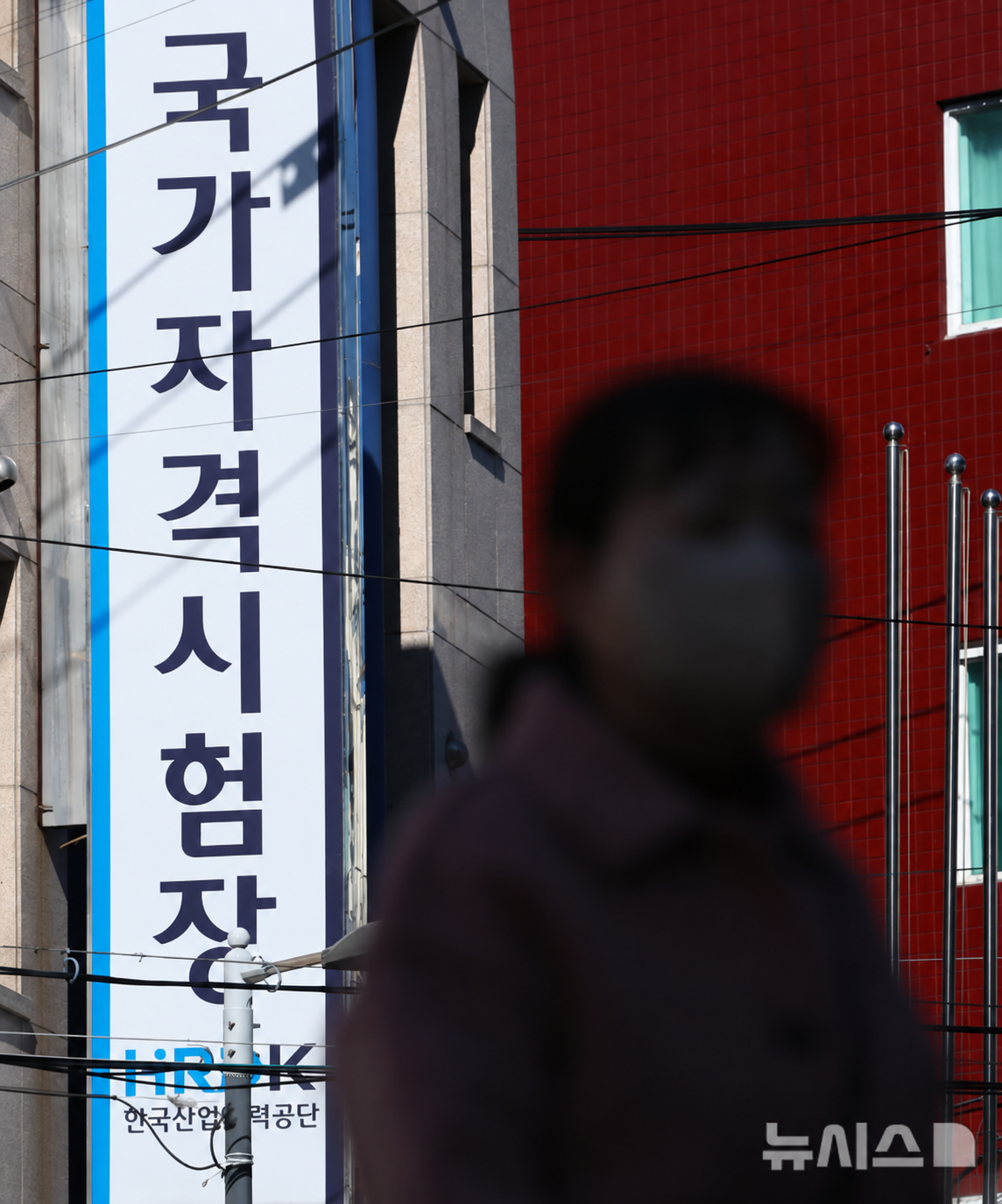
The budget for the Human Resources Development Service of Korea to counter cheating at national certification exams was increased by 18.17 billion won. The figure incorporates a 6.57 billion won increase proposed by People Power Party lawmaker Kim Wi-sang in the budget subcommittee, plus an additional 11.6 billion won subsequently requested by the ministry. The funds will go toward hiring "AI inspector" personnel and purchasing equipment such as radio-wave detectors. A separate 3.56 billion won increase was also approved for holiday work allowances tied to running the national certification exams.
The committee adopted an accompanying opinion urging the ministry to thoroughly investigate recent cheating incidents involving the misuse of advanced devices, while ensuring that on-site supervisors and other agency staff are not subjected to excessive disciplinary action. The intent is to avoid holding employees unreasonably accountable when they lacked the detection equipment and legal investigative authority needed to prevent the violations, provided there was no willful misconduct or gross negligence on their part.
6.43 billion won added to Korea Workers' Compensation and Welfare Service payroll; budget committee review still ahead
The committee approved a 6.43 billion won increase in payroll for the Korea Workers' Compensation and Welfare Service, which is responsible for shortening the processing time for occupational disease claims and expanding the retirement pension fund system. The increase matched the amount proposed by 12 committee members and was adopted in full by the budget subcommittee. A separate 357 million won was also set aside to cover the cost of appointing agency heads at the new occupational disease adjudication committees in Ulsan and Gangwon Province, and at the Gwangju southeastern branch, all of which are to be established next year.
The budget for training programs to develop skilled workers in advanced industries and digital fields — part of the Tomorrow Learning Card initiative — was cut by 9.5 billion won, on the grounds that adequate training demand in the AI sector had not been confirmed. The social enterprise growth and advancement project was reduced by 1 billion won following criticism that the performance of existing policy financing and the potential for follow-on private investment had not been sufficiently assessed.
The committee attached an opinion calling on the ministry to consult with fiscal authorities on transferring projects within the future-response fund that require stable funding to the general or special accounts. It also called on the government to consult fully with the relevant standing committees of the ministries responsible for carrying out projects when drawing up or revising fund management plans, and to reflect their input.
The budget proposal approved by the committee now goes to the National Assembly's Special Committee on Budget and Accounts for review. The budget adjustment subcommittee has been in operation since Monday, examining individual projects. With the ruling and opposition parties locked in a standoff — the People Power Party launched a filibuster Thursday against the tabling of a bill on honoring pro-democracy figures — there is growing talk that the deadline for passing next year's budget, Dec. 2, may be missed.
fact0514@heraldcorp.com