Reconstruction excess profit recapture levy now certain to be imposed this year
Buyers must weigh levy exposure before entering market
Additional contributions, financial costs and taxes add to burden
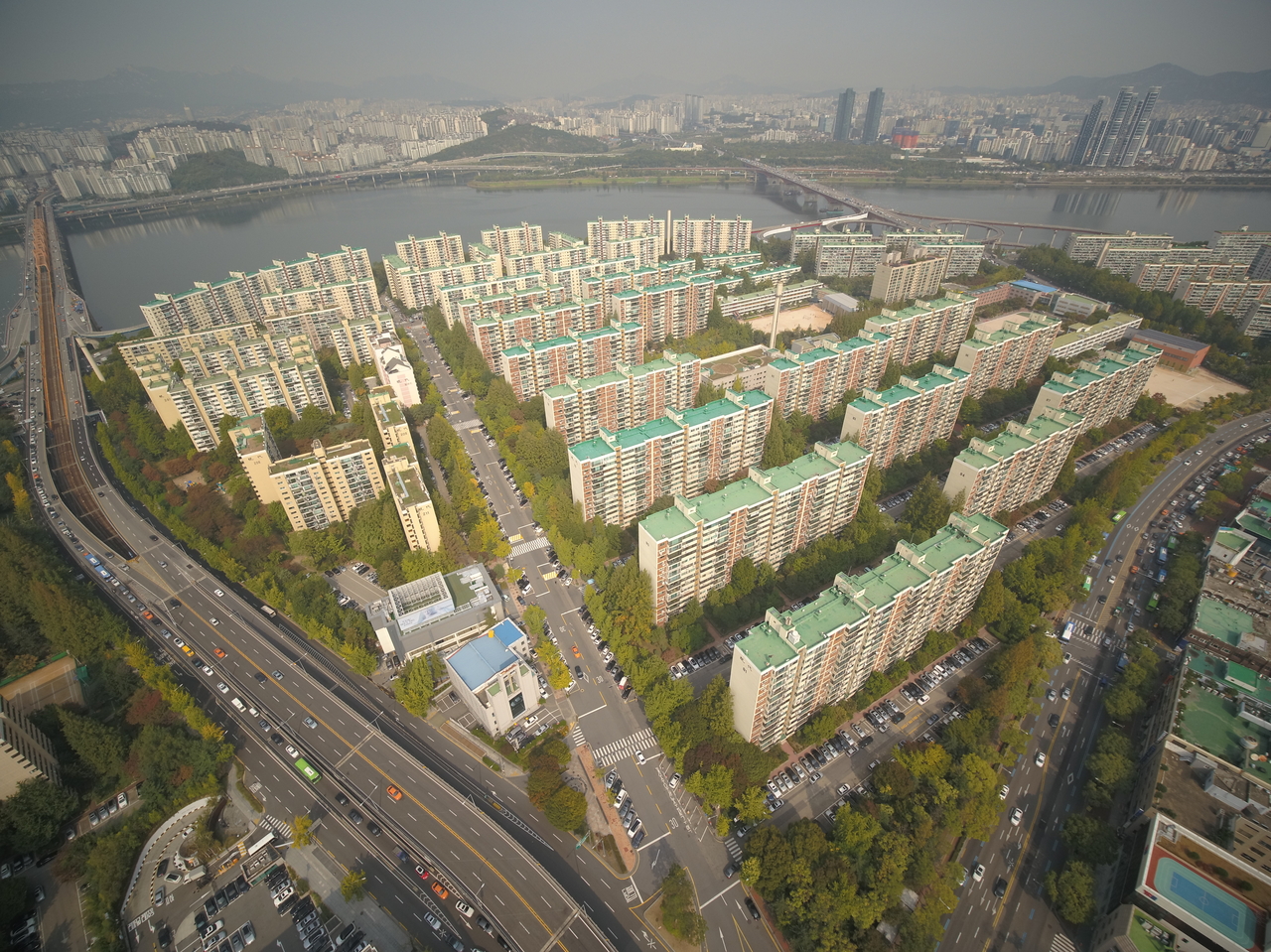
The confirmation that reconstruction excess profit recapture levies will be imposed on Seoul apartment complexes before year-end has complicated the investment calculus for prospective buyers. Experts are advising buyers — particularly those eyeing Gangnam-area reconstruction complexes — to carefully account for growing post-purchase costs, including property holding taxes, additional unit contributions and the recapture levy.
After the Ministry of Land, Infrastructure and Transport ruled Thursday that no extension of the levy imposition deadline would be granted, the barrier to entry is expected to rise for reconstruction complexes subject to the charge, starting with Banpo Hyundai — now known as Banpo Centrevill Asterium — in Seocho-gu, Seoul. By fixing the imposition window at five years from five months after the completion approval date, the ruling means complexes already completed and occupied will also be unable to escape the levy.
Don't snap up a distressed listing — check these factors before buying
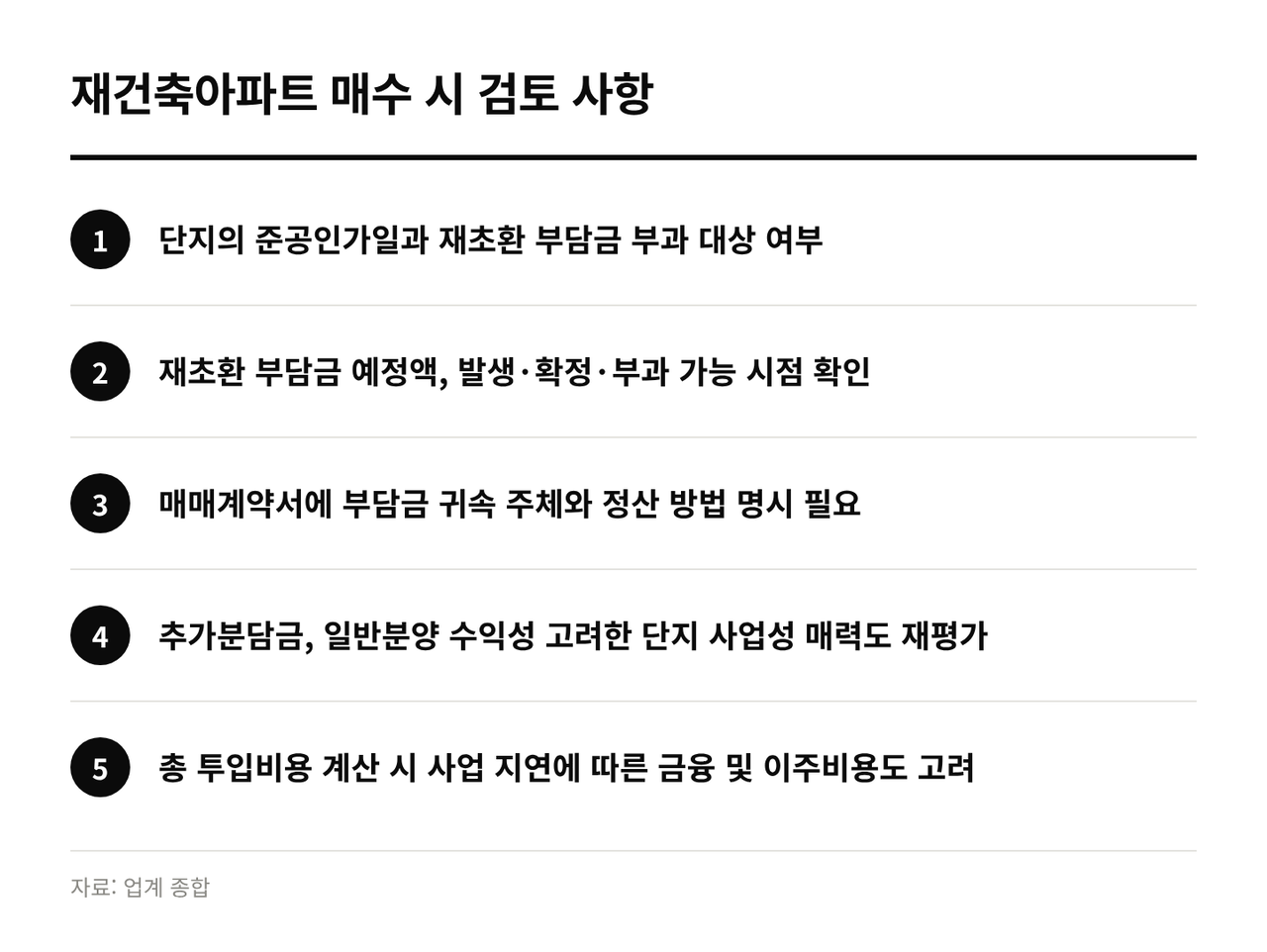
Buyers should verify the completion approval date of any complex they are considering, the earliest date on which the levy can be imposed, the projected levy amount and whether an actual charge has been confirmed.
Experts stress that when purchasing a unit from a union member at one of these complexes, the contract must clearly specify who bears the reconstruction excess profit recapture levy and set out the settlement method in detail. In principle, the primary obligation to pay the levy falls on the project operator — the reconstruction union, a trust company or a residents' agreement body. If the union is dissolved or lacks sufficient assets, a secondary payment obligation falls on union members at the time the levy period closes.
Ham Young-jin, head of the real estate research lab at Woori Bank, said buyers must distinguish between the timing of the transaction, the point at which the levy arises and is finalized, and the basis on which it is apportioned among union members. "The projected amount notified to the union differs from the final levy," Ham said. "The actual charge is determined by factors including the property value at the end of the levy period, the value at the start, the normal rate of housing price appreciation and development costs."
How to judge a fair purchase price — tally the costs you'll carry after buying
For complexes still in the early stages of development, industry advisers say investors need to calculate total returns by factoring in not only the recapture levy but also rising project costs and additional unit contributions. Kim Hyo-seon, a senior real estate specialist at KB Kookmin Bank, said determining a fair purchase price for a reconstruction complex requires comparing nearby new-build market prices against the total costs to be incurred through completion. "Buyers must consider the additional contributions and levies they will pay going forward, as well as financing costs and relocation expenses caused by project delays," Kim said. "The wider the gap between the expected move-in date and the final cost burden, the harder it will be to close a deal."
Industry analysts say the ministry's decision will prompt a reassessment of project viability on a complex-by-complex basis. Ham said comprehensive calculations are now essential, covering whether the recapture levy applies, the stage of project progress, construction costs, additional contributions and the profitability of general pre-sales. "A complex's appeal will be determined less by its location and age than by how predictably and how quickly it can be turned into a new building," Ham said.
Around complexes where the levy has been confirmed, discounted distressed listings are emerging, creating a two-tier pricing phenomenon within the same complex for units of identical size. At Raemian Trinione, a complex subject to the recapture levy, two listings with the same view and floor area were priced differently as of Friday depending on who bears the levy — 5.5 billion won ($4.14 million) for a unit where the seller absorbs the charge, and 4.5 billion won for one where the buyer does.
Kim said disputes over the reconstruction levy will persist even at newly completed complexes that have gone through the reconstruction process. "Listings where the seller agrees to bear the future recapture levy will become increasingly common," Kim said.
hope@heraldcorp.com