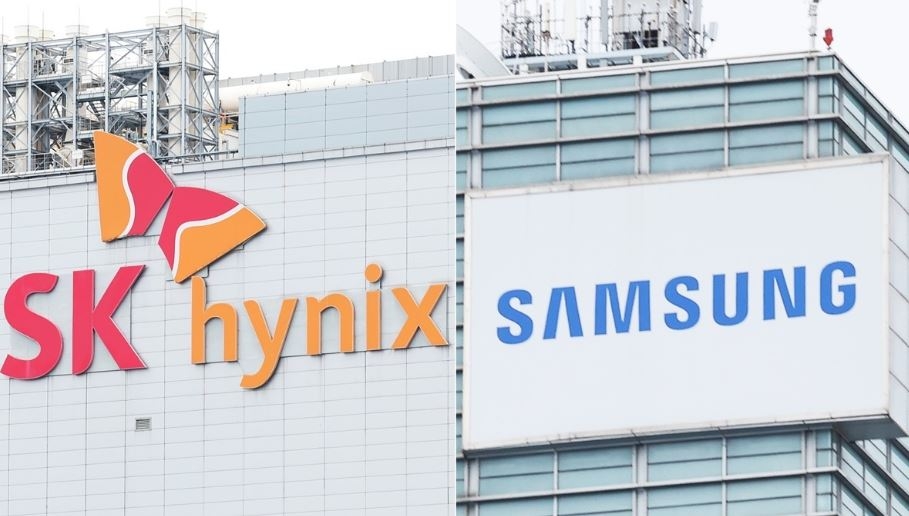
South Korean memory chipmakers Samsung Electronics and SK hynix are expected to sustain strong earnings next year on the back of rising AI investment, with favorable market conditions set to persist as demand for AI-related memory chips grows rapidly while supply expansion remains constrained. The benefits of expanding AI infrastructure investment are also expected to spread to adjacent industries, including data center construction, power grid equipment and cooling systems.
Moody's said in its "2027 Asia-Pacific Non-Financial Corporate Credit Outlook" report, released Thursday, that South Korea's technology-related exports will support the country's economic growth next year.
The ratings agency said strong AI demand and limited supply growth are creating a favorable business environment for memory chip manufacturers. It also projected that related industries — including semiconductor equipment makers, materials suppliers and specialty chemical companies — will benefit from the expansion of AI investment.
Samsung Electronics and SK hynix were identified as key drivers of profit growth among Asia-Pacific technology companies this year. Moody's projected that South Korean memory chip manufacturers, led by the two companies, will continue to expand production capacity for AI memory products and strengthen their market competitiveness next year.
The agency particularly noted that demand for AI-related products remains elevated while supply growth in memory chips stays limited. South Korean companies expanding their production capacity in response to rising demand will continue to benefit from the favorable industry environment, it said.
Moody's said South Korea's technology-related exports, driven by growth in the semiconductor industry, will continue to support the broader economy next year. The expansion of the AI market is expected to have a positive effect on earnings and export growth for major domestic companies.
The benefits of expanding AI investment are expected to reach beyond chipmakers to related infrastructure industries. As investment in data centers and semiconductor production facilities needed to power AI technology increases, business opportunities are growing for construction companies and equipment manufacturers alike.
Moody's projected that sustained investment in AI infrastructure will support investment and earnings growth across semiconductors, data centers and digital infrastructure broadly. It particularly expects companies involved in building large-scale semiconductor production facilities and data centers to benefit from the expansion of related investment.
Manufacturers supplying power grid equipment, electronic components and cooling systems were also identified as beneficiaries. Building and operating data centers requires large-scale power supply and equipment cooling, so demand for related equipment and components is expected to rise in tandem.
In the domestic construction sector, Samsung C&T was cited as a representative beneficiary. Moody's projected that as construction of digital infrastructure — including semiconductor production facilities and data centers — expands, contracting opportunities for construction companies involved in such projects will also increase.
Growing investment in AI-related facilities could also increase the financial burden on companies, given the large capital requirements for building semiconductor production facilities and data centers and the considerable time needed to recoup those investments. Moody's said refinancing risks for the companies involved would remain limited, but that funding costs would rise.
The growth of AI-related industries is expected to influence the overall earnings of Asia-Pacific companies next year.
Moody's assigned a "stable" credit outlook for non-financial companies in the Asia-Pacific region excluding Greater China. It projected that EBITDA for those companies will grow about 12 percent next year, following a 53 percent increase this year.
Growth rates are expected to vary by sector. EBITDA growth for companies outside the technology, media and telecommunications sector is forecast to slow from 8 percent this year to about 2 percent next year — a gap of 10 percentage points compared with the projected 12 percent growth for all companies combined.
Moody's said AI-related demand will drive earnings growth among companies in the region by expanding investment in semiconductors and digital infrastructure. Profit growth next year in the Asia-Pacific region is therefore expected to be concentrated in AI-related industries, while growth in other sectors remains comparatively modest.
rainbow@heraldcorp.com