Exam held Saturday at 33 sites nationwide; random phone-call check introduced for first time
AI inspectors flag five more violations; radio-frequency detectors and CCTV expansion planned
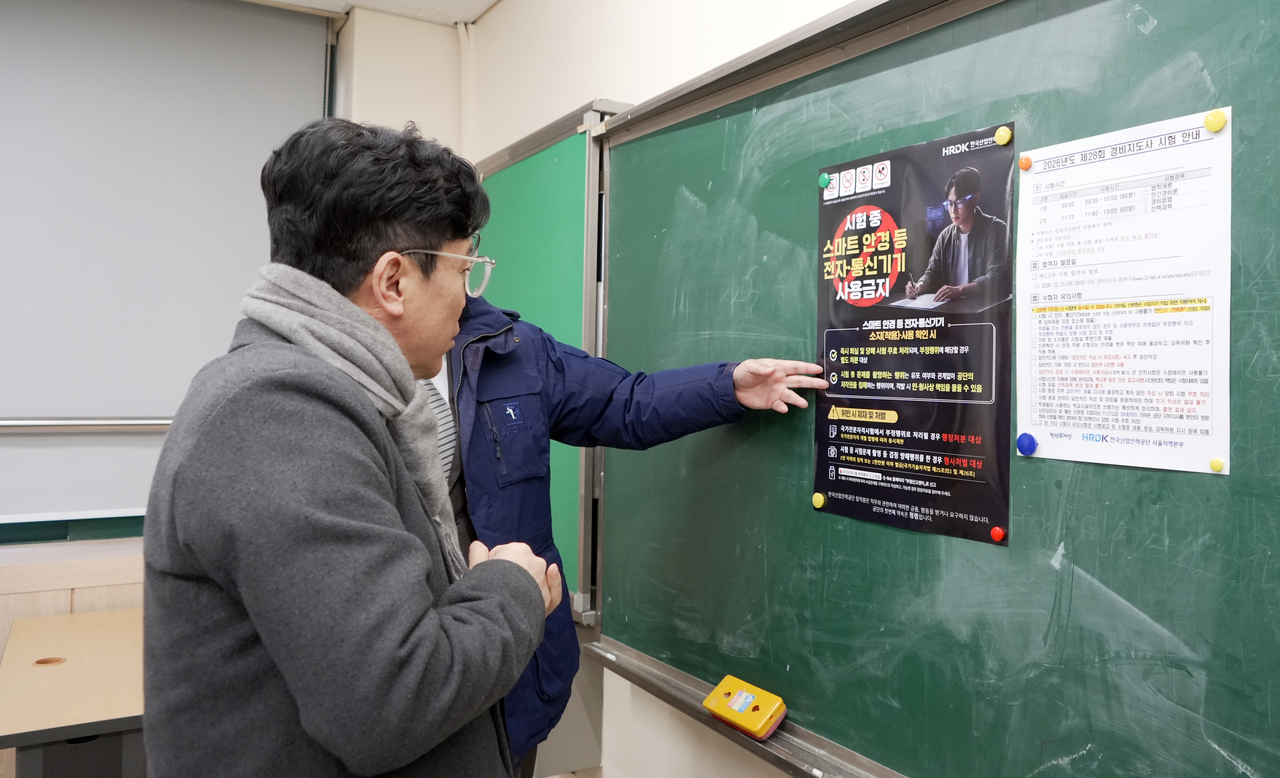
A proctor dialed an examinee's number during a national licensing exam — and a phone rang. Six cases of cheating involving electronic devices were uncovered at the first national licensing exam held since a top-scoring tax accountant candidate confessed to using AI to cheat.
The Korea Human Resources Development Service of Korea said Sunday that six examinees were caught cheating at the 28th security guard supervisor licensing exam, held Saturday at 33 test sites across the country.
Starting with this exam, the agency introduced a procedure in which all mobile phones are collected before the test begins and proctors then randomly call examinees' numbers to verify the devices are switched off. When the check was carried out during the exam, one examinee's phone rang, and that person's test was immediately invalidated.
The remaining five cases were caught by "AI inspectors" — specialists deployed to detect cheating involving advanced electronic devices. They identified examinees including one found carrying a powered-on tablet computer. All five were classified as cheaters and are expected to face penalties including invalidation of their exam results and a ban on future sittings.
Employment and Labor Minister Kim Young-hoon also visited the security guard supervisor exam site on Saturday to conduct an on-site inspection.
The Ministry of Employment and Labor and the agency plan to tighten oversight of national licensing exams to prevent AI-assisted cheating. The number of AI inspectors will be increased, and radio-frequency detectors will be deployed to all exam sites as soon as development is complete. The authorities also plan to extend closed-circuit television coverage to venues that currently borrow equipment from outside sources.
Verification of successful candidates and penalties for cheating will also be strengthened. The authorities are pushing to require public disclosure of scores for first- and second-place finishers, and to extend the ban on sitting national technical qualification exams for cheaters from the current three years to 10 years.
fact0514@heraldcorp.com