WSJ: Trump sent letter to Kim, but it was returned unopened
US discussed end-of-war declaration, liaison office and statement without denuclearization demand
North Korea's warheads doubled to 60; Russia and China ties deepened
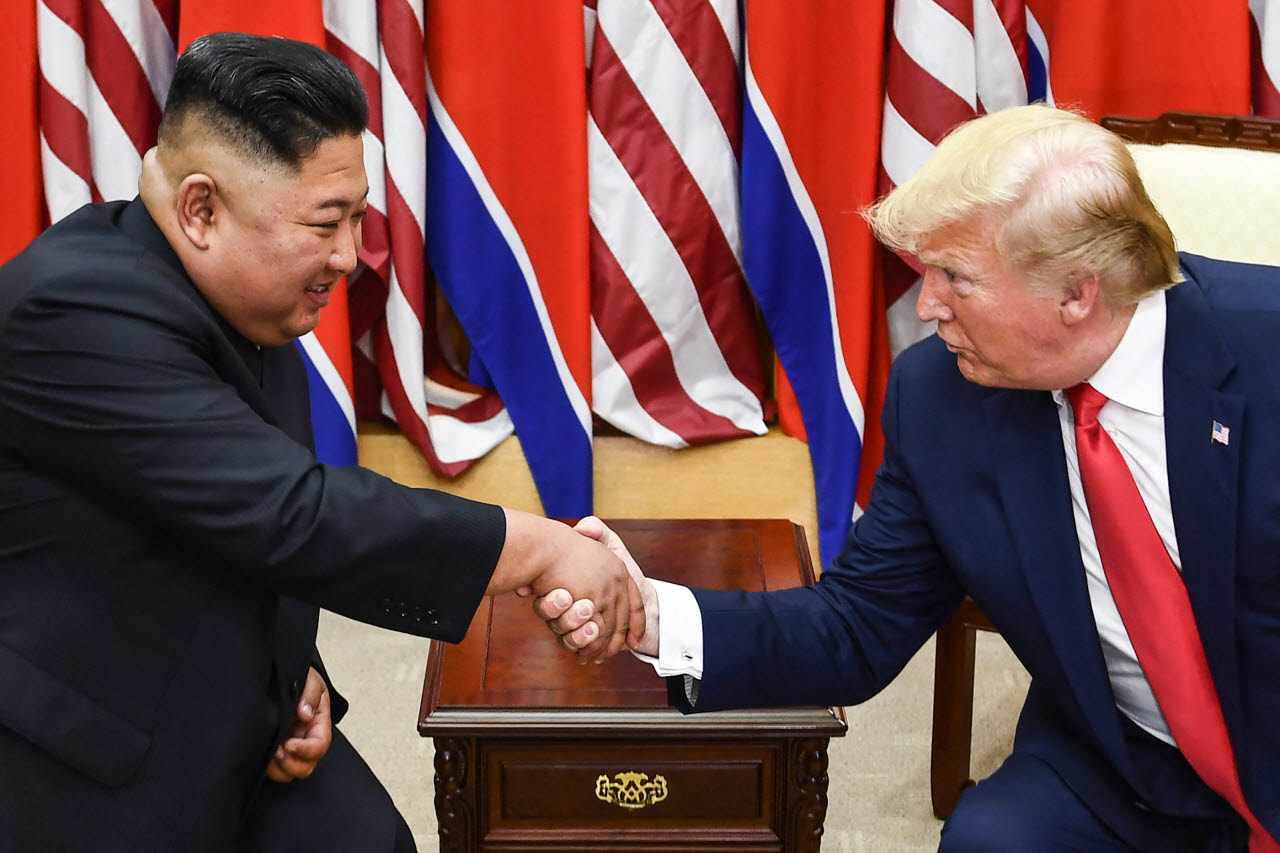
Donald Trump considered offering a formal declaration ending the Korean War — and even a joint statement that would stop short of demanding North Korea's denuclearization — to secure a summit with Kim Jong-un, sources familiar with the matter said. Kim did not respond to Trump's outreach, including a personal letter. Analysts say North Korea's expanding nuclear arsenal and deepening ties with Russia and China have reduced its incentive to negotiate with Washington.
The Wall Street Journal reported Saturday (local time), citing US government officials and diplomatic sources, that the Trump administration discussed options representing a significant departure from longstanding US policy toward North Korea as it sought to arrange a meeting with Kim.
According to the report, US officials considered formally declaring an end to the Korean War as an inducement for a North Korea-US summit. They also discussed issuing a statement that would neither officially recognize North Korea as a nuclear state nor demand the dismantlement of its nuclear program.
In return, North Korea would be asked to limit nuclear weapon and missile tests. Officials also discussed establishing a liaison office as a first step toward building more formal diplomatic relations between the two countries.
The proposals mark a substantial shift from Washington's longstanding position, which has treated complete denuclearization as the central goal of any negotiations with Pyongyang. They suggest the administration may be moving toward arms-control-focused talks that would seek to cap North Korea's nuclear capabilities rather than eliminate them — even without formally recognizing the North as a nuclear power.
A Trump administration official denied to the Wall Street Journal that any effort had been made to arrange a meeting with Kim. The White House has also maintained its official position supporting North Korea's denuclearization.
Trump began trying to contact Kim last year but made little headway, sources said. After attempts through existing phone lines and communication channels went unanswered, Trump wrote a personal letter.
White House officials arranged for the letter to be delivered to a North Korean diplomat outside Pyongyang's mission to the UN in Manhattan. But at a subsequent UN meeting, the diplomat threw the unopened letter in front of the US representative, officials said.
Trump also pressed aides to arrange a meeting with Kim ahead of a recent trip to Asia, sources said. Both sides explored the possibility of a face-to-face meeting until the last moment, but talks ultimately fell through after Kim put forward conditions Washington found unacceptable.
While Trump has pursued engagement, North Korea's nuclear capabilities have grown sharply. According to the Wall Street Journal, North Korea is estimated to have approximately 60 nuclear warheads — roughly double the 20 to 30 it was believed to possess at the time of the last North Korea-US summit in 2019. Pyongyang has also acquired solid-fuel intercontinental ballistic missiles capable of reaching the US mainland.
Unlike liquid-fuel missiles, solid-fuel ICBMs do not require fueling immediately before launch, making a surprise strike considerably easier. That has made it harder for the United States and its allies to detect launch preparations in advance or respond preemptively.
The environment in which North Korea must withstand US sanctions and diplomatic pressure has also changed. Military cooperation with Russia stands out as a key factor: North Korea supplied weapons and troops to Russia in connection with the war in Ukraine, and Russia responded by signing a mutual defense treaty with Pyongyang and deepening the relationship.
A shift in China's posture has also worked in North Korea's favor. Beijing, which once opposed Pyongyang's nuclear weapons development, has moved away from publicly demanding denuclearization and now emphasizes a "fair and equitable" approach to peace on the Korean Peninsula. Russian officials have gone further, stating that North Korea's possession of nuclear weapons is an undeniable reality.
North Korea's ability to withstand economic pressure has also been bolstered by cryptocurrency theft. The Wall Street Journal said North Korea has secured foreign currency through large-scale cryptocurrency heists, strengthening its capacity to endure US economic pressure.
Meanwhile, US policy toward North Korea has struggled to find clear direction. Unlike during his first term, Trump has left the position of special envoy for North Korea policy vacant. The national security strategy released last year omitted any mention of North Korea — the first time that had happened since the end of the Cold War.
The US Department of Defense's National Defense Strategy released in January identified North Korea as a clear and present nuclear threat to the US homeland, yet — unlike previous strategies — did not explicitly call for North Korea's denuclearization.
US intelligence agencies concluded in last year's annual threat assessment that Kim has no intention of abandoning his strategic weapons program. The assessment noted that decades of engagement, economic support, sanctions and diplomatic isolation had all failed to halt North Korea's nuclear development.
Victor Cha, a former Asia director at the White House National Security Council, said North Korea's nuclear threat is growing even as Washington's attention wanes. "For someone like me, it's like screaming in the forest," he said. "Nobody is listening."
Cha argued that arms control, rather than complete denuclearization, should now serve as the starting point for any negotiations with North Korea — a pragmatic approach aimed at curbing further expansion of Pyongyang's nuclear capabilities given how unlikely it is to give them up entirely.
The dynamic between Trump and Kim has also shifted since the two leaders met three times — at the 2018 Singapore summit, the 2019 Hanoi summit and a brief encounter at Panmunjom. Trump once exchanged letters with Kim and emphasized their special relationship, but now even a direct outreach from a sitting US president has failed to draw a response from Pyongyang.
North Korea has secured a stronger negotiating position than it held in the past, the Wall Street Journal said, having expanded its nuclear arsenal and deepened ties with Russia and China. Even if Trump pursues another summit with Kim, analysts say it will be far harder to achieve meaningful results while holding to the original goal of denuclearization.
sjy@heraldcorp.com