Zone extended to waters south of Oman; P-8A patrol aircraft to be added
Defense committee report says South Korea must not support US operations against Iran
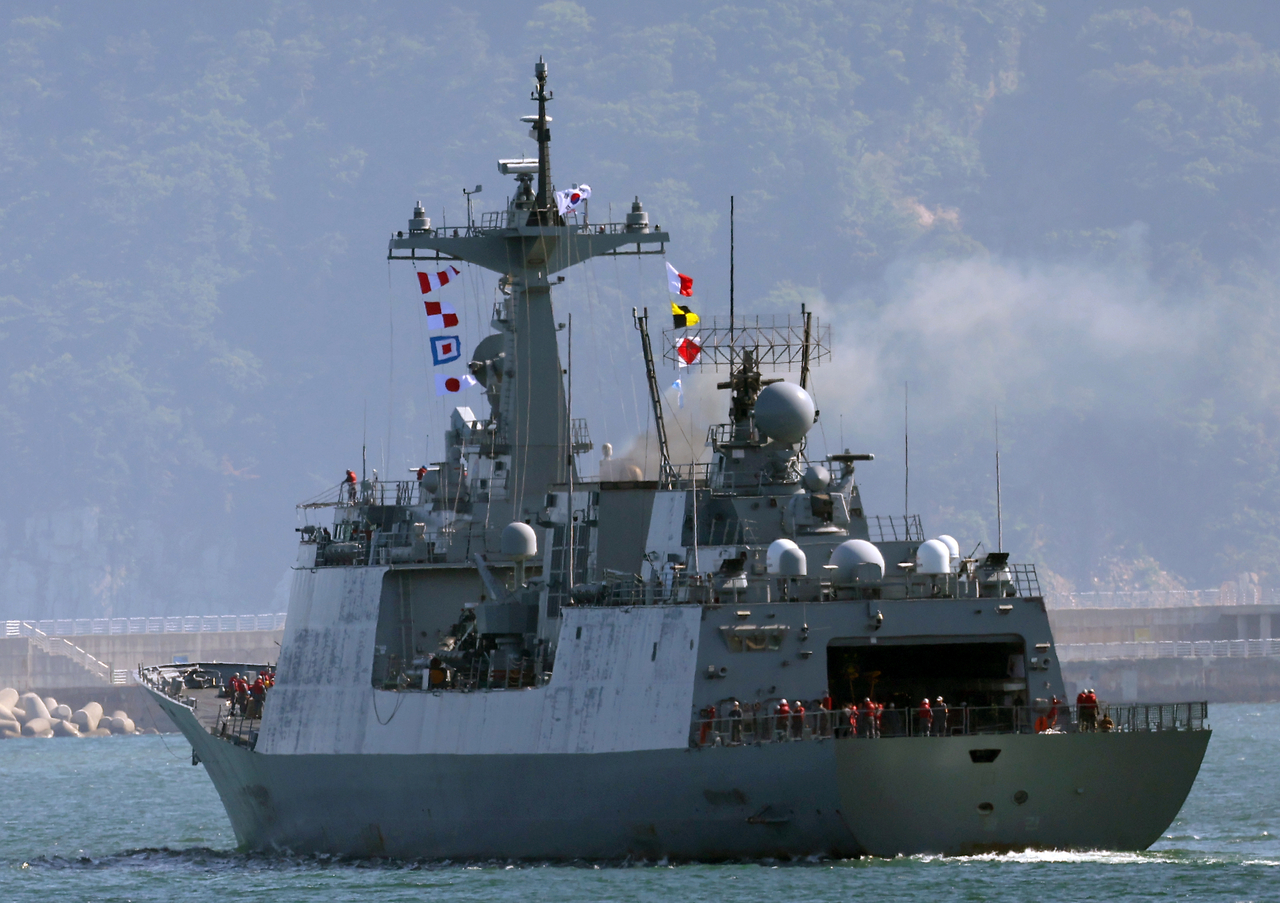
A revised bill to extend the deployment of the Cheonghae Unit and roughly double its operational zone — from the Gulf of Aden off Somalia to the open waters south of Oman — was submitted to the National Assembly's National Defense Committee on Monday.
The defense committee is set to table the "Revised Bill on the Extension of the Dispatch of Korean Armed Forces to the Gulf of Aden off Somalia and the Open Waters South of Oman" at a plenary session that day and refer it to a legislative review subcommittee. The subcommittee is expected to begin reviewing the bill on Tuesday.
The bill adds "support for the restoration of freedom of navigation on international maritime routes" to the unit's mission alongside the zone expansion. It also calls for adding one P-8A Poseidon maritime patrol aircraft, an explosive ordnance disposal team and unmanned minesweeping equipment to the existing destroyer, raising the personnel ceiling from 320 to 395.
The northern edge of the new operational zone lies about 650 kilometers from the Strait of Hormuz. If the bill passes the full National Assembly, the deployment would be extended through Dec. 31 next year.
A review report by the defense committee's senior expert adviser called for the mission's purpose and limits to be clearly defined.
The report said it was necessary to clarify during the Assembly's deliberations that South Korea would not participate in US military operations related to a war with Iran, nor provide — directly or indirectly — any reconnaissance, surveillance or detection intelligence in support of such operations.
The report also assessed that deploying a patrol aircraft would be difficult to rule out as military surveillance or a check on a specific country. On the unmanned minesweeping equipment, it said minesweeping activities could themselves be interpreted as measures to counter or neutralize military action.
Regarding language in the bill that includes waters where South Korean nationals may need protection in an emergency, the report said it could not rule out the possibility that such wording might lead to operations exceeding the scope approved by the National Assembly.
The report also said the government should spell out rules of engagement and emergency withdrawal criteria to prepare for accidental clashes, provide objective grounds for the assessed level of piracy threat in the area, and present measures to offset any gap in domestic maritime patrol coverage caused by the aircraft's redeployment. It said the criteria for determining a "permissive environment" — the condition required for deploying minesweeping equipment — and the procedures for commencing operations should be reported to the National Assembly in advance.
South Korea's Ministry of National Defense has said the Strait of Hormuz is not included in the mission area and that South Korea will maintain its principle of non-involvement in the war and an independent chain of command. The ministry said the minesweeping equipment would be deployed only when navigational safety is ensured and at the request of the international community.
The Democratic Party of Korea has also described the measure as a response to a rise in piracy. The Rebuilding Korea Party and the Progressive Party, however, are opposed, calling it a "roundabout troop dispatch to the Strait of Hormuz."
With US President Donald Trump having warned that he could launch further strikes after the new year if Iran fails to reach a deal, debate over the risk of South Korea being drawn into combat is expected to dominate the subcommittee's review.
rimsclub@heraldcorp.com