Ministry says no special university admissions benefit included; 635 people eligible for review
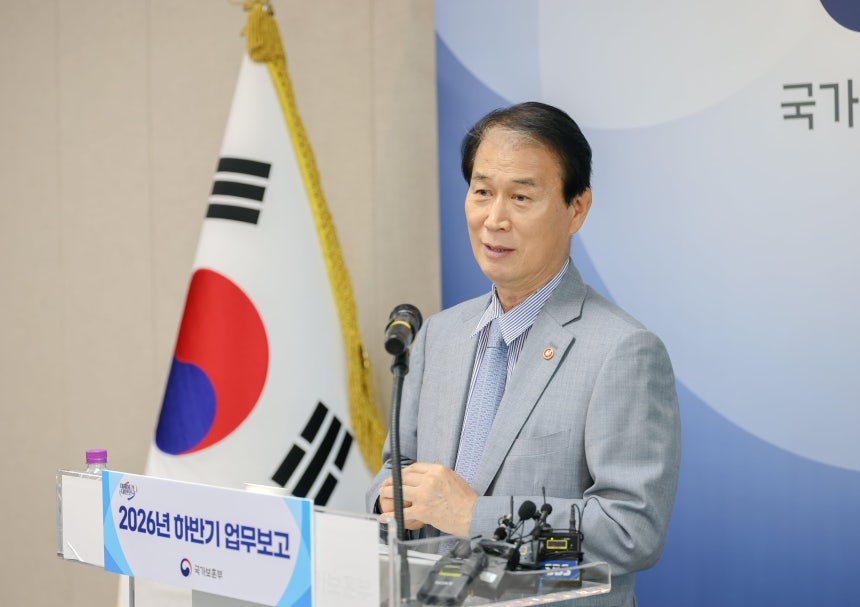
A law requiring the state to honor those who died or were injured during South Korea's democracy movement passed the National Assembly on Friday, 26 years after it was first introduced in 2000. The Ministry of Patriots and Veterans pushed back against opposition concerns over alleged university admissions privileges, saying the law contains no education support provisions and therefore does not qualify recipients for special university admissions consideration.
The ministry said the National Assembly's plenary session passed the Act on the Honorable Treatment of Democracy Movement Merit Holders on Friday. The bill will be sent to the government, go through a Cabinet vote and then be promulgated. Registration of merit holders and the delivery of benefits are expected to begin around June next year, six months after promulgation.
Those eligible are individuals recognized under the Act on the Restoration of Honor and Compensation for Persons Related to the Democratization Movement, or the Act on the Restoration of Honor and Compensation for Persons Related to the Busan-Masan Democratic Uprising, who died, went missing or received a disability rating for injuries sustained. Among them, those whose sacrifice or contribution to establishing a free and democratic basic order is clearly recognized and has broad public support — as determined by the minister of patriots and veterans — along with their bereaved families, will be covered.
As of the end of last December, 635 people are eligible: 137 who died or went missing, and 498 who received disability ratings for injuries. Those wishing to register may apply to the minister, who will then request verification of eligibility from the chairperson of the Democratization Compensation Deliberation Committee and others. A final decision on registration will be made after review and a vote by the Patriots and Veterans Merit Deliberation Committee.
Those registered as democracy movement merit holders will be entitled to medical, elderly care and nursing support, as well as in-home welfare services. The state and local governments will be required to pursue commemorative and memorial projects.
Opposition lawmakers voiced concerns during the plenary vote on Friday. After the vote, Minister of Patriots and Veterans Kwon O-eul visited the tent of the National Federation of Families for Democracy, a bereaved families' group that had been staging a sit-in outside the National Assembly.
"I want to make clear that the Act on the Honorable Treatment of Democracy Movement Merit Holders contains no education support of any kind, including special university admissions benefits, and that recipients do not qualify for special university admissions under the Higher Education Act and its subordinate regulations, which fall under the jurisdiction of the Ministry of Education," Kwon said.
According to the ministry, the basic guidelines for university admissions under Article 34-5 of the Higher Education Act define eligibility for special admissions for state merit holders as those who qualify for education support under relevant patriots and veterans laws. Because the new law contains no education support provision, recipients cannot qualify for special admissions, the ministry said.
On the question of whether those convicted under the National Security Act could be registered, Kwon said the principle is that such individuals cannot be registered as democracy movement merit holders. However, Kwon added, "there may be cases where people were unjustly harmed during the democracy movement in the past, so we will determine registration through fair deliberation by the merit deliberation committee." Asked about vague review criteria, Kwon said the ministry would "promptly establish subordinate regulations to ensure rigorous screening."
Kwon offered condolences to members of the bereaved families' group, saying, "It took far too long for this bill to pass. I am truly sorry." Kwon went on to say, "The 1987 constitutional order we enjoy today — direct presidential elections and the freedoms of thought, press and publication — are all thanks to the democracy movement merit holders."
The ministry also announced follow-up measures. It said it would review designating as state-managed burial sites the scattered graves of democracy movement merit holders across the country, including the democracy movement memorial park in Icheon, the May 18 old cemetery in Gwangju and the democracy activists' cemetery at Maseok Moranpark in Namyangju. The ministry plans to work with the bereaved families' group and related organizations to establish a public-law entity, and to create a legal basis for designating and managing democracy movement memorial facilities.
"To the victims and bereaved families who have endured long years of suffering while waiting for the state to respond, I convey my deep condolences and sincere regret that we have only now laid the legal foundation for proper recognition," Kwon said. Kwon went on to say the ministry would "do everything possible to implement the system with public support through rigorous and objective registration and screening."
rimsclub@heraldcorp.com