COP31 closes without agreement on mitigation and response measures; decisions adopted on adaptation, just transition and finance; South Korea advances RISE ASIA and other multilateral initiatives
The UN climate summit ended without a comprehensive agreement after member states failed to bridge deep divisions over issues including the phase-out of fossil fuels. Developed countries pushed for stronger greenhouse gas reduction commitments, while developing nations demanded greater support for climate finance and technology transfers — a gap that proved impossible to close.
Despite the failure to adopt an overarching agreement, South Korea's government delegation used the summit to highlight the country's leading role in international climate cooperation, including its Korean Green Transformation (K-GX) strategy and push for electrification.
South Korea's Ministry of Climate, Energy and Environment said Monday that the 31st Conference of the Parties to the UN Framework Convention on Climate Change (COP31) closed without reaching a comprehensive agreement on major climate action directions. It was the first failure to reach such an agreement since the Copenhagen summit (COP15) in 2009 — a gap of 17 years.
The conference, held as the Paris Agreement marked its 10th anniversary this month, focused on translating established climate targets into concrete policies and actions, and on accelerating international cooperation to address the climate crisis.
Host country Turkey emphasized expanding substantive climate action through dialogue, consensus and action, while co-presidency holder Australia focused on responding to temperatures exceeding 1.5 degrees Celsius, strengthening support for climate-vulnerable nations, and reaching agreement through inclusive negotiations.
Parties adopted the agenda on the opening day, Nov. 9 (local time), following pre-consultations, but divisions persisted between developed countries pressing for stronger emissions reductions and developing nations seeking expanded climate finance and technology support. Disagreements continued across key agenda items — including mitigation, adaptation, just transition, finance and response measures — prompting rounds of technical negotiations and high-level political consultations in search of common ground.
The Turkish and Australian presidencies sought to produce a landmark decision text known as the Antalya Pact, intended to carry COP31's core messages on minimizing temperature overshoot beyond 1.5 degrees Celsius and accelerating implementation of the Paris Agreement.
The original draft decision text included six elements South Korea had advocated: minimizing the scale and duration of any overshoot beyond 1.5 degrees Celsius, expanding electrification, scaling up climate finance, strengthening international cooperation, deepening ocean-climate linkages, and reviewing the first trade-climate dialogue.
The Turkish presidency extended negotiations by two days in an effort to reconcile differences, but ultimately failed to adopt the text after parties could not resolve disagreements over language on transitioning away from fossil fuels.
A second draft dropped both a target to raise the share of electricity in global final energy consumption from about 21 percent to 35 percent by 2035, and a goal to increase climate adaptation finance to $120 billion.
Decisions at UN climate summits are adopted by consensus, meaning no formal objection may be raised. In effect, the process requires unanimous agreement — active support is not required from every party, but no party may explicitly oppose the outcome.
Despite the failure to adopt an overarching agreement, South Korea's delegation put forward the country's positions on key agenda items — including mitigation, adaptation, finance, just transition and response measures — and coordinated with the Environmental Integrity Group (EIG) and like-minded countries to ensure South Korea's positions were reflected as fully as possible in the negotiated outcomes.
Through summit-level meetings, high-level sessions and major side events, the delegation introduced South Korea's key climate and energy policies, including the K-GX strategy and the transition to an "electro-state." The delegation also signed a Korea-Australia decarbonization cooperation MOU and submitted a Korea-Australia joint proposal to the UNFCCC, presenting to the international community a model for accelerating Paris Agreement implementation through bilateral cooperation.
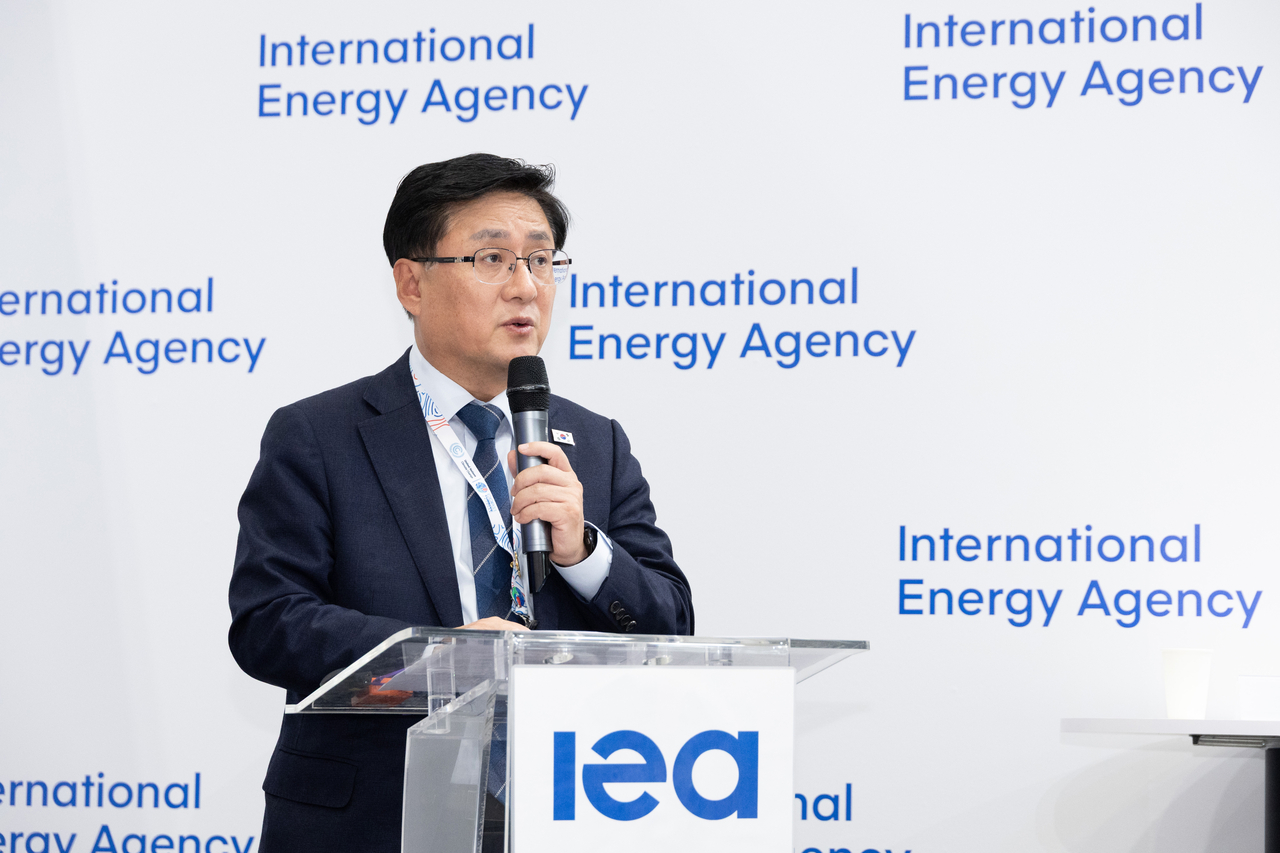
South Korea also hosted a side event on the RISE ASIA initiative, which it is advancing together with the International Energy Agency (IEA), and held a signing ceremony for a joint letter of intent on the Global Voluntary Carbon Market (GVCM) cooperation, further underscoring the country's leading role in building international partnerships.
In addition, South Korea joined several major international initiatives, including the Global Electrification Pledge — which aims to raise electricity's share of global final energy consumption to 35 percent by 2035 — as well as the Open Coalition for Carbon and Climate Markets (OCCCM) and the Antalya AI Pledge. The country also signed a climate change cooperation agreement with Nepal, broadening multilateral efforts to address the climate crisis.
"It is deeply regrettable that the Conference of the Parties was unable to adopt a landmark decision text at a time when the severity of the climate crisis is growing," Minister of Climate, Energy and Environment Kim Sung-hwan said. "The Republic of Korea will accelerate the green transformation of industry and energy based on the K-GX strategy, and work with the international community to deliver tangible greenhouse gas reduction outcomes."
The next Conference of the Parties (COP32) will be held in Addis Ababa, Ethiopia, in November next year.
thlee@heraldcorp.com