New physical AI support category created
Up to 200 million to 1.2 billion won per company
Large-company cooperation model expanded with 19 firms
Applications open Dec. 7 through Jan. 6
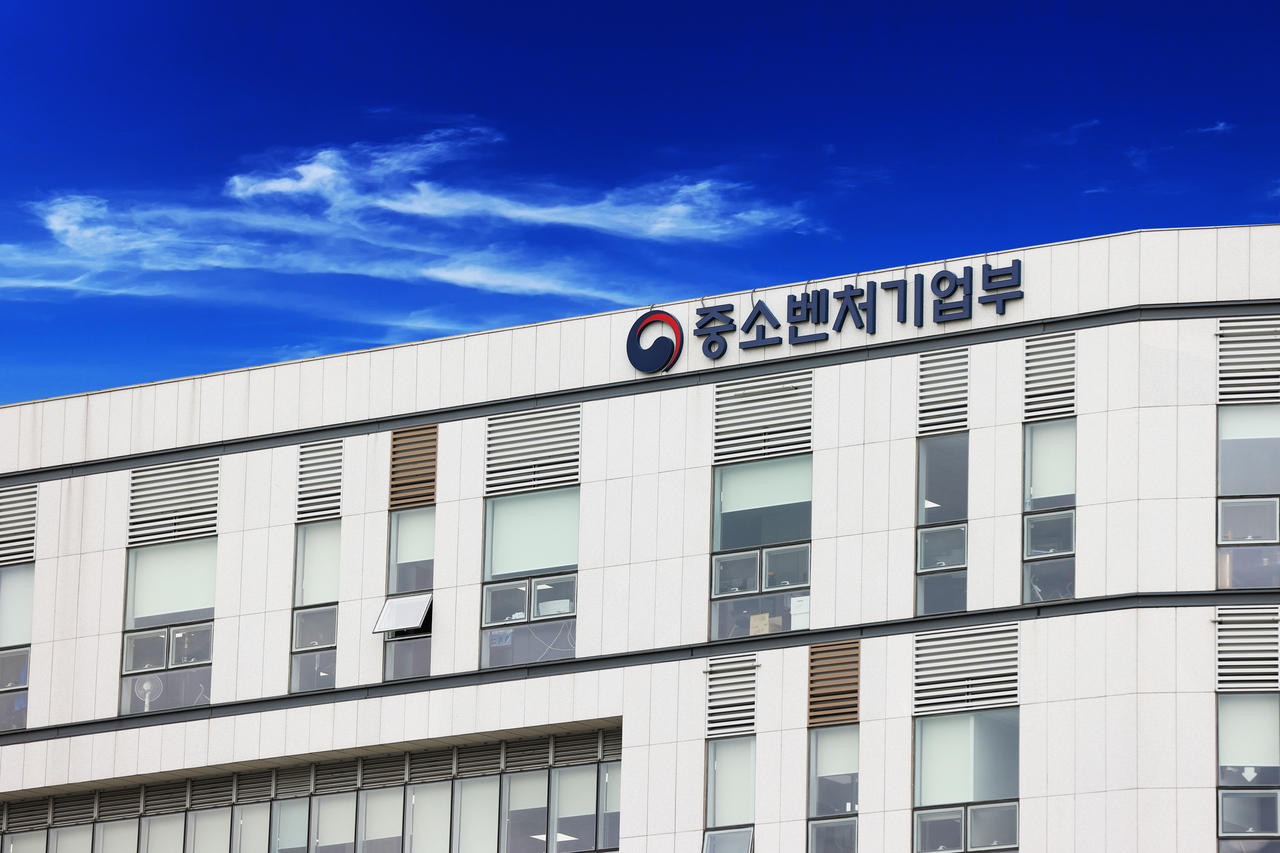
The government will invest 269.6 billion won ($202 million) next year to help small and medium-sized manufacturers build smart factories, with a new dedicated support category for physical AI and an expanded program linking large companies with smaller firms for AI transformation.
The Ministry of SMEs and Startups announced Monday it was accepting applications for the 2027 Smart Factory Construction Support Project.
The program targets 1,021 small and medium-sized manufacturing companies. Previously separate smart factory support announcements have been consolidated into a single call, allowing companies to select the type of support that best fits their needs.
Four categories are available: a standard government support track, a manufacturing AI specialization track, an autonomous factory track, and a mutual-growth AI transformation (AX) model. Depending on a company's level of digital transformation and AI adoption, it can receive up to 200 million to 1.2 billion won toward smart factory construction costs.
The smart factory construction program uses AI and information and communications technology to improve production efficiency. It supports the introduction of operating systems, automated equipment and sensors on the factory floor. Selected companies also receive a range of additional services covering exports, market access, technology and certification.
Support for spreading physical AI will be strengthened next year in particular. The ministry created a dedicated physical AI support category in line with its "Physical AI Diffusion Strategy for Small Manufacturers," announced Oct. 29.
The move is intended to extend the results of physical AI research, development and demonstration projects being carried out by the Ministry of Science and ICT in North Jeolla Province and South Gyeongsang Province to small and medium-sized manufacturers. The ministry will also roll out "AI Factory Manager for All," a service that uses AI to diagnose factory conditions and help companies plan automation, along with related consulting and training.
The mutual-growth AX model — through which large companies share their AI technology and infrastructure with smaller firms — will also be expanded. Nineteen large companies are participating in this round to recruit small and medium-sized enterprises for joint AX initiatives. The ministry plans to strengthen cooperation based on the "Great Transformation Mutual Growth Agreement" it signed with large companies and related organizations Wednesday.
Support will also be expanded for high-growth sectors including K-food and beauty, healthcare and defense. The ministry said it will work with relevant government agencies and local authorities to focus smart manufacturing transition efforts on those industries.
The program places greater emphasis not only on building smart factories but also on how companies use and manage them after installation. Support will be provided to establish a data accumulation framework based on the national Asset Administration Shell standard, enabling systematic collection and use of manufacturing data. The program will also connect newly hired workers with on-site training through workforce development initiatives, and the post-installation monitoring period will be extended from three years to five.
Companies wishing to apply may do so from Dec. 7 through Jan. 6, 2027. Details are available on the Ministry of SMEs and Startups website and the Smart Factory Project Management System.
Kwon Sun-jae, the ministry's director general for regional enterprise policy, said the smart factory construction program had been structured by industry, region and capability level to reflect the diverse needs of small manufacturers on the ground. "We will also work to invigorate the smart manufacturing innovation ecosystem — nurturing supplier companies, creating a virtuous cycle of manufacturing data, and developing skilled workers," Kwon said.
boo@heraldcorp.com