Stepped down after 14 months in office amid college admissions, political neutrality disputes
Criticized for scaled-back public appearances before college entrance exam
Teachers' groups demand hands-on successor; ministry union expresses gratitude
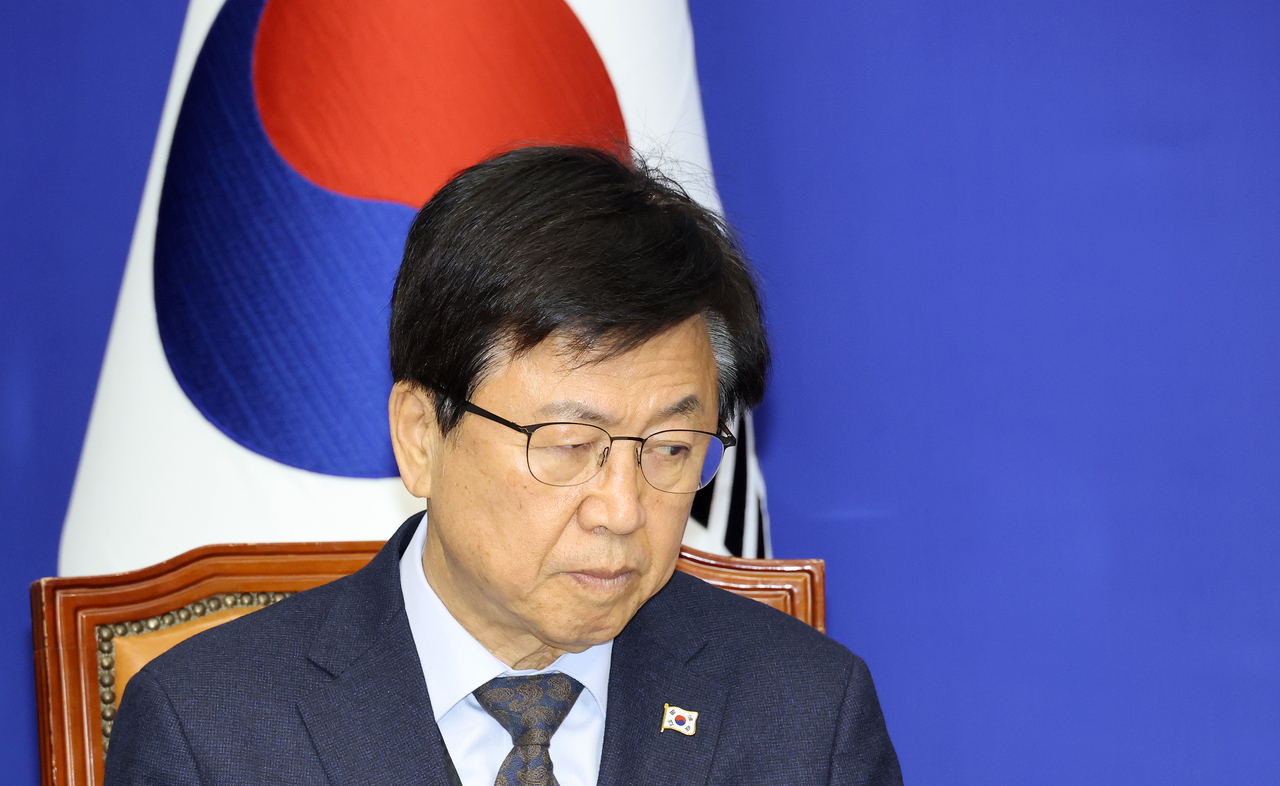
Education Minister Choi Kyo-jin stepped down Monday, taking responsibility for the confusion surrounding anti-cheating measures for the College Scholastic Ability Test, just 14 months after taking office.
Choi had already drawn criticism during his tenure over remarks about reforming the college admissions system, questions about his political neutrality, and a technical failure in the university application portal. The controversy deepened in the days before the exam when his handling of AI-assisted cheating drew fresh scrutiny. He also faced criticism for pulling back from public appearances — including canceling a planned visit to an exam venue — leaving many to say he had failed to offer adequate explanations.
In a statement released Sunday, Choi said he did not believe he was "free from criticism that, as the minister in charge, the public may feel we failed to prepare in advance" for AI cheating on the exam. "Now that the exam is over, I feel a deep sense of responsibility and tender my resignation," he said. President Lee Jae Myung accepted the resignation about an hour after it was made public.
Absolute grading remarks six days into tenure; election controversy and application system failure follow
Choi, a three-term Sejong City superintendent of education, took office on Sept. 12 last year. Just six days later, during a parliamentary interpellation session, he said he agreed with converting the college entrance exam and high school grades to an absolute grading system, adding that he intended to put the issue on the agenda with the National Education Commission and prepare for the next round of admissions reform.
The remarks set off widespread concern about a possible overhaul of the admissions system. The Ministry of Education moved to clarify that no decision had been made at the government level on whether to pursue such a change or on any specific timeline. Choi later acknowledged in a media interview that he had come to understand "how much weight a minister's words carry" and admitted the remarks had been imprudent.
This year brought a series of political neutrality disputes. In April, it emerged that Choi had attended the opening of a campaign office for Im Jeon-su, a preliminary candidate for Sejong City superintendent of education, ahead of the June 3 local elections. He expressed regret, but in late May drew fresh criticism when he liked a Facebook post supporting Im and left a comment reading, "You are wonderful. Thank you."
In September, he liked — and then unliked — a social media post that described the National Education Commission, which was reviewing an expansion of class hours for lower elementary school grades, as a "nuisance."
On Sept. 11, a technical failure struck the Uway Apply application platform with 10 minutes left before the deadline for early admissions applications for the 2027 academic year. Some applicants were unable to submit their forms, prompting the Korea University Education Council to extend the deadline by one hour for 100 universities.
The controversy over admissions fairness widened when it emerged that some universities had disclosed their applicant-to-seat ratios after the original deadline had passed. Choi apologized to applicants and their families and said the ministry would review options for placing the application system under public management.
Confusion over AI cheating response triggers gaffe; exam-day venue visit canceled
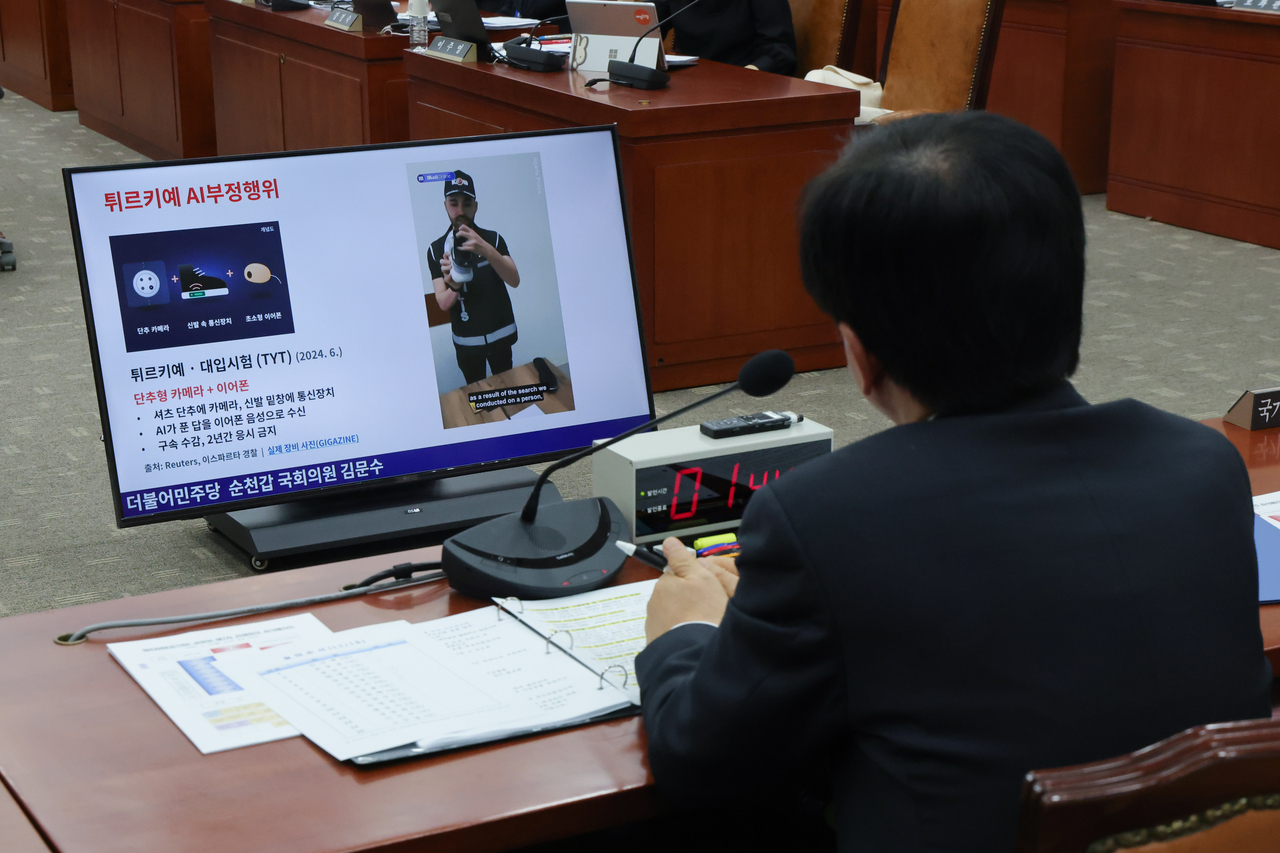
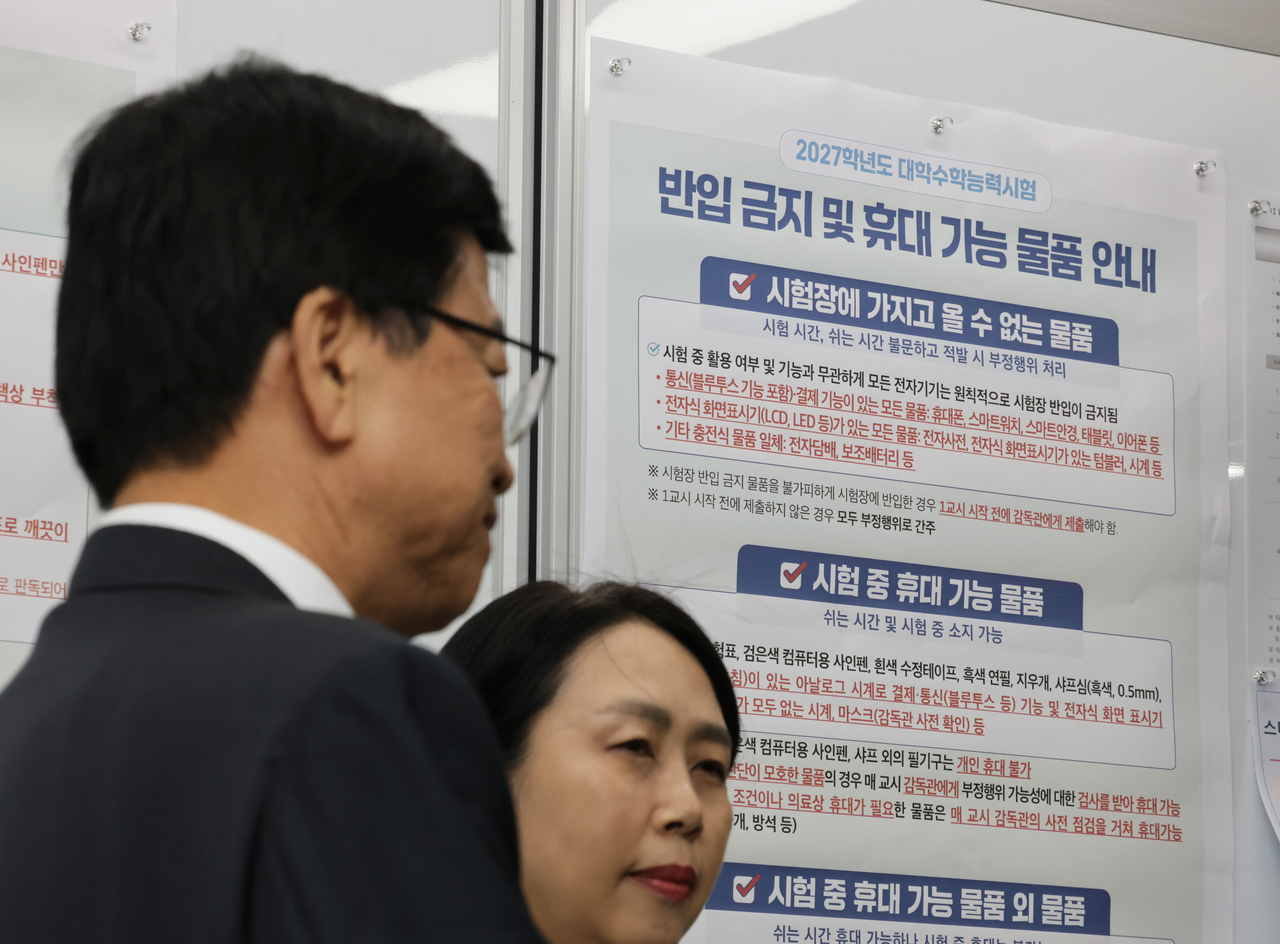
The immediate trigger for Choi's resignation was the confusion over the government's response to AI-assisted cheating in the lead-up to the exam. The ministry had focused its efforts on preventing cheating via smart glasses, but broadened its approach after Nov. 15, when the top scorer on a tax accountant licensing exam admitted to cheating using a miniature camera and AI.
In the course of that response, Choi said the ministry would consider jamming radio signals inside exam venues — only for the ministry to clarify the same day that it was not pursuing that option due to legal and technical constraints.
At a plenary session of the National Assembly's Education Committee on Sunday, People Power Party lawmaker Park Jeong-hun asked whether Choi was confident that 100 percent of AI cheating could be detected. "I don't think I can," Choi replied. "I'm getting on in years …" Later that day, at Yeongdeungpo Girls' High School in Seoul, Choi referenced the cheating on the tax accountant exam and said with a laugh, "Honestly, my reaction was — oh, they go this far?" The remark drew criticism that he was taking the situation too lightly.
Two days before the exam, the government announced it would deploy more than 8,400 additional personnel — including corridor supervisors and staff dedicated to monitoring smart devices — and place stickers over buttons on examinees' clothing. On Wednesday, the day before the exam, officials also revised guidelines on writing instruments. The last-minute changes prompted complaints of confusion from examinees, parents and supervisors alike.
After the controversy erupted, Choi scaled back his public activities. A public address on anti-cheating measures scheduled for Tuesday was delivered by Prime Minister Han Seong-sook in his place. At Wednesday's ruling party-government meeting, Choi made no public remarks. On Thursday, the day of the exam, he canceled a planned visit to an exam venue, and Vice Minister Choi Eun-ok took over the briefing on exam proceedings and cheating detections.
At a pan-government task force meeting on AI cheating countermeasures on Friday, Choi deflected questions from reporters about whether he would resign. "I should do my best for as long as I'm in office," he said. "If the person who appointed me tells me to resign, then I will." He submitted his resignation two days later.
Teachers' federation: 'Late but inevitable'; ministry union to present plaque of appreciation
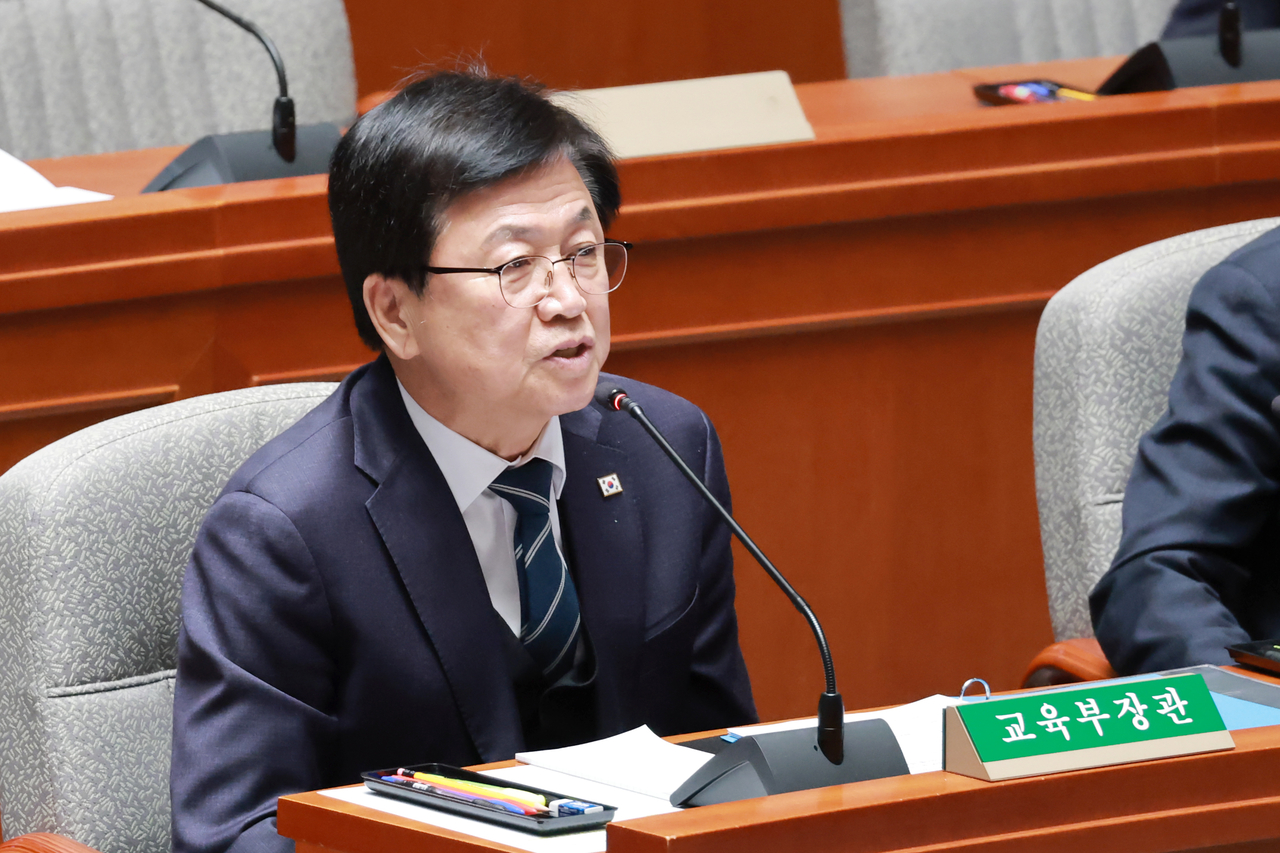
Teachers' organizations criticized Choi's handling of key issues during his tenure and called on the government to manage the remaining admissions schedule carefully while selecting a successor with strong ties to the classroom. The Korean Federation of Teachers' Associations said in a statement that the resignation was "late, but the right decision," welcoming what it called a long-overdue acceptance of its repeated calls for Choi to step down. The federation had been demanding his resignation since the election controversy earlier this year.
On the handling of the exam in particular, the federation said that while education authorities were mired in confusion over the radio-jamming policy, it fell to supervising teachers to identify devices and respond to examinees' objections. It called for a separate National Assembly hearing to establish why advance warnings had not been incorporated into the government's response plan, and urged the creation of a national exam security center under the prime minister's office, equipped with specialist personnel and detection equipment.
The Korean Teachers' Union Federation said Monday it was concerned that the minister's post had fallen vacant at a time when the admissions chaos still needed to be resolved and the remaining application process managed. "This year's admissions cycle is not yet over for examinees," the federation said, calling on the prime minister to work with the Education Ministry and universities to review the remaining stages and ensure that applicants and their families could complete the process without confusion.
On Choi himself, the federation said expectations had been high given his background as a teacher, but that he had fallen short in proactively incorporating classroom difficulties into policy. "The ability to assess in time the seriousness of problems raised in the field, and to lead the ministry to prepare in advance, did not live up to those expectations," it said.
Teachers' groups named hands-on classroom experience as the top criterion for the next minister. The Korean Teachers' Union Federation stressed the need for "the decisiveness to correct already-set policies when field criticism is valid, and the drive to secure the necessary personnel and budget so that schools receive support when they need it."
Korean Federation of Teachers' Associations Chairman Kang Ju-ho echoed that view, saying the next minister must have "the insight to read the times, the ability and drive to resolve pressing issues, and the leadership to communicate with the field." Above all, he said, the minister must be able to "convey the difficulties of schools to the president with conviction and draw pan-government cooperation and support."
The Education Ministry branch of the Korean Government Employees' Union took a different tone, expressing regret over Choi's departure and thanking him for his communication with staff and his respect for the union during his tenure. "We feel deep sorrow and gratitude for the minister's sense of responsibility in making his own position the final shield so that the arrows of blame would not turn toward frontline staff," the branch said, adding that it planned to present him with a plaque of appreciation.
brunch@heraldcorp.com