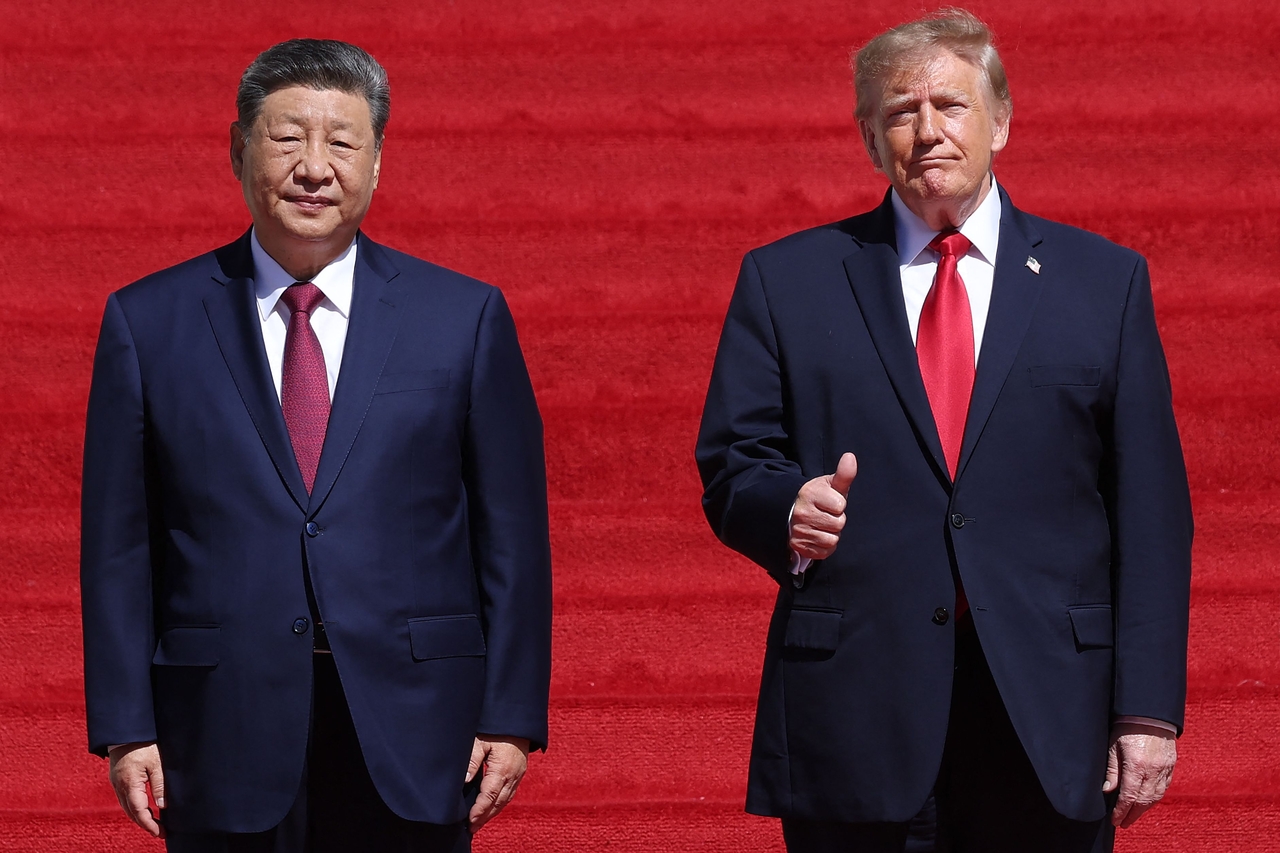
The power gap between the United States and China in Asia has narrowed to its smallest margin on record, driven largely by American policy failures, an Australian think tank has found.
Hong Kong's South China Morning Post cited the Lowy Institute's 2026 Asia Power Index, released Sunday, in reporting the findings. The United States topped the rankings with an overall power score of 78.9 out of 100, while China came second with 73.6. The gap between the two countries was limited to 5.3 points.
That is the smallest margin since the index began in 2018. The United States recorded its lowest-ever score after falling for two consecutive years, while China held roughly steady compared with last year. Researchers Hunter Marston and Jack Sato, who authored the report, said the narrowing "owes more to American missteps than to any significant advances by China."
The researchers said US military capabilities had weakened as the country depleted its long-range missile stockpiles in its ongoing war with Iran, and that perceptions of American diplomatic influence had suffered significantly across Asia and beyond.
China, meanwhile, maintained its overall influence by expanding its diplomatic and cultural reach in the region and pressing ahead with military modernization. The report also noted that Chinese AI models had reached a level of quality comparable to their American rivals.
The gap in military power scores between the two countries also hit a record low this year, at 15.3 points. The United States still held a substantial lead over China in defense spending and long-range maritime capabilities, including ballistic missile submarines, aircraft carriers and amphibious vessels. However, the institute said China held an advantage over the United States in its ability to rapidly deploy large-scale military force in the Pacific.
China's edge in diplomatic influence grew more pronounced. Beijing has ranked first in that category for four consecutive years since 2023, while Washington's score has fallen for four straight years — posting its steepest single-year decline since the index began. The institute pointed to the Trump administration's pursuit of unilateral foreign policy — including imposing steep tariffs on trading partners and intensifying criticism of and sanctions against international organizations — as key factors behind the drop.
In the overall Asia power rankings, India (40.5), Japan (38.6), Russia (32.2), Australia (31.7) and South Korea (31.0) followed the United States and China to round out the top seven. South Korea fell 0.5 points from last year to place seventh, while North Korea ranked 17th with 13.0 points. The Lowy Institute assesses the influence of 27 Asia-Pacific countries and territories using 131 indicators across eight categories, including economic strength, military capability, diplomatic influence and cultural reach.
korean@heraldcorp.com