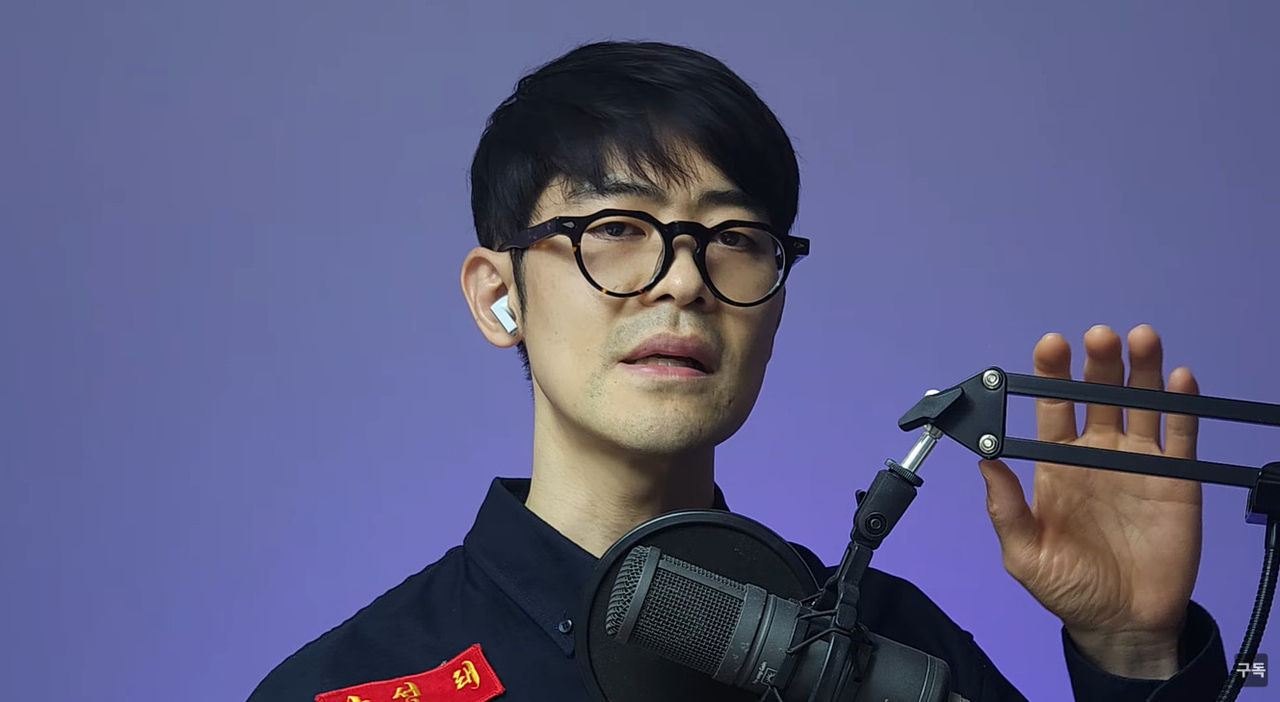
Kang Sung-tae, CEO of Gongsin.com and widely known as the "God of Studying," said the number of students who did not sit this year's College Scholastic Ability Test, or Suneung, was 5,400 higher than expected, and suggested some of them may have planned to cheat using AI before deciding to abandon the attempt.
On Sunday, Kang posted a video to his YouTube channel titled "AI calculated the scale of Suneung cheating — so the Ministry of Education didn't have to."
In the video, Kang said the Suneung no-show rate had been on a steady downward trend in recent years before reversing course this year.
"All of this started when cheating on the tax accountant exam came to light," he said. "If that issue had surfaced after the Suneung was over, we might have seen the highest number of perfect scorers in the test's history."
"The government announced emergency measures the day before the Suneung," Kang said. "For those who had planned to cheat, it must have felt like the sky was falling. A significant number would have had no choice but to give up."
Kang cited data on first-period no-show rates over the past four years to support his analysis. According to the figures, the rate fell each year — from 10.82 percent for the 2023 academic year, to 10.59 percent for 2024, 10.07 percent for 2025, and 9.35 percent for 2026.
Applying a linear regression to that trend, Kang projected the no-show rate for the 2027 academic year would drop further to 8.98 percent. The actual first-period no-show rate this year came in at 9.97 percent — 0.99 percentage points above the projected figure. Converted to headcount, that gap amounts to roughly 5,400 more students sitting out than anticipated.
"If you put 28 students in each exam room, 5,400 people is the equivalent of 190 classrooms sitting completely empty," Kang said.
Kang raised the possibility that the spike in no-shows was linked to the AI cheating controversy that erupted just before the exam and the government's decision to tighten oversight in response.
Kang also addressed the 111 electronic-device violations detected during this year's Suneung. "The people who came in and got caught become a statistic," he said. "The people who didn't come in at all become no-shows."
However, Kang acknowledged that other factors — including cold weather and a rise in the number of students who had already secured early admissions — may also have contributed to the higher no-show rate. The 5,400 figure represents the gap between the projected and actual no-show counts based on historical trends; it does not confirm that those individuals had planned to cheat.
Kang called on the Ministry of Education to conduct a formal investigation. "I hope there is an official probe into why no-shows increased so sharply this year," he said.
choigo@heraldcorp.com