Brazilian research team analyzed bite conditions by stepping on heads, bodies and tails of 116 pit vipers
Newborns bit 2.17 times more often than adults
Team won this year's Ig Nobel Prize in biology — but the paper was retracted last year over ethics concerns
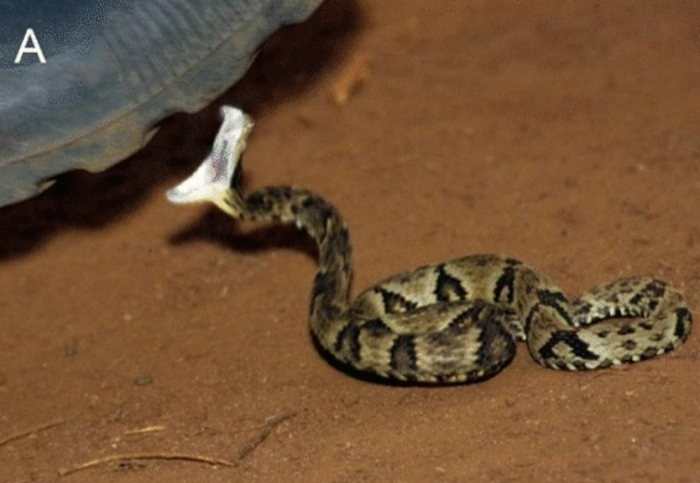
A researcher who deliberately stepped on venomous snakes tens of thousands of times to find out which ones bite people has won this year's Ig Nobel Prize — the award popularly known as the "quirky Nobel."
According to AFP, a research team led by João Miguel Alves-Nunes of Brazil's Butantan Institute received the biology prize at the 36th Ig Nobel Prize ceremony held in Zurich, Switzerland, in September. AFP said the team conducted nearly 40,000 trials on 116 venomous snakes.
The Ig Nobel Prize has been awarded since 1991 by the American humor science magazine Annals of Improbable Research for research that "first makes people laugh, then makes them think."
Taking the stage, Alves-Nunes shouted, "Who would be stupid enough to put their foot in front of a venomous snake?" — then answered his own question: "It was me."
Recreating the accidental step
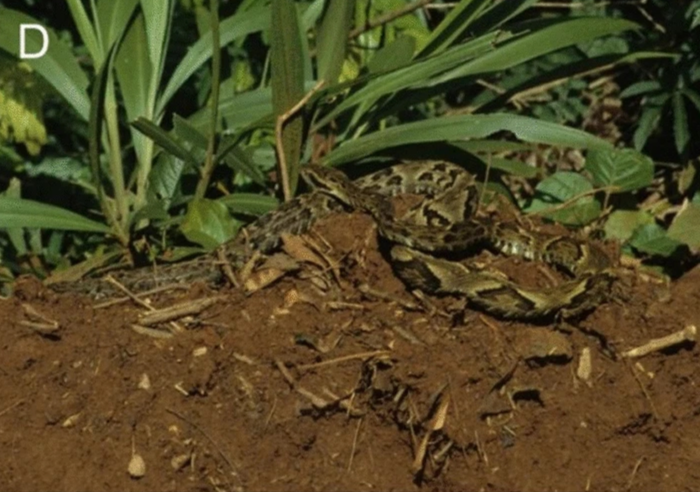
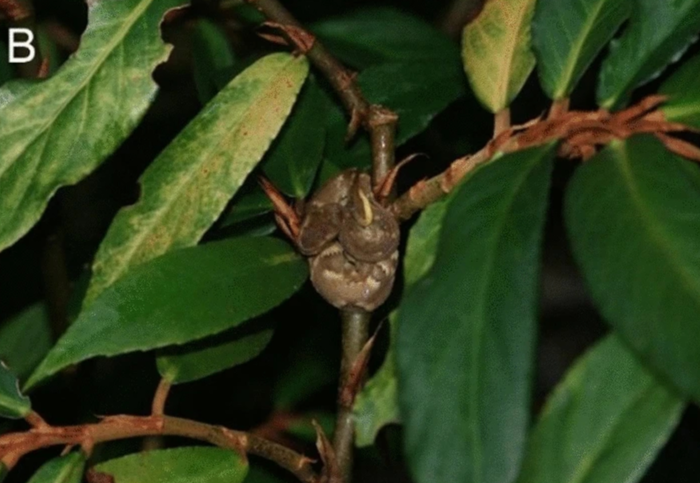
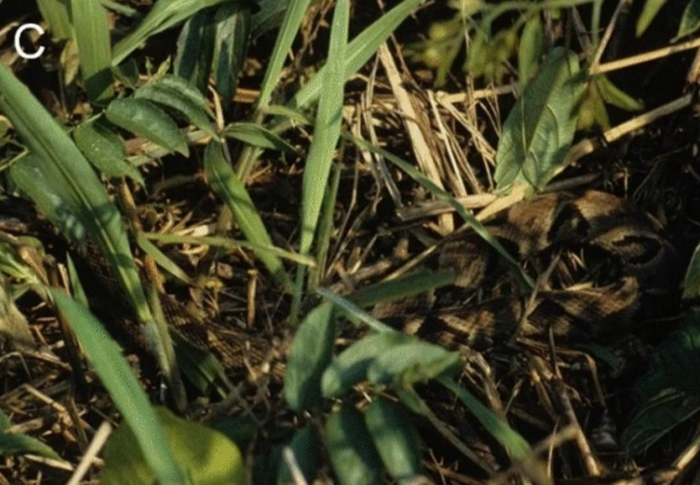
The subject of the experiments was the jararaca (Bothrops jararaca), the most common venomous snake in southeastern Brazil.
According to the paper published in the international journal Scientific Reports in May 2024, the jararaca is responsible for the majority of snakebite incidents in the region and accounts for a significant share of the roughly 20,000 snakebite poisoning cases recorded annually across Brazil.
Snakebite is a more serious problem than many realize. The paper notes that WHO classifies snakebite as a neglected tropical disease requiring priority attention. Research has long focused on venom and antivenom, while studies on when and why snakes bite people have remained scarce.
The research team said that when snakes bite defensively in response to a perceived threat, they tend to inject more venom than when striking prey, which can worsen the severity of poisoning.
The team recreated in a laboratory setting the scenario of a person accidentally stepping on a snake while walking.
According to the paper, the team placed individual jararacas in a 1.5-by-1.35-meter enclosure and, wearing safety boots, lightly stepped on the head, body and tail of each snake 10 times each in random order, with a three-second interval between steps. A separate set of trials involved stepping 5 centimeters away from the snake.
A total of 116 snakes were used: 75 adults, 13 juveniles aged one and a half years, and 29 neonates that were 14 days old. Of these, 25 had been caught in the wild, but showed no significant difference in biting tendency compared with laboratory-born snakes.
In an interview with Science magazine, Alves-Nunes said he "felt 100 percent safe" and that the jararaca's fangs "never once penetrated the boots." He added that during a similar experiment with rattlesnakes, one snake did pierce the boot and bite him. The incident revealed that he was allergic to antivenom, and he subsequently handed the hands-on work to laboratory technicians.
Newborns bit 2.17 times more often
According to the research team, two-week-old neonates were 2.17 times more likely to bite than adults. Among neonates, females bit most readily.
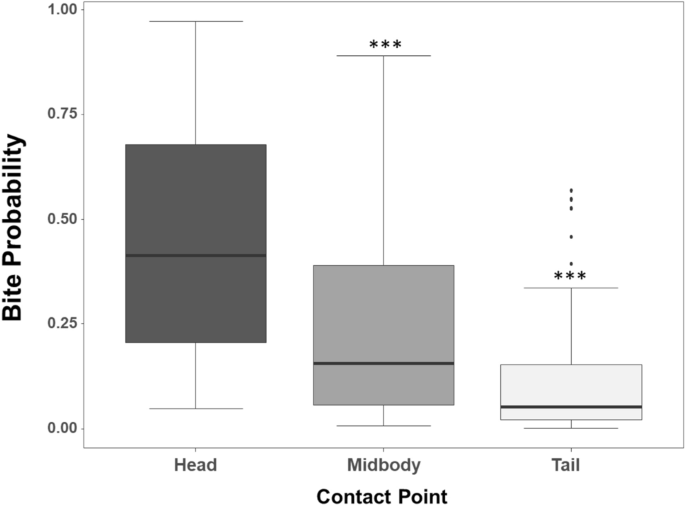
When the head was stepped on, the probability of a bite was about 40 percent. Stepping on the body dropped that figure to 20 percent, and the tail to 11 percent. The team said that stepping on the head or front portion of a smaller jararaca "significantly increases the risk of snakebite." The paper notes that natural predators also frequently target the head or neck when attacking snakes, which may explain why contact near the head triggers a stronger defensive response.
Females bit more readily as their body temperature rose. Males, by contrast, bit less often when warm at night. The team interpreted this as evidence that males — which are more active at night — tend to flee rather than bite when warm.
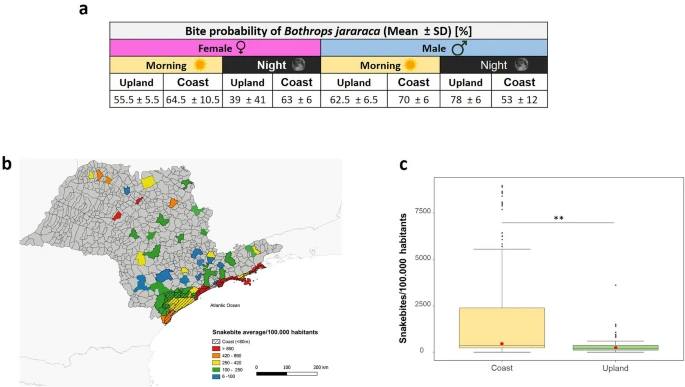
When the team compared their experimental results with actual snakebite statistics from São Paulo state covering 2009 to 2022, the data matched: coastal areas recorded an annual average of 500 snakebite cases per 100,000 rural residents — nearly double the 278 cases recorded inland.
In the paper, the team called on governments and relevant agencies to invest more in research on the ecology and behavior of venomous snakes, arguing that such data could help predict high-risk areas and ensure antivenom is dispatched where it is needed most.
Prize won — but paper retracted
According to Retraction Watch, a publication that monitors research ethics, Scientific Reports retracted the paper in February last year. The stated reason was that the animal experiment ethics approval the team had received "did not include neonatal snakes or the light-stepping method."
According to Retraction Watch, Alves-Nunes said he "believed that both the stepping experiments and the use of neonatal snakes had received approval" and called the retraction decision "excessive."
At the time, when the team applied to add neonatal snakes to the experiments, the ethics committee rejected the request, citing Alves-Nunes' antivenom allergy. When he was removed as the lead experimenter and a colleague was listed in his place, the committee responded with a single word: "Approved."
The team later claimed they had only realized afterward that the approval covered the change of personnel alone — not the neonatal snake experiments.
Alves-Nunes said "the mistake was administrative, not scientific misconduct, plagiarism or experimental error." Butantan Institute also told Retraction Watch that it did not believe the breach of approved protocols was intentional.
The retracted paper went on to win the Ig Nobel Prize in biology a year and a half later.
Reference paper
DOI: 10.1038/s41598-024-59416-6
Alves-Nunes JM, Fellone A, Almeida-Santos SM, et al. Study of defensive behavior of a venomous snake as a new approach to understand snakebite. Sci Rep. 2024;14:10230. (Retracted)
Retraction notice DOI: 10.1038/s41598-025-88686-x
dbsdn1110@heraldcorp.com