
Seoul index up just 0.01%, nearly flat
Decline spreads beyond Gangnam to Yeongdeungpo, Gwangjin
Gunpo, Hwaseong Dongtan, Yongin Giheung lead Gyeonggi gains
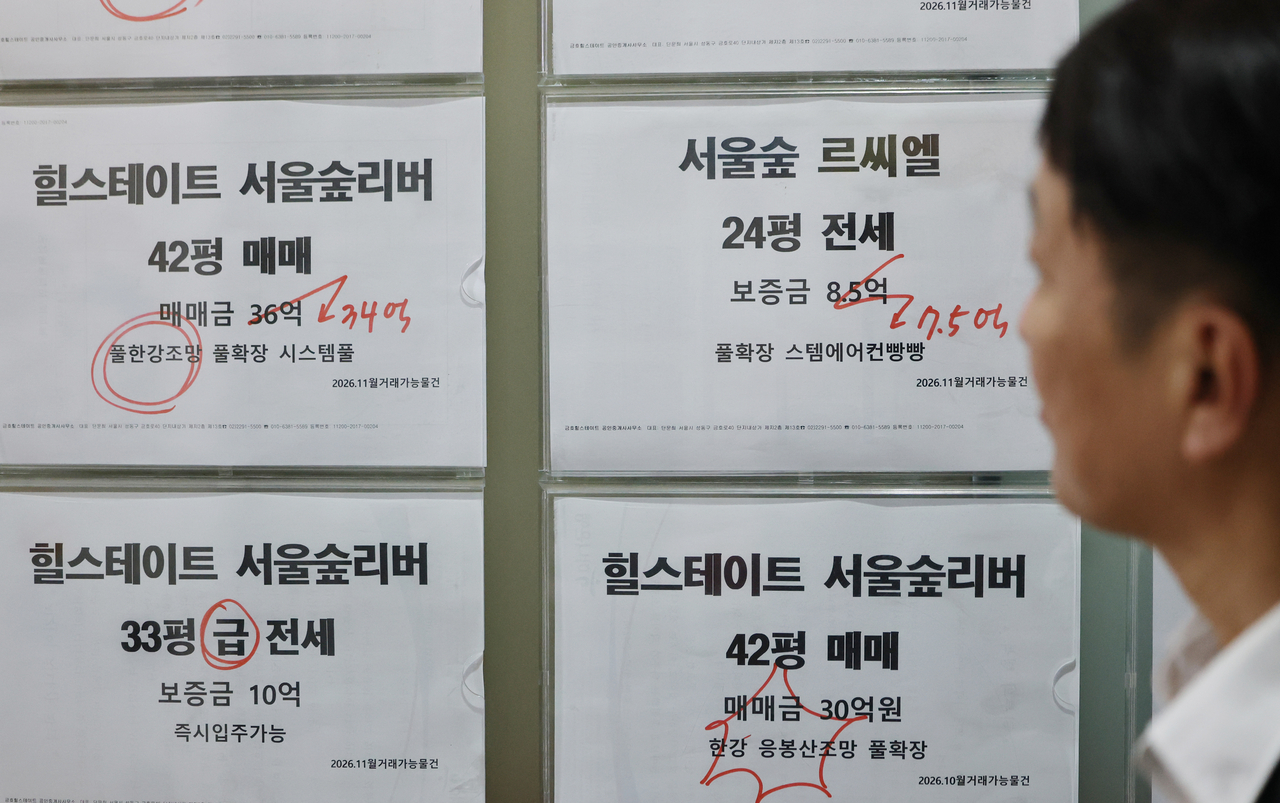
Seoul apartment prices rose for the 94th consecutive week, even as the correction that began in the three Gangnam districts spread further along the Han River belt to Yeongdeungpo and Gwangjin. Gains in outer districts kept the overall index in positive territory. In Gyeonggi Province, the semiconductor belt — anchored by Hwaseong's Dongtan district and Yongin's Giheung district — continued to climb.
According to the Korea Real Estate Board, Seoul's apartment sale price index rose 0.01% in the fourth week of November, based on Monday's figures, extending its winning streak to 94 weeks. The gain narrowed from 0.03% the previous week but remained positive.
Northeast Seoul the only zone to accelerate among five regions
In southeastern Seoul, declines deepened while outer districts drove price gains. The northeastern zone posted a 0.19% rise — the only one of Seoul's five zones to accelerate from the prior week's 0.17%. Seongbuk-gu led all 25 districts with a 0.33% gain, driven by large complexes in Jeongneung and Donam-dong. Nowon-gu rose 0.27%, led by transit-oriented areas in Sanggye and Junggye-dong.
Seodaemun-gu climbed 0.25%, driven by small- and mid-sized units in Hongjae and Hongeun-dong. Geumcheon-gu rose 0.16%, led by Siheung and Doksan-dong, while Gangseo-gu gained 0.15% on small- and mid-sized units in Banghwa and Hwagok-dong. Dobong-gu (0.12%), Geumcheon-gu (0.16%) and Gangseo-gu (0.15%) all recorded their lowest gains in six weeks, and Jungnang-gu's pace of increase slowed sharply from the prior week, down 0.14 percentage points.
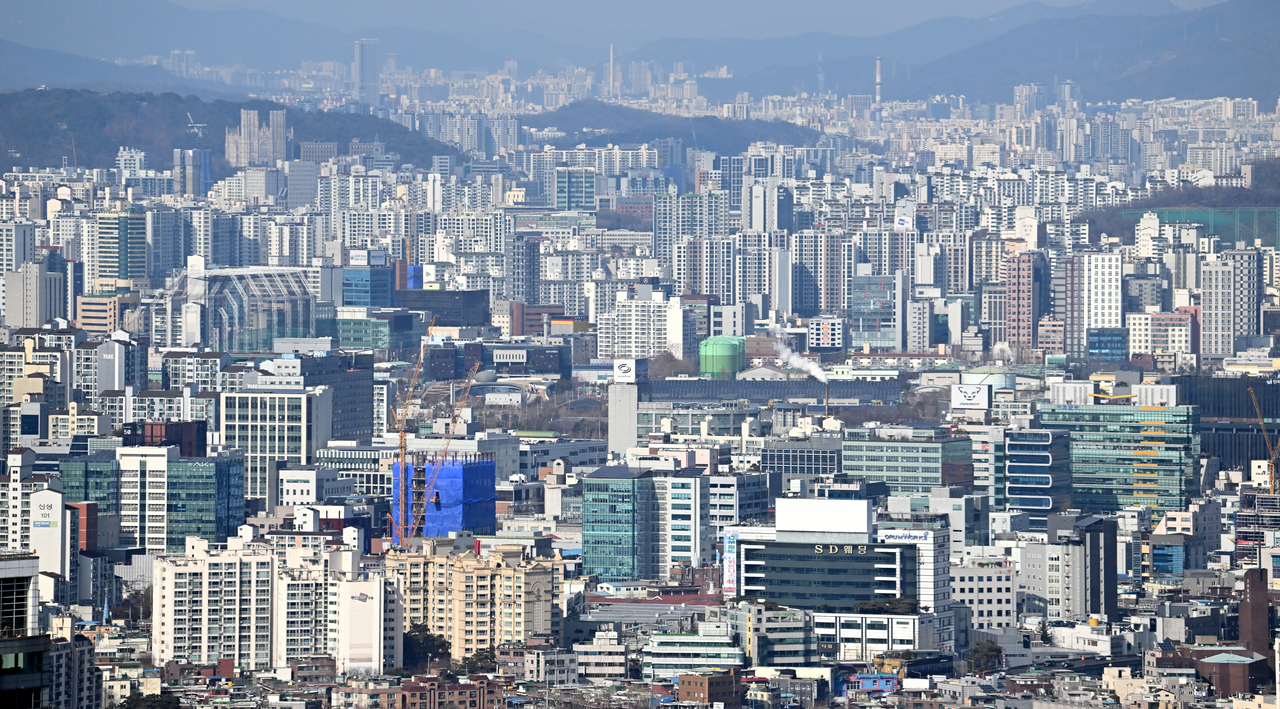
An industry expert said tighter lending regulations and recent stock market volatility had squeezed buyers' purchasing power. "Today's benchmark interest rate hike could dampen buying sentiment further, but demand for homes priced below 1 billion won remains intact — supported by a shortage of jeonse and monthly-rent listings — so a sharp short-term price drop is likely to be limited," the expert said.
In southeastern Seoul, declines widened across Gangnam, Songpa and Gangdong. Songpa-gu, where prices fell mainly at major complexes in Jamsil and Munjeong-dong, deepened its drop to minus 0.50% from minus 0.42% the previous week. Gangnam-gu's decline also widened, to minus 0.34% from minus 0.30%. Gangdong-gu, now in its third consecutive week of decline, slipped to minus 0.03% — slightly steeper than the prior week's minus 0.01%.
Decline spreads to Yeongdeungpo and Gwangjin along Han River belt
Industry observers say a steady flow of distressed listings — concentrated in early-stage reconstruction apartments — has been weighing on prices, as concerns mount over reduced profitability under the reconstruction excess profit recapture scheme.
Nam Hyeok-woo, a real estate researcher at Woori Bank, said last week's wave of distressed sales at reconstruction complexes in Gangnam and Seocho briefly slowed the pace of decline, but prices fell more sharply again this week, suggesting the rebound was short-lived. "With stock market volatility rising and interest rates climbing, additional distressed listings from rental-property owners are expected next year, so a wait-and-see mood among buyers is likely to persist," Nam said.
Experts are watching several factors that could shift the trajectory of Gangnam apartment prices: the possibility that prospective buyers currently renting high-priced jeonse units may switch to purchasing ahead of the "DIH Banpo 124" pre-sale, a deepening shortage of jeonse and monthly-rent listings, and the approach of the peak moving season.
Along the Han River belt, Yeongdeungpo (minus 0.01%) and Gwangjin (minus 0.01%) both turned negative this week. Yongsan fell 0.03%, led by declines in Ichon and Hannam-dong. Mapo's gain slowed to 0.02% from 0.10% two weeks earlier, and Seongdong-gu posted a third consecutive weekly decline at minus 0.04%.
The Korea Real Estate Board said apartment sale prices rose overall in Seoul, with gains concentrated in large complexes and transit-oriented areas offering good living conditions, even as some districts recorded price declines — creating a mixed picture across the city.
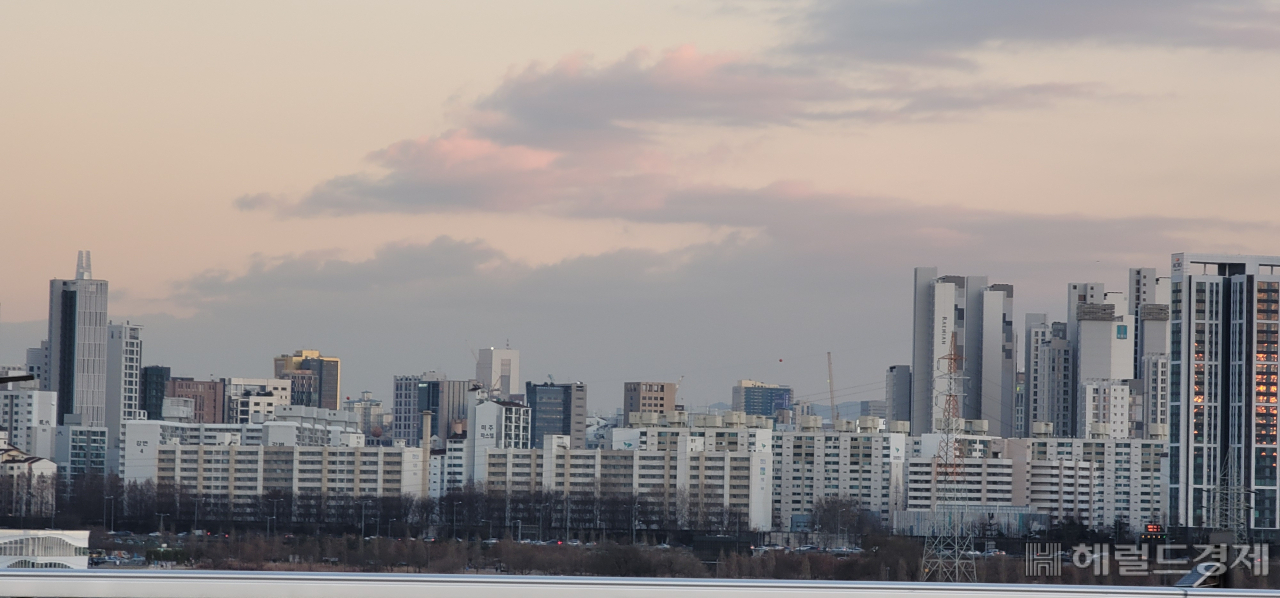
Gyeonggi Province's apartment sale price index rose 0.17%, slowing from 0.21% the prior week. Gunpo (0.52%) was led by large complexes in Sanbon and Geumjeong-dong; Yongin's Giheung district (0.52%) by Junggal and Sanggal-dong; and Hwaseong's Dongtan district (0.50%) by small- and mid-sized units in Bansong and Cheongye-dong. On the downside, Yeoju fell 0.18%, led by Gyo-dong and Ganam-eup, while Icheon dropped 0.17% on small units in Bubal-eup and Jeungpo-dong.
High-priced areas in southern Gyeonggi Province that had overheated on short-term price gains showed relatively modest increases. Seongnam's Sujeong district slowed for a third consecutive week to 0.02% — its lowest reading in six weeks — while Jungwon also hit a six-week low at 0.18%. Suwon's Gwonseon district surged 0.62% last week but retreated to 0.28% this week, a drop of 0.34 percentage points, returning to its earlier level of around 0.26%. Suwon's Yeongtong district also eased, to 0.42% from 0.51%.
Some recovery was visible in Incheon and non-regulated areas of western Gyeonggi Province. Seven of the top 12 districts by week-on-week gain were in Incheon or western Gyeonggi — Bucheon Sosa (plus 0.19 percentage points), Incheon Namdong (plus 0.16 percentage points), Incheon Michuhol (plus 0.09 percentage points), Gimpo (plus 0.07 percentage points), Incheon Geomdan (plus 0.07 percentage points), Siheung (plus 0.05 percentage points) and Incheon Yeongjong (plus 0.05 percentage points).
Seoul's apartment jeonse price index held steady at 0.14%, matching the prior week. The 14 districts north of the Han River (0.19%) continued to outpace the 11 districts to the south (0.09%). Nowon-gu (0.40%) rose on transit-oriented areas in Sanggye and Junggye-dong; Seongbuk-gu (0.27%) on large complexes in Donam and Jeongneung-dong; Dobong-gu (0.20%) on Banghak and Changdong; Mapo-gu (0.16%) on major complexes in Sangam and Ahyeon-dong; and Jungnang-gu (0.15%) on Sinnae and Myeonmok-dong.
Geumcheon-gu (0.29%) gained on large complexes in Siheung and Gasan-dong; Gangseo-gu (0.17%) on Banghwa and Hwagok-dong; Gangnam-gu (0.14%) on Gaepo and Suseo-dong; and Yangcheon-gu (0.11%) on school-district areas in Sinjeong and Mok-dong. Seocho-gu bucked the trend, falling 0.02% on older units in Banpo and Jamwon-dong.
Gyeonggi Province's apartment jeonse price index also held at 0.16%, unchanged from the prior week. Hwaseong's Dongtan district (0.42%) rose on newer units in Sancheok and Yeoul-dong; Gwangmyeong (0.36%) on large complexes in Cheolsan and Haan-dong; Suwon's Yeongtong district (0.35%) on Uiui and Yeongtong-dong; and Guri (0.35%) on older units in Inchang and Gyomun-dong. Icheon fell 0.19%, led by small- and mid-sized units in Changjeon and Jeungpo-dong.
hope@heraldcorp.com





