
35,000 pre-sale, 21,000 rental units — double the five-year average
First pre-sales at Ssangmun, Banghak and Jeomulpo transit-oriented sites
Unsold-unit purchase guarantees extended to regulated private land with no volume cap
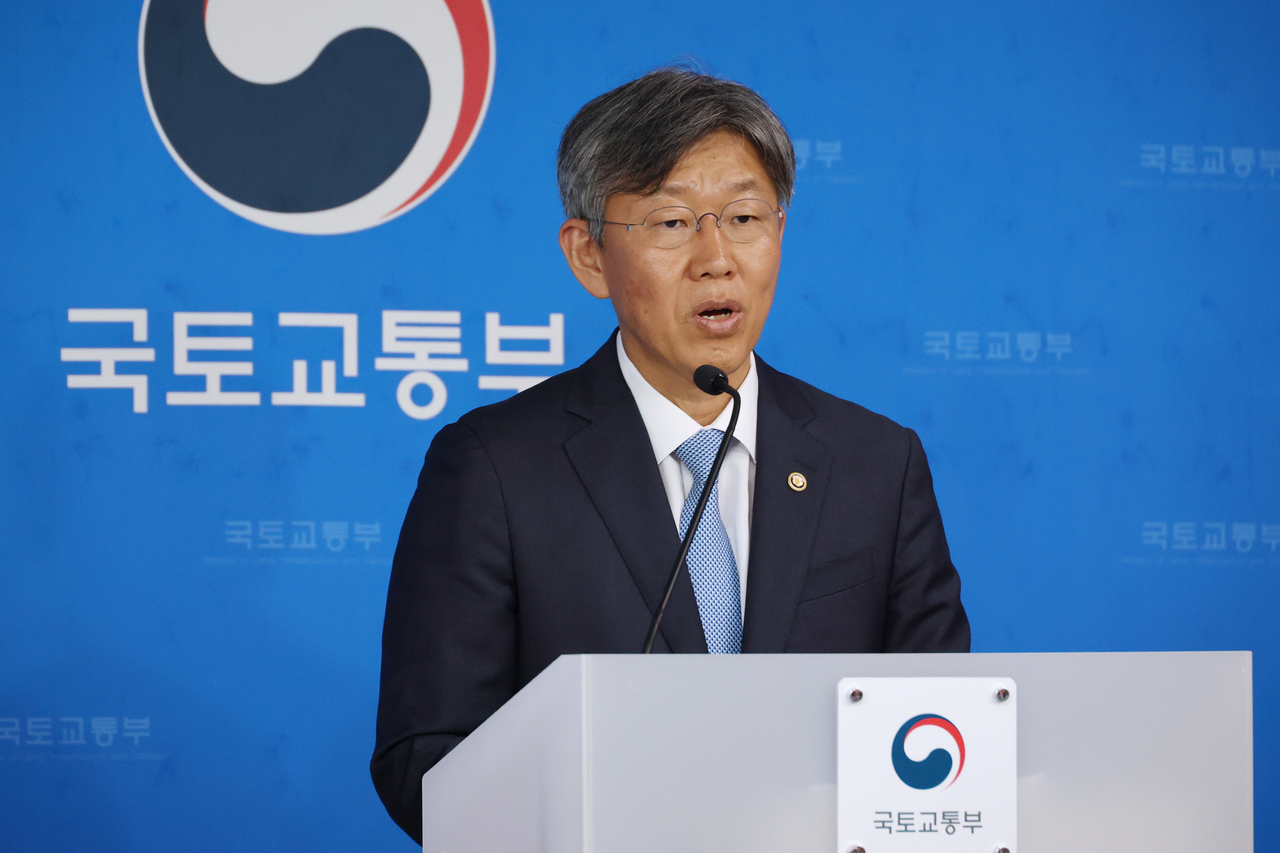
The government plans to recruit applicants for 56,000 public housing units — covering both pre-sale and rental — across the Greater Seoul area next year, roughly double the average annual volume over the past five years. Korea Land and Housing Corporation will also, for the first time, offer purchase guarantees for unsold units on privately held land in regulated zones of the metropolitan area, a measure aimed at encouraging early ground-breaking at private development sites.
The Ministry of Land, Infrastructure and Transport announced the plans Thursday at its fourth regular housing supply briefing, unveiling the 2027 public housing applicant recruitment plan for the Greater Seoul area along with measures to accelerate private supply.
Of the total, 35,000 units are earmarked for public pre-sale and 21,000 for public rental. The figure is double the annual average of 28,000 units recruited over the past five years (2021–2025) and about 44 percent higher than this year's projected figure of 39,000 units.
Public pre-sale units will be distributed across Seoul (3,000 units), Gyeonggi Province (27,000) and Incheon (5,000), concentrated in second- and third-generation new towns and key urban locations. Sites include Namyangju Wangsuk (6,800 units), Suwon Dangsu (3,200), Ansan Jangsang (1,800), Siheung Geomo (1,300), Seongnam Bokjeong (735) and Hwaseong Dongtan (464). Urban public housing complex projects will also see their first pre-sales, with 3,800 units going on offer at transit-oriented sites including Ssangmun Station in Seoul (500 units), Banghak Station in Seoul (300) and Jeomulpo Station in Incheon (3,000).
The government will also expand affordable pre-sale housing for young people and newlywed couples. About 2,700 units of equity-accumulation public housing — a scheme introduced for the first time this year — will be supplied at Namyangju Wangsuk and Suwon Dangsu. A profit-sharing model under which buyers borrow up to 70 percent of the pre-sale price (up to 500 million won, or $372,000) at low interest from the Housing and Urban Fund and split any resale gains with the fund is under consideration for about 1,000 units, pending legislation.
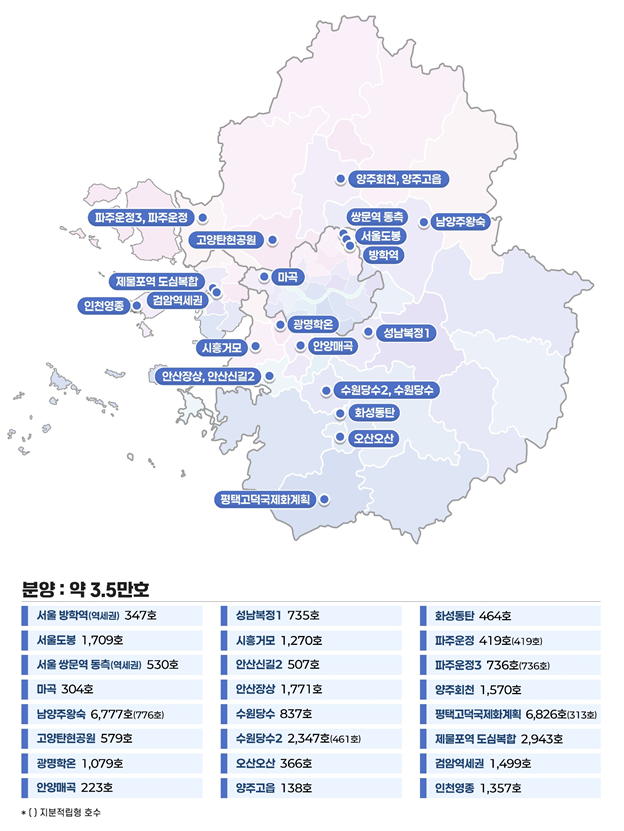
Public rental units will be allocated across Seoul (1,000 units), Gyeonggi Province (17,000) and Incheon (3,000), with supply coming from third-generation new towns such as Namyangju Wangsuk (2,100 units) and Bucheon Daejang (1,100), as well as urban sites including Yeongdeungpo in Seoul (354 units), Gwacheon Juam (406) and Guri Galmaeyeok transit-oriented area (362). The recruitment timeline will also be moved up — from one year before the scheduled move-in date to two and a half years before — allowing early recruitment of 9,000 units in the Greater Seoul area (10,000 nationwide) next year.
Support measures for unsold units will be broadened to stimulate private supply. Purchase guarantees, previously limited to public land supplied by Korea Land and Housing Corporation, will be extended to all public land and private land alike. Under the scheme, the corporation agrees in advance to buy units at a set price if they go unsold at a project site before ground-breaking.
Eligible projects are apartment and row-house developments with an exclusive use area of 30 to 85 square meters on residential land in regulated zones of the Greater Seoul area, and only sites that can break ground by 2028 may apply. Projects that clear the review process will receive guarantees with no cap on volume, and sites that begin construction early in the first half of next year will receive the maximum purchase price benefit. Financial support, including project financing loan incentives, will run alongside the scheme. A project announcement is expected next month.
A program to purchase completed but unsold apartments — previously focused on non-metropolitan areas — will be extended to non-regulated zones within the Greater Seoul area. Purchases will begin next year following a procurement announcement next month, and the acquired units will be offered as public rental housing for low-income households without homes.
Supply procedures will also be streamlined. A simplified strategic environmental impact assessment will be applied for the first time to six new housing sites (77,000 units) announced in October, with district designation expected to be completed around February — just four months after the candidate sites were announced. For 24,000-unit projects led by regional public corporations, the government will seek exemptions from local fiscal investment reviews and feasibility assessments, cutting timelines by more than six months. Korea Land and Housing Corporation will halve the time from project tender to ground-breaking.
"To stabilize the housing market, it is important to give the public confidence that housing will be consistently supplied where they want to live," First Vice Minister of Land, Infrastructure and Transport Kim I-tak said. "We will take full responsibility for monitoring the progress of each project so that the supply measures we have announced translate into real results, not just plans."
hwshin@heraldcorp.com





