
Plays detective Kim Suk in Netflix's 'Blue Roads'
Fourth collaboration with director Han Jun-hee
'A telephoto lens slowly zooming in'
"The good times are the real crisis. Never forget that."
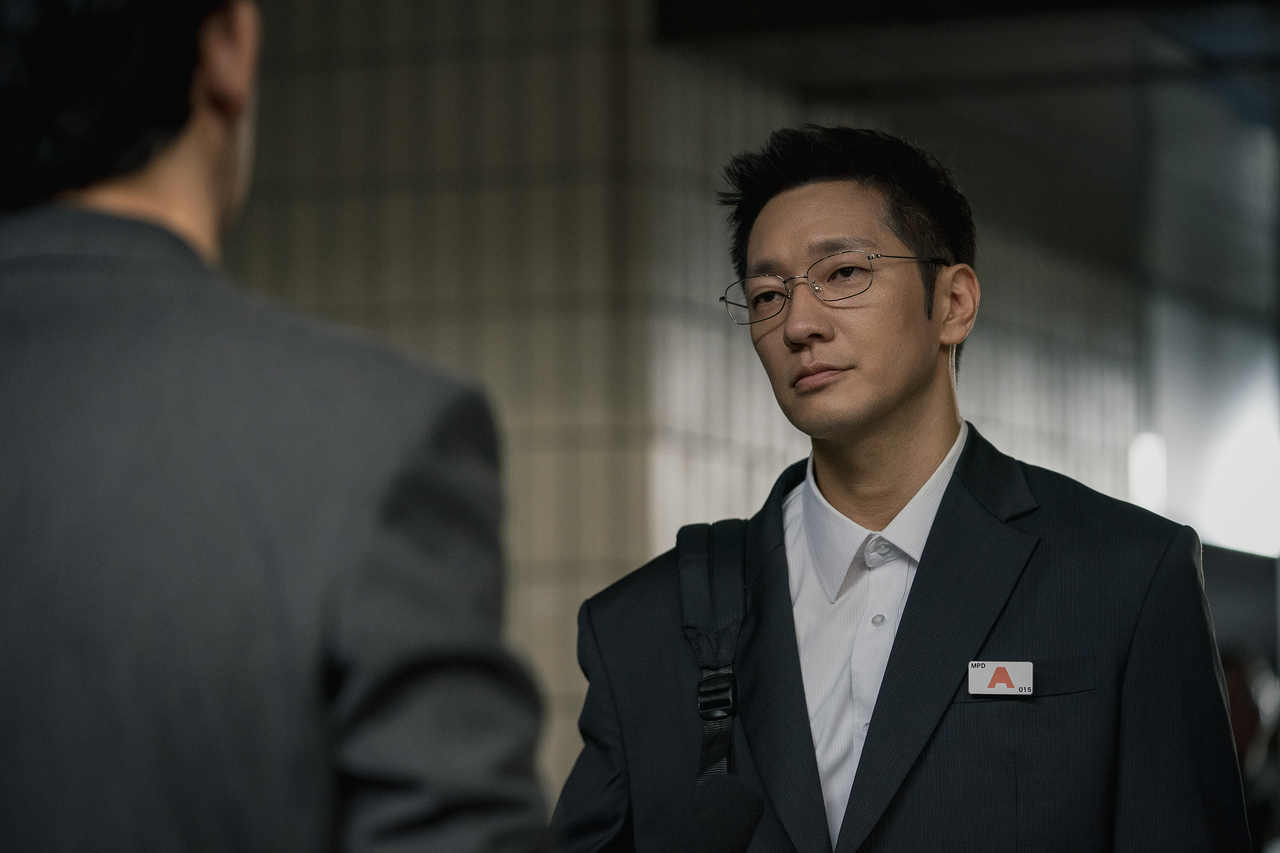
It was advice Son Suk-ku heard from his father from an early age. Son first came to public attention through "Sense8" (2017) and revealed his full range as an actor in "Be Melodramatic" (2019, JTBC). In "D.P.," he brought to life a character torn between institutional loyalty and personal conscience. Then came "My Liberation Notes" (2022), which sparked what fans called the "Mr. Gu craze" and cemented his status as a bona fide star. A face that holds human contradiction and duality proved an irresistible choice for director after director, and for a time Son became the actor everyone wanted.
Yet the actor himself was quietly taking stock, speaking openly about hitting a wall.
Meeting Son at a cafe in Seoul's Samcheong-dong recently, he said he came to "Blue Roads" at precisely the moment he felt he needed to confront the limits of what he had.
Released on Netflix on Friday, "Blue Roads" is directed by Han Jun-hee and sees Son once again step into a detective's shoes. The eight-part crime thriller is based on a Korean-Japanese co-produced manga of the same name by Edogawa Keishi and Kwon Ga-ya.
"Things are going well, and I have no complaints about my career. But I kept asking myself: how long can I keep receiving this many calls from directors? It's not that I've actually reached my limit — I think what matters is declaring that limit yourself. I was at a point where I wanted to try acting after letting that go."
That "declaration" was an act of inner resolve. Son believed that only by naming the limit could he find a reason to push past it. He described himself around that time as feeling like "a sprinter who can't break the 13-second barrier in the 100 meters."

The person Son had in mind to help break through that barrier was director Han Jun-hee. "Blue Roads" marks their fourth collaboration, following "Hit-and-Run Squad" and both seasons of "D.P." Son said, laughing, "A project is a collaboration from start to finish, and finding the right partner is the real skill. I was lucky to meet this director, so I'm holding on tight."
Set in 2002: building a detective through voice, not gesture
At the height of the 2002 Korea-Japan World Cup, a series of grotesquely contorted bodies and cryptic messages begin turning up in Seoul and Tokyo. It is an era of flip-phone text messages and Boa's songs drifting from the entrance of Don Quijote, Japan's sprawling discount variety chain. Into this world steps Detective Kim Suk of the Seoul Metropolitan Police Agency's mobile investigation unit — sharp eyes concealed behind square gold-rimmed glasses, a loose jacket, a sagging belt, and a vaguely retro look that places him firmly in a pre-millennial sensibility.
"Blue Roads" follows detectives from South Korea and Japan as they join forces to track a bizarre series of linked murders spanning both countries, probing historical wounds and twisted human desire in a meditation on justice and what it means to be human. Son plays Korean detective Kim Suk, while Japanese actor Nagayama Eita plays Tokyo Metropolitan Police detective Inose. The series drew 2.3 million views in its first three days and reached No. 7 on Netflix's global top 10 non-English TV chart.
Kim Suk's wardrobe for 2002 reflects ideas from both Son and director Han. "Rather than dressing for the era, we shaped the costume concept around Kim Suk's specific situation," Son explained. "We wanted to capture a feeling like our fathers' generation, and there was also a deliberate reversal of the typical images of Korean and Japanese detectives." He added that he asked for slightly oversized clothes, imagining a backstory in which the character had lost weight from sleepless nights chasing a suspect.
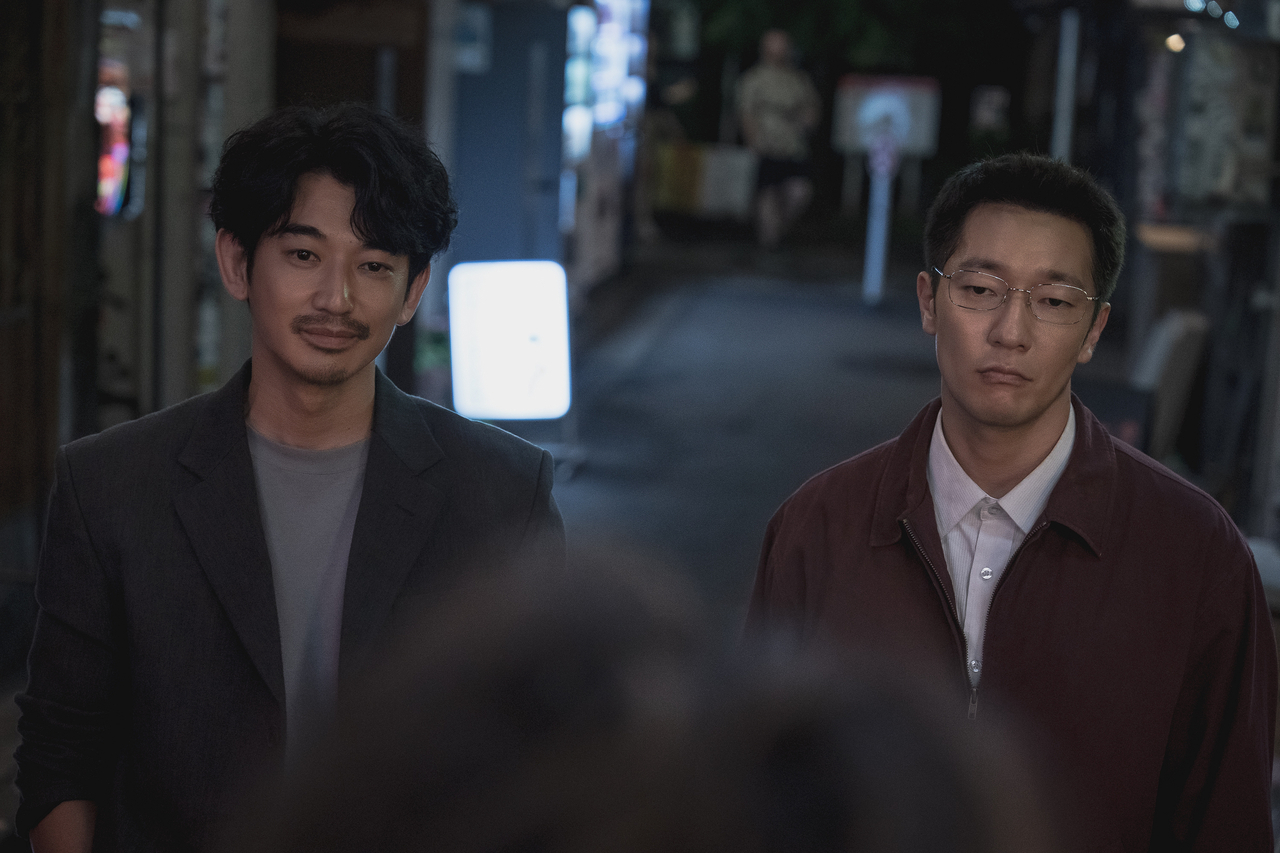
For this role, Son set aside the loose, unhurried performance style that had become his trademark. Director Han asked him for an entirely different face. Where Son had long used the body as an instrument — a slight curl of the lip, an inscrutable glance, small and seemingly trivial movements — Han suggested he try "using the shoulders, neck and hands less, and making the delivery of lines a little more rigid."
The first day of shooting covered a briefing scene and an interrogation room. It was Son's chance to show Han the Kim Suk he had built. Han recalled the moment: "There was a coolness coming off those scenes."
The space left by restrained movement was filled by voice. A flat, affect-free delivery. Eyes stripped of expression and loaded with suspicion. A cadence that builds tension through pauses — these became another face of Son's performance. He drew on the speech patterns of veteran broadcaster Kim Dong-geon, though not as a period-accuracy exercise. It was a choice rooted in the character's history of never quite belonging anywhere.
"Kim Suk grew up in a family — starting with his mother and father — that never fit in anywhere. He's someone who doesn't mix well," Son said. "I figured the more that's true, the stronger his desire to appear as though he belongs." The vocal tone and delivery that drew attention after the series dropped were the product of deep research into the character's upbringing, backstory and the work's larger themes.
"I chose a voice that was more unbending, uncompromising — one that sounds like it doesn't negotiate. I also used the most standard Seoul speech, as if to say, 'I was always one of you here.' Like someone who owns Seoul."
'Lava boiling inside, ice on the surface'
From "Sense8" to "Casino" to "Murderer," Son has played detectives many times over. The same profession, but for this actor, no two characters are ever the same.
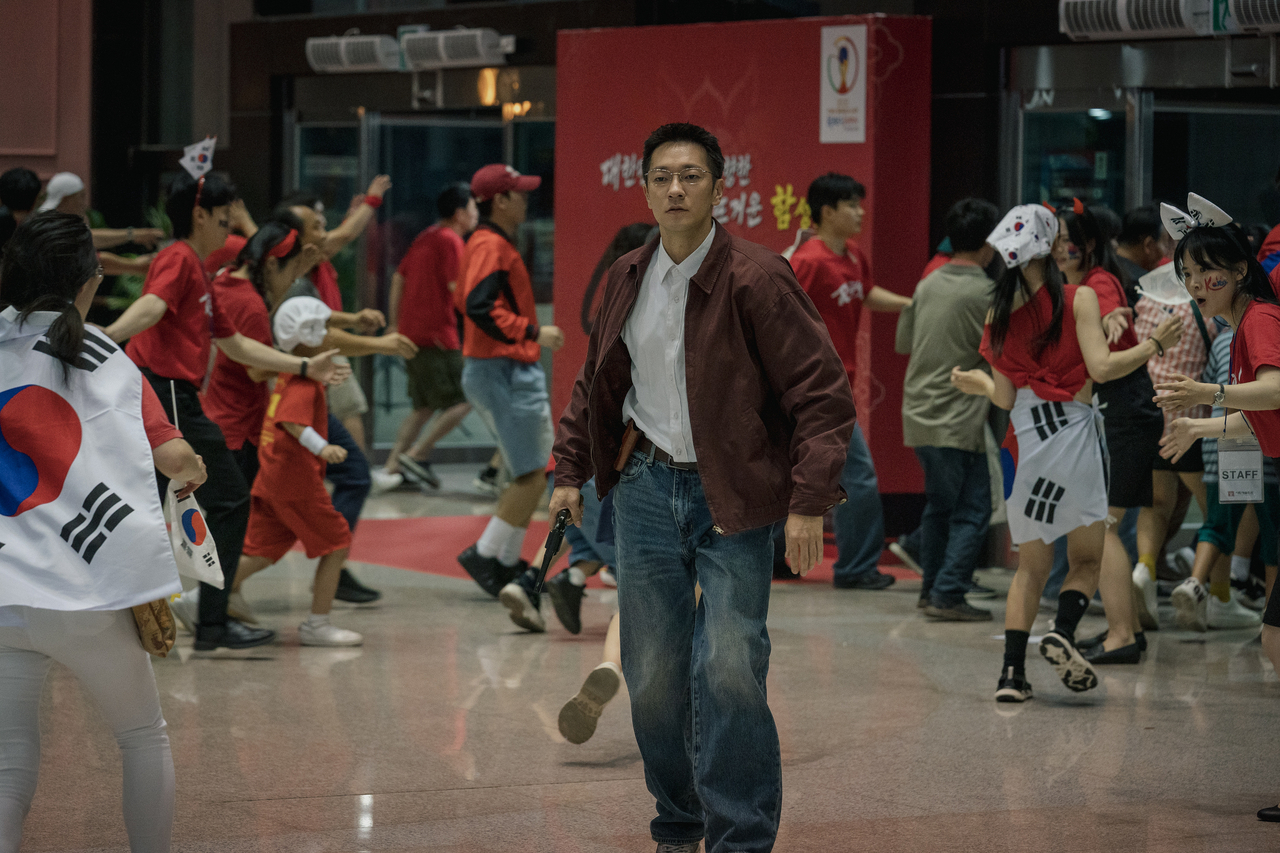
"I don't particularly love or hate this type of role. From where I stand, it's purely luck," he said. "It may have something to do with a certain image I carry, but I have no desire to avoid it. It's not so different from an actor in their 30s playing a character in their 30s." When Son chooses a project, the character's profession is not the first thing he looks at.
"What matters is what this person wants. What kind of goals and intentions do they live by — what drama do they carry inside them? That said, a profession is a major building block of character, so it becomes a useful prompt for thinking about what angle to take this time. I don't think of 'Blue Roads' as a story about catching a criminal. It's the story of a man overcoming himself."
In the early episodes, Kim Suk rarely lets emotion show. He speaks little and keeps his face still. Through the silences, the weight of the years he has carried and the faintest tremors of feeling seep through. A single look carries more layered emotion than a hundred words. Even the detective's instinct — the way he starts calculating the moment he picks up a clue — lives on screen without exaggerated gesture, including in the moments of quiet that give the breathless thriller room to breathe.
One of the series' standout moments comes when Kim Suk watches Detective Inose effortlessly charm a village resident during a joint investigation. The expression that crosses Kim Suk's face — starting from the strangeness of witnessing an unexpected skill, shifting quickly through suspicion and into a flicker of genuine curiosity — is riveting. Without a single line of dialogue, a barely perceptible change in expression makes the audience believe in the character's inner world as he registers an unfamiliar side of his partner.
"Kim Suk is dry overall. But if he's just dry, there's no reason to watch. The character only becomes worth watching when there's lava boiling inside while the surface stays cold."
That, too, was a deliberate choice. Kim Suk is on screen for nearly every moment of all eight episodes. It was precisely this that Son thought hardest about when building the character.
"In basketball, you have a guard who handles the ball a lot, and a center who holds the paint. Kim Suk is the center. If he's running around with the ball doing flashy things, the audience gets worn out. It's the fate of a lead who's on screen constantly — if that character becomes the one delivering all the satisfying moments, it becomes too draining to watch. So the balance I was looking for was someone who holds their ground, almost invisible, but unmistakably present when it counts."
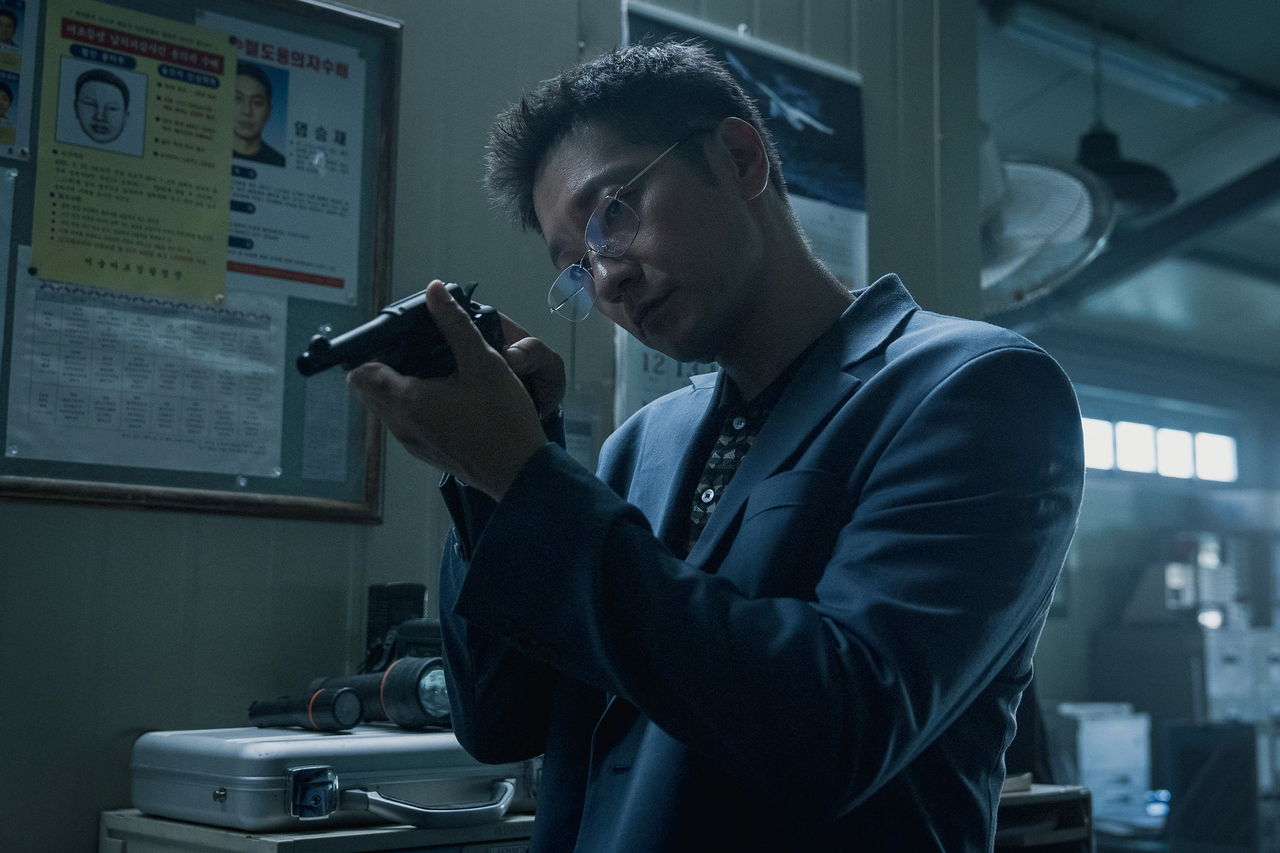
Because the series moves between South Korea and Japan, the actors shift between Korean and Japanese constantly — sometimes within a single line. Son took Japanese lessons before filming and received help from Eita on set. "My original grand plan was not just to memorize lines but to get comfortable enough in basic conversation to suggest line readings to the director in Japanese on set," he said. "My brain simply couldn't manage it, so I went the brute-force route and just drilled the lines." There was no shortcut. He would run through them until he fell asleep, then recite them again first thing in the morning, "before the brain is fully awake." If the words flowed without a hitch at home, he trusted they would on set too. "If it didn't work, I'd go back to the beginning and do it again. And again."
His Japanese performance was also shaped around Kim Suk's character. Son trimmed lines where he could, opting to speak "as economically as possible." He decided that "not cutting content, but speaking efficiently without excess — that suited Detective Kim Suk."
The meticulously constructed facade of the unshakeable detective begins to crack midway through the series. That is where Son locates what makes Kim Suk distinctive. The character's defenses have already crumbled, and the story shifts into an entirely different register. Bridging a character's transformation and fall without making it feel abrupt was, by far, the actor's responsibility.
"Everyone walking around Samcheong-dong has their own burning history, but from a distance they're just passersby. The closer the camera zooms in, the more you learn of a person's story — until you reach the moment they finally explode. I thought of it as a telephoto lens slowly pulling in on Kim Suk from episode one through eight."
Director Han described Son as "a live, courageous actor who prepares far more meticulously than you'd expect. He arrives with everything absorbed into his body, then rides the energy of the set." Han also called him "a surfer of an actor," and added that he felt he had "barely scratched the surface of what Son Suk-ku has to offer," already looking ahead to their next project together.
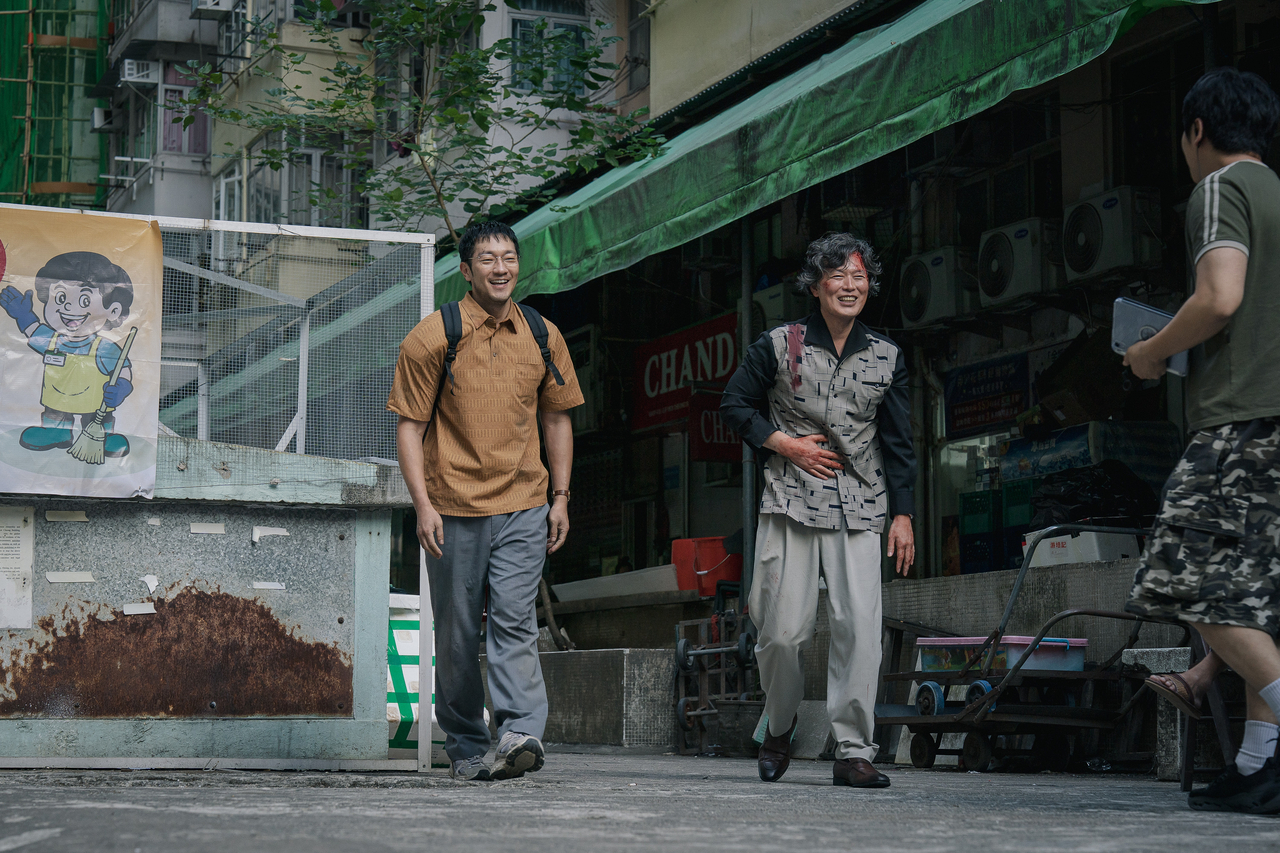
'I have to build the wall myself'
"If you look at it coldly, we're in a content boom and it feels like the good times will keep rolling — but I genuinely think it could be shorter than people expect. Even if it isn't, I think you have to believe it might be."
For all the talk of a golden age of Korean content, Son is not one to simply enjoy the ride. "I'm deeply grateful for the opportunities I have right now," he said, "but I think you have to stay aware that they could disappear."
Son's ambition is to be someone who acts for a long time. Working alongside Eita on "Blue Roads" gave him both inspiration and a sense of kinship. "Eita isn't someone who has just been acting," Son said. "He's someone who endlessly pursues the mastery of a craftsman — the kind you reach by putting 10,000 hours into a single calling." Son said he, too, aspires to be a quiet, dedicated practitioner of the craft, walking a single path without fanfare.
That makes the sense of urgency he feels as an actor all the sharper. Film, once the hottest cultural product around, has entered what he calls "an era where it's almost embarrassing to say that anymore." Unless audiences are given a clear reason to come to a cinema, he said, "there's no shortage of other entertainment to fill that space." Investors and audiences alike need to be persuaded, and "showing that film is still a vital cultural product requires bolder risks." He said he wants to take on new faces and new projects himself, and help open up different paths.
Son sees where he is now as the second act of his life as an actor. Where the first act was about "carving out a place for myself," he is now looking in a different direction.
"This is not an easy industry to survive in. I worked hard to get here, so the second act is about not settling — about taking on challenges. Whether the reviews are good or bad, I want to be known as an actor who appears in work that didn't exist before. When I feel myself getting comfortable, I want to build a wall and leap over it. I want to be someone who gets there one step ahead of the audience — and even if it feels unfamiliar right now, can say, 'Let's try going this way.'"
shee@heraldcorp.com





