Over 8,400 fake posts made using 800-plus stolen accounts
40,000 won per review, 5 million won a month for top search placement
Operators staggered comment timing to avoid detection
"Here's my one-month post-op photo." "I'm especially happy with my jawline." "I was amazed comparing before and after my closed rhinoplasty." "OO Plastic Surgery was the only clinic where the doctor explained everything in detail."
A large number of reviews flooding online plastic surgery communities turned out to be fabricated. Genuine and fake reviews were cleverly mixed together, and some posts even included before-and-after photos staged by people who had never undergone surgery. Police arrested dozens of people connected to plastic surgery clinics and advertising agencies who had been luring customers with fake reviews.
The Seoul Metropolitan Police Agency's Cyber Investigation Division announced Thursday that it had arrested and referred to prosecutors 52 people — including the head of a Gangnam-based plastic surgery clinic and employees of advertising agencies — on charges of violating the Medical Service Act and the Act on Promotion of Information and Communications Network Utilization and Information Protection. The suspects had used portal accounts purchased from a Chinese hacking organization under other people's names to post fake reviews and collect illicit profits.
Two members of the hacking account sales organization were detained and referred to prosecutors on Oct. 1.
According to police, the suspects are accused of using more than 800 portal accounts purchased from a Chinese hacking group — registered under other people's identities — to post more than 8,400 fake reviews and comments on popular portal cafe sites and beauty and medical information platforms between August 2021 and last July.
The clinic also set up its own advertising agency to promote itself, hiring dozens of employees to write fake reviews and comments while also managing outside advertising firms. In the process, the clinic used patient information and photos from its own surgeries — without consent — to craft the fraudulent posts.
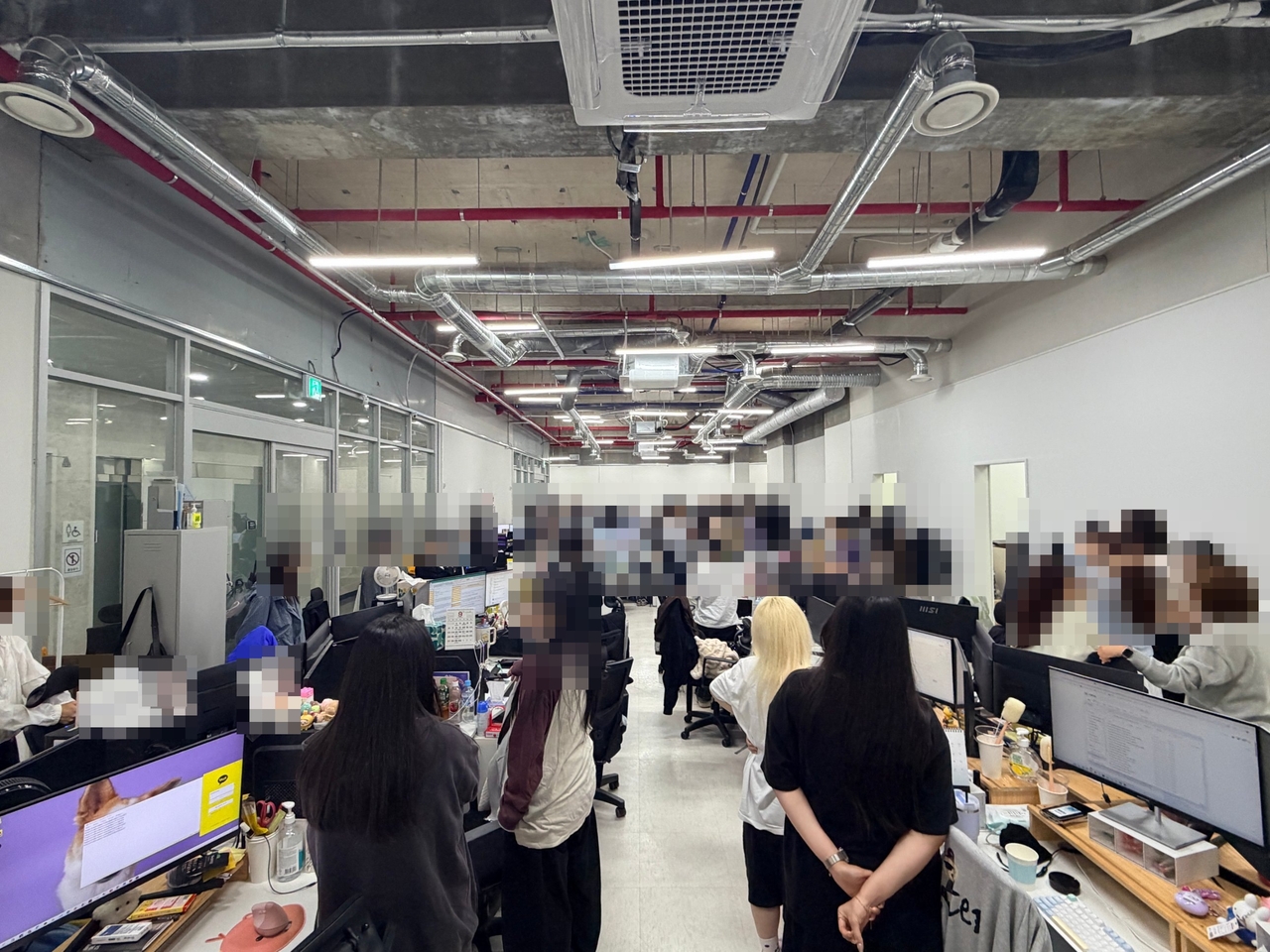
Each type of fraudulent activity carried its own price tag. Advertising agencies charged 40,000 won ($30) per fake review post, 500,000 won per 100 comments, and around 5 million won per month for top search placement services.
Police found that the plastic surgery clinic would pass patient surgery information and photos to the advertising agency, which would then write fake reviews based on that material and report back on the results. When problems arose — such as comments being deleted — the agency provided follow-up management as well.
The fake review posts were accompanied by comments crafted to sound like real patient experiences, such as "Go in person and get a consultation" and "It hurts at first, but it gets better later," designed to generate word of mouth.
Efforts were also made to turn fake posts into popular content. A feature known as "Comment TOP" — used by major plastic surgery online communities to surface popular posts — highlights the most-commented posts from the past week, and the suspects exploited this mechanism to push their fabricated content to the top.
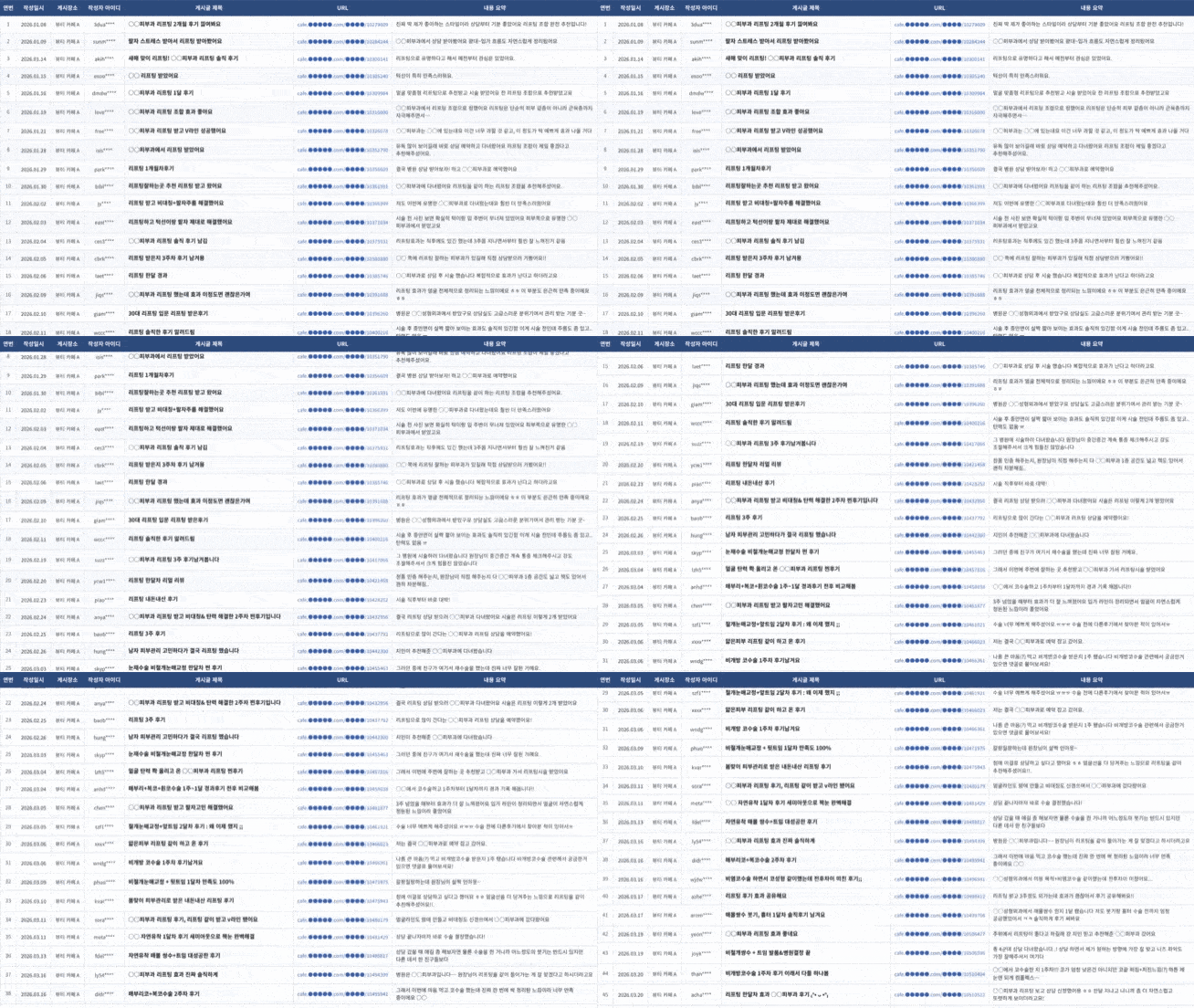
The advertising agency used 50 different stolen accounts to post comments on review articles forwarded by the clinic's promotions team. It then recorded the number of comments posted, the date and time each post entered the top rankings, and the peak exposure position, and reported all of this back to the clinic.
A group chat shared between the clinic's promotions team and the advertising agency contained a message reading: "Please space out the comment work over time. Doing too much in a short period makes it obvious." The operators coordinated even the timing of comments to prevent consumers from detecting the fraud.
The advertising agency also resold hacked accounts. It purchased portal accounts registered under other people's names from the Chinese hacking group for around 30,000 won each, then resold some of them to the clinic's in-house advertising arm for around 50,000 won. Non-real-name accounts were purchased for around 10,000 won each.
Police launched the investigation in December last year after discovering, while probing a portal account hacking case, that fake plastic surgery reviews had been posted using a victim's account.
The hacking organization, based in Qingdao, China, sold portal accounts registered under other people's names via Telegram. The advertising agency purchased accounts registered primarily under women's names.
Police traced financial transactions to identify and arrest two Chinese nationals who had transferred account sale proceeds to the hacking organization, and both were detained. Police plan to request an Interpol red notice for the ringleader of the account sales operation.
Police have requested that portal sites delete the fake review posts identified during the investigation, and said they plan to expand the probe to additional advertising clients and agencies uncovered in the process.
"Fake reviews distort patients' choices of medical institutions and create demand for account theft and trafficking, fueling the crimes of hacking organizations — making this a serious offense," a police official said. "Yet it has become so widespread that it is treated almost as standard practice, and greater public awareness is needed."
kido@heraldcorp.com