Interview with Si Jin-guk, managing attorney at Hwang & Partners, who represented SK Shipping in its damages suit against Korea Gas Corporation
Seoul High Court's appellate ruling nearly doubles the first-instance award to 220.4 billion won
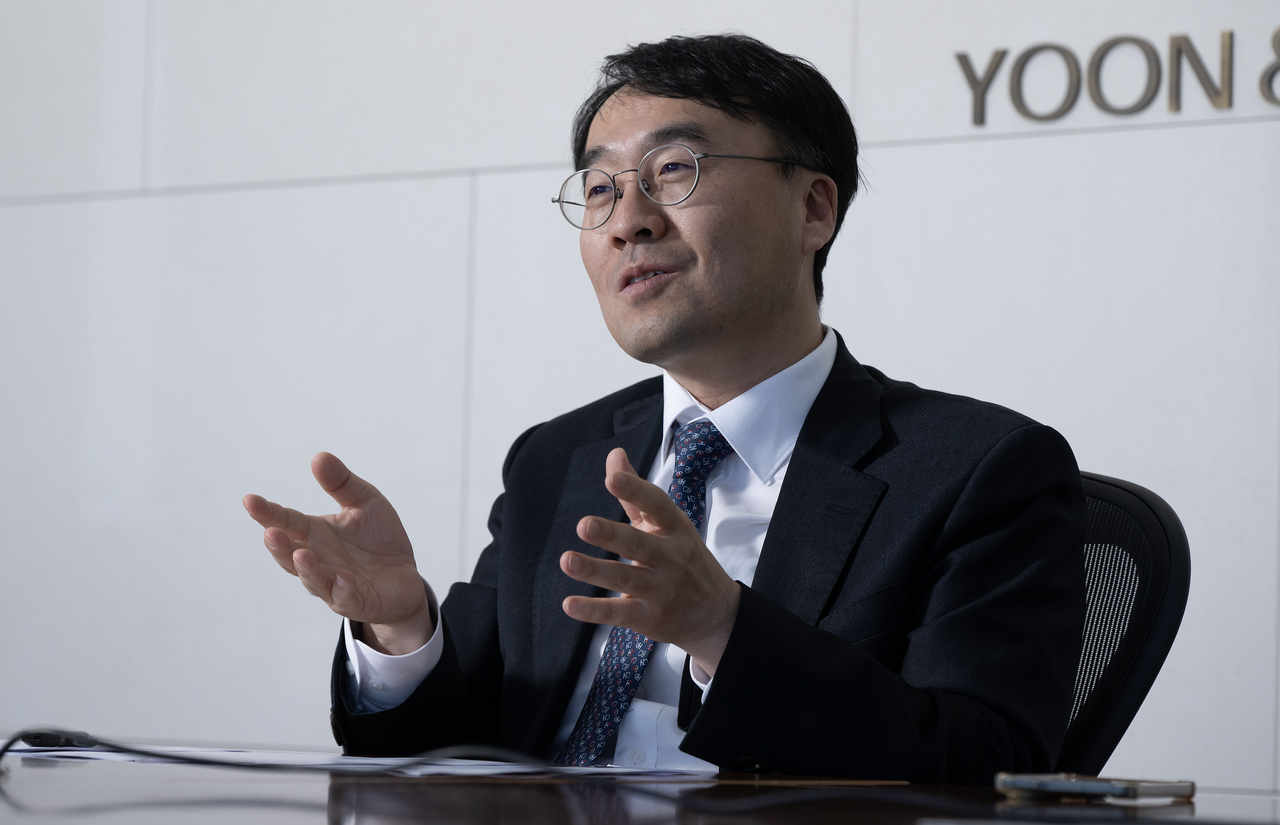
South Korea holds the world's largest record for building liquefied natural gas carriers, yet the country's shipbuilding industry still lacks its own LNG cargo containment technology. As a result, Korean shipbuilders pay royalties equivalent to 4 to 5 percent of a vessel's price to French firm GTT for the use of its containment systems. Developing a homegrown alternative has long been considered a critical industry goal.
A defect that emerged during that localization effort has since triggered a legal battle running into the hundreds of billions of won. The dispute traces back to 2018, when problems arose during the trial operation of a vessel fitted with KC-1 — a Korean-developed LNG cargo containment system created and supplied by Korea Gas Corporation. SK Shipping, now known as KL LNG, and Korea Gas Corporation have been locked in litigation since 2019 over liability for the resulting damages. The Seoul High Court's Civil Division 37-1, presided over by judges Kim Jong-gi, Min Jeong-seok and Park Eun-young, ruled in SK Shipping's favor on Nov. 11.
Si Jin-guk, managing attorney at Hwang & Partners, represented SK Shipping from the first instance through the appeal, ultimately securing a victory against Korea Gas Corporation. The first-instance court ruled in 2023 that Korea Gas Corporation must pay SK Shipping approximately 115.4 billion won ($85.9 million). The appellate court recognized additional damages and ordered payment of approximately 220.4 billion won — nearly double the original award — after SK Shipping expanded its claim during the appeal.
Si sat down with The Herald Business at the Hwang & Partners office in Gangnam-gu, Seoul, on Tuesday. "This decision carries major legal weight because it confirms that even in large-scale technology development projects or state-led initiatives involving multiple parties and overlapping contracts, legal responsibility must be assigned based on who actually led the technology development, delivery and risk management — not on the formal contract structure," Si said.
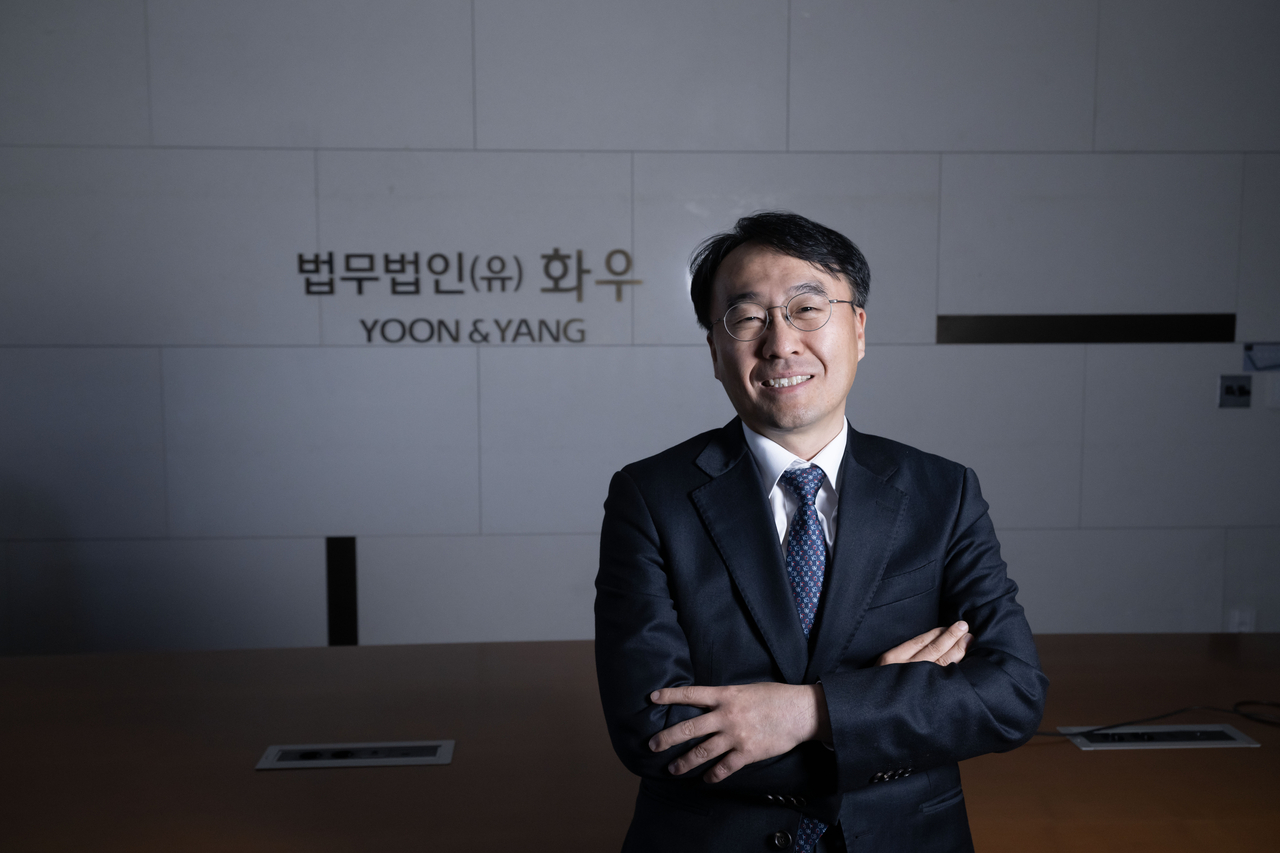
Q: This case arose from the effort to localize LNG cargo containment technology. Can you walk us through what happened?
The KC-1 localization project was structured as a multi-party arrangement: Korea Gas Corporation developed and supplied the technology and commissioned the work, Samsung Heavy Industries applied that technology to build the vessel, and SK Shipping operated it. Shortly after the ship was delivered in 2018, defects emerged — including so-called "cold spots," where the hull temperature dropped below permissible limits — rendering the vessel inoperable. That triggered domestic and international disputes over who bore responsibility for the resulting losses.
Three separate legal proceedings followed. SK Shipping sued Korea Gas Corporation for damages, alleging design defects in the cargo containment system. Korea Gas Corporation countersued SK Shipping, claiming liability for the failure to commence and the subsequent suspension of vessel operations. Samsung Heavy Industries separately filed claims against KC-LNG Tech — a joint venture related to KC-1 — and Korea Gas Corporation, seeking recovery of repair costs and related expenses.
Q: The appellate ruling came roughly seven years after the initial filing. What are your thoughts?
The court clearly affirmed that being a new technology does not exempt a developer from the obligation to ensure basic safety. If a developer foresees the risks a new technology may bring and fails to take measures to prevent them, that developer must bear tort liability. I find it deeply meaningful to have contributed to the substantive restoration of our client's rights after years of being unable to operate the vessel and suffering significant losses.
Q: The damages recognized on appeal were substantially higher than at first instance. What specifically did the court accept?
The original claim at first instance was approximately 115.4 billion won, but as the vessel remained inoperable and losses continued to accumulate, SK Shipping significantly raised its claim to 220.4 billion won to reflect the additional damages. Two strategic approaches proved decisive in persuading the appellate court to accept the full expanded claim along with delay damages. First, we categorized the long-accumulated losses by item, systematically organized the timing of each loss and the underlying expenditure records, and concretely established the causal link between the defects and the damages. Second, we made a compelling argument that SK Shipping had no involvement whatsoever in the technology development or cargo containment design and therefore bore no fault.
The appellate court rejected Korea Gas Corporation's argument that the defects resulted from construction negligence by the shipbuilder and recognized the full amount of the expanded damages. The fact that the claim was not reduced at all — in a case worth hundreds of billions of won against a public enterprise — reflects the court's complete acceptance of our arguments, and that is significant.
Q: The litigation spanned a considerable length of time. What were the greatest challenges?
Explaining highly complex engineering and technical issues in a way the court could intuitively grasp was the hardest part. From the first instance onward, we included patent attorneys from Hwang & Partners' patent practice in the team and conducted extensive study sessions with SK Shipping's technical specialists to build a thorough understanding of the technical issues. During the appeal, we consulted multiple external experts to sharpen our arguments on those points. Korea Gas Corporation argued on appeal that the cause lay in construction defects by Samsung Heavy Industries, but we rebutted that argument in detail, and the court's written ruling sets out our rebuttal reasoning and expressly rejects the claim.
Q: A further appeal to the Supreme Court cannot be ruled out. How are you preparing?
Given the nature of Supreme Court review as a review of law rather than fact, we plan to focus our efforts on defending the validity of the appellate ruling on every front — demonstrating that a duty of care giving rise to tort liability attaches to the technology developer and controlling party on the basis of the facts and technical findings lawfully established by the lower court, and that internal apportionment of responsibility among joint tortfeasors cannot be used to limit the victim's recovery.
Q: The legal industry is facing sweeping change in the AI era. There are growing concerns about AI cheating on the Legal Education Eligibility Test, which has undermined confidence in the exam. How do you see this?
The string of AI-related cheating incidents in various nationally certified examinations is a stark reminder of the harm that can result from the misuse of advanced technology. Legal professionals, whose work is grounded in fairness and trust, are held to a stricter standard when it comes to the use of AI. I believe a law firm's competitiveness in the AI era depends not only on the swift adoption of AI tools, but equally on maintaining the unwavering trust of clients and society — in the processes by which those tools are used and in how the results are applied.
bell@heraldcorp.com