
Top honor goes to fewer than 0.1% of IEEE members annually
Recognized for leadership in commercializing 3D TSV-based HBM
Joined SK hynix in 2018; helped bring MR-MUF to market
Now leading next-generation hybrid bonding packaging technology
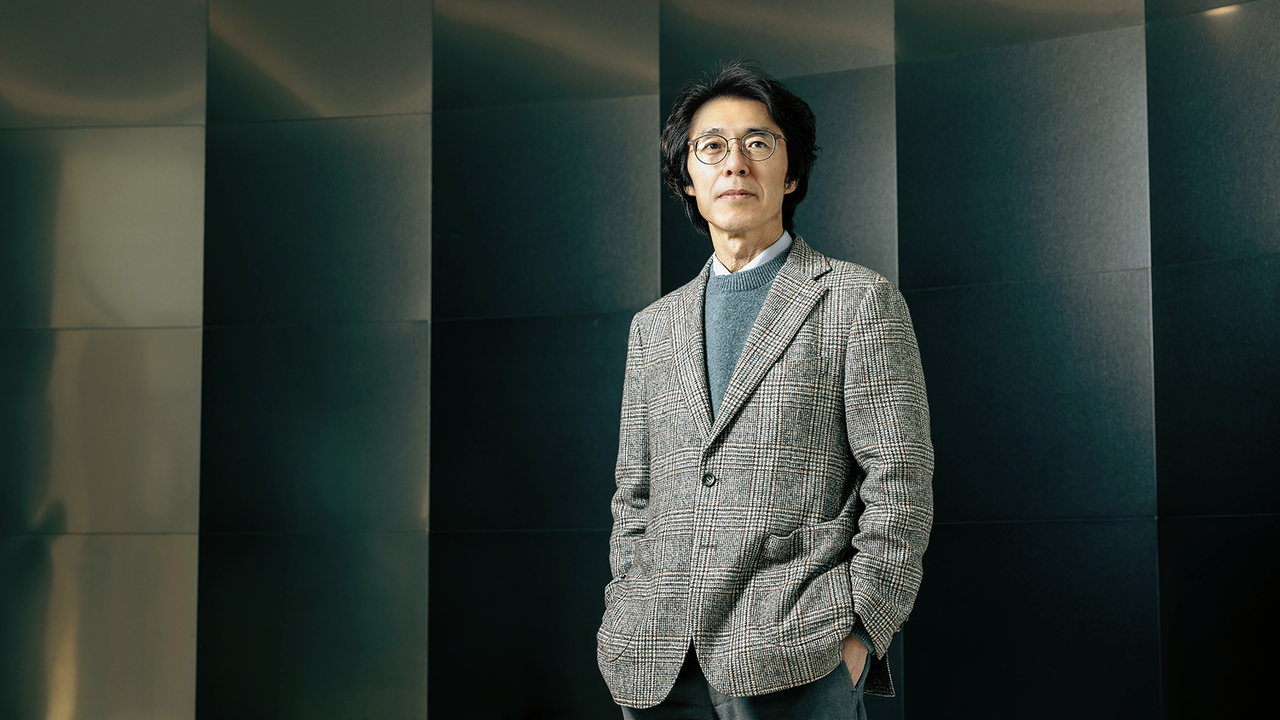
Lee Kang-wook, SK hynix's executive vice president for packaging development, has been named a fellow of the Institute of Electrical and Electronics Engineers. Lee is a packaging specialist who led the development of high-bandwidth memory.
Lee announced the honor on his SNS account. "I am truly honored to share the news that I have been selected as a 2027 IEEE Fellow upon the recommendation of the IEEE Electronics Packaging Society," he wrote.
Lee was recognized for his leadership and technological innovation in commercializing 3D through-silicon via-based HBM.
The IEEE is the world's largest professional organization in electrical engineering, electronics, computer science and communications, with more than 500,000 members in over 190 countries.
The IEEE Fellow grade is awarded to no more than 0.1 percent of the membership each year and is reserved for those whose academic or technical achievements have been formally recognized.
"I am proud and delighted that my doctoral research laid the technical groundwork for 3D TSV-based stacked memory chips, and that I was able to successfully commercialize TSV and MR-MUF — Mass Reflow Molded Underfill — technology in industry to realize HBM production," Lee said.
MR-MUF is a process in which a liquid protective material is injected into the gaps between stacked semiconductor chips and then cured to shield the circuitry. It is considered more efficient and more effective at dissipating heat than the conventional method of laying down a film-type material each time a chip is added to the stack.
Lee earned his doctorate from Tohoku University in Japan in 2000, then worked as a postdoctoral researcher at Rensselaer Polytechnic Institute in the United States and as a professor at Tohoku University before joining SK hynix in 2018.
Lee is credited with achieving the first successful development of TSV technology in South Korea. After joining the company, he applied MR-MUF technology to the third-generation HBM2E, laying the foundation for commercializing AI memory chips.
Lee is currently spearheading efforts to advance packaging technology and secure chiplet-based heterogeneous integration capabilities in preparation for future market demands.
In an interview with the SK hynix Newsroom earlier this year, Lee said continuous innovation in HBM packaging technology is essential to meet the demands of AI systems for greater capacity, higher performance and improved energy efficiency. "To that end, we are channeling our efforts into advancing MR-MUF technology and developing next-generation technologies such as hybrid bonding," he said.
In February, Lee received the eighth Kang Dae-won Award in the device and process category at the 32nd Korean Conference on Semiconductors. The award was established to honor Kang Dae-won, a semiconductor pioneer who left a landmark legacy in South Korea's semiconductor industry. While the prize has historically gone to academics, this year marked the first time it was presented to someone from the private sector in the device and process category.
jeongwan@heraldcorp.com





