- Links data and functions across systems without rebuilding existing infrastructure
- Supports AI predictive analytics and hybrid simulation
South Korean researchers have developed a core technology that connects independently operated digital twins — covering urban traffic, the environment, energy and more — into a unified system capable of comprehensive analysis and disaster prediction.
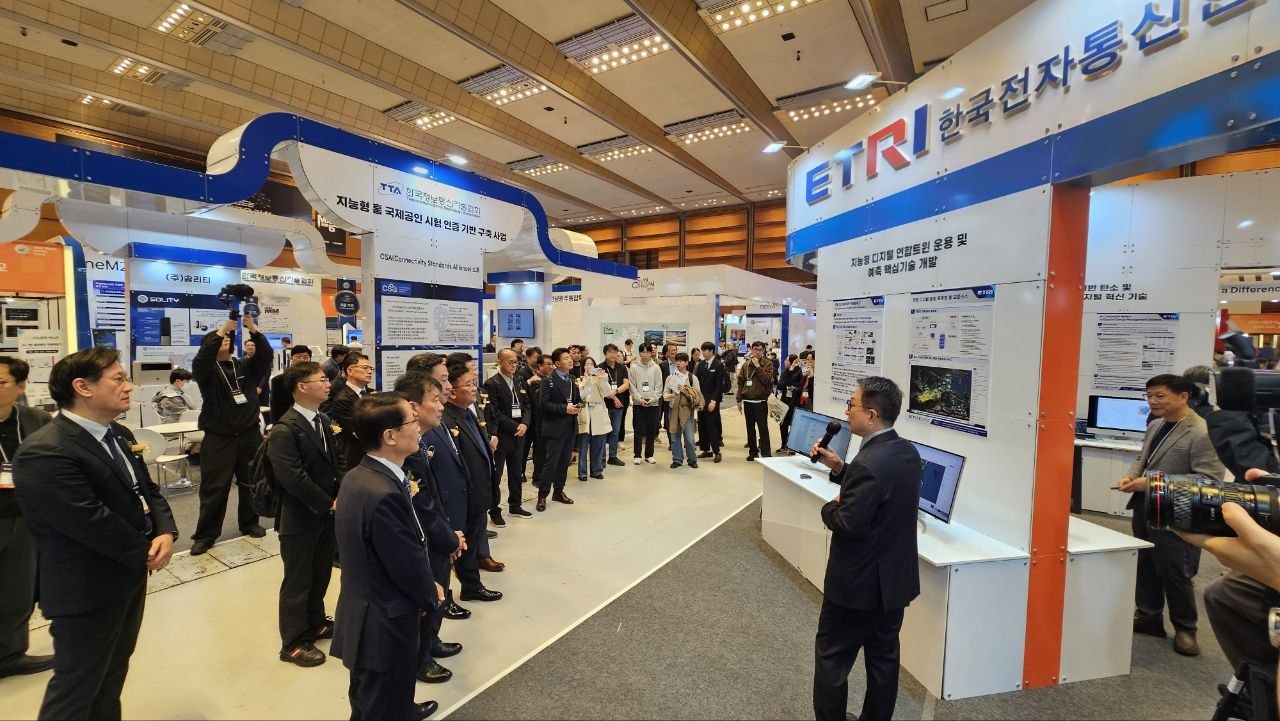
The Electronics and Telecommunications Research Institute (ETRI) announced Friday that it has developed and released as open source FeDiT 2.0, a software framework that links disparate digital twins for integrated operation.
A digital twin is a technology that replicates real-world objects, facilities or spaces in a virtual environment and connects them to live data for monitoring conditions or forecasting future states.
While digital twins are widely used across manufacturing, urban planning, transportation and environmental management, most operate as standalone systems, limiting the ability to share data and functions across different platforms.
FeDiT, developed by ETRI, links the data and functions of individual digital twins for integrated monitoring, analysis, prediction and simulation — without requiring existing systems to be rebuilt from scratch.
For example, connecting a city's traffic, environmental and energy digital twins enables comprehensive analysis of complex situations that would be difficult to identify through any single system alone. In a disaster scenario, the framework can integrate relevant data to forecast the extent of damage and identify optimal response strategies.
FeDiT is built around seven core functions: federated object composition, large-scale data synchronization, AI model-based predictive analytics, modeling and federated analysis, hybrid simulation, visual lightweighting, and federated services with a developer authoring tool.
The framework manages large volumes of data generated across multiple systems in a time- and space-synchronized manner, and supports AI training and inference, three-dimensional modeling and physical analysis.
A dedicated developer authoring tool allows companies and researchers to easily build customized digital twin services and simulations suited to industrial environments.
The framework's ability to reuse existing digital twin infrastructure is also significant, as it reduces the burden of redundant investment for companies and accelerates the development of new services.
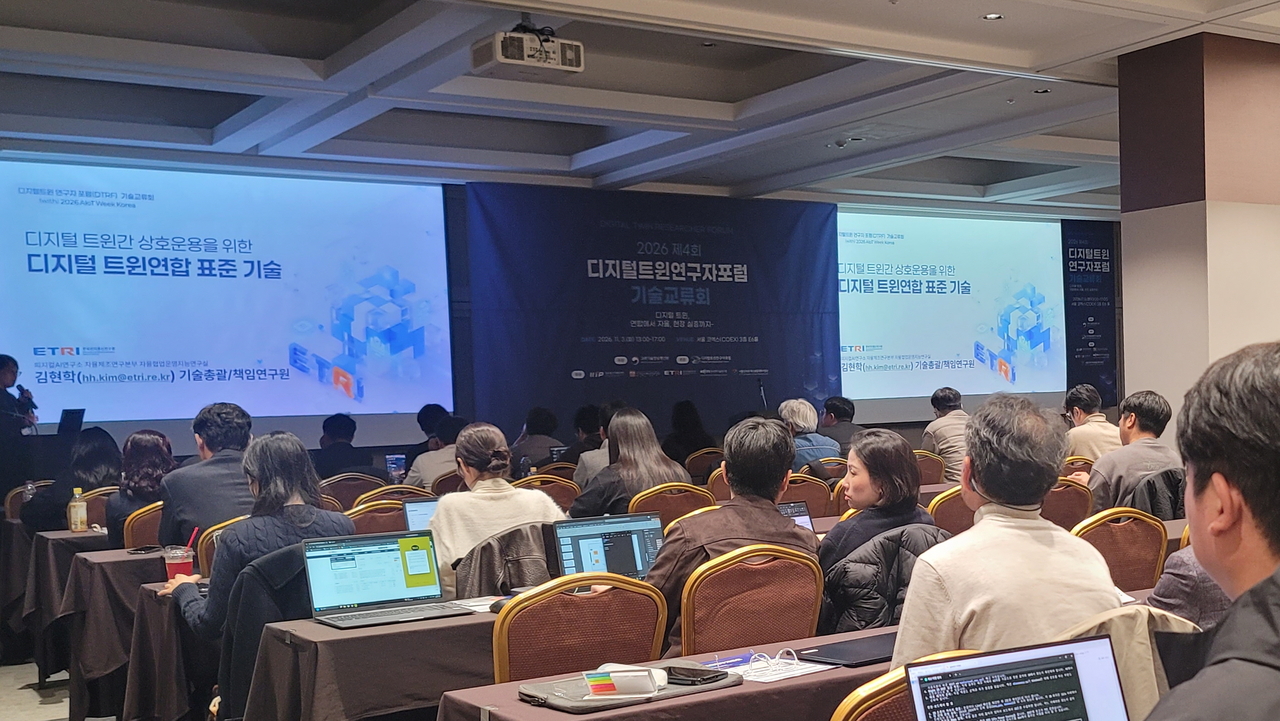
ETRI developed the core technology in collaboration with 21 institutions, including the Korea Electronics Technology Institute and EA8. To establish interoperability and a foundation for wider adoption, the team also helped formulate 10 standards through the Telecommunications Technology Association (TTA).
ETRI published the FeDiT 2.0 source code on GitHub, the global software development platform, late last month. Building on that release, the institute plans to foster an open digital twin ecosystem in which domestic companies, research institutions and developers can participate in further technology development and refinement.
"By releasing the FeDiT framework as open source, we have laid the groundwork for domestic researchers and companies to share data and functions from existing digital twins, reduce redundant investment, and develop broader monitoring, analysis and prediction services," said Park Chan-won, a principal researcher at ETRI. "We will continue to expand the use of federated digital twin technology and contribute to the growth of South Korea's digital twin ecosystem."
nbgkoo@heraldcorp.com