Listed firms' contributions would fund share purchases, with cancellation within 3 years
Corporate tax breaks proposed to encourage voluntary participation
'Asking financial firms for more contributions alone is not enough'
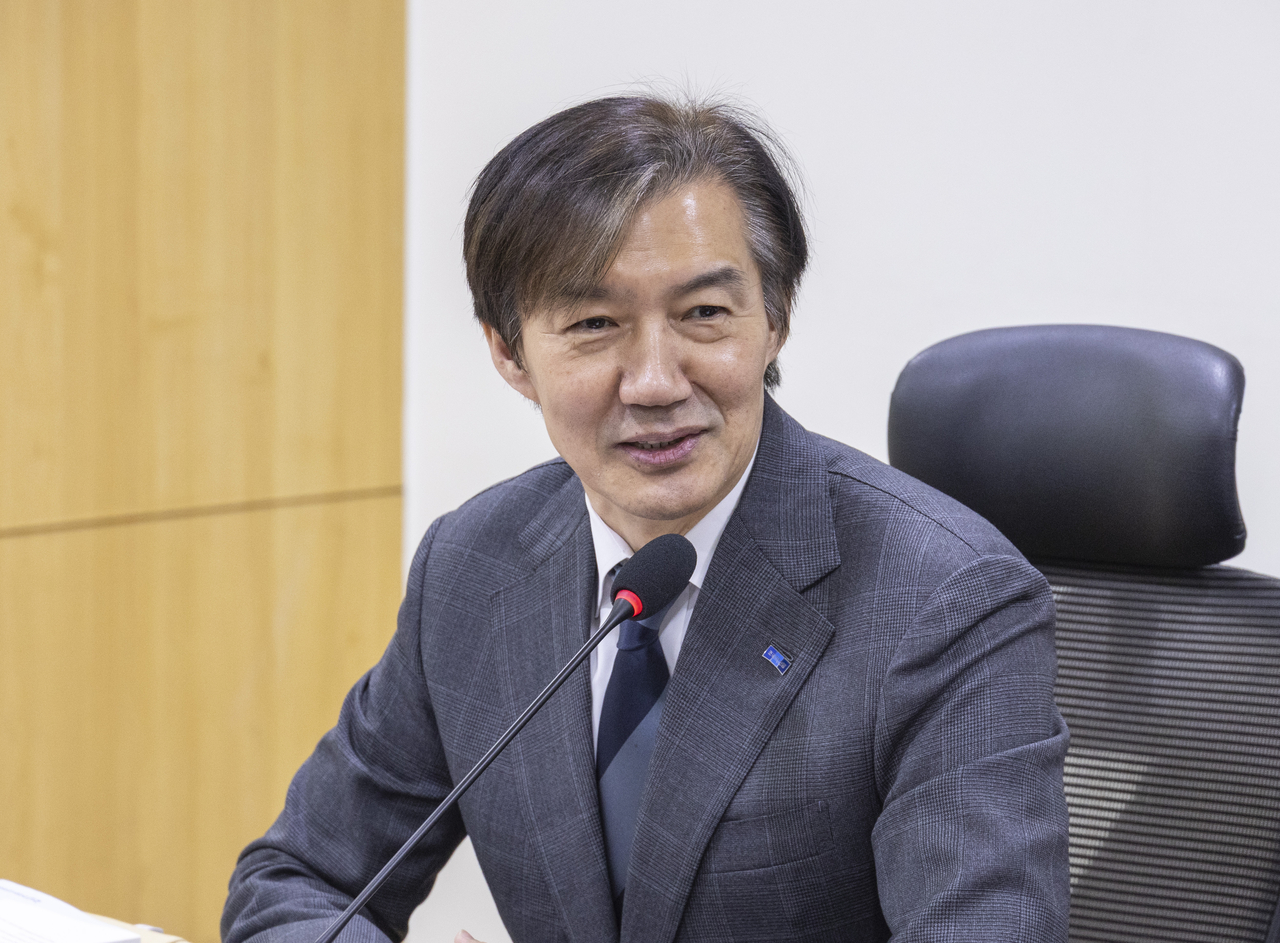
Cho Kuk, head of the Rebuilding Korea Party's innovation policy research institute, called on the government Friday to launch a "buy-and-cancel" stock market stabilization fund that would use listed companies' own capital to purchase and retire shares during sharp market downturns.
Cho made the call on Facebook, describing the proposal as "an idea to overcome the limits of a stabilization fund that has relied solely on financial firms' money — by bringing in corporate money instead."
The concept was originally proposed by Lee Gwang-su, head of real estate and investment advisory firm Gwangsunebok Deokbang. Under the model, listed companies would contribute to a fund, which would then buy their shares during steep price drops and cancel them within three years.
"Kospi-listed companies earned more than 550 trillion won ($409 billion) in net profit in the first nine months of this year alone," Cho said. "The stock market is collapsing while corporate coffers are overflowing."
Cho also said chipmakers had grown with broad national support — including government backing and public infrastructure built on public consensus — and warned that "sustainable corporate growth is impossible if the stock market and domestic demand do not recover."
Cho flagged a structural flaw in existing stabilization funds: they can create selling pressure during market recoveries. As evidence, he cited the government-led stock stabilization fund established in 1990, which offloaded large volumes of shares in 1994 as prices rebounded.
"As long as purchased shares are held, they will return to the market as supply whenever prices rise," Cho said. "That is why the stabilization fund must be structured as a buy-and-cancel model."
To prevent fund capital from concentrating in a handful of large-cap stocks such as Samsung Electronics and SK hynix, Cho proposed allocating a portion of contributions to diversified investments across the broader market.
Cho also called for legislative support from the National Assembly — specifically, a special provision to extend the share cancellation deadline under the current Commercial Act to up to three years, and a new corporate tax deduction tied to the volume of shares cancelled to encourage voluntary corporate participation.
"The government's response looks not just slow but leisurely," Cho said. "Asking financial firms for additional contributions alone is not enough."
thanks@heraldcorp.com