About 1.5 million growers tracked, 2.5 million plots mapped
GPS data, satellite imagery boost supply chain transparency
'Companies leading sustainable shift must not be penalized'
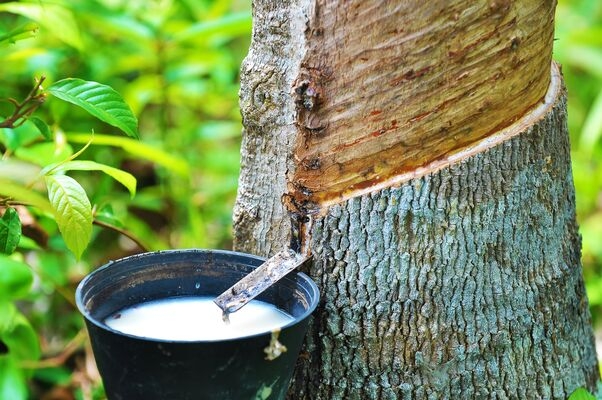
Michelin said Friday it will source only natural rubber produced without deforestation from anywhere in the world, ahead of the EU's enforcement of the European Union Deforestation Regulation.
The French tiremaker said it is applying the EUDR standard not just to its European market operations but to all natural rubber procurement globally. To that end, the company has spent years building a system to track where rubber is grown, how it moves through the supply chain, and whether it originates from deforested land.
Michelin set a goal in 2015 to source only deforestation-free natural rubber. Since then, it has pursued five steps in sequence: identifying risks in the supply chain and mapping production land; integrating growers into a supply chain traceability system; developing that traceability system; applying GPS and satellite imagery technology; and providing support to suppliers and growers. The company introduced management systems in stages as sustainability standards tightened.
About 1.5 million growers now participate in Michelin's supply chain traceability system, and roughly 2.5 million rubber-growing plots have been mapped with location data. Michelin said the effort demonstrates not only that it can meet EUDR requirements but also that large-scale procurement of deforestation-free natural rubber is achievable.
Natural rubber is a renewable, bio-based material. About 75 percent of global output goes into tire manufacturing, with the remainder used in medical devices, industrial components and various mobility applications.
Michelin uses about 750,000 metric tons of natural rubber each year. The company said the material is essential for ensuring product performance, safety and durability, owing to its strength, elasticity, flexibility and grip.
While synthetic materials can replicate some of those properties, no substitute yet matches all of them. Rubber trees require hot, humid climates and grow mainly in tropical regions near the equator, limiting where they can be cultivated and making it difficult to establish production systems that conserve resources while accounting for biodiversity and local communities. The global supply chain depends heavily on about 6 million growers across multiple countries, and procurement networks are complex.
Michelin called the EUDR an important step forward in preventing deforestation, while saying that a sustainable transition for the natural rubber industry requires the participation of all stakeholders — including growers, cooperatives, commodity traders, processors, manufacturers, retailers and government agencies — to continuously improve how rubber is produced and sourced.
The company also said the same standards should be applied fairly to all market participants worldwide, not just in Europe, in order to ensure the regulation's effectiveness and preserve the competitiveness of manufacturers leading the sustainable transition.
Pierre-Martin Huet, Michelin Group's senior vice president for sustainability, said the company's experience over the years has confirmed that responsible raw material sourcing requires significant investment, a solid technical foundation, and sustained engagement with local stakeholders, non-governmental organizations and local authorities.
"It is important that regulations be applied fairly and effectively so that companies leading the sustainable industrial transition are not put at a competitive disadvantage," Huet said. "Achieving real and lasting change in Europe and around the world requires all stakeholders to work together."
eyre@heraldcorp.com