Second meeting of interregional disparity task force held Friday
Ministries of Interior and Land to identify flagship projects, resident-focused initiatives
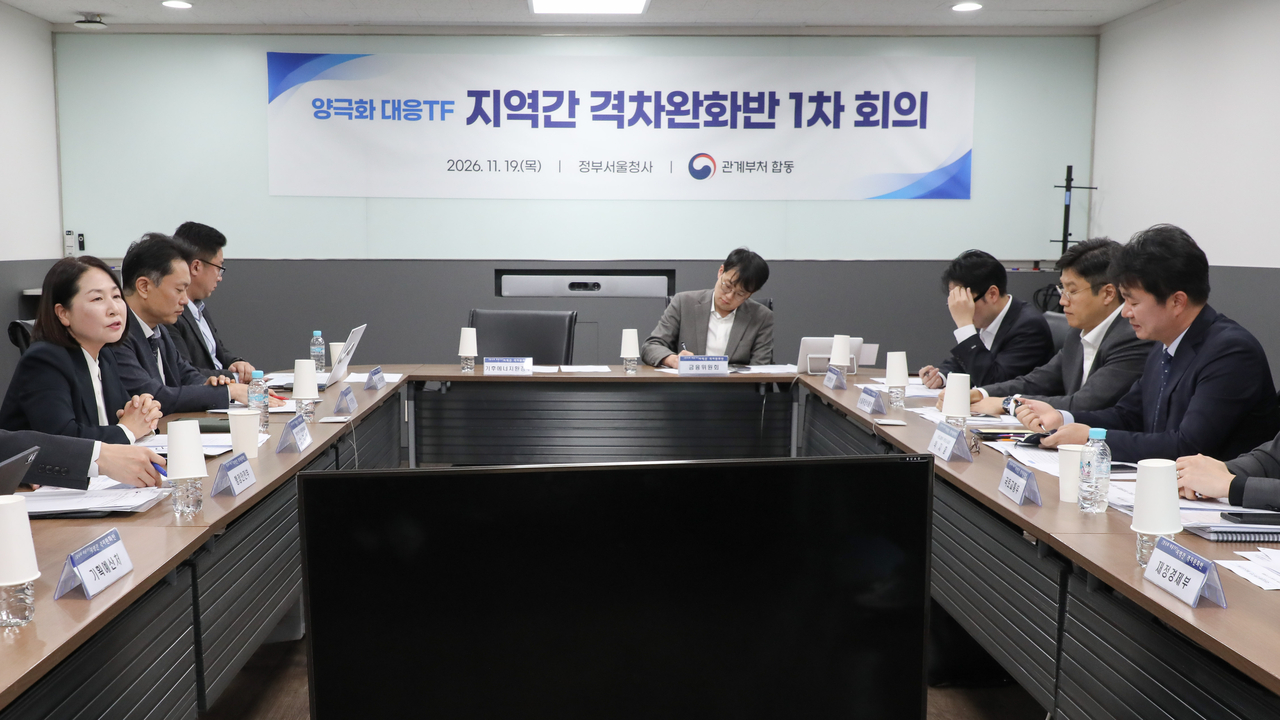
The Ministry of Interior and Safety and the Ministry of Land, Infrastructure and Transport announced Friday they will hold the second meeting of the interregional disparity reduction working group in Seoul that afternoon.
The meeting follows the first session held last week and is designed to gather input from research institutions and experts on disparity-reduction initiatives identified by each ministry, and to flesh out implementation plans.
The working group, jointly operated by the two ministries, is tasked with identifying initiatives to narrow gaps in regional economic conditions and residents' quality of life, and with coordinating projects and policies across related ministries.
The session will be chaired by Kim Min-jae, vice minister of the Ministry of Interior and Safety, with participation from the Ministry of Land, Infrastructure and Transport, related ministries and research institutions. Attendees will gather expert opinions on ways to boost regional investment and employment and ease residents' daily inconveniences, and will review proposals submitted by each ministry.
Discussions will focus particularly on whether the proposed measures match the conditions and needs of each region, whether residents will feel a tangible impact, and what steps are needed to link projects and improve related systems.
Presentations by research institutions and experts will outline policy directions for reducing regional disparities, centering on the development of regional growth hubs and the revitalization of regional finance.
Yun Yeong-mo, head of the balanced development support center at the Korea Research Institute for Human Settlements, will present a strategy for nurturing five major and three special regional growth hubs to reduce disparities. The presentation will propose directions for developing growth hubs tailored to each region's industrial base and local conditions, along with plans to link industrial, residential and transport functions to attract corporate investment and talent.
Park Jin-gyeong, director of the regional balanced development division at the Korea Local Administration Research Institute, will present measures to reduce disparities in areas experiencing population decline. The proposals will address policy directions for easing daily inconveniences for residents in such areas and revitalizing local communities — including guaranteeing basic services, upgrading daily life services through AI and building regional circular economies.
Kim Dae-hwan, a professor at Konkuk University, will offer views on ways to revitalize regional finance. Based on the opinions presented, participants will discuss directions for financial support and measures to promote capital supply to help expand investment by small and medium-sized enterprises in the regions.
Drawing on the proposals and expert opinions from both meetings, the two ministries plan to identify flagship brand initiatives that reflect each region's distinct characteristics and resident-focused initiatives whose effects people can feel in their daily lives.
"Reducing interregional disparities is a core element of addressing polarization, and it requires fundamental structural reform that is not constrained by existing institutional frameworks or barriers between ministries," Kim Min-jae said. "The initiatives developed by this working group must be practical alternatives that allow residents to feel real change in their lives, and we must concentrate all our efforts to ensure they take root at the local level."
Kim I-tak, vice minister of the Ministry of Land, Infrastructure and Transport, called on related ministries to cooperate, saying, "To narrow regional disparities, we must jointly pursue the full range of policies that regions need — from support for corporate investment and job creation to improvements in residents' living conditions." Kim added, "Based on the expert opinions presented at this meeting, we must closely coordinate projects across related ministries and work together to ensure that the vitality of growth hubs extends to surrounding areas and to residents' daily lives."
thlee@heraldcorp.com