
Inclusive finance push drives down rates for low-credit borrowers
Banks cut spreads, expand preferential rates even as market rates climb
Financial sector warns of cracks in credit-pricing fundamentals
Record bank profits fuel debate over social responsibility
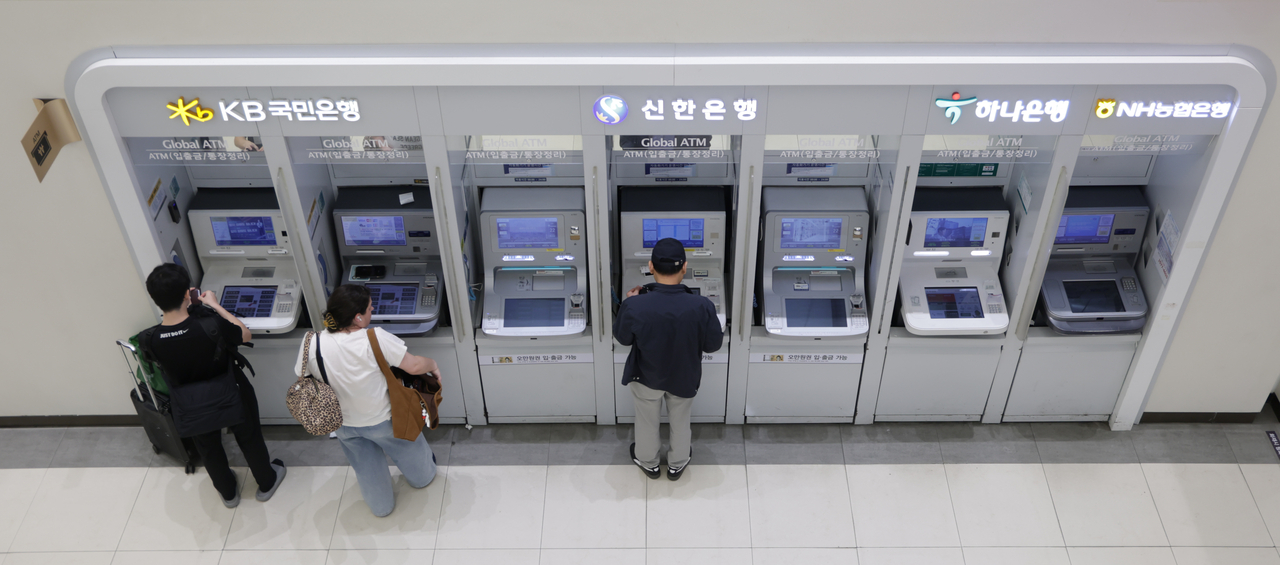
Even as interest rates rise, loan rates for high-credit borrowers have climbed across the board while those for low-credit borrowers have actually fallen. The divergence is attributed to the government's inclusive finance drive, which has prompted lenders to cut rates and expand credit supply for vulnerable borrowers. Cases of "rate inversion" — where borrowers with lower credit scores end up paying less than those with higher scores — are now emerging at major banks.
The widening gap between high- and low-credit borrowers has drawn concern from within the financial sector, with some warning that the basic principles of credit-based pricing are beginning to erode. While the situation does not yet pose an immediate threat to financial institutions' soundness, critics argue it risks undermining the importance of credit management.
According to financial sector sources Friday, authorities announced at the eighth Inclusive Financial Transformation Council meeting, held Thursday, that personal loan rates for low-credit borrowers had fallen despite rising market rates.
Data submitted to the authorities by Korea Credit Information Services showed that from the end of March to the end of July this year, the average outstanding balance rate on bank personal loans rose 0.19 percentage points for high-credit borrowers — those in the top 50 percent by credit score — while falling 0.05 percentage points for low-credit borrowers in the bottom 20 percent. Over the same period, the one-year bank bond rate rose 0.43 percentage points. Across the broader financial sector, rates for low-credit borrowers fell between 0.05 and 0.27 percentage points. Authorities said the rate-cutting effect on new loans had offset the upward pressure on existing loan rates.
A separate analysis of Korea Federation of Banks data on new household personal loan rates showed a similar pattern. From the end of June 2025 to the end of September this year, loan rates for high-credit borrowers at the five major banks — KB, Shinhan, Hana, Woori and NH — all rose, while rates for low-credit borrowers fell in some cases. Over the same period, the one-year bank bond rate climbed 1.604 percentage points, from 2.539 percent to 4.143 percent per annum.
For borrowers in the top three credit score tiers, benchmark rates rose 0.99 to 1.12 percentage points and credit spreads widened by 0.11 to 0.25 percentage points. Preferential rate adjustments narrowed by 0.06 to 0.15 percentage points, resulting in an overall loan rate increase of 1.25 to 1.43 percentage points.
For the bottom three tiers, benchmark rates also rose 1.05 to 1.10 percentage points, but credit spreads narrowed by 0.18 to 1.59 percentage points while preferential rate adjustments widened by 0.39 to 0.52 percentage points. As a result, loan rates actually fell in two of the three bottom tiers, and the remaining tier saw only a 0.42 percentage point increase.
The government's inclusive finance policy is seen as a key driver behind the decline in low-credit borrowers' rates even during a period of rising rates. Since last year, the government has directed banks and other financial institutions to improve credit access for vulnerable borrowers, prompting lenders to expand their supply of retail financial products and reduce interest burdens through measures such as rate caps. Starting next year, a comprehensive inclusive finance evaluation framework — assessing lenders' performance in serving underserved borrowers — is set to take full effect. High-credit borrowers, meanwhile, have faced growing upward rate pressure as rising market rates combined with household loan volume caps to shrink preferential rate benefits.
Within the financial sector, concerns are mounting that the inclusive finance push could disrupt the market order under which loan rates are set according to creditworthiness. Bank loan rates are typically determined by adding a credit spread — reflecting a borrower's default risk — to a benchmark rate that captures funding costs, then subtracting any preferential rate adjustments. The principle, industry officials say, is that lower creditworthiness means higher repayment risk and therefore a higher rate.
Published loan rate data from the five major banks for last month showed that at three banks, borrowers with credit scores between 651 and 700 were charged higher rates than those scoring below 600. "Pricing in the cost of default risk for borrowers more likely to fall behind is a basic principle of financial markets — and the reason credit management is the most important lesson in financial education," one bank official said. "We understand the government's intent to support vulnerable borrowers, but we worry this could lead to market distortion." Another official said: "Banks may not handle a large share of low-credit loans, but regardless of volume, this is a question of market order."
Others argue, however, that supporting vulnerable borrowers is a social responsibility the financial sector should embrace. Domestic banks posted a combined 48.4 trillion won ($36 billion) in interest income through the third quarter of this year, a record high. "Monetary policy and loan volume caps have made it harder to extend credit to high-credit borrowers as actively as before," one financial sector official said. "Lending to low-credit borrowers is also a necessary part of the business."
Kim Sang-bong, a professor of economics at Hansung University, cautioned against conflating low income with low creditworthiness. "Low-income and low-credit borrowers are clearly different groups, and cutting rates for both together does not align with market principles," Kim said. "Rather than leaving this to financial institutions, the better path is to establish alternative credit scoring systems that reassess the creditworthiness of low-credit borrowers on their own merits."
hyuk@heraldcorp.com





