Additional annual burden estimated at 700 million won per course
Between 7,000 and 10,000 caddie jobs at risk
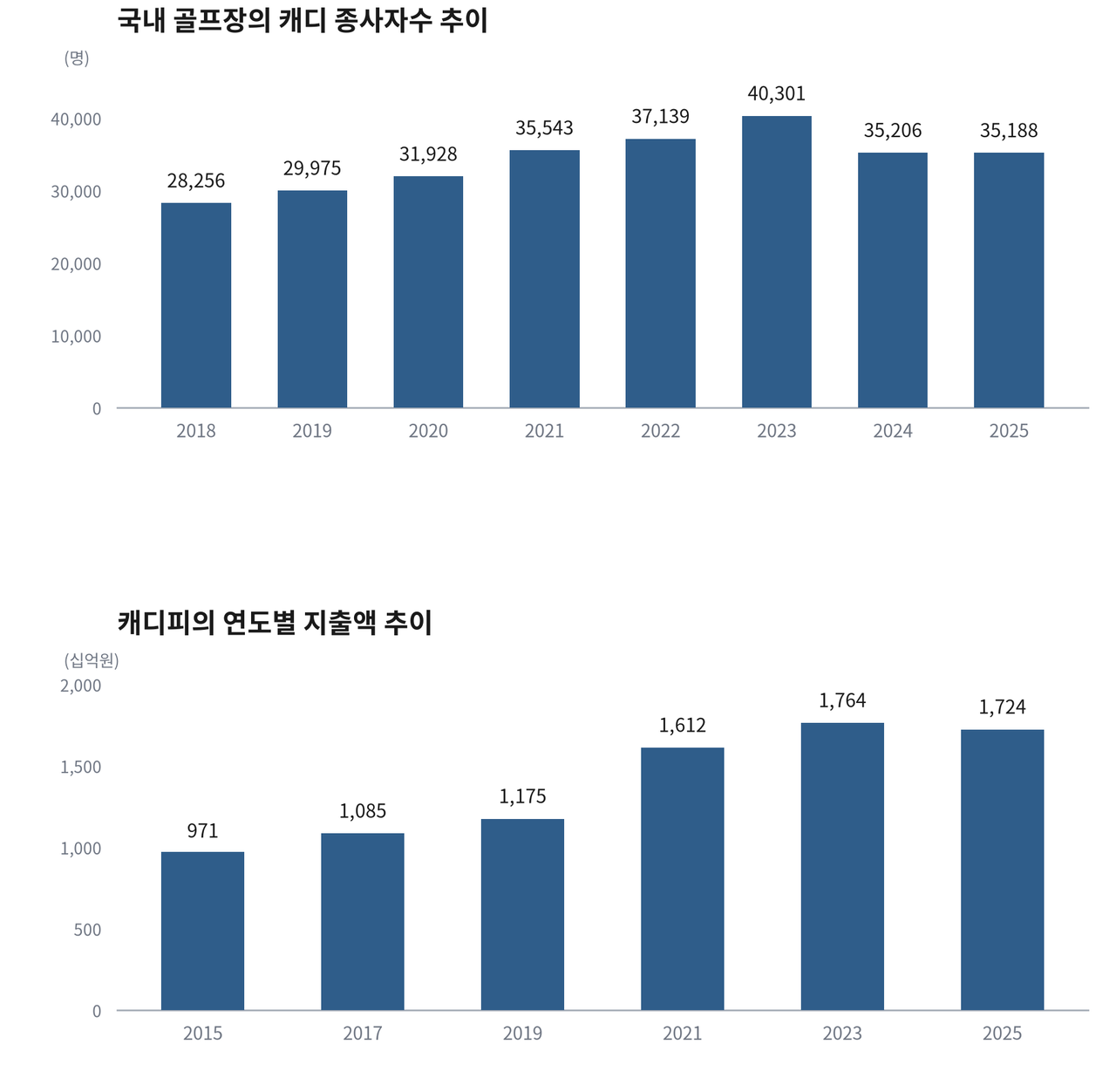
A proposed labor rule meant to protect caddies could instead reduce their employment and increase the financial burden on golf courses, according to a new analysis. Golf courses are likely to cut caddie hiring and expand self-play — rounds without a caddie — to offset rising labor costs. The wider adoption of optional caddie systems could also ease the fee burden on golfers.
The Korea Golf Consumer Institute released an analysis Friday on the projected impact of introducing a worker presumption regime, finding that the annual cost per caddie to a golf course would reach approximately 15.7 million won ($11,700) under the system. For an 18-hole course employing 45 caddies, the additional annual burden would reach about 708 million won.
Under a worker presumption regime, anyone confirmed to have provided labor is presumed to be an employee, and the employer must produce evidence to the contrary or the worker is formally recognized as such. Recognized employees would be entitled to the minimum wage, the 52-hour workweek cap, severance pay, weekly holiday allowances and the four major social insurance programs. The government and the Democratic Party of Korea submitted a related amendment to the Labor Standards Act to the National Assembly in January.
The institute projected that golf courses would reduce caddie employment following the rule's introduction. As of the end of last year, there were 35,188 caddies working in South Korea, an average of 58.1 per 18-hole course. A 20 percent reduction in employment would eliminate roughly 7,000 jobs, while a 30 percent cut would wipe out about 10,600, the institute said. Many of those who lose work would be in their 50s and 60s, raising concern that reemployment would be difficult.
Golf courses may also shift to keeping permanent staff at a minimum and relying on part-time workers only during peak seasons. Japanese golf courses, which hire caddies as full-time employees, already operate with skeleton crews year-round and bring in part-timers during busy periods, the institute noted.
Course profitability is also expected to deteriorate. The institute estimated that the operating profit margin at public golf courses would fall 5.9 percentage points, from 35.1 percent last year to 29.2 percent, while membership courses would see a 5.6-percentage-point drop, from 9.1 percent to 3.5 percent. With the golf boom fading and operating conditions already worsening, the added costs could place a heavier strain on course management, the analysis said.
Golf courses may also pass on the increased costs through higher caddie fees or cart rental charges. Some courses already charge self-play customers an additional cart fee of 20,000 to 40,000 won for round preparation, cart inspection and cleaning.
The spread of optional caddie systems, however, could reduce costs for golfers. Golfers spent 1.72 trillion won on caddie fees last year, up 77.5 percent from 2015, according to the institute. Annual caddie fee spending per golfer reached 346,000 won, excluding over-par surcharges.
If caddie numbers fall by 20 percent and self-play expands, annual caddie fee spending per golfer would drop to 276,000 won, a reduction of about 70,000 won, the institute estimated. As of May, 260 courses — 46.1 percent of the total — had adopted optional caddie systems. If the regime takes effect, the system is expected to spread to most courses outside a handful of premium venues.
Korea Golf Consumer Institute Director Seo Cheon-beom warned that introducing the worker presumption regime without sufficient prior analysis of its effects and ripple impacts "would not protect caddies' rights and interests but would instead produce the reverse effect of taking away their jobs and shrinking the golf course industry."
yjc@heraldcorp.com