Forum on 2027 annual general meeting strategies held at COEX
Six key issues under revised Commercial Act and shareholder persuasion strategies shared
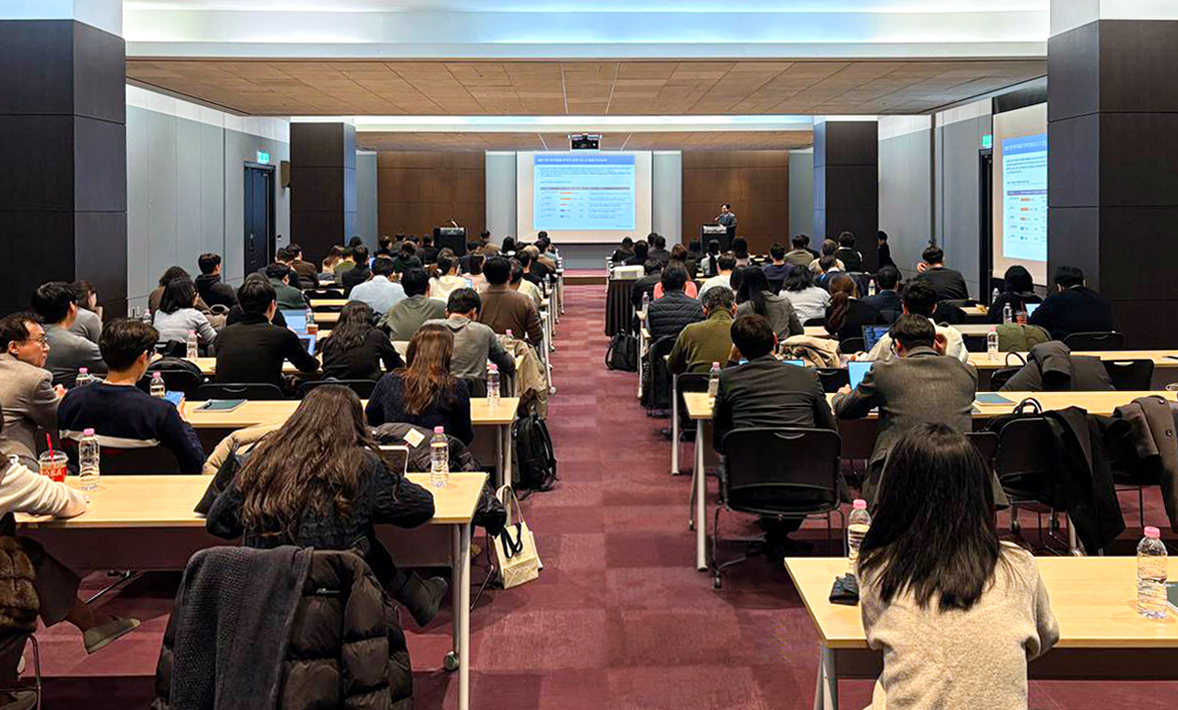
Law firm Bae, Kim & Lee said it held the "2027 Annual General Meeting Preparedness Strategy Joint Forum" at COEX Conference Hall in Gangnam-gu, Seoul, on Wednesday.
The forum was co-hosted by Bae, Kim & Lee alongside global proxy solicitation firm Georgeson, strategic consulting firm Boston Consulting Group (BCG), and shareholder platform Beside Korea, and was attended by IR, legal and disclosure practitioners from listed companies.
Bae, Kim & Lee led a session titled "Responding to the 2027 AGM: From Legal Issues to Shareholder Persuasion," presenting a timeline of tasks companies must complete to prepare for shareholder opposition. Next year's regular general meeting will be the first at which all Commercial Act amendments enacted since 2025 apply simultaneously. Listed companies with assets of 2 trillion won ($1.49 billion) or more will no longer be able to exclude cumulative voting through their articles of incorporation, the number of separately elected audit committee members will increase to two, and hybrid electronic general meetings combining in-person and online participation will become mandatory.
Jang Yun-je, a specialist member at Bae, Kim & Lee who led the presentation, identified six key issues for the 2027 AGM: a 3 percent cap on the combined voting rights of the largest shareholder's side when electing audit committee members; expansion of the independent director ratio; a ban on excluding cumulative voting through the articles of incorporation; mandatory hybrid electronic general meetings; the risk of director election opposition following board decisions after the shareholder loyalty duty takes effect; and governance improvement measures for listed financial companies.
On the legal risk front, Jang said companies should prioritize reviewing director elections and cumulative voting, proxy and quorum tallying, and audit committee elections and the 3 percent rule — areas where large blocks of voting rights are at stake and errors are difficult to correct after the fact.
On investor risk, Jang noted that the national pension fund's opposition rate at this year's March regular general meetings rose to 24.1 percent from 19.1 percent the previous year, with particularly high opposition rates on agenda items related to treasury share holdings and disposals (49.5 percent), executive compensation limits (42.5 percent) and amendments to the articles of incorporation (26.7 percent).
"The starting point is confirming there are no legal problems, and then clearing the bar set by shareholders," Jang said. "If opposition stems from a lack of information, the explanation needs to be strengthened; if it reflects a substantive challenge, the agenda item or candidate must be changed." Jang added that beginning in December, companies should assess their asset size, the effective dates of relevant laws, their articles of incorporation and board composition, and cross-check candidates and agenda items against the criteria of major shareholders before finalizing them — steps that improve the likelihood of passage.
In the question-and-answer session that followed, Bae Yong-man, an attorney at Bae, Kim & Lee, addressed the practical aspects of running electronic general meetings and disposing of treasury shares. "Shareholders attending electronically are treated the same as those physically present, so how the right to ask questions and speak is guaranteed is directly tied to the validity of resolutions," Bae said. While the number and duration of questions and remarks can be limited, Bae said companies should establish the standards in advance through operating rules and notify shareholders of attendance methods in the meeting notice to avoid disputes over shareholder rights violations.
As a contingency measure for communication failures, Bae advised companies to specify failure response procedures and the allocation of responsibility in their contracts with custodian institutions, and to keep records of how any incidents occurred. On treasury shares, Bae presented competing views on whether disposal under transitional provisions requires shareholder approval, and outlined measures to reduce legal risk.
Kim Seo-ha, a BCG partner who also presented, identified four tasks companies should complete before the general meeting: diagnosing vulnerabilities to activist shareholders; finalizing a value-up plan that includes a path to return on equity exceeding the cost of capital; verifying and documenting board decision-making based on per-share value; and linking executive compensation to total shareholder return. Kim noted that the price-to-book ratio of the Kospi, excluding Samsung Electronics and SK hynix, stands at around 0.78 times, and said concrete action plans are needed.
Im Seong-cheol, chief executive of Beside Korea, highlighted five priorities: identifying beneficial shareholders; understanding the voting decision-making structure of each institutional investor; running vote simulations by agenda item; developing a tailored communication strategy for each shareholder; and refining the operational framework for electronic general meetings. Im explained that companies should build a "shareholder map" combining shareholders' investment backgrounds with their voting information to sharpen persuasion arguments, and prepare in an integrated manner from securing advance votes through to the day-of ballot and tally.
Bae, Kim & Lee addresses corporate governance, capital market regulation, shareholder disputes and related legal issues through its BKL Governance Solution Center. The center includes attorneys Seo Dong-woo, Yoon Seong-jo, Bae Yong-man, Lee O-ryeong, Choi Cheol-ung, Park Jong-seung and Kim Kyung-soo, as well as Jang Yun-je, who previously served as a senior researcher at the Korea Institute of Corporate Governance and Sustainability (KCGS) and as a civilian specialist member of the national pension fund's stewardship responsibility committee.
Meanwhile, Bae, Kim & Lee also provides comprehensive one-stop legal services across all practice areas through its overseas offices in Beijing, Vietnam and Singapore. The firm has been named among the world's top 200 law firms for eight consecutive years and received the top overall law firm award at the 2025 Asian Business Law Journal Korea Law Firm Awards, recognizing its international capabilities.
an@heraldcorp.com