
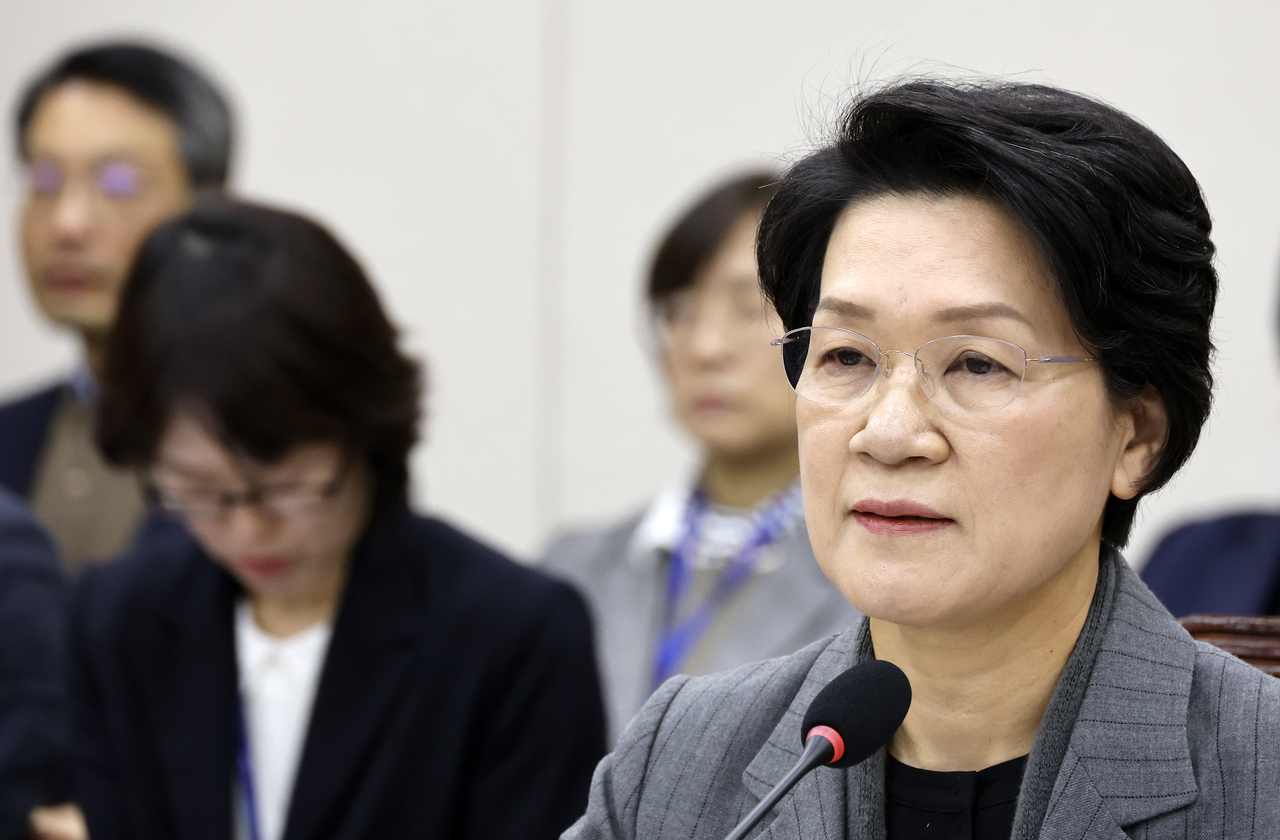
Lawmakers from both the ruling and opposition parties united Friday to criticize the Education Ministry's follow-up measures on AI-assisted cheating in the College Scholastic Ability Test at a National Assembly Education Committee plenary session.
The committee received a briefing from the Education Ministry on its response plans and follow-up measures related to cheating in the college entrance exam.
Democratic Party of Korea lawmaker Baek Seung-a said the ministry needed to move quickly. "Is an analysis of cheating countermeasures for this year's exam already underway?" Baek said. "We need to test measures at the June mock exam next year, refine them at the September mock exam, and make sure there are no mistakes by the time the actual exam comes around — so we really need to hurry."
People Power Party lawmaker Jeong Seong-guk said his office had sent an urgent cooperation letter to preserve last year's exam papers on Nov. 18, only for the prime minister's directive to follow the next day. "The fact that a lawmaker's office had to send an urgent letter first, and the government only responded afterward — that itself is a problem," he said.
The session also raised concerns about the Education Ministry extending its cheating countermeasures beyond the college entrance exam to university-administered tests and high school internal assessments.
Rebuilding Korea Party lawmaker Kang Gyeong-suk took issue with the ministry's plan to conduct comprehensive checks for electronic devices using metal detectors ahead of final exams. "The number of metal detectors currently allocated by city and provincial education offices stands at around 8,300," Kang said. "The Education Ministry said it would purchase an additional 12,000, but the number of high school classrooms is 50,500. It is hard to see that as sufficient."
Kang also criticized the ministry's plan to strengthen disciplinary measures for cheating up to expulsion, saying the ministry had yet to provide a standard template for revising school rules, concrete criteria for determining what constitutes cheating, or a model for exam administration.
People Power Party lawmaker Seo Beom-su echoed the concern, saying the ministry appeared to be issuing one-sided directives to schools without regard for conditions on the ground. "Because the situation feels urgent, it looks like the Education Ministry is pushing guidelines down to schools unilaterally, as a way of deflecting its own responsibility — and that is why frontline teachers have so many complaints," he said.
bigroot@heraldcorp.com





