
Ren Zhengfei thanks Trump for driving self-reliance
R&D investment tops $27 billion a year
US sanctions accelerated China's push for tech independence
Huawei's AI computing power still below 4% of Nvidia's — but could catch up around 2030
"Please pass along my gratitude to President Trump."
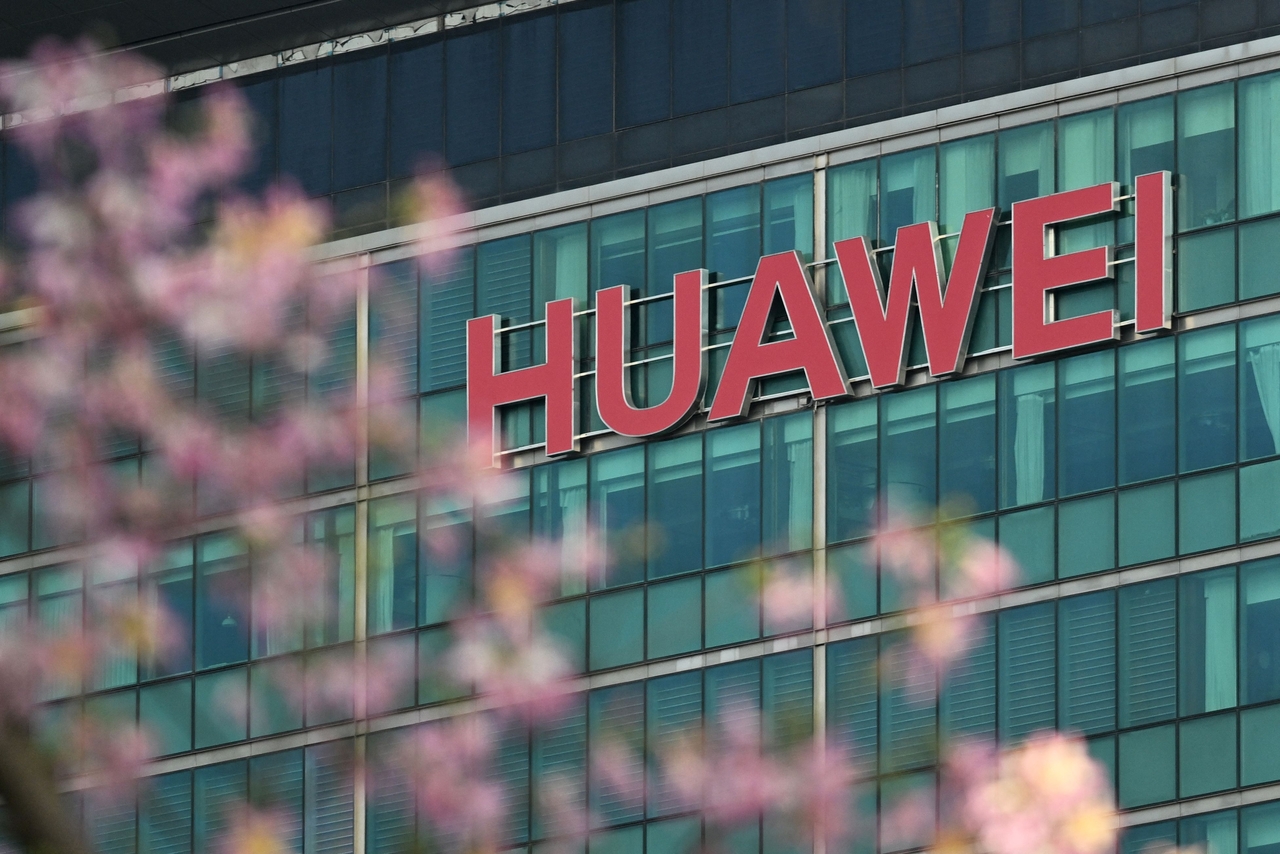
Ren Zhengfei, founder and CEO of Huawei, said in an interview with The New York Times on Thursday (local time) that it was Donald Trump who set Huawei and China on a new era of technological self-reliance.
The New York Times reported that day that Huawei has become indispensable to the Chinese government despite a significant technology gap with American rivals — a gap that has widened as China's access to Nvidia's advanced semiconductors grows increasingly restricted.
Huawei's annual research and development spending now exceeds $27 billion. Its Ascend processor has established itself as China's leading alternative to Nvidia's AI accelerators. The company is also laying the groundwork to grow into one of the world's largest semiconductor manufacturers, moving beyond chip design alone.
At Huawei's headquarters in Shenzhen, a palace-like corridor adorned with gilded ceilings and elaborate frescoes of Russian nobles on horseback bears the name of the president who once sought to bring the company down.
Huawei executives call it the "Trump Corridor" — a reference to Trump's efforts during his first term to expel Huawei from global wireless networks and cut off its access to advanced semiconductors.
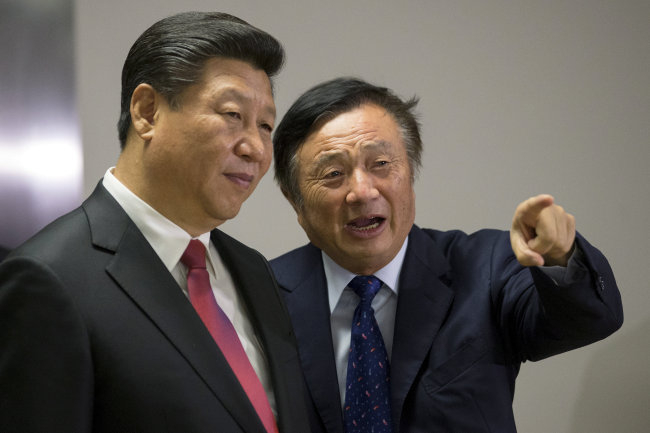
The name carries a defiant message. Having survived harsh US sanctions, Huawei is determined to prove that Washington cannot dictate its future. Ren said the sanctions reinforced Huawei's identity as "our country's company."
Trump's 2019 sanctions threatened the company's survival at the very moment Huawei had risen to the top of the global telecommunications equipment and consumer electronics industries. Before the sanctions, Huawei was deeply embedded in the global technology supply chain. According to the company, it was purchasing $2.5 billion worth of semiconductors from Intel each year and was a major customer of Oracle and TSMC, the world's largest contract chipmaker.
When the first Trump administration approved sweeping sanctions against Huawei, many inside the US government believed the measures could bring the company down. Officials also expressed concern that Huawei might be supporting the Chinese military.
Liza Tobin, who handled China policy at the National Security Council during that period, said, "We thought this could be a fatal blow. We grabbed Huawei's ankle and broke its leg, slowing it down — but now they've regrouped."
"After the US sanctions, our top priority was survival," Ren said. From around 2021, he accelerated the push to build an independent semiconductor supply chain by working with SMIC, China's largest foundry, along with research institutions and other Chinese companies. Huawei believes it can ultimately compete with Nvidia's systems by linking together multiple lower-performance processors.
Huawei's resurgence illustrates the paradox of US policy aimed at curbing China's technological rise. The company was among the earliest targets of the regulatory measures that became the template for American export controls. Those controls slowed China's technological progress but at the same time spurred a nationwide effort to sever the technological dependencies through which the United States had been able to exert influence.
As ties with the United States are cut, Huawei is becoming ever more essential to China. This month, the Trump administration announced measures to block Chinese companies from accessing advanced AI chips through overseas data centers.
The move came as Nvidia was navigating internal turmoil. Jensen Huang had stepped down as CEO two weeks earlier after an extramarital relationship with an executive at Megaspeed, a Singaporean data center company, came to light, but returned to the role under pressure from Trump. Before that turmoil unfolded, Ren had acknowledged the difficulties of building an advanced semiconductor supply chain while predicting that China would ultimately surpass the United States. "It's only a matter of time," he said.
Huawei has brought together component suppliers, government-backed manufacturing facilities and semiconductor equipment makers, and has built out data centers. It has also worked with Chinese AI companies including DeepSeek to ensure their AI models can run on Huawei chips.
The technology gap, however, remains substantial. According to Epoch AI, an AI research organization, Huawei's chips are expected to deliver less than 4 percent of Nvidia's AI computing performance this year. The company is not projected to reach Nvidia's current supply capacity until around 2030. Venkat Somala, an Epoch AI analyst who recently published a report on Huawei, said the company is "using every tool at its disposal and going all out. The question is whether that will be enough."
Even so, Huawei does not necessarily need to match Nvidia's capabilities to dominate the Chinese market. US export controls and Beijing's push for technological self-reliance are steering Chinese companies toward domestic suppliers.
Martin Lau, president of Chinese internet giant Tencent, said losing access to Nvidia's advanced chips was "setting back every company in China" in AI development. He told investors that accelerating the development of a domestic supply chain "must now be the top priority."
mokiya@heraldcorp.com





