
- Walkerlinspace and KT SAT sign MOU and letter of commitment for on-orbit servicing technology
- Retired satellite to be used for in-space demonstration; operational satellites targeted after 2030
- Robot satellite VEROS-1 in development as company eyes global geostationary market
A South Korean space startup and a satellite communications company have joined forces to pursue what the industry calls "satellite after-service" — extending the operational life of spacecraft that have run out of fuel in orbit.
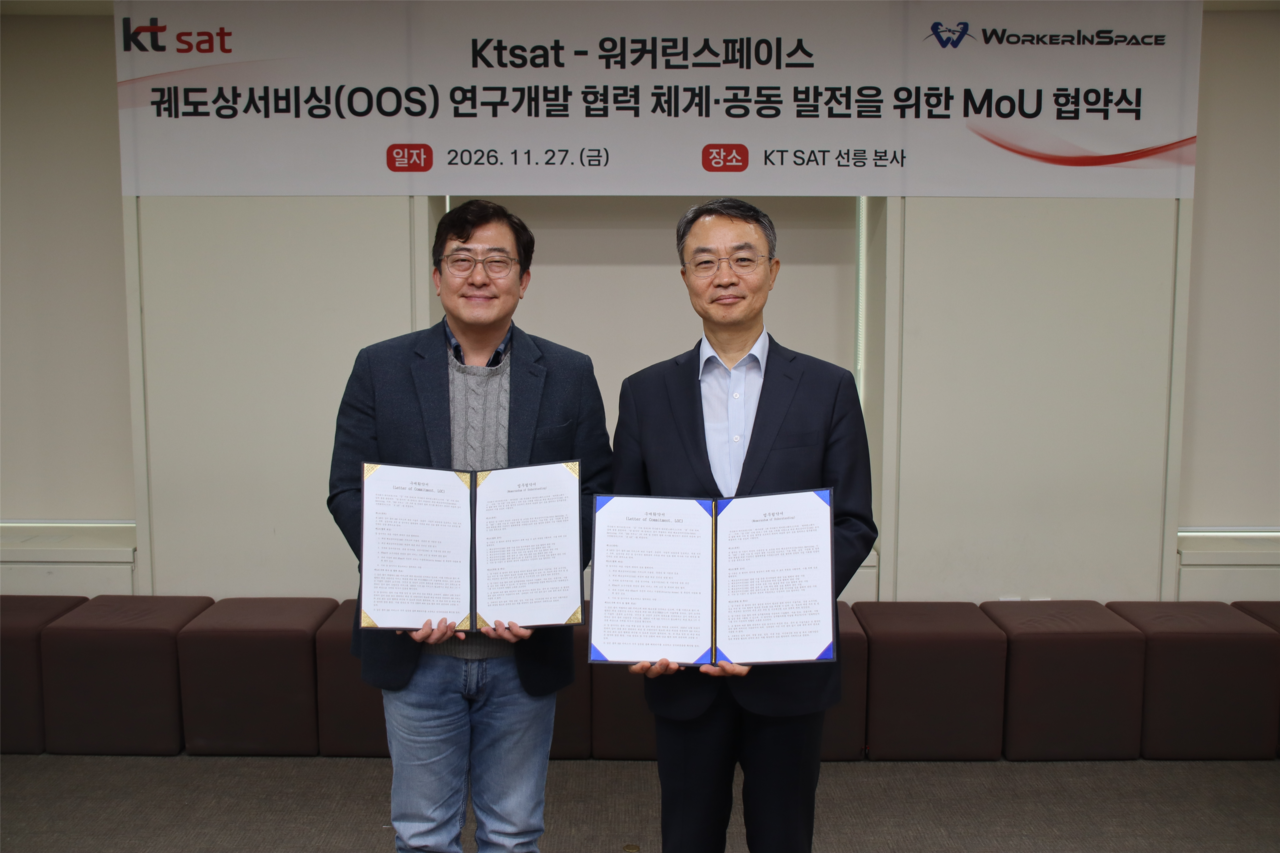
Walkerlinspace, a domestic on-orbit servicing (OOS) specialist, announced Friday that it has signed a memorandum of understanding and a letter of commitment with KT SAT to cooperate on OOS technology and business development.
Under the agreement, Walkerlinspace will explore the feasibility of demonstrating its OOS technology in space using one of KT SAT's retired satellites. KT SAT plans to use the results of that in-space demonstration as the basis for discussing concrete business cooperation.
The two companies will also look to collaborate on ground station technology and infrastructure development essential to servicing operations. They plan to assess, in stages, the technical and commercial viability of applying life-extension services to satellites KT SAT operates after 2030.
On-orbit servicing — sometimes called "space MRO" for maintenance, repair and overhaul — involves refueling, repairing or replacing components on satellites while they remain in orbit, extending their operational lives.
Geostationary communications satellites are particularly well suited to such services: even after their fuel is exhausted, their payloads and other key hardware often continue to function normally. Applying life-extension services would allow operators to squeeze additional value from expensive satellites and avoid the enormous costs of building and launching replacements.
The global on-orbit servicing market has been heating up since 2020, when US defense contractor Northrop Grumman became the first company to successfully extend the life of a commercial satellite — an Intelsat spacecraft. Specialized startups have since emerged across the United States, Japan and Europe, while major satellite operators including SES, Australia's Optus and Japan's SKY Perfect JSAT have moved to adopt related services.
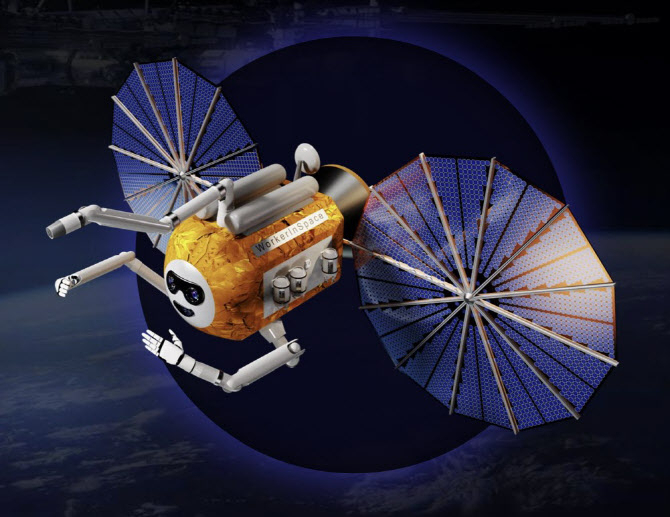
Walkerlinspace is developing its robot satellite VEROS-1 with commercial OOS in mind. Through the agreement with KT SAT, the company aims to lay the groundwork for an in-space demonstration and a commercial service business, accelerating its push into the global geostationary satellite market across the Asia-Pacific region and beyond.
"This agreement will serve as a model of mutual growth — a space startup and a major satellite communications company advancing together into the global commercial market," Walkerlinspace CEO Kim Hae-dong said.
KT SAT President Choi Kyung-il said on-orbit servicing is "a promising future field that can enhance the value of existing satellites and create new growth opportunities for the satellite industry." He added that the company would continue to explore technology cooperation with domestic space firms and identify business opportunities in next-generation space services, drawing on its satellite operations expertise.
nbgkoo@heraldcorp.com





