
Bilateral negotiations lower phytosanitary hurdles
Export season for oriental melon extended by one month to Australia, Vietnam
568 registered export quarantine complexes provide on-site support nationwide
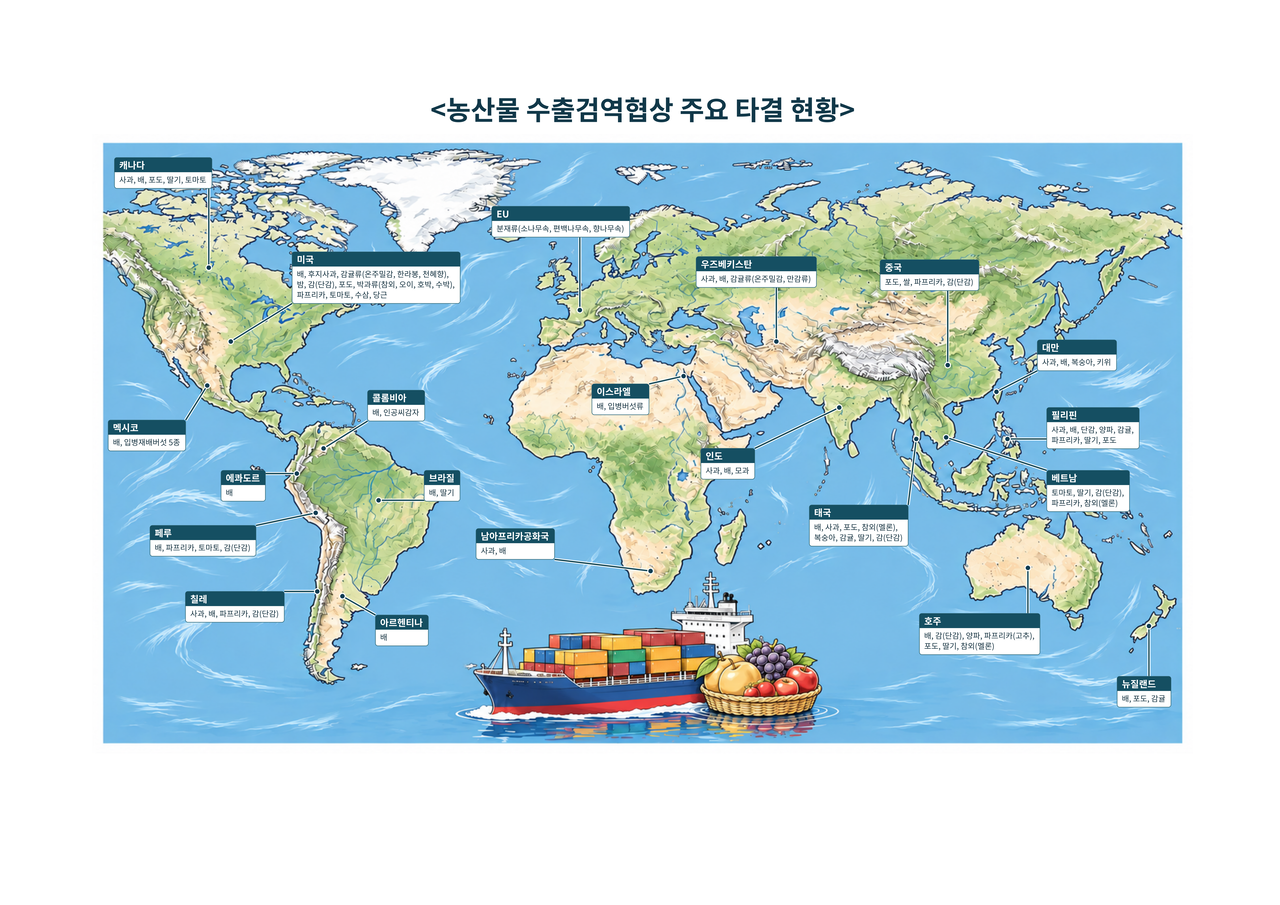
Quarantine barriers that had blocked South Korean agricultural products from overseas markets are coming down. Over the past two years, new export channels have opened in seven countries for eight crop categories, and the export season for domestically grown oriental melon to Australia and Vietnam has been extended by one month. The government is following up bilateral quarantine negotiations with on-site inspection support covering the full chain from cultivation to shipment, aiming to expand exports further.
According to the Animal and Plant Quarantine Agency on Friday, South Korea has concluded quarantine negotiations and published export requirements for 36 crop categories across 21 countries since it first opened an export channel for Korean pears through negotiations with the United States in 1986 — with the latest tally running through the end of October this year. Negotiations are currently ongoing for 106 crop categories across 23 countries.
Recent negotiating results have continued to accumulate. Last year, export approvals were secured for strawberries to Brazil, persimmons to China, grapes to the Philippines, and lily and cymbidium cut flowers to New Zealand. This year, quarantine negotiations concluded for citrus to Uzbekistan in March, pears to Egypt in June, and paprika to Chile in October.
There have also been cases of eased regulations on existing export items. Korean oriental melon gained access to Australia in 2023 and Vietnam in 2024, but the export season was restricted to December through May of the following year due to the risk of oriental fruit fly infestation.

Through additional negotiations, the agency reached agreements to extend the export season through June — with Vietnam in May this year and Australia in June. As a result, an additional 10 metric tons of oriental melon were exported to Vietnam during the newly added month of June.
Concluding a quarantine negotiation is not the end of the process. Actual shipment requires meeting the pest management and quarantine requirements set by the importing country. Export agricultural products must go through procedures including cultivation-site inspections, packing-house checks, and cold treatment or fumigation, all in accordance with each country's standards.
As of July this year, 568 quarantine complexes are registered nationwide to handle exports of 12 crop categories — including grapes, pears, strawberries, persimmons and oriental melon — to 16 countries.
The Yeongnam Regional Office oversees 308 of those complexes, the largest share among the agency's six regional offices nationwide. Last year it conducted export quarantine inspections on 134,031 metric tons of fresh agricultural produce — roughly 40 percent of the national quarantine volume.
From November through May of the following year, when strawberry exports are at their peak, the office operates a dedicated export quarantine support team. Inspection personnel are deployed flexibly and inspections are carried out even on holidays to ensure harvested strawberries clear quarantine and reach shipment as quickly as possible.
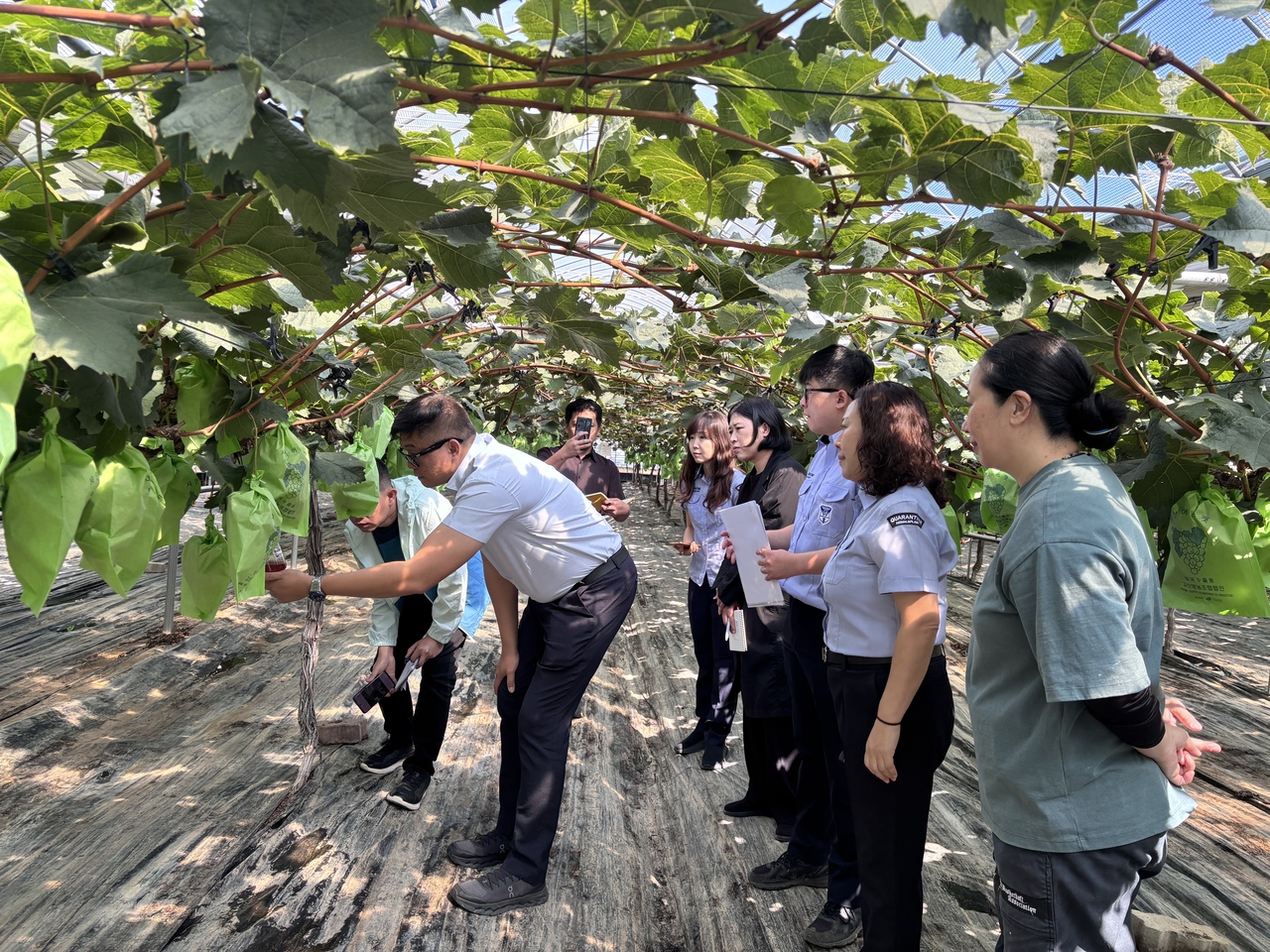
The Honam Regional Office serves as a key hub for Korean pear exports. Last year it supported the export of 7,717 metric tons of pears, accounting for about 43 percent of the national pear export quarantine volume of 17,870 metric tons. It manages 47 pear export complexes across 14 cities and counties, including Naju.
Pears have the widest export reach of any domestically grown fresh fruit, with quarantine negotiations concluded for 18 countries including the United States and Taiwan. To handle the differing quarantine requirements of each market, the Honam office holds two integrated training sessions a year for farmers and packing-house workers, and carries out cultivation-site inspections and packing-house checks according to advance schedules.
The agency plans to identify the difficulties faced by export farms and companies and bring them to the table as negotiating priorities, while expanding country-specific information services and on-site quarantine support. It intends to focus its negotiating capacity not only on opening new markets but also on improving quarantine requirements for existing export items.
adastra@heraldcorp.com





