
Number of taxpayers above 2.5 billion won taxable base more than doubles
Tax assessed on bracket above 1.2 billion won surges 93%
Bracket below 300 million won accounts for less than 10% of total tax
More than half of this year's residential property tax assessed on individuals was concentrated in the bracket with a taxable base above 1.2 billion won ($894,000), a group that makes up only about 7 percent of all notified taxpayers. The number of taxpayers in the bracket above 2.5 billion won more than doubled in a single year.
An analysis of the Ministry of Finance and Economy's "2026 Comprehensive Real Estate Tax Notice" data released Saturday shows that of the 669,000 individuals notified of residential property tax this year, about 48,000 — or 7.2 percent — had a taxable base exceeding 1.2 billion won.
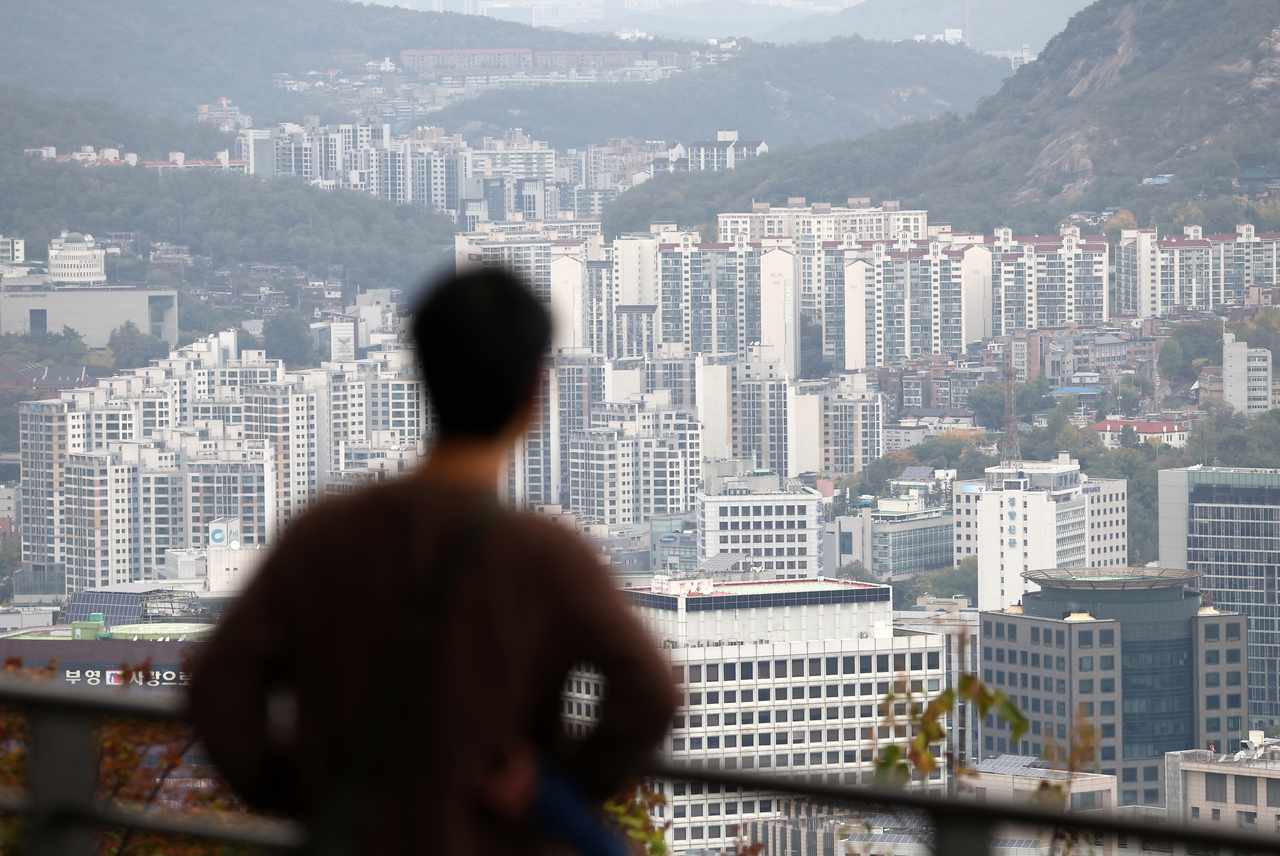
The tax assessed on this group reached 682.2 billion won, accounting for 51.2 percent of the total residential property tax levied on individuals, which stood at 1.333 trillion won.
Last year, the tax assessed in the bracket above a 1.2 billion won taxable base was 353.4 billion won, representing 45.8 percent of the total individual residential property tax of 771.8 billion won. As the assessed tax in that bracket surged 93.0 percent in a single year, its share of the total rose by 5.4 percentage points.
The total individual residential property tax assessed this year increased by 561.2 billion won from last year. Of that increase, 328.8 billion won — or 58.6 percent — came from the bracket above a 1.2 billion won taxable base.
Breaking it down further, about 39,000 individuals fell in the bracket between a 1.2 billion won and 2.5 billion won taxable base, with assessed tax of 353.4 billion won. About 9,000 individuals — 1.3 percent of all individual taxpayers notified — had a taxable base above 2.5 billion won.
The tax assessed on this top group came to 328.8 billion won, or 24.7 percent of the total individual residential property tax — up 3.0 percentage points from last year's 21.7 percent.
By contrast, 377,000 individuals — more than half of all notified taxpayers, at 56.4 percent — fell in the bracket with a taxable base of 300 million won or below, yet their assessed tax was only 130.2 billion won, or 9.8 percent of the total. That share was down 2.5 percentage points from last year's 12.3 percent.
In general, the higher the taxable base, the greater the growth in both the number of taxpayers notified and the tax assessed.
In the bracket at or below a 300 million won taxable base, the number of taxpayers and the tax assessed rose 26.9 percent and 37.1 percent, respectively, from last year. In the bracket between 300 million won and 600 million won, the taxpayer count grew 37.9 percent and the tax 44.8 percent, while the bracket between 600 million won and 1.2 billion won saw increases of 75.8 percent and 71.3 percent, respectively.
In the bracket between 1.2 billion won and 2.5 billion won, the number of taxpayers notified rose 102.6 percent and the assessed tax increased 90.1 percent.
In the bracket above a 2.5 billion won taxable base, the number of taxpayers grew 121.7 percent, from about 4,000 last year to about 9,000 this year. The assessed tax also climbed 96.3 percent, from 167.5 billion won to 328.8 billion won. The growth rate in taxpayer numbers for this top bracket was more than three times the overall individual growth rate of 39.1 percent.
The Ministry of Finance and Economy attributed the increase primarily to rising publicly assessed prices of apartment complexes, particularly in Seoul and the broader metropolitan area, noting that no major changes were made to the comprehensive real estate tax system this year.
However, the ministry projected that if housing prices stabilize and the government's proposed reform of the tax clears the National Assembly, the tax burden will ease, especially for owner-occupants of a single home.
The government's proposal would raise the taxable threshold and the basic deduction for owner-occupants from a publicly assessed value of 1.2 billion won to 1.4 billion won. The ministry estimated that if the proposal takes effect, single-household homeowners would owe no comprehensive real estate tax on properties valued at up to around 2 billion won in market price, and would see their tax burden reduced on properties valued at up to around 3 billion won, regardless of whether they live in the home.
y2k@heraldcorp.com





