
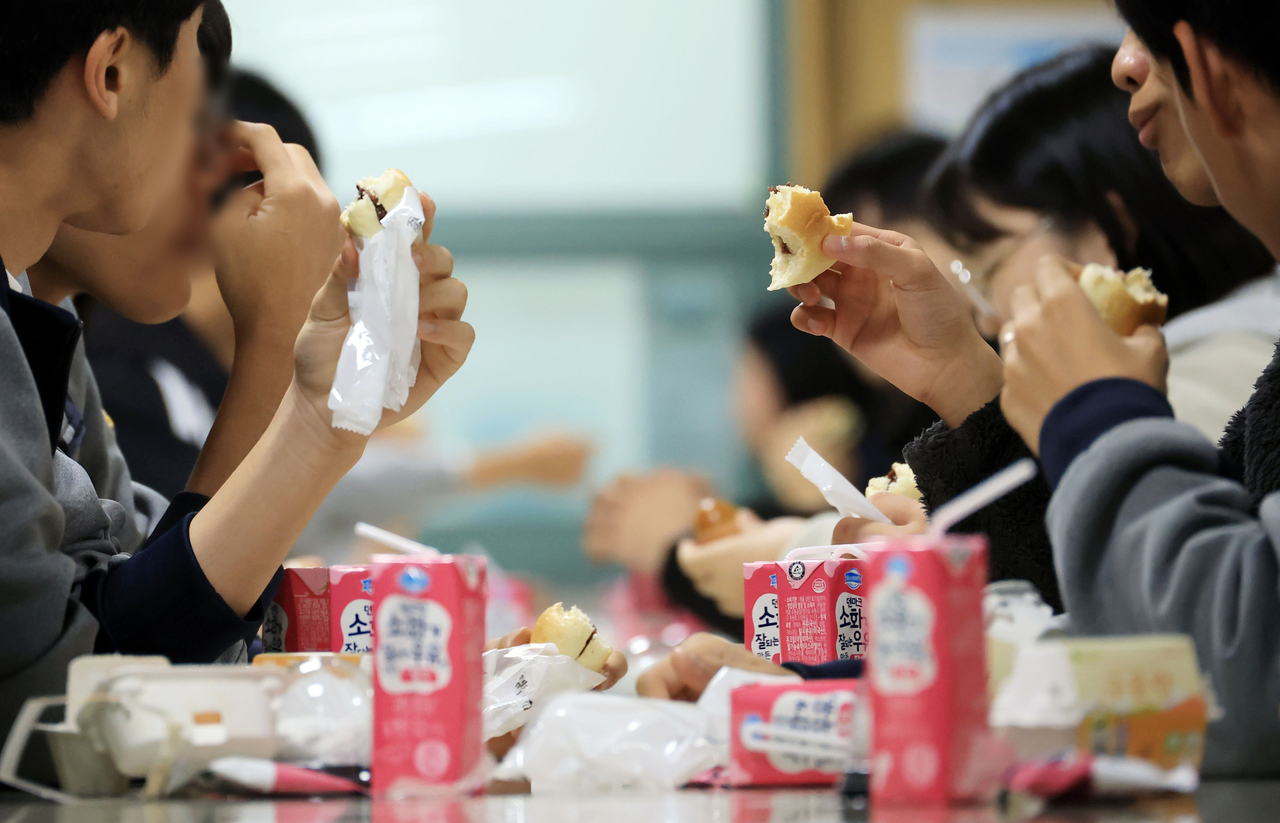
A general strike by the National School Non-Regular Workers' Solidarity Council on Friday disrupted school meals and after-school care programs across the country.
In Gangwon Province and Sejong, more than 60 percent of all schools served substitute meals such as bread and milk. Some schools sent students home early instead of serving lunch, while others did not open their after-school care classrooms.
According to a preliminary tally by the Gyeonggi Province Office of Education as of 11 a.m., 926 of the province's 2,782 schools — 33.3 percent — provided substitute meals, while 11 schools, or 0.4 percent, served no lunch at all.
In North Chungcheong Province, 246 of 508 schools with cafeteria programs — about 48.4 percent — served substitute meals, including bread and milk, boxed dosirak ordered from outside, or pizza.
In Busan, 142 schools replaced regular meals with bread and beverages, while eight others provided ready-to-eat convenience food.
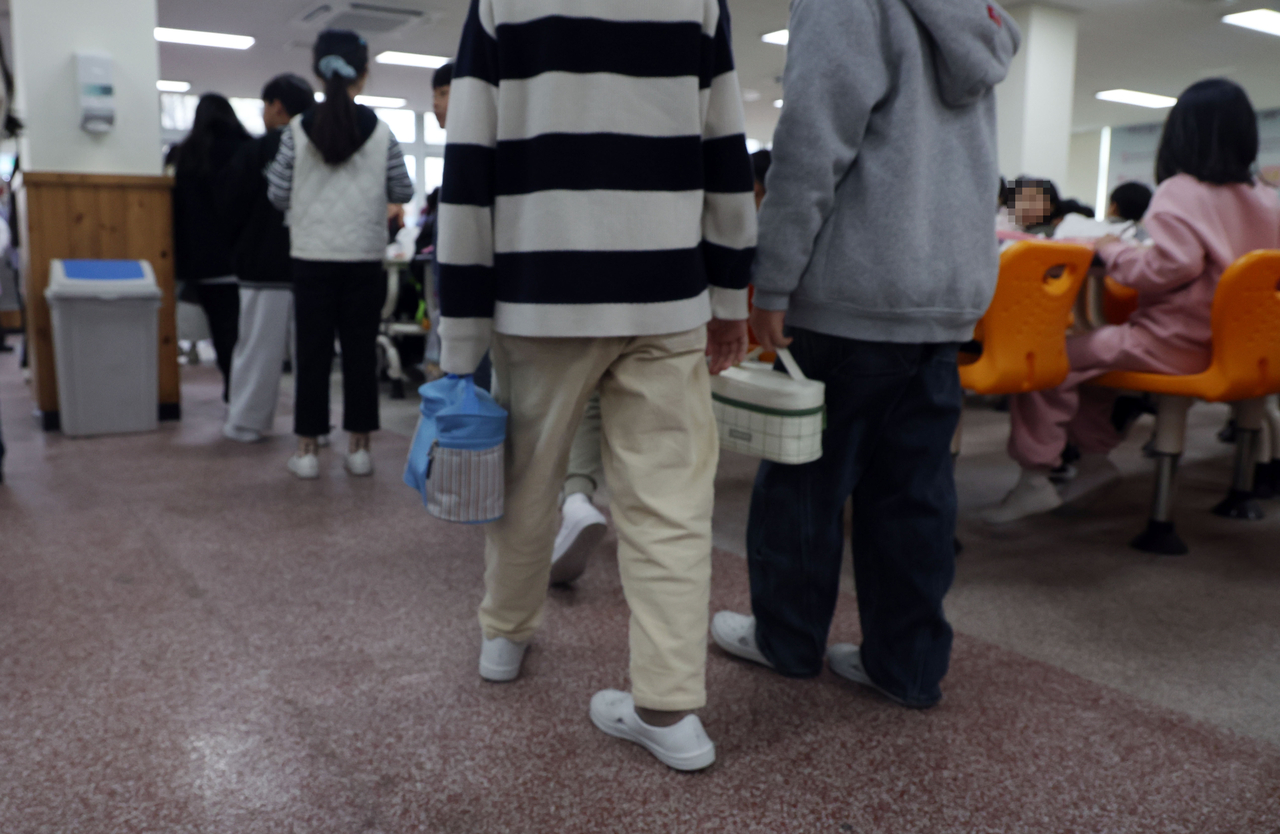
In North Jeolla Province, 355 of 783 schools — 45.3 percent — served substitute meals such as bread and milk. Including 22 schools that held only morning classes and others that rescheduled academic programs with field trips or similar activities, a total of 392 schools, or 50.1 percent, saw their meal service disrupted.
In Gangwon Province, 424 of 670 schools — 63.3 percent — provided substitute meals. Another 30 schools, or 4.5 percent, adjusted their schedules and dismissed students early without serving lunch.
In Sejong, 97 of 152 schools — 63.8 percent — served substitute meals, while the remaining 55 operated their cafeterias as usual.
After-school care programs were also partially disrupted.
In Gyeonggi Province, 33 of 1,336 elementary schools with after-school care classrooms — 2.5 percent — did not open them Friday.
In North Chungcheong Province, 5 of 30 elementary schools whose care staff joined the strike were unable to open their after-school classrooms. In South Gyeongsang Province, 4 of 513 schools with after-school care programs, or 0.8 percent, kept their classrooms closed.
Some districts merged two after-school care classes into one, or brought in education researchers and teachers as substitute staff.
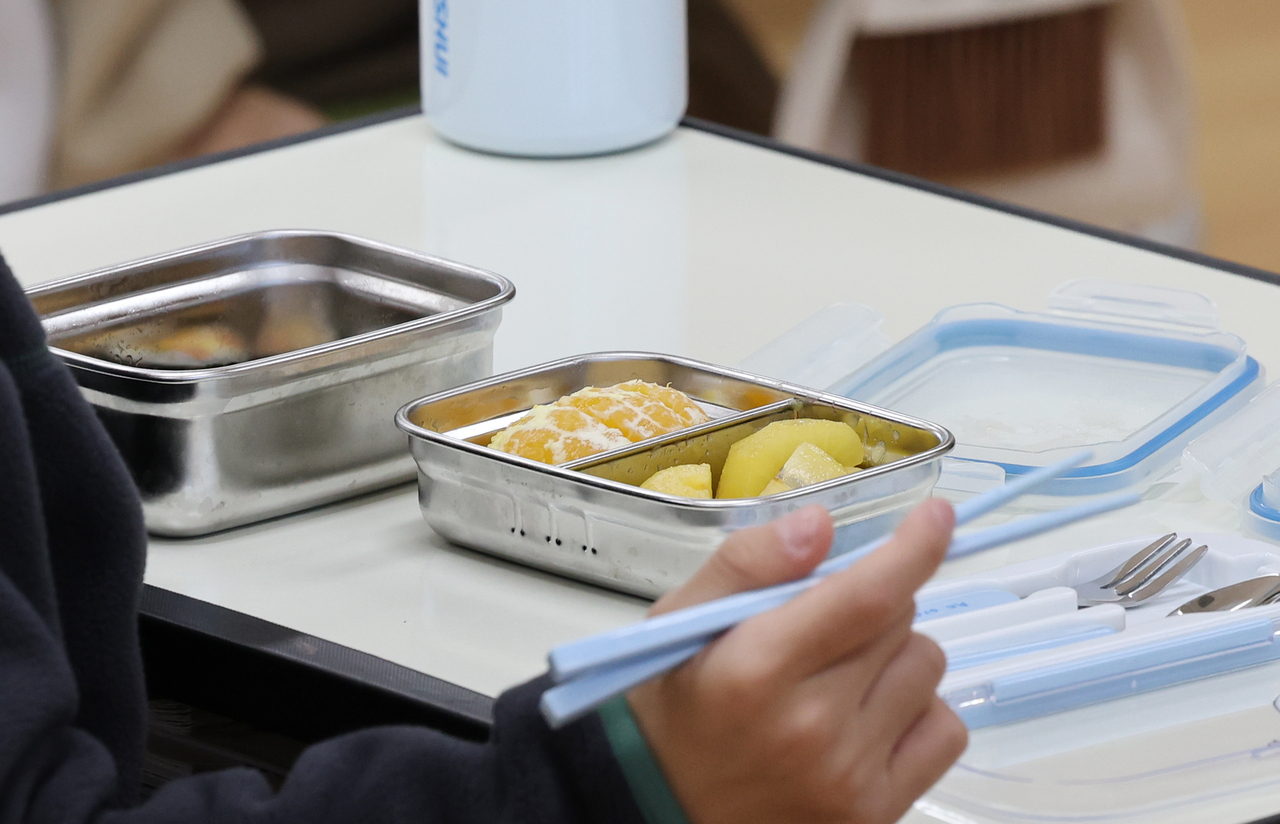
The strike visibly changed the lunchtime scene at schools across the country.
At one elementary school in Chuncheon, Gangwon Province, students ate lunch in their classrooms rather than the cafeteria.
The school distributed bread and apple juice, and some students brought dosirak or cup noodles from home. Students shared banchan from their packed lunches with one another.
At an elementary school in Suwon, Gyeonggi Province, some students ate packed lunches from home instead of the substitute meals provided. A third-grader who brought a lunchbox filled with rice balls and tteok-galbi said, "Pork was supposed to be on the menu today, so I'm upset that we got bread instead."
A school official said parents had been notified about the substitute meals several days before the strike. "We also let them know that students with allergies, or whose parents preferred it, could bring their own lunch," the official said.
The solidarity council called the one-day general strike after collective wage negotiations with the Ministry of Education and 16 city and provincial education offices broke down.
The council called for a 105,000-won ($78) increase in base pay, a 1 million won raise in annual bonuses, and the creation of new job-duty allowances and occupational stipends for permanent positions. The Ministry of Education and regional education offices activated emergency response centers to manage the situation.
husn7@heraldcorp.com





