Avoid overexertion and take regular breaks, medical experts say
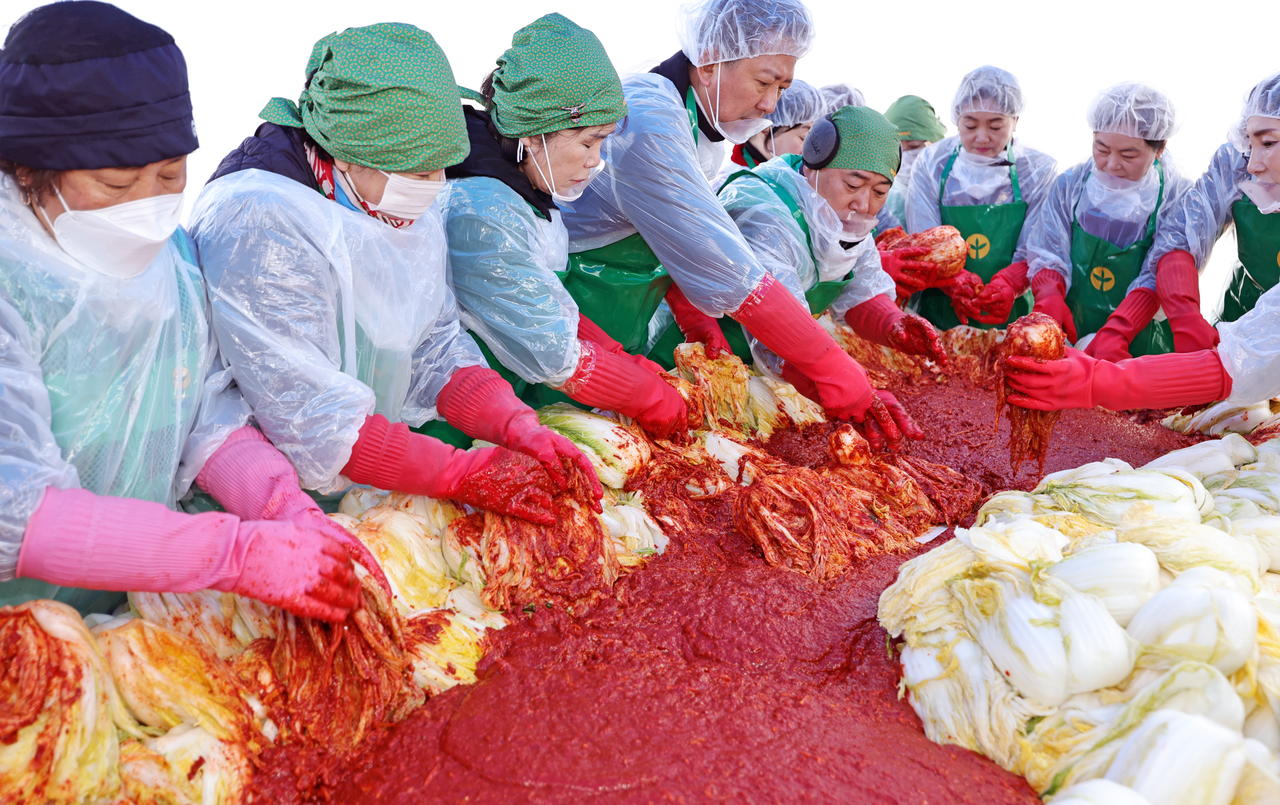
As kimchi-making season gets underway in earnest, many households are busy preparing their winter supply — but the hours spent crouching and mixing are taking a toll. The repeated bending, salting and seasoning of cabbage puts significant strain on the back and knees.
Medical professionals are urging people with pre-existing back or knee pain, or those with osteoarthritis, to take extra care, warning that kimchi-making can worsen their symptoms.
An official at Gangdong Kyung Hee University Hospital said proper posture during the work is the single most important factor in preventing musculoskeletal pain in the knees and back afterward.
Squatting on the floor is particularly hard on the knees. When the knees are deeply bent while bearing body weight, pressure on the patellofemoral joint at the front of the knee increases sharply.
Research has shown that prolonged, repeated kneeling or squatting can raise the risk of developing knee osteoarthritis.
Sitting cross-legged on the floor — a traditional posture for kimchi-making — strains the lower back. Bending forward or twisting the torso to reach cabbage and seasoning placed on the ground puts added stress on the back muscles and surrounding tissue, making lower back pain likely.
The best way to reduce such pain is to improve the working environment and posture, and to avoid overexertion.
Working on the floor should be avoided as much as possible. Ideally, the cabbage and seasoning should be placed at a height where they can be reached without bending deeply at the waist.
If sitting is unavoidable, a chair with back support — one that allows the feet to rest flat on the floor without forcing the knees into a sharp bend — is recommended. Ingredients should be kept as close to the body as possible to minimize reaching and twisting. When standing, alternating between sitting and standing rather than holding one position for a long time is helpful.
Regular rest breaks are essential. Stopping work about once an hour to straighten and stretch the back and knees is advisable.
Carrying heavy containers of salted cabbage or finished kimchi alone in a single trip should be avoided. Two people should lift together, or a cart or other carrying aid should be used.
If back or knee pain develops after kimchi-making, the priority is to cut back on strenuous activity while keeping gently mobile within a pain-free range. If the knee swells severely, or if back pain is accompanied by leg weakness or worsening pain, medical attention should be sought promptly.
"Kimchi-making is an important annual tradition for preparing a family's winter food supply, but there is no need to push through it at the cost of your health," said Kim Dong-hwan, a professor of rehabilitation medicine at Gangdong Kyung Hee University Hospital. "Reducing the amount you make, sharing the work with family members, or simply buying kimchi are all valid options. What matters is breaking away from working methods that put unnecessary strain on the body."
20ki@heraldcorp.com