Federation of Korean Industries analyzes corporate social contribution cases
AI technology expands reach into education, employment and disaster response
Sustaining impact after initial rollout remains a key challenge
Major South Korean companies are deploying AI to address a widening range of social challenges — from elderly care and youth job training to disaster response — according to an analysis by the Federation of Korean Industries (FKI).
The FKI released the findings Sunday, drawing on sustainability reports and press materials from leading domestic companies to identify four core keywords grouped under the acronym "LEAD."
The framework covers Learning, Employment, Accessibility and Daily Care & Safety, focusing on how corporate technology and resources translate into tangible benefits for different segments of society.
Companies are using AI to broaden learning opportunities for people ranging from high school students to older adults.
Hyundai Mobis developed a curriculum on AI-powered autonomous driving for use in regular high school classes. Students build their own autonomous driving algorithms and implement them in model cars, learning the principles and practical applications of AI firsthand.
KT Corp has been strengthening generative AI education through its "IT Supporters" program, which dates to 2007. Retired employees serving as senior IT instructors teach single-person elderly households in Seongnam how to use generative AI tools.
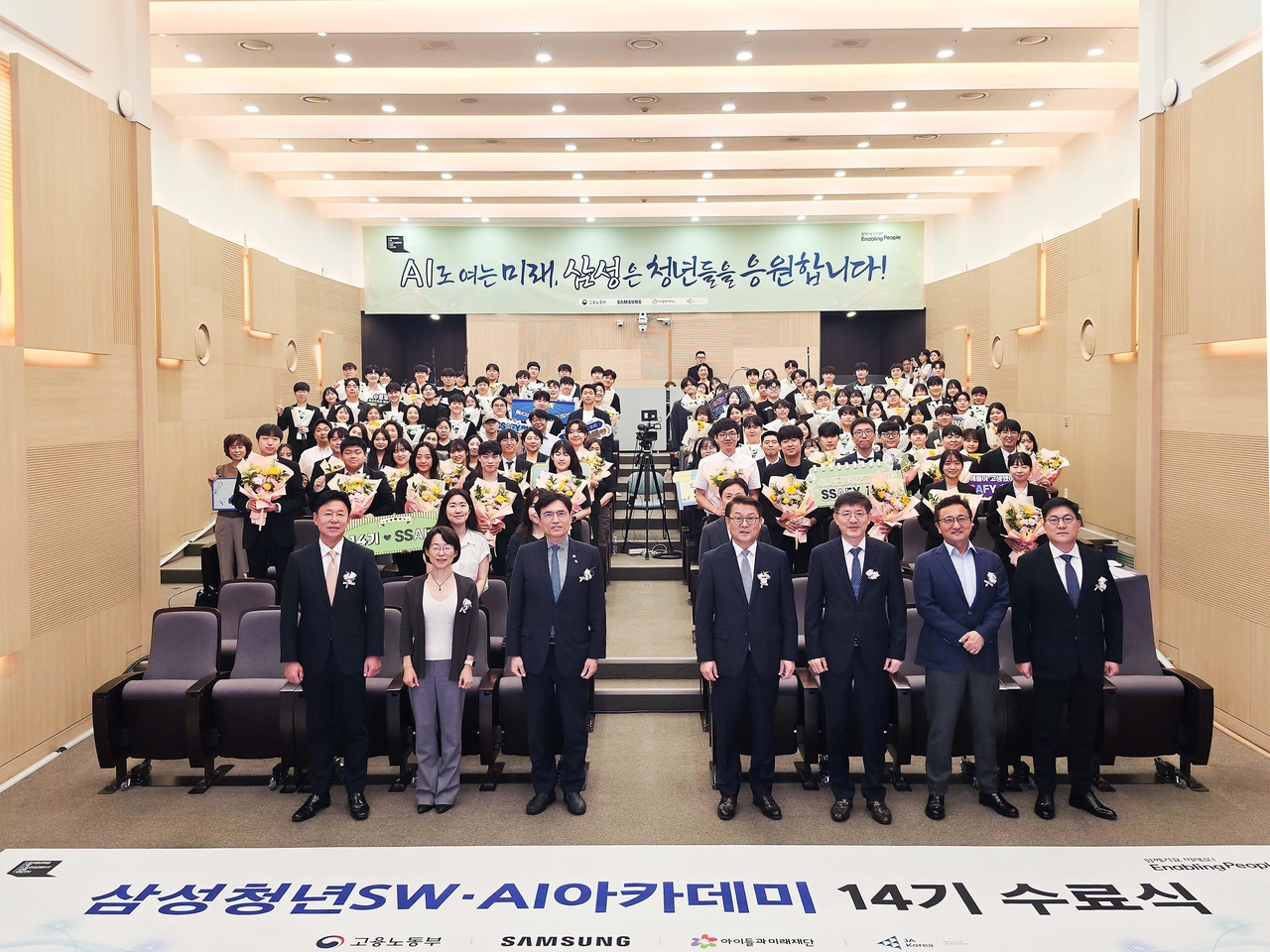
Companies are also bridging the gap between AI skills and actual employment. Samsung's Software and AI Academy for Youth provides unemployed young people with a year of software and AI training alongside job placement support.
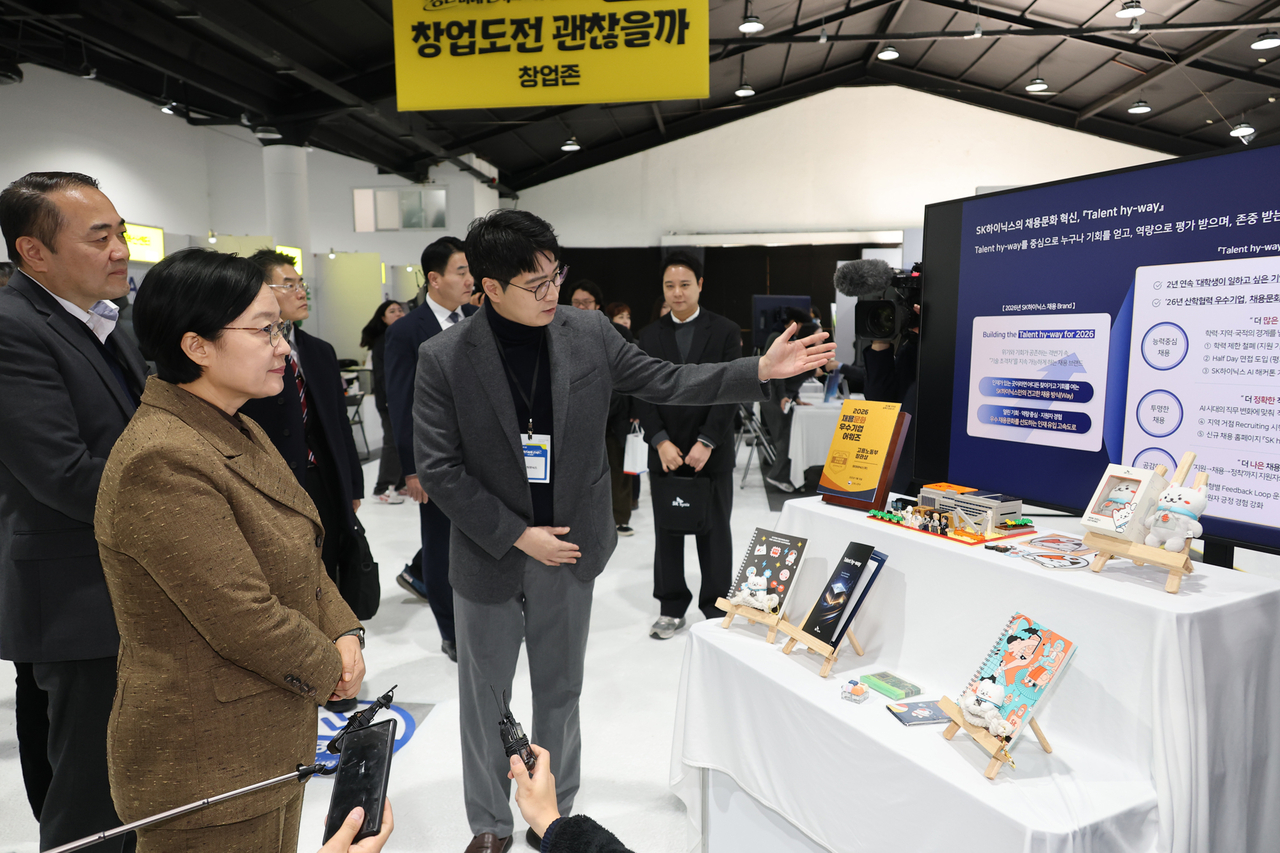
SK hynix's "AI Data Planet" program trains immigrant residents in AI annotation — processing images, audio and other data so AI systems can learn from them — while also offering Korean-language education and job placement assistance. This year, the program expanded its target beneficiaries to include women who have left the workforce and single-parent households.
Several companies are using AI and digital technology to lower communication barriers. NC's free app "My AAC" (Augmentative and Alternative Communication) lets people who have difficulty expressing themselves verbally select pictorial symbols, which AI then converts into spoken words. "Peach Bookshelf AI," developed with support from Kakao Impact, rewrites complex texts into simpler language tailored to the reader's comprehension level.
BGF Retail has partnered with the AI visual assistance app Sullivan Plus so that people with visual impairments can point their smartphone camera at a convenience store product's barcode or price tag and receive spoken information about the product name, price and any ongoing promotions.
AI capabilities are also making an impact in care and safety. SK Telecom's "AI Care" service uses AI speakers and phone calls to check on the well-being of elderly people living alone, sends medication reminders and connects users with emergency services or on-site personnel when needed.
Hyundai Motor Group donated four unmanned firefighting robots — equipped with AI-based visibility-enhancing cameras and remote-control functions — to the National Fire Agency. Firefighters can operate the robots remotely to carry out fire suppression in smoke-filled environments where visibility is severely limited.
The FKI said AI-driven corporate social contribution must move beyond pilot projects and spread across society, calling on companies to measure real-world usage and effectiveness in order to refine their programs. It identified "on-the-ground adoption and sustained use after initial support" as the key challenge going forward.
"As AI transformation in the corporate sector accelerates in earnest, social contribution is expanding beyond financial and material support into an arena where technology helps solve social problems," an FKI official said, and went on to say the organization would work to ensure that companies' AI capabilities drive both industrial growth and improvements in people's quality of life, in line with the FKI's "New K-Industry" vision.
joze@heraldcorp.com