Ministry of Land, Infrastructure and Transport proposes revision to Building Act enforcement decree, adding post-completion inspections for multi-unit homes and neighborhood facilities
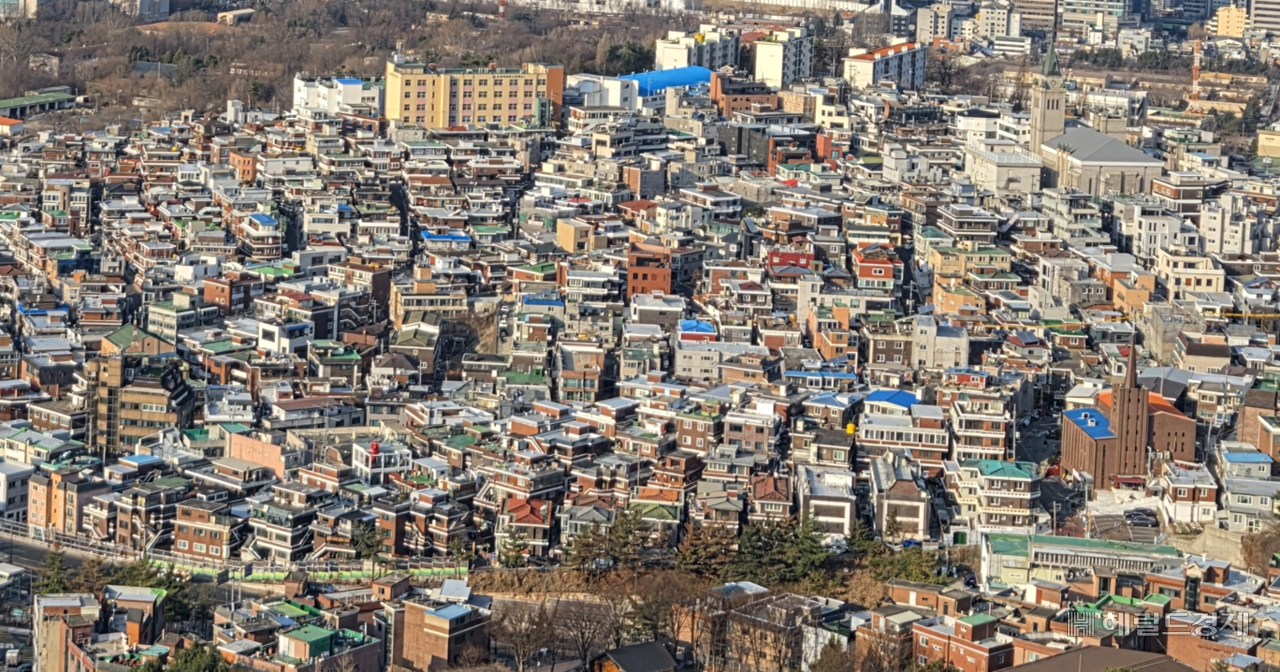
Building owners who ignore correction orders for unauthorized expansions or other illegal modifications will face compulsory compliance fines that grow heavier each year. Multi-family homes, multi-unit residential buildings and neighborhood commercial facilities will also be subject to local government inspections even after receiving final occupancy approval.
South Korea's Ministry of Land, Infrastructure and Transport announced Friday that it had filed a legislative notice for a proposed revision to the Building Act enforcement decree reflecting these changes. The revision sets out detailed criteria — including the escalating fine structure — to implement amendments to the Building Act passed last August that take effect Feb. 12 next year.
Under the proposed revision, compulsory compliance fines will increase starting the year after the fine is first imposed on a building owner who has not complied with a correction order. The surcharge rates are 10 percent in the first year after initial imposition, 20 percent in the second year, and 50 percent from the third year onward. Owners who restore a building to its original state immediately after being cited will not face any surcharge.
The ministry said the escalating structure was necessary because many violations are driven by profit or personal convenience, and fines must be set high enough to outweigh the economic gains from noncompliance in order to encourage early correction. The share of correction orders that have been fully resolved — through restoration or other remediation — currently stands at only 40 to 50 percent. As of last year, 30,421 building owners were subject to the regulations covering illegal structures.
To close the enforcement gap that has allowed illegal expansions and alterations to occur after occupancy approval, the revision also designates categories of buildings subject to post-completion inspections by permitting authorities to verify that structures are being maintained as approved. The categories are: single-family homes (including multi-tenant and multi-unit houses), apartment buildings (excluding those subject to mandatory management), first- and second-class neighborhood commercial facilities, and other buildings designated by local ordinance. Apartment complexes already subject to mandatory management — which have on-site management offices and resident representative councils overseeing them on an ongoing basis — were excluded to avoid unnecessary use of administrative resources.
By building type, multi-family homes recorded the highest violation rate last year at 10.3 percent, covering 26,462 buildings. Multi-unit residential houses followed at 5.9 percent, second-class neighborhood commercial facilities (general restaurants) at 5.6 percent, first-class neighborhood commercial facilities (retail stores) at 3.6 percent, apartments at 1.5 percent, and single-family homes at 0.9 percent.
As of December 2024, there were approximately 148,000 buildings nationwide classified as illegal structures — 83,000 residential and 65,000 non-residential — with the number growing by 5,000 to 6,000 each year.
The ministry said it does not expect the post-completion inspection requirement to place a significant burden on local governments. Among the five local governments with the largest number of buildings subject to post-completion management, the annual caseload is estimated at between 476 and 844 cases. The ministry also noted that provisions taking effect next February — including penalties for obstructing or evading inspections, and rules allowing compulsory fine revenue to be used to fund illegal-structure investigations and remediation — will further support enforcement.
Meanwhile, ahead of the new escalating fine regime, a special act to temporarily legalize small-scale residential illegal structures will take effect Dec. 17 for an 18-month period. Buildings that were in effect completed as of Dec. 31, 2023 are eligible. It is the first such legalization drive in 12 years, since 2014, when 26,924 of the 28,388 eligible buildings were successfully legalized.
smh@heraldcorp.com