14 of 17 banking groups and banks post higher CET1 ratios
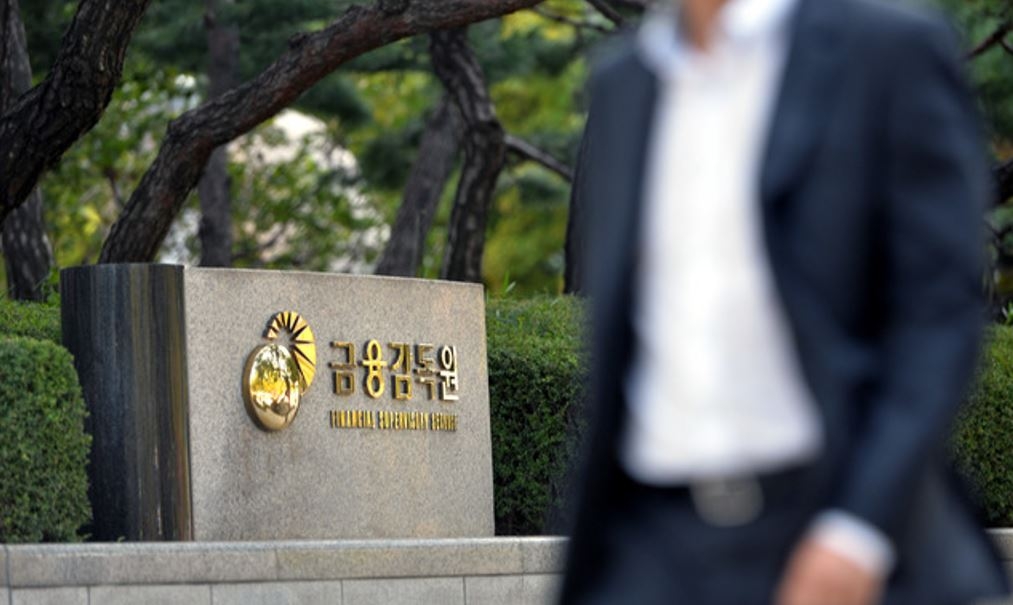
South Korea's banking sector improved its capital adequacy in the third quarter as earnings accumulated during the period boosted capital, while a drop in the exchange rate and other factors reduced risk-weighted assets.
According to the Financial Supervisory Service, the domestic banking sector's Common Equity Tier 1 ratio under Bank for International Settlements standards stood at 13.87% as of end-September, up 0.24 percentage points from the end of the previous quarter, according to preliminary figures released Monday. The ratio was 0.37 percentage points higher than the year-end 2025 level of 13.50%.
The CET1 ratio is a key capital adequacy indicator measuring a financial institution's ability to absorb losses. In the third quarter, the banking sector's common equity capital rose 1.3 trillion won ($968 million), or 0.4 percent, while risk-weighted assets fell 35.4 trillion won, or 1.3 percent.
The Tier 1 capital ratio came in at 15.13%, up 0.27 percentage points from the end of the previous quarter, while the total capital ratio rose 0.23 percentage points to 16.02%. The leverage ratio also improved, climbing from 6.56% to 6.69% over the same period.
Among the five major financial holding companies, Woori Financial Group posted the highest CET1 ratio at 13.85%, followed by KB Financial Group at 13.80%, Shinhan Financial Group at 13.62%, Hana Financial Group at 13.45% and NH NongHyup Financial Group at 13.05%.
Of the 17 banking groups and non-holding banks surveyed, 14 saw their CET1 ratios rise. Citibank Korea recorded the largest gain at 3.94 percentage points, while Korea Development Bank rose 0.58 percentage points, partly due to a paid-in capital increase. K bank (-0.41 percentage points), JB Financial Group (-0.14 percentage points) and Kakao Bank (-0.08 percentage points) were the only institutions to post declines.
All institutions surveyed exceeded regulatory minimums. The Financial Supervisory Service requires a CET1 ratio of at least 8.0%, a Tier 1 capital ratio of at least 9.5% and a total capital ratio of at least 11.5%. Domestically systemically important banks and banking groups are subject to an additional 1 percentage point surcharge on each threshold.
The Financial Supervisory Service cautioned, however, that credit risks in vulnerable sectors could weigh on banks' capital adequacy amid persistent uncertainty stemming from geopolitical risks such as the war in the Middle East and rising interest rates at home and abroad. The regulator said it plans to guide banks to maintain sound capital management so they can build sufficient buffers against potential losses and continue to provide stable funding.
Meanwhile, the Financial Supervisory Service recently distributed standardized disclosure materials to help financial companies voluntarily review their consumer protection frameworks from the product design and development stages. The move aims to prevent a recurrence of large-scale consumer losses — such as those caused by the Hong Kong H-index equity-linked securities crisis — by strengthening conflict-of-interest management and ensuring greater objectivity and fairness in product review procedures during development.
rim@heraldcorp.com