
Park Hyo-shin debuted in 1999 with his first studio album "Haejul Su Eomneun Il" and entered the Korean pop scene. Hits including "Good Person," "Snow Flower" and "Fool" elevated him to the ranks of Korea's most representative vocalists. With "Wildflower" in 2014 he reached the peak of his vocal artistry — and cemented his status as the country's finest voice by conquering musical theater as well.
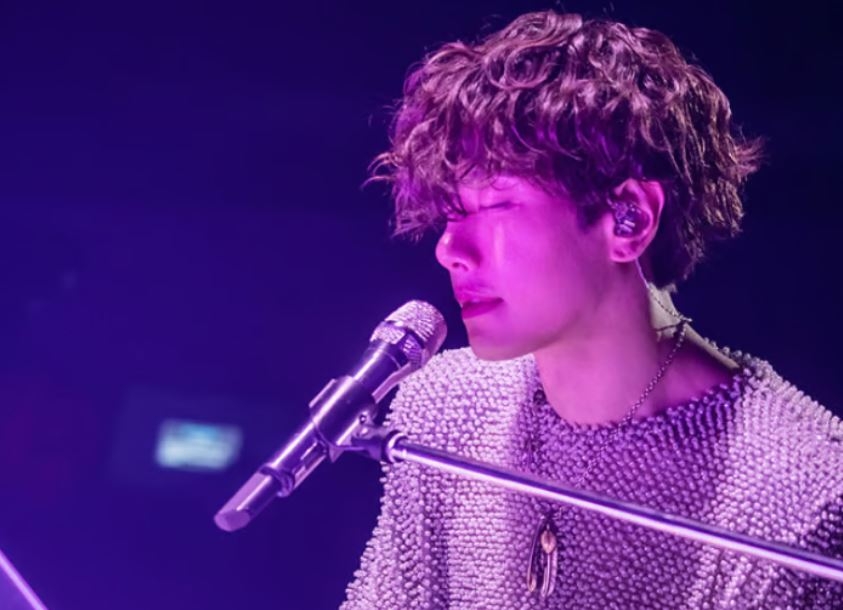
"His vocal placement…" "His use of the nasal cavity…" "His upper-register octave…"
For most singers, such language works. Pitch, range, breath, placement, phrasing, resonance — these are the tools critics use to take a voice apart and explain what makes it exceptional. The exclamation "he sings so well" leads naturally to an examination of the craft behind it, and the critic's sharp scalpel becomes a kind of guide to understanding a musician's art.
With Park Hyo-shin, however, that process stubbornly refuses to function. Technical vocal perfection is already baked in as a baseline, and the sensibility and emotion that emerge from it provoke wonder and reverence before criticism even gets a foothold. A critic must always find a crack to pry open, must dissect structure and draw out meaning from within — but Park's voice, solid as polished marble, does not permit so much as a fingernail's width of an opening for a critical blade. Interpretation slips away. Analysis falls powerless. Only one thing remains to be said: he is simply that good.
And yet perfection, by rights, should feel unshakeable — a sensation of everything locking into place without tremor. In this voice, where everything does lock into place with precision, something else faintly drifts through: a human fragility, a sense of things crumbling, of barely holding on. The feeling of enduring a collapse heard from somewhere just offstage. Where does that sensation, audible beneath the perfection, come from?
Only the good memories remain,
only the longing remains —
I stand here still
on the road you walked away down.
— Park Hyo-shin, "Wildflower"
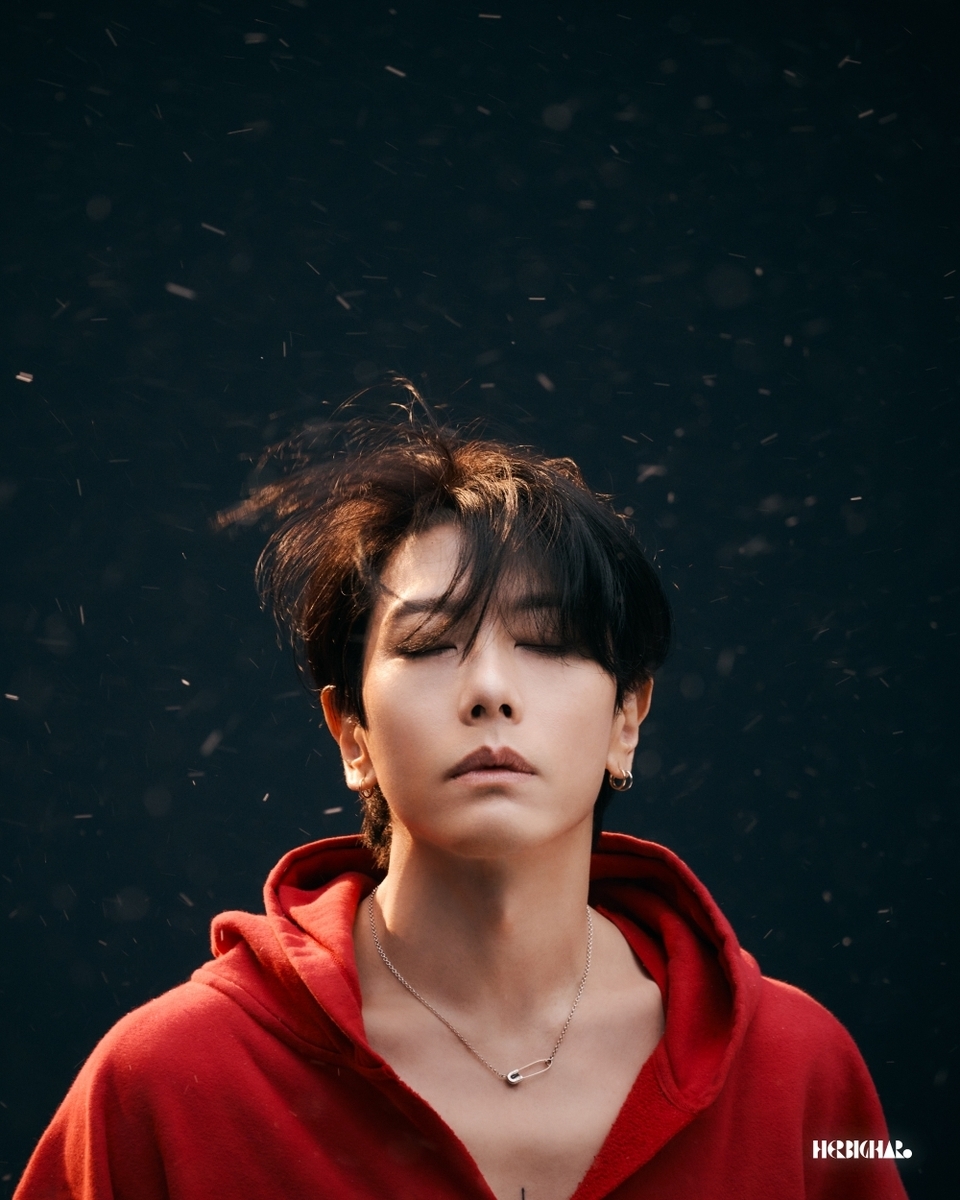
The slightly overbearing 'cattle-drive' style — Park Hyo-shin before the wildflower bloomed
Park Hyo-shin's voice reached its peak after "Wildflower," released in 2014. Looking back, the flawless instrument we know today was not always there from the outset.
The earlier Park Hyo-shin was already a vocalist of remarkable ability, to be sure. His pitch was accurate, his placement stable and deep, and his high notes rang out with power. Technically, he was beyond reproach. But it would be fair to say he had not yet arrived at the density and depth he possesses now. The perfection of that era was subtly different from what it is today — closer, in the end, to a "well-crafted voice" than to something more.
This was less a personal limitation than a consequence of the system within which Korean ballads were produced during the late 1990s and early 2000s, when Park debuted and was most active. Ballads of that period were largely generated within a composer-centered system, and songs were frequently delivered to singers in a fully finished form. The emotional arc, the point of escalation, the climactic explosion and its resolution — all of it was woven together like a single narrative, and vocalists were judged on how precisely they could execute that design according to the composer's intent.
Within that environment, the vocalist's role was closer to performance than creation. Emotion was something to follow, not generate; a song was something to reproduce, not interpret. Park Hyo-shin executed that grammar with precision and density, but he had not yet reached the level of what we now recognize as a "problematic vocalist" — in the sense of something bordering on the miraculous. His refinement was confined to completeness within a given framework: high notes surged at predetermined moments, emotion flowed in designed directions, and songs closed exactly where they were meant to close.
Ultimately, the early Park Hyo-shin was a vocalist of near-perfect technique, but he had not yet converted that perfection into a language entirely his own. He sang with greater precision than anyone else along a meticulously engineered emotional arc, and his excellence within that framework made him more than enough of a "great singer."
Love blooms and fades, a flame that burns to ash —
I close my eyes against the rain.
— Park Hyo-shin, "Wildflower"
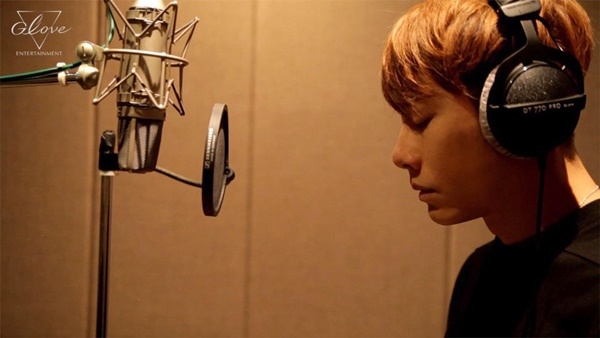
Four years of silence — a wildflower blooming on parched ground
The change that could be sensed in Park Hyo-shin after his years of incident and absence was something close to a leap across a chasm. Having disappeared from the stage for a time and then passed through whatever lay in between, he had become a clearly different vocalist. Judged purely by the outcome, the transformation was striking enough to be described as an entire stage skipped over in a single bound.
This was a growth that could not simply be called greater refinement. The difference between before and after shows most clearly in how he approaches a song. Where the earlier voice was focused on faithfully tracing a designed melody and emotional flow, the later Park Hyo-shin no longer merely reproduces that flow — he no longer settles for raising the level of completion within a given framework, but instead pulls the framework itself toward him. The song is no longer something performed; it becomes something handled.
As a result, the balance of authority between voice and song shifts. It is not the song leading the voice, but the voice organizing the song in its own way — not climbing aboard a structure already complete, but running that structure through itself once more from the inside. It is precisely at this point that Park Hyo-shin's voice escapes the category of "singing well" altogether. It is no longer a technique that can be reduced to explanation; it is closer to the transformation of Park Hyo-shin as a human being. We encountered that transformation not as a process but as a result, and the first scene of it was "Wildflower."
I could not hold on
to your hand as it moved away —
and it hurts.
— Park Hyo-shin, "Wildflower"
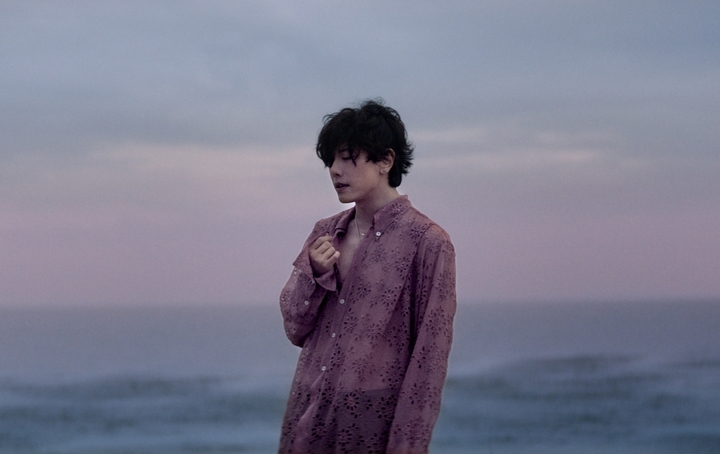
From 'Wildflower' to 'Open Those Eyes' — and a place reached again, a decade later
So how did that leap actually work in practice? The title track "Wildflower" from his seventh studio album and "Open Those Eyes" from the musical "The Man Who Laughs" are the most direct answers to that question.
Both songs share a structure that pushes emotional density to an extreme as they progress toward the end, then finally detonates it. "Open Those Eyes" in particular converges all its energy toward a single point — the final climax is so thoroughly the song's destination that calling it the song's entire purpose would not be an overstatement — and it opens and closes with a clean release. "Wildflower" follows a similar ascending structure, beginning from a low place, slowly pushing emotion upward, and ultimately arriving at the moment it breaks open.
It is precisely here that what makes Park Hyo-shin's voice extraordinary becomes visible. The high notes in the climactic explosion land perfectly, emotion reaches its peak, and the listener feels catharsis in the body — yet it does not arrive as simple release. Something unresolved is left behind in a corner of the heart. It is a relief that still aches; a liberation that sinks you deeper.
That is why the high notes in "Wildflower" are so striking. Carried within that sound is the sensation of time already spent enduring and holding on — so that the moment of achievement feels simultaneously like a moment of survival. The high note becomes not a display of vocal technique but a channel through which a human being finally releases an emotion that can no longer be held down.
That is why Park Hyo-shin's voice, technically perfect as it is, never sounds cold. "Perfection" is commonly understood as a state without flaw, with all error removed, with nothing left to add or take away — but humans cannot linger long before that kind of perfection. Smooth beauty draws admiration, yet sometimes leaves no feeling behind. The reason Park's voice stays with you is not its seamless, sterile flawlessness, but the fact that unresolved grief, wounds not yet fully healed, and the will to not collapse despite everything are all alive within it at once.
Ultimately, the peak his voice has reached is not "an unshakeable perfection" but something closer to the state of holding on to what must inevitably crumble — enduring it, surviving it, and blooming again from within it. What we hear in "Wildflower" is not merely exceptional singing. It is closer to a record of how one human being endured the emotions inside himself, lived through them, and finally made them his own.
When that spring comes
to bring you back to me someday —
on that day, I will bloom.
— Park Hyo-shin, "Wildflower"
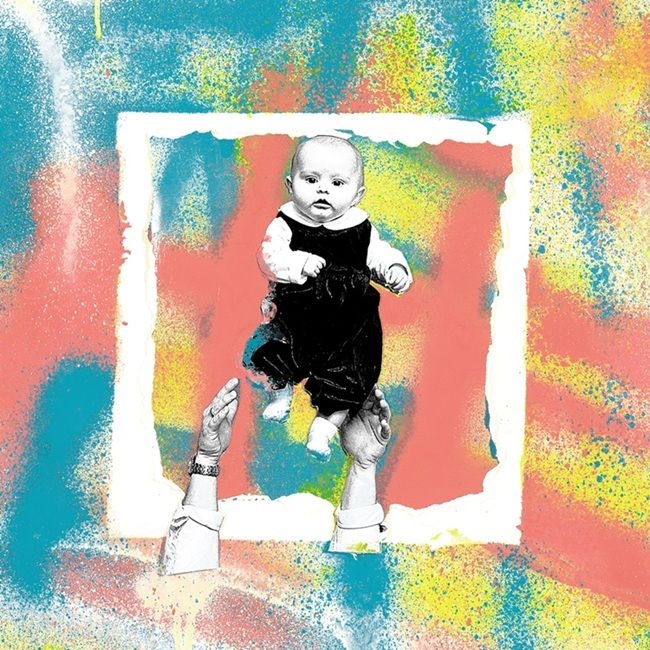
Ultimately, the "perfection" Park Hyo-shin's voice has reached is not a state that permits no flaw. It is closer to the human heart that holds on to emotions that must inevitably crumble — that endures them, survives them, and blooms again from within them. Precision and trembling, control and fracture, existing at the same time: an unstable yet perfect balance. That contradiction is precisely what pushes Park Hyo-shin as a vocalist into a realm beyond explanation. His voice transcends description not because he is simply "too good," but because the human trembling audible beyond that perfection exists there alongside it.
Park released a new album on April 3 — his first in roughly a decade. The force has eased, the tone has grown softer, the grandeur has been set aside. He sounds at peace.
The wildflower that bloomed on parched ground survived to the end, and has bloomed again in a different voice.
And the wildflower that bloomed is not one perfect song — it is the voice of a human being who refused, in the end, to disappear.
rainbow@heraldcorp.com





