A blockbuster in theaters, yet the seats stay empty
Ticket prices and screen monopolies are driving moviegoers to OTT
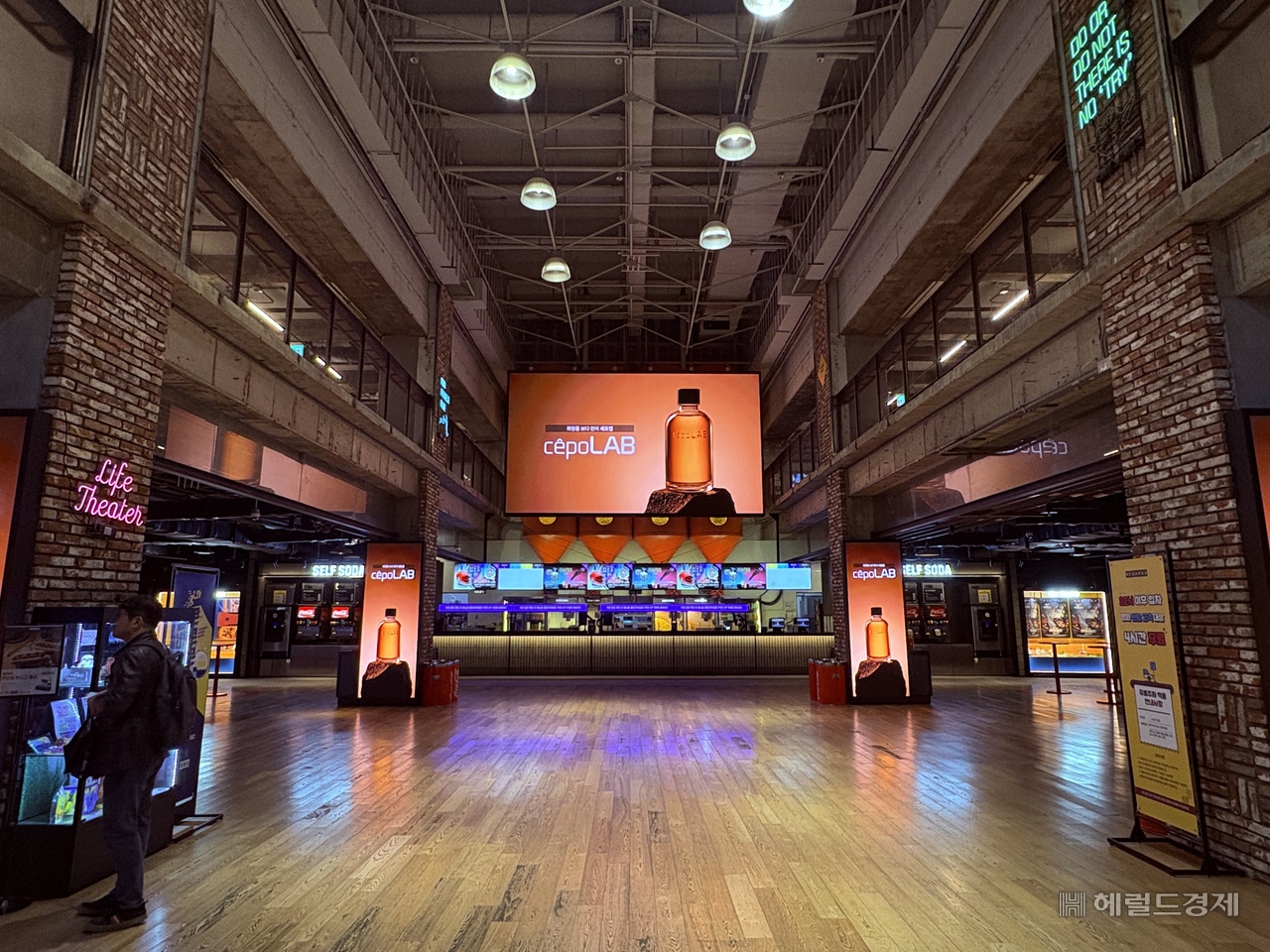
The ticket counter at Megabox COEX in Gangnam-gu, Seoul, was quiet on the morning of April 10. Even allowing for the weekday hour, the place felt nothing like a theater with a blockbuster playing.
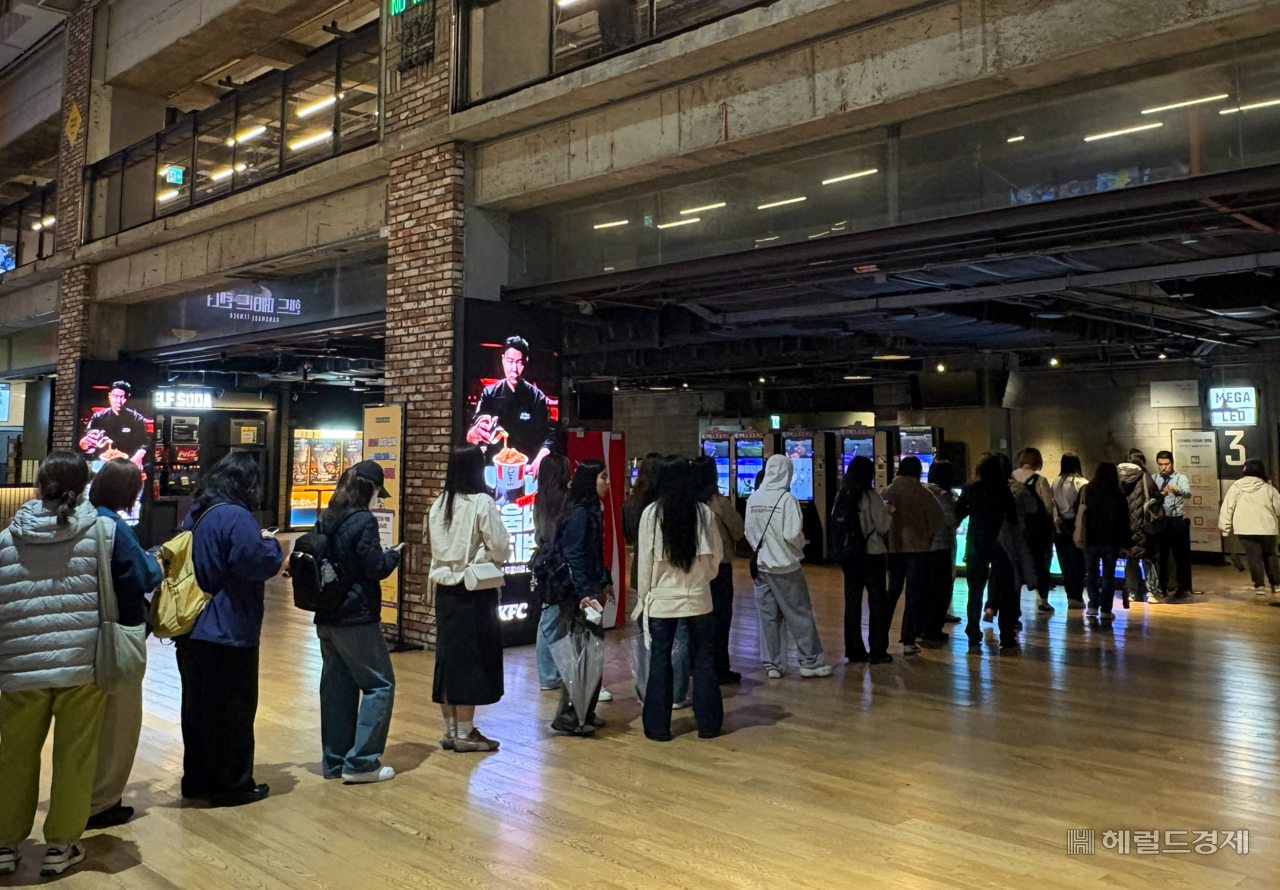
One corner, however, had a long line — not for a regular film but for an idol-group virtual reality screening. About 20 moviegoers were waiting to enter "TWS VR Concert," featuring idol group TWS.
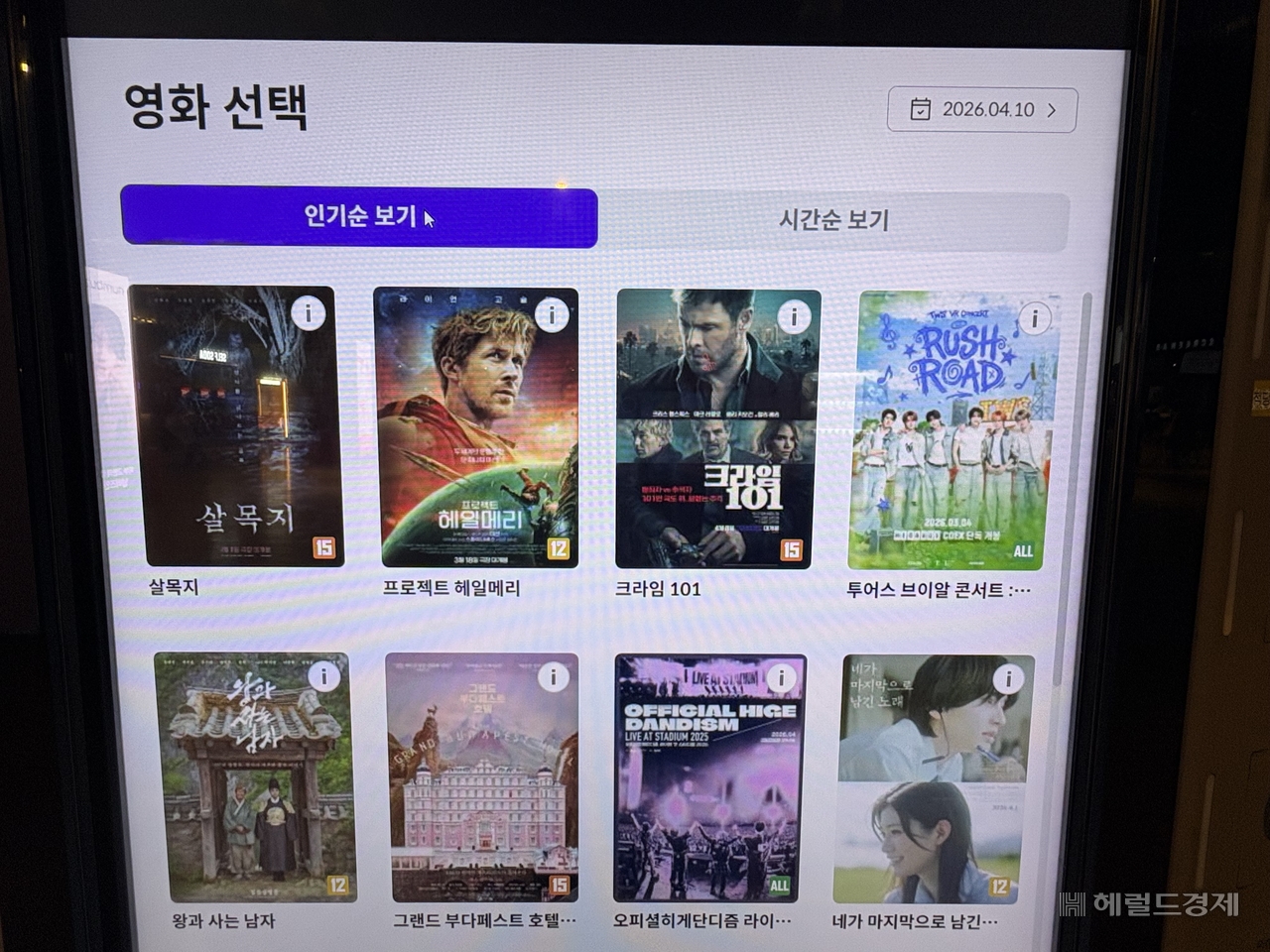
On the kiosk popularity rankings, idol content had climbed to fourth place. The King's Warden, more than two months into its run, still held fifth.
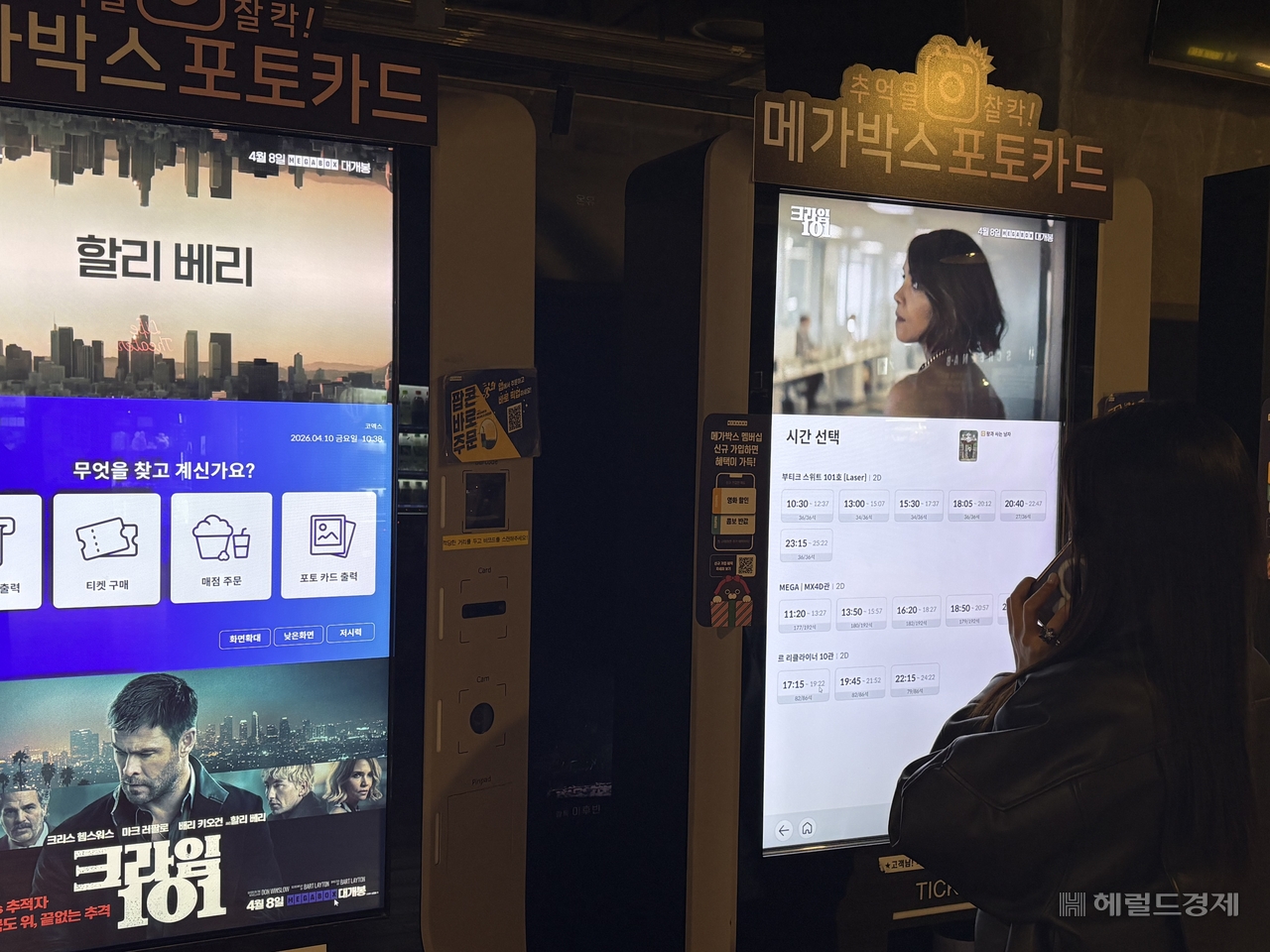
Screen allocation that day reflected the same concentration: "Project Hail Mary" occupied 7 screens, The King's Warden 3, and "Salmokji" 4, claiming the main auditoriums among them. Every other film was limited to one or two showings a day.
"These days, audiences don't come to the theater to browse — they come having already decided what to watch," an industry official said. "If there's no blockbuster, the overall audience just drops sharply."
Why audiences left: 'Ticket prices pushed us to OTT'
That moviegoers have migrated to streaming services is hardly news.
Kim Seong-cheol, 26, who lives in Sadang-dong, Dongjak-gu, said he loves films but now watches only one or two a month in theaters. "Today I didn't come specifically to see a movie — I was already at COEX and ended up choosing 'Project Hail Mary,'" he said, adding that unless a film is worth seeing on the big screen, he usually waits for it on a streaming service.
Park Yu-na, 19, from Yeomni-dong, Mapo-gu, skipped films altogether in favor of idol content. "I came because the VR concert is only available live here," she said. "Movies are too expensive to see often." She added that while films eventually appear on streaming services, live experiences like the VR concert cannot be replicated later. "When I weigh the experience against the price, this wins," she said.
A man in his 50s surnamed Jang, an office worker from Yeoksam-dong, Gangnam-gu, said he used to visit the cinema every weekend but has sometimes gone more than six months without going. "Streaming services are so varied and convenient that I just don't feel the need to make the trip," he said.
Survey data confirm the trend. A poll of 638 moviegoers conducted in February by the Film Industry Solidarity and People's Solidarity's Livelihood Hope Center found that 67.7 percent cited ticket prices as the main reason they were going to theaters less often. Some 48.1 percent said streaming services were simply more convenient, and 41.7 percent said only certain films were being screened rather than the ones they wanted to see.
Particularly striking: 66.9 percent said they had waited for a film to appear on a streaming service because of the cost of a theater ticket — meaning roughly two in three moviegoers are in effect ruling out the cinema as an option.
The sticker shock is sharp. Some 95.6 percent of respondents said current ticket prices are too high, and most said the right price would be under 10,000 won (about $7).
Kim, who came to see "Project Hail Mary" that day, said he cannot bring himself to buy a ticket without a discount coupon from a film studio or a mobile carrier. "I think a discount of 4,000 to 5,000 won from the current price would be fair," he said. "I already subscribe to Netflix and Watcha at the same time — paying separately on top of that for a movie ticket is a real burden."
Monthly streaming subscriptions run from 6,500 won to around 13,000 won (about $9) — less than the price of a single theater ticket. For groups of two to four, once concessions are added, the perceived cost gap widens considerably.
The paradox of 16 million tickets: a blockbuster era in empty theaters
According to the Korean Film Council's "2025 Korean Film Industry Review," 106.09 million people went to the cinema last year — roughly half the 226 million who attended in 2019. Even the audiences who still show up consistently tend to seek out specific films, leaving little room for diversity on the schedule.
That pattern was on full display at Megabox COEX that day. The King's Warden, more than two months after its opening, was still drawing a steady stream of viewers, while only a handful of other titles — "Project Hail Mary" among them — were attracting any meaningful audience.
Jang, the office worker in his 50s who came to see The King's Warden, said it was his first theater visit this year. "I was late to it, but I made a point of coming to see The King's Warden. There wasn't anything else I really wanted to see," he said.
The King's Warden has now surpassed 16 million admissions, rewriting Korean box-office records. That a blockbuster of this scale emerged even as audiences broadly turn away from cinemas points to a market that has shifted toward an ecosystem where only a tiny number of films survive.
"A hit film can't easily end its run," a theater official said. "There are still people coming to see The King's Warden every day, so we're keeping at least three or four screens running for it. Ultimately the whole operation revolves around a handful of titles."
Screen monopolies breed concentration, not growth
Films that crossed the 10 million admissions mark in the past typically started with 300 to 700 screens and built their audiences through word of mouth over long runs.
"The King's Men" (2005) reached 10 million admissions across a maximum of 313 screens over 67 days. "The Host" (2006) hit the same milestone in 33 days with a peak of 647 screens. "Haeundae" (2009) climbed into the 10-million club with a maximum of 764 screens.
Recent blockbusters operate on an entirely different scale: "12.12: The Day" (2023) ran on up to 2,463 screens, "Exhuma" (2024) on up to 2,355, and "The Roundup: Punishment" (2024) on up to 2,980. The King's Warden screened on a maximum of 2,170 screens and crossed 10 million admissions within a month. Compared with 20 years ago, peak screen counts have grown three- to fivefold. Seat capacity has expanded sharply as well, normalizing a model in which a film absorbs its entire potential audience in the opening weeks.
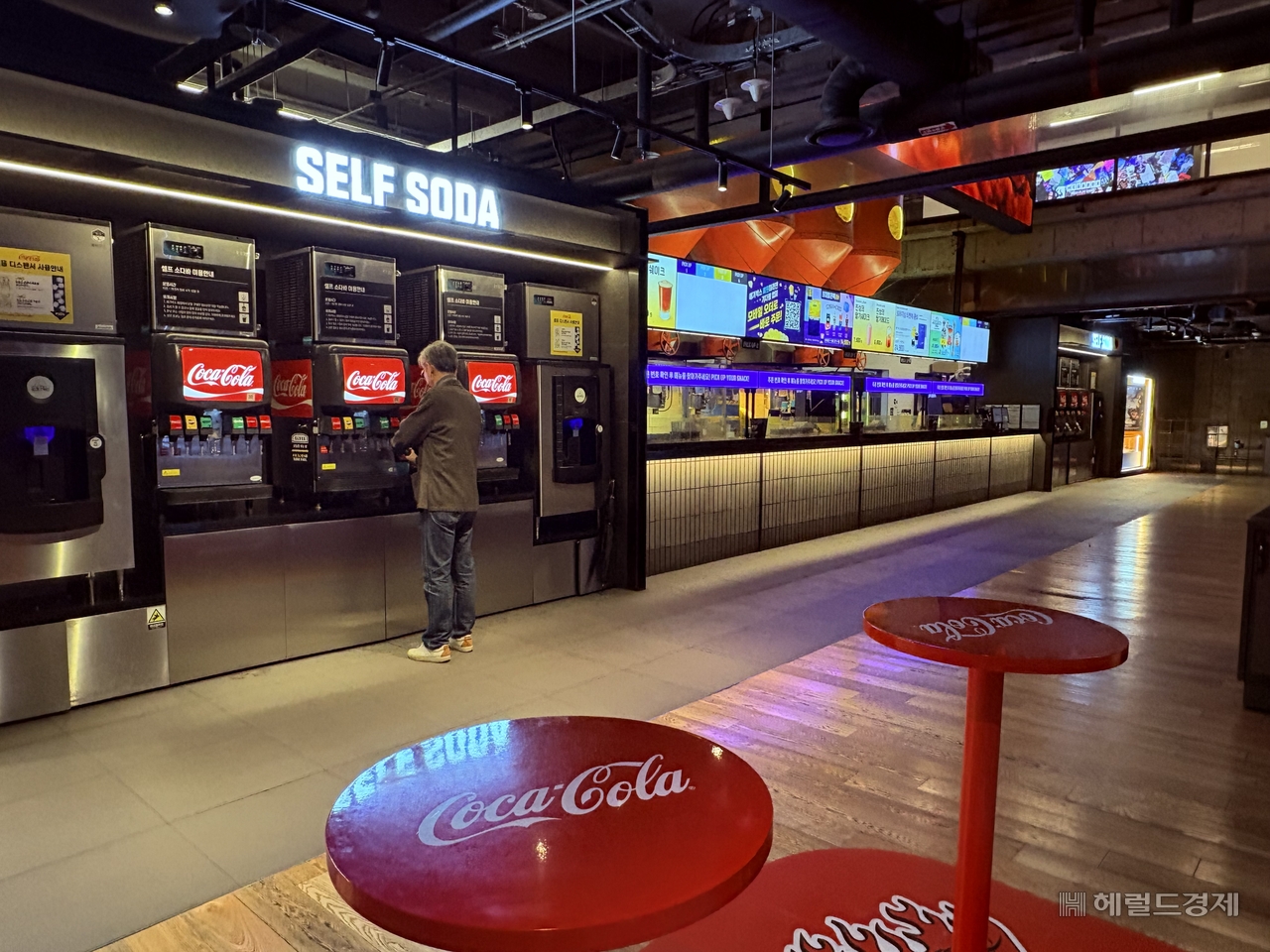
Experts agree that this structure produces audience concentration, not audience growth. A polarized ecosystem is hardening, they say, in which films that lock up screens early succeed faster while films that cannot secure screens never get the chance to find an audience at all.
Kim Byeong-in, chairman of the Korea Scenario Writers Association, said films used to reach 10 million admissions on 200 to 600 screens. "The current model of seizing 1,000 to 2,000-plus screens at once is about winning through sheer volume before word of mouth can even form," he said.
He added that under the current structure, audiences are no longer choosing films so much as consuming a pre-set menu of a few titles. "Ultimately, diverse films lose their place, and box-office success becomes less about the quality of the work and more about the scale of distribution," he said.
Park Gyeong-sin, a professor at Korea University School of Law, said theaters have been reduced to spaces for consuming specific blockbusters. "When only people who already know what they want to see bother to come, the theater's broader function weakens," he said.
He said the over-concentration of screens on particular films shrinks the overall pool of screening opportunities and ultimately eliminates audience choice as well.

jookapooka@heraldcorp.com