Society weighs whether to lower the age threshold for juvenile criminal immunity
'It's necessary' vs. 'it's not a cure-all'
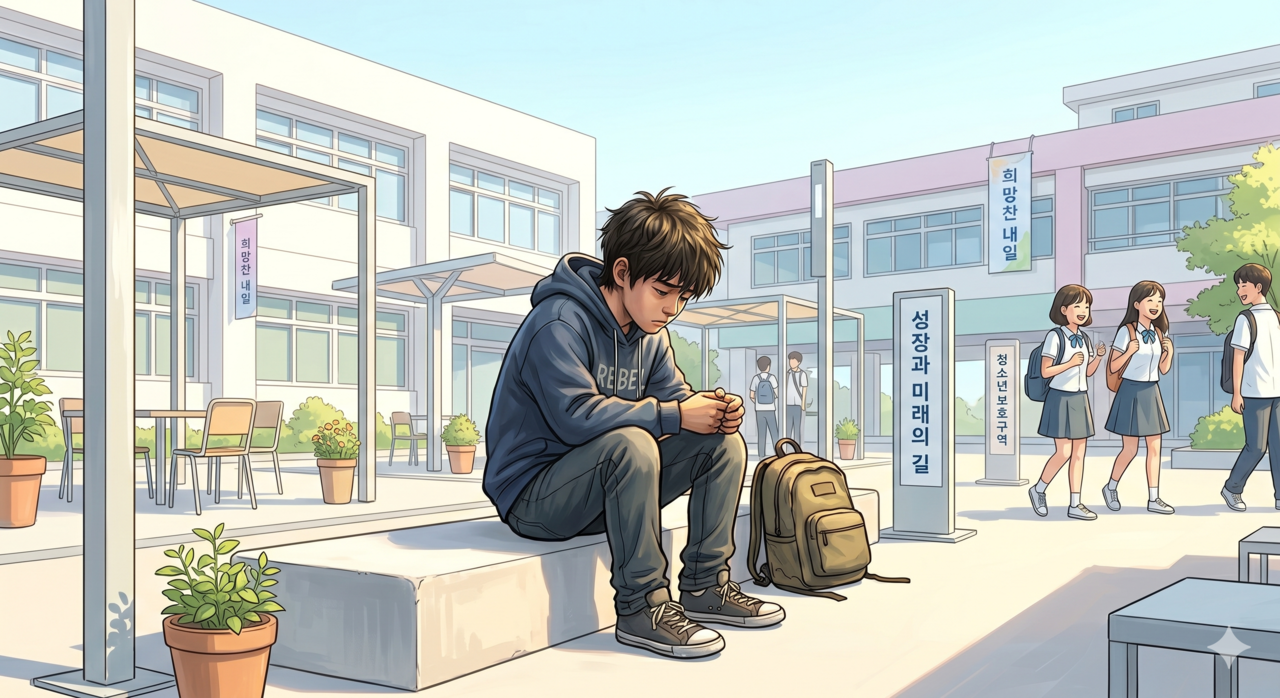
"It seems the overwhelming majority of citizens think the age should be lowered by at least one year." — President Lee Jae-myung, at a Cabinet meeting in late February
Since the president directed the government to gather public opinion on lowering the age of criminal responsibility for juveniles, the government and civil society have been locked in heated debate. Public support for tightening the threshold has grown alongside widespread — if sometimes mistaken — belief that juveniles currently face no consequences at all, and as a string of serious crimes committed by minors has drawn national attention.
Juvenile offenses have in fact been rising sharply every year, with sex crimes and theft seeing particularly steep increases. Those who cite these trends argue that young people have become more dangerous and that the age threshold must come down.
But opponents push back, arguing that lowering the age is not a panacea and that the focus should be on education and rehabilitation rather than punishment. They also contend that reducing the age threshold would put South Korea out of step with international standards.
Amid the standoff, the Ministry of Gender Equality and Family is conducting a public deliberation process to gather citizen input. Based on the results, it plans to compile policy recommendations and hold a full session of the Social Dialogue Council on April 30. The question of whether to lower the age is expected to take shape after further discussion at a Cabinet meeting.
Juveniles under criminal age: protected, not punished
“14세 되지 아니한 자의 행위는 벌하지 아니한다” (형법 제9조)
“형벌 법령에 저촉되는 행위를 한 10세 이상 14세 미만인 소년” (소년법 제4조)
The Criminal Act, enacted in 1953, bars criminal punishment for anyone under 14. Minors between the ages of 10 and 14 are instead subject to "protective disposition" — a non-criminal measure — and it is this group that is legally defined as juveniles under criminal age, or "chokbeop sonyeon," meaning youth below the age of criminal responsibility.
Cases involving such juveniles follow a different path from ordinary criminal proceedings. After a police investigation, the case goes directly to the juvenile division of a family court, bypassing the standard process in which prosecutors decide whether to indict and a court determines guilt.
The juvenile court then decides on a protective disposition. The measures range from Level 1 and 2 dispositions — such as placement in the care of a guardian or mandatory counseling — all the way to Level 8, 9 and 10, which involve commitment to a juvenile reformatory, for a total of 10 tiers.
The concept reflects a belief that minors who are physically and mentally immature are better served by rehabilitation and protection than by punishment, with the goal of helping them reintegrate into society. Yet every time a serious offense by a juvenile makes headlines, public concern about the effectiveness of that protective approach deepens.
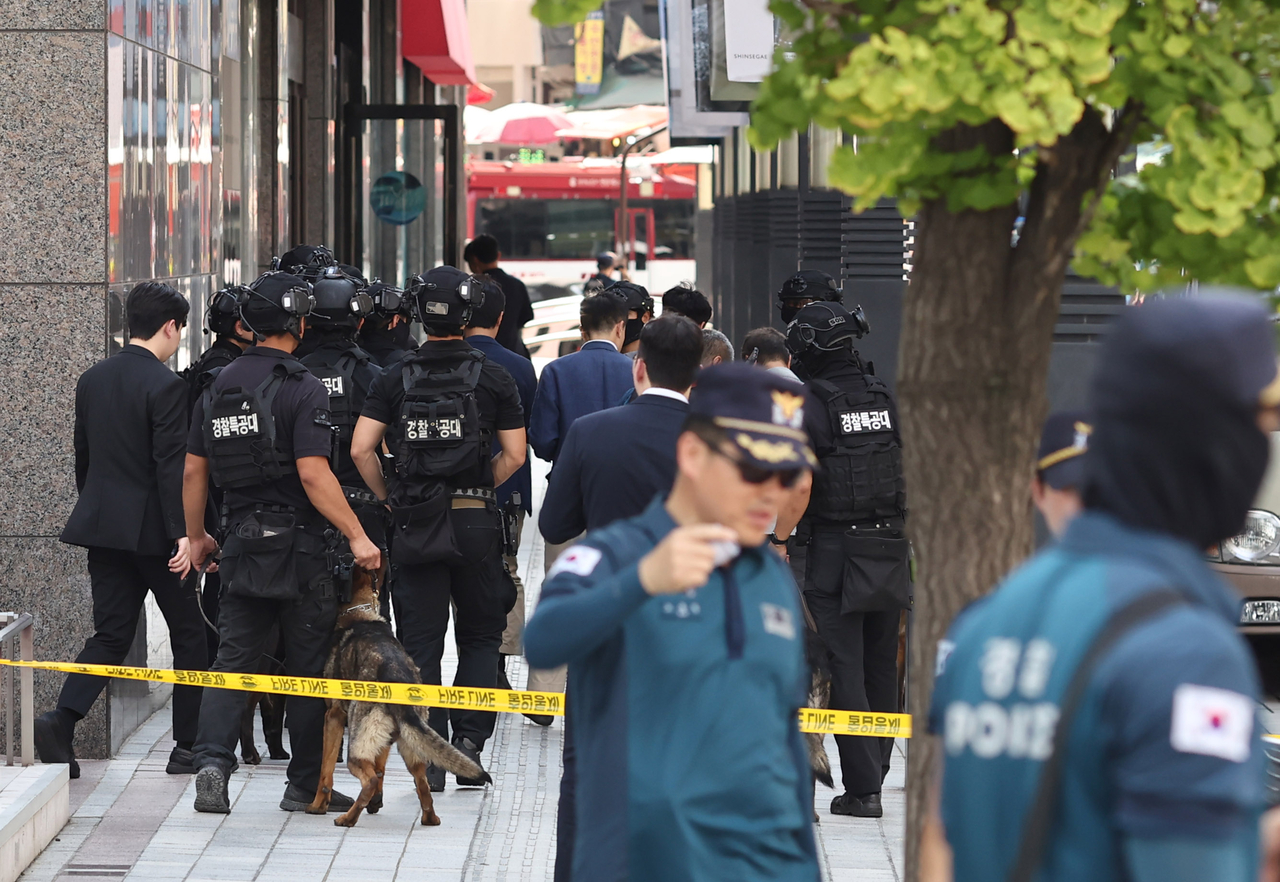
In August last year, a post appeared online threatening to plant and detonate a bomb at the Shinsegae department store in Jung-gu, Seoul. A massive police and fire department response was mobilized, some 4,000 people were evacuated, and the store was forced to suspend operations — with estimated sales losses reaching 600 million won (about $406,000).
The person behind the threat turned out to be a first-year middle school student, identified only as A, who lived on Jeju Island and was a juvenile under criminal age. He escaped criminal punishment.
Public outrage has also been stirred by cases in which juveniles avoided criminal charges for violent sex crimes. The suspects in a 2024 gang rape case in Chungju, North Chungcheong Province, were also juveniles under criminal age. Three of the five suspects were sent to the juvenile division of the Cheongju District Court.
Although the court issued rulings that amounted to findings of guilt, the details of those dispositions were not disclosed even to the victims. In a separate hidden-camera crime case, police sought to seize the mobile phones of some suspects during the investigation, but a court rejected the search and seizure warrant on the grounds that the suspects were juveniles under criminal age.
According to data on juvenile case dispositions from 2021 to 2025, the number of cases handled increased 1.8 times over the past five years.
From just over 12,026 cases in 2021, the figure climbed steeply to 15,468 in 2022, 19,884 in 2023, 21,139 in 2024 and 21,958 in 2025 — meaning more than 20,000 juveniles under criminal age now receive dispositions from juvenile courts each year.
Violent offenses have drawn particular concern. Data compiled by the Korean National Police Agency on juvenile offenses by crime type from 2022 to 2024 show that rape and sexual assault cases involving juveniles under criminal age rose from 557 in 2022 to 883 in 2024. Over the same period, theft cases climbed from 7,874 to 10,416, and assault cases from 4,075 to 4,873.
The case for lowering the age threshold
In the current 22nd National Assembly, People Power Party lawmaker Han Ji-a and Democratic Party of Korea lawmaker Yoon Jun-byeong have each introduced bills to amend the Juvenile Act and lower the age of criminal responsibility, part of a consistent push to expand the scope of criminal punishment for juvenile offenders.
Son Jeong-suk, a prosecutor at the Ulsan District Prosecutors' Office who has long advocated for lowering the age threshold, said by phone that both the overall number of juvenile offenses and the number of serious crimes have increased. "Looking at the objective statistics, I believe there is a case for lowering the age," she said.
"When you deal with cases involving children, you encounter many with serious offenses, including gang rape," she added. "The idea is not to open the door to criminal punishment for all crimes, but specifically for the most serious ones, as a deterrent."
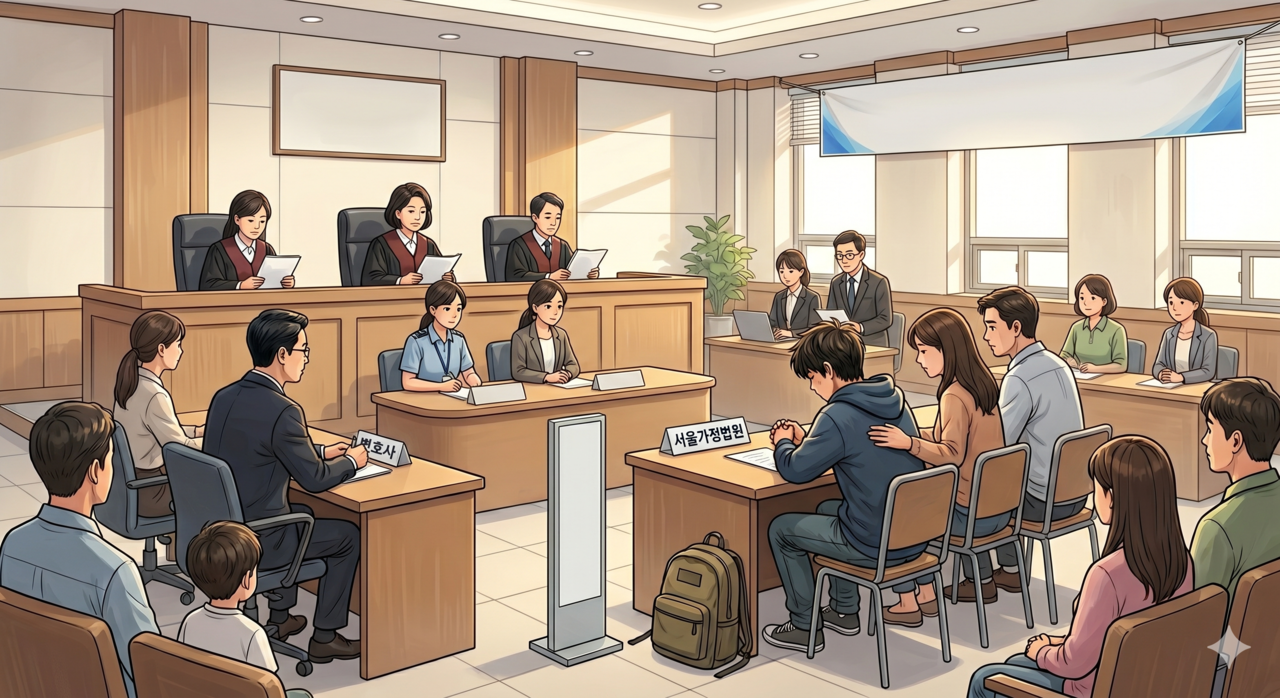
The closed nature of juvenile proceedings also means that victims are frequently shut out, even in serious cases. "Unlike ordinary criminal trials, juvenile hearings are closed to the public by default," Son said. "Victims have no way of finding out what disposition the offender received. They need to know the outcome if they want to pursue civil damages later — but even victims have no way of learning what happened."
Erasing the 'it's OK because I'm a juvenile' mindset
Punitive approach shows little crime-prevention effect
A forum on "Institutional Measures to Supplement the Age Standard for Criminally Irresponsible Minors" was held April 15 at the Bank Hall in Jung-gu, Seoul, co-hosted by the Ministry of Gender Equality and Family, the Ministry of Education and the Ministry of Justice. Experts exchanged a range of views on the age threshold debate.
Jeong Ui-rom, a professor in the Department of Police Administration at Busan University of Foreign Studies, said "even at a declaratory and symbolic level, there is a need to lower the age of criminal irresponsibility to 13 to reflect public sentiment toward the law."
Moon Deok-ju, a school police officer at the Ansan Sangnok Police Station, said the spread of the attitude that "it's fine because I'm a juvenile" was weakening the deterrent effect of the law and "could end up pushing children toward even more serious crimes."
He added that surveys show 95 percent of the public view juvenile crime as a serious problem, with the majority supporting a lower age threshold.
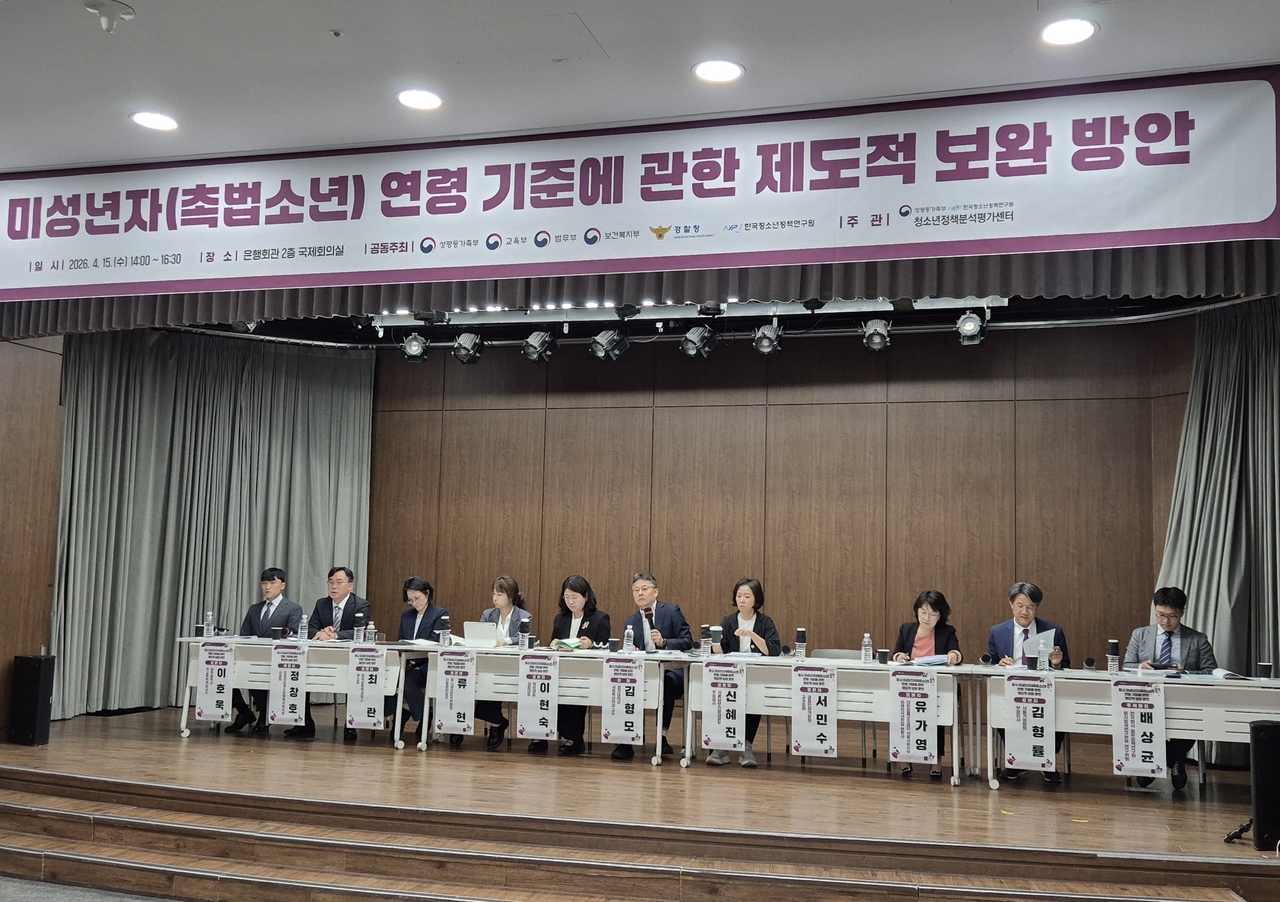
Opposing voices at the forum argued that lowering the age threshold is not a fundamental solution to juvenile crime. Experts from the fields of education, welfare and law enforcement said a lower age of criminal responsibility would likely amount to little more than a symbolic gesture, and stressed that core challenges — protecting victims, preventing reoffending and ensuring educational intervention — remain inadequately addressed.
Bae Sang-gyun, a research fellow at the Korea Institute of Criminology and Justice, said "what is needed now is not an age adjustment but procedural reform, improved treatment and guaranteed rights for victims," adding that "lowering the threshold from 14 to 13 would not significantly change the actual punishment structure and could end up as a purely symbolic measure." He also noted that the UN Committee on the Rights of the Child has opposed lowering the age of criminal responsibility below 14.
Practitioners in the field also pointed to the limits of a punitive approach. Choi Ran, deputy director of the Korea Sexual Violence Relief Center, said "a punishment-focused policy not only fails to improve crime prevention but can also push victim recovery to the back burner," and that "juvenile protection cases must place the guarantee of victims' rights at the center."
Lee Hyeon-suk, standing representative of TakTin Tomorrow, said "as the discourse has tilted toward harsh punishment, the core values of educational intervention and victim recovery have been sidelined," and called for "a restorative approach that confronts offenders with the impact their actions have had on others' lives."
The need to strengthen parental responsibility also came up. Shin Hye-jin, a senior prosecutor at the Seoul Southern District Prosecutors' Office, noted that unlike the United States and the United Kingdom, South Korea does not hold parents criminally liable for their children's wrongdoing, whereas the US has a legal framework that imposes strict criminal responsibility on parents. "A system that can make parenting education more substantive is necessary," she said.

20ki@heraldcorp.com
kido@heraldcorp.com