Hyundai Motor's 8th wage talks
AI job security emerges as key issue amid smart factory expansion
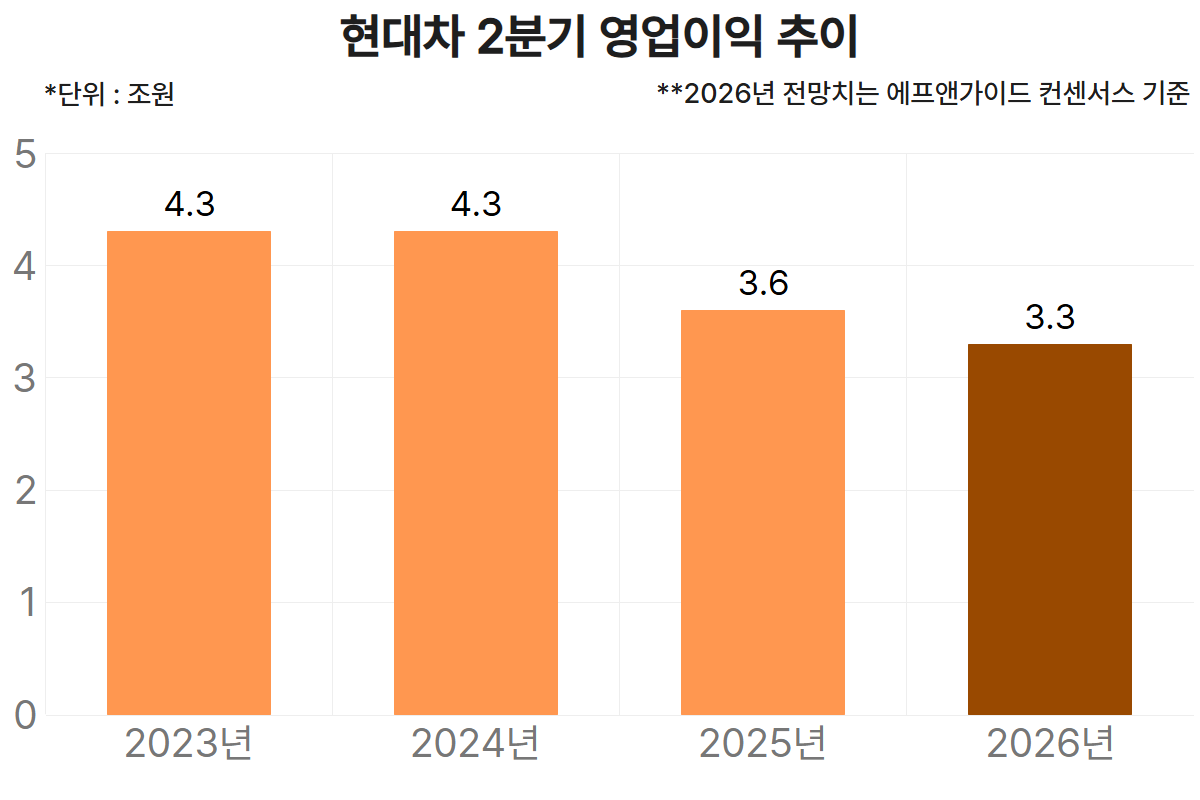
Company warns of weaker Q2 earnings
Union calls for employment stability talks
Sharp divide over indirect employment and rehiring conditions
![The Ioniq 5 production line at Hyundai Motor Co's Ulsan factory [Hyundai Motor Co]](https://wimg.heraldcorp.com/news/cms/2026/06/04/news-p.v1.20260527.4b02c322b71341549f64e78d963831ad_P1.jpg)
Hyundai Motor Co and its union have entered into a serious standoff over AI-related employment issues in this year's wage and collective bargaining negotiations. As Hyundai Motor pushes ahead with smart factory initiatives and AI-driven manufacturing innovation, the union is demanding job security measures and insisting that AI must not be deployed as a tool to replace workers.
At the eighth round of negotiations held Thursday, the two sides took up AI as a central agenda item. The union said "joint labor-management discussions are needed to prepare for job insecurity caused by AI" and that "AI adoption must not be used as a means to replace workers."
The company pushed back, saying current laws — including the Personal Information Protection Act and the AI Basic Act — already provide sufficient safeguards, and that it is premature to predict the impact of AI on employment.
The union's move to formally make AI a key issue in this year's negotiations marks a notable feature of the current bargaining round. Hyundai Motor Group has been expanding its application of AI and automation technology, centered on a dedicated electric vehicle factory in Ulsan and the Hyundai Motor Group Metaplant America in the United States. The group is also pursuing plans to build annual robot production capacity of 30,000 units in the United States by 2028 and to deploy more than 25,000 robots — including the Atlas model — across Hyundai Motor and Kia production sites.
![The Hyundai Motor union holds a rally to kick off this year's wage negotiation campaign on the lawn in front of the main building of the Ulsan factory on May 13. [Yonhap]](https://wimg.heraldcorp.com/news/cms/2026/06/04/rcv.YNA.20260513.PYH2026051318710005700_P1.jpg)
Beyond AI, Thursday's session also covered indirect employment, improved treatment for rehired skilled workers, and expanded leave policies.
The union called on Hyundai Motor, as the primary employer, to come to the table on guaranteeing basic labor rights for indirectly employed workers. It said that if the National Labor Relations Commission recognizes Hyundai Motor's status as an employer, the company must accept that responsibility, and demanded that issues affecting subcontracted and indirectly employed workers be placed on the bargaining agenda. The company refused, saying it cannot address demands from the Korean Metal Workers' Union in wage negotiations and that subcontracted workers are not a party to the talks.
A ruling on whether Hyundai Motor qualifies as an employer for its subcontractors' union has been delayed. The case has drawn wide attention as the first test in the auto industry since the enactment of the so-called Yellow Envelope Act. The Ulsan Regional Labor Relations Commission failed to reach a conclusion at its second hearing on June 1 and scheduled a third hearing for June 15. Separately, the Korean Metal Workers' Union has announced a general strike for July 15 regardless of the commission's ruling.
The treatment of rehired skilled workers also emerged as a major sticking point. The union argued that workers brought back after retirement deserve compensation commensurate with their experience and skill level, and called for regular pay-grade increases to apply to rehired workers as well. The company said it has already improved conditions through a labor-management agreement and that further improvements are not feasible.
The dispute centers on Hyundai Motor's "senior contract worker" program, in place since 2019, which rehires retirees on fixed-term contracts for a set period to reduce income gaps after retirement and retain skilled workers. Critics have noted, however, that expanding the program could limit the company's capacity to hire new full-time employees.
The two sides also showed a clear divide over a proposed promotion leave benefit for all job categories. The union called for the policy to be extended to all union members rather than limited to specific job categories, but the company said promotion leave is part of the managerial personnel system, not a welfare benefit, and that job-category characteristics must be taken into account.
The union also raised the issue of commuter bus fares, citing other large companies as examples and arguing that costs should be reduced as a welfare measure. The company countered that under a 1995 labor-management agreement, union members cover half the transportation cost, and that current fare levels are appropriate.
During the session, Hyundai Motor's chief executive also addressed the company's difficult operating environment. CEO Choi Young-il said the company faces tough conditions due to declining sales, the impact of a fire at a Mobis factory in India, and deteriorating second-quarter earnings, and expressed hope that this year's negotiations would focus on the company's future growth and that practical solutions could be found quickly through working-level consultations.
Lee Jong-cheol, head of the Hyundai Motor union chapter, said he expects all 12 wage and separate agenda items to be completed in this week's negotiations. "We explained our demands sincerely on each item — negotiations that merely go through the motions are meaningless," he said. He added that management must review the proposals in good faith and accept them actively, and that the timing of a settlement ultimately depends on the company's attitude.

kwater@heraldcorp.com