Interview: Park Jong-chun, JB Financial Group AX and Future Growth Division head
Proactive partnerships forged with exchanges, wallet providers and overseas fintech firms
Portfolio company AhnLab Blockchain Company secures VASP license
Jeonbuk Bank pursues 'all-in-one wallet' integrating fiat and digital assets
Foreign worker finance seen as prime stablecoin use case
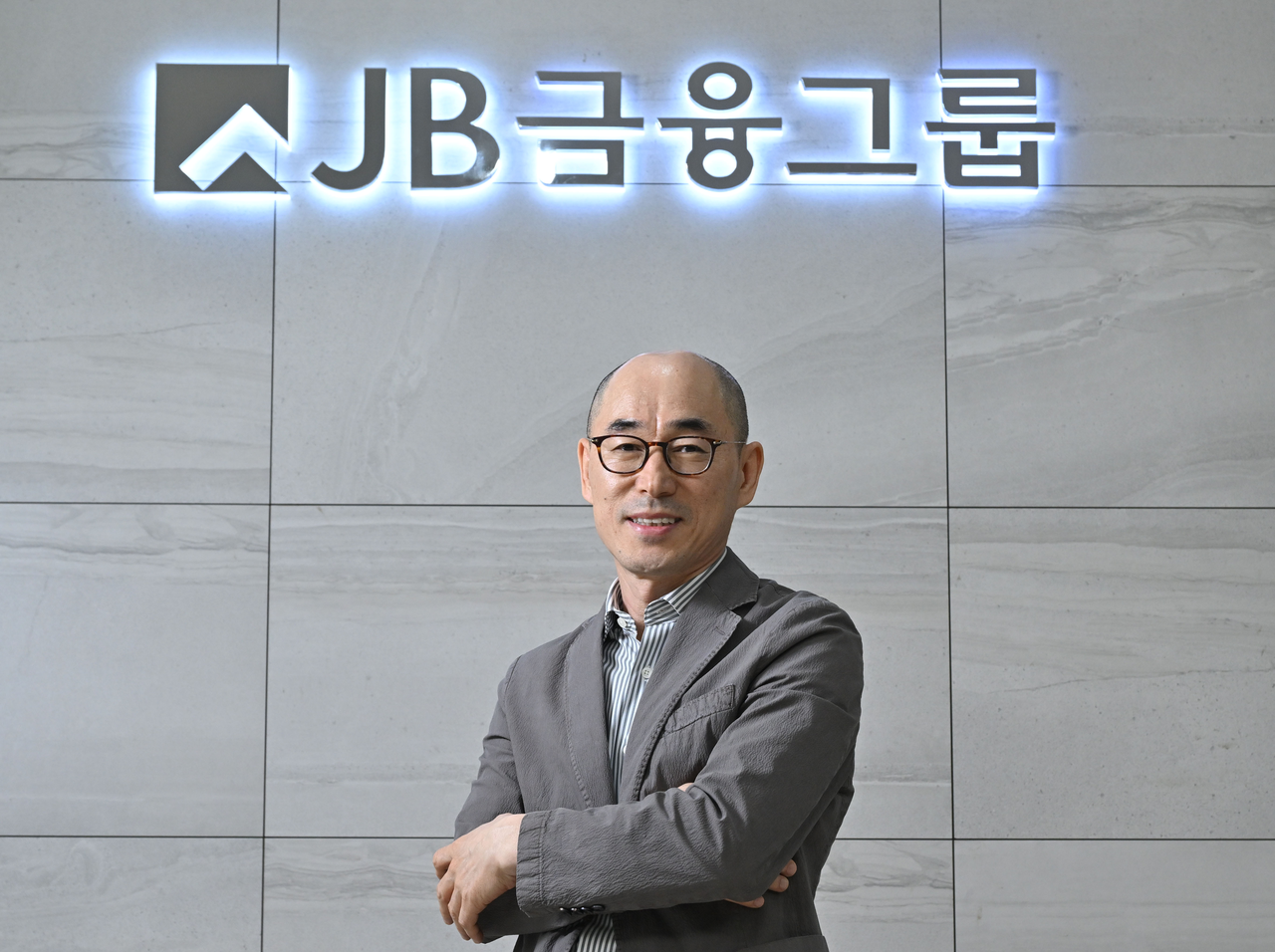
"To prepare for the next decade, we need to bring in DNA that doesn't exist inside the bank."
Park Jong-chun, executive vice president and head of the AX and Future Growth Division at JB Financial Group, made the remark in an interview at the group's headquarters in Yeouido, Seoul, on Friday. "JB Financial has focused on strategic investment premised on business cooperation, rather than simple financial investment," he said. "We have been building a collaborative foundation across digital asset infrastructure — wallets, custody and exchanges — to prepare a future growth portfolio."
With landmark virtual asset framework legislation on the horizon, alliances among traditional financial institutions, fintech firms and the digital asset industry are accelerating. JB Financial plans to secure future growth engines through an "inorganic growth" strategy that absorbs the capabilities of outside innovators. Park also forecast that as AI agents spread and fundamentally reshape how customers interact with financial services, competition to build next-generation payment and settlement systems — including digital bank wallets — will intensify sharply.
Park is one of South Korea's leading digital finance specialists, overseeing JB Financial Group's digital transformation and future growth strategy. He joined JB Financial in 2019 after stints at Shinhan Bank and Hanwha Life. A veteran of the field, he previously served as head of the group's digital transformation division and as deputy head of digital operations at both Gwangju Bank and Jeonbuk Bank. In his current role, he leads the group's work across digital assets, AI transformation, strategic partner development and future growth businesses.
Competition to acquire even a sliver of equity in digital asset exchanges has grown fierce across the financial and securities industry — as one industry saying goes, firms would buy "even 0.1 percent" of an exchange if they could. The frenzy has been fueled by signals from financial regulators that they may ease the longstanding policy separating financial institutions from virtual asset businesses, pushing digital asset alliances to the top of the market agenda. JB Financial moved early. The group is one of the major shareholders in Gopax, the exchange acquired by Binance, having taken equity stakes through affiliates JB Woori Capital and JB Asset Management.
That early positioning has drawn fresh attention to JB Financial's portfolio. Since 2023, the group has steadily broadened its fintech relationships, building a collaborative base spanning digital asset exchanges, wallet services and overseas fintech. The push reflects a deliberate effort to find new growth engines beyond the structural constraints facing regional lenders — sluggish local economies and population outflows. The industry widely regards JB Financial as the most aggressive traditional financial institution in pursuing digital transformation.
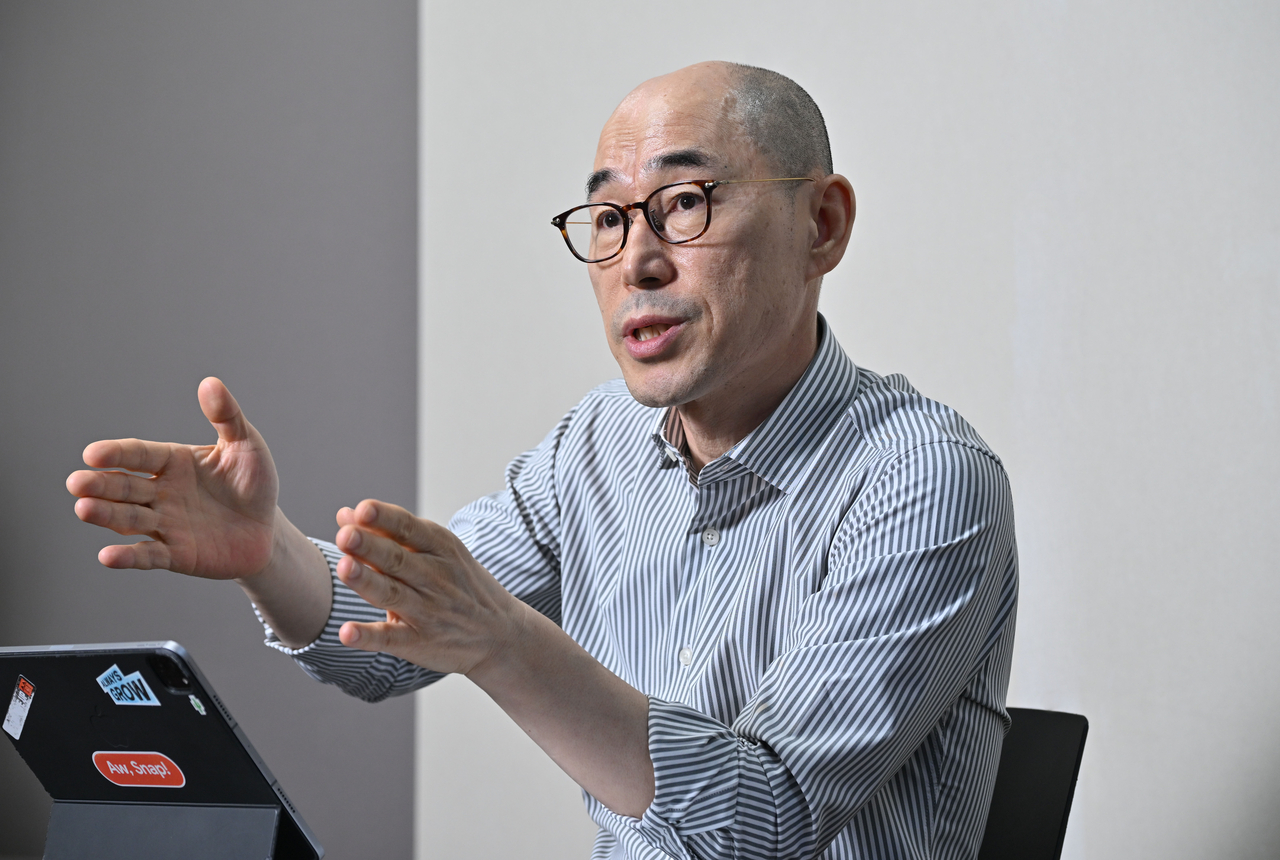
The companies JB Financial has backed by sector are beginning to deliver results. Park highlighted one recent milestone: "AhnLab Blockchain Company, the blockchain subsidiary of AhnLab that we invested in during the third quarter of last year, recently obtained a virtual asset service provider license from the Financial Intelligence Unit for virtual asset storage and transfer services." AhnLab Blockchain Company operates Klip, a virtual asset wallet service it acquired from Ground X, the technology affiliate of Kakao.
Wavebridge, which holds both digital asset exchange and custody licenses, is another key investment. This year, Wavebridge became the first domestic firm to launch custody services on Canton, an institutional blockchain network backed by global financial institutions, and is expanding its digital asset infrastructure business targeting corporate clients.
JB Financial's ability to translate investments into actual financial products is also seen as a competitive edge. A co-lending product developed with Toss is the clearest example. "JB Financial made a strategic investment in Toss when it was still in its early growth stage, and after roughly three years of collaboration, we were able to launch a co-lending product between Toss Bank and Gwangju Bank — the first financial innovation service of its kind in South Korea," Park said. He added that the group would build on that experience to deepen cooperation with Gopax, exploring opportunities in digital asset custody and wallet services as infrastructure development progresses.
These examples illustrate how JB Financial is broadening the foundation for its future growth businesses along two axes: strategic alliances and an investment portfolio. "A bank's capacity for innovation depends on how quickly it can read new markets and turn that reading into products," Park said. "We want to be the first to bring digital asset services applicable to the domestic market, drawing on overseas cases including the United States."
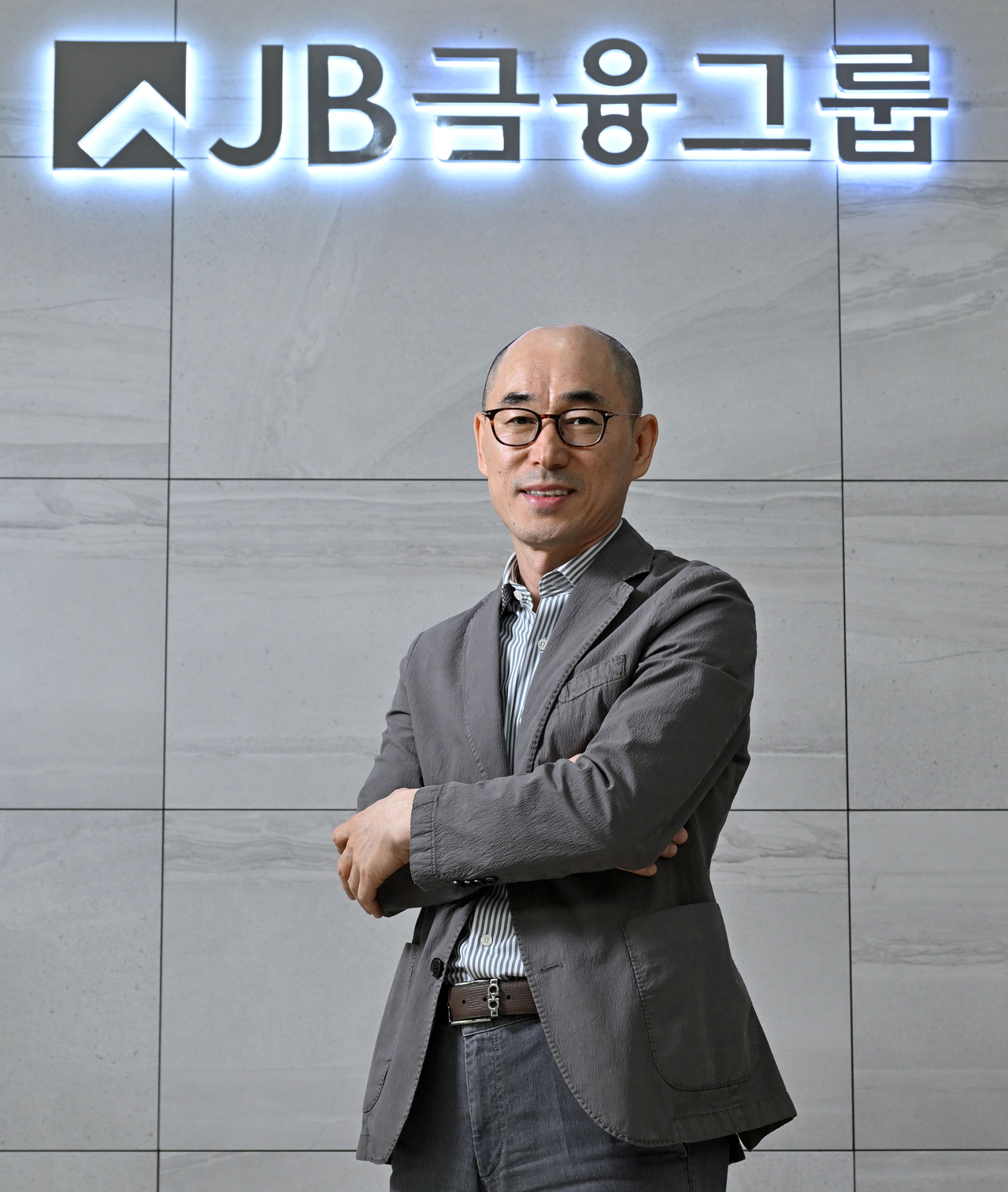
As alliances between traditional financial institutions and fintech firms accelerate, Park said the importance of an inorganic growth strategy will only grow. "JB Financial is absorbing external innovation DNA by collaborating with companies at the frontier of change — fintech, digital assets and foreign worker finance," he said. "The key is building partnerships that preserve the independence and expertise of our partners while generating synergies, rather than pursuing straightforward mergers and acquisitions."
The JB Forum, a networking event for fintech, platform and startup companies that JB Financial hosted in Jeongeup, North Jeolla Province, last year, reflects the same thinking. The group aims to play a platform role — creating new business opportunities unique to JB Financial by connecting companies with one another. "As good companies grow, collaboration opportunities naturally multiply," Park said. "Our goal for the JB Forum, which we plan to hold again this October, is to build relationships where we help each other grow."
Another major theme reshaping the digital finance market is the "AI agent economy." Unlike the existing economy, where humans make payments, the expectation is that AI agents will autonomously purchase data and execute transactions in a machine-to-machine economy. As the volume of transactions conducted without human intervention grows, analysts say stablecoins will emerge as core infrastructure for automated payment and settlement systems.
Asked about the role of banks in an AI agent economy — a question squarely within Park's remit as the group's AX strategy chief — he said banks would "evolve on the foundation of existing payment and settlement functions." He elaborated: "Payment and settlement is still the core function of banking. Once the regulatory regime around stablecoins is established, the day will come when banks offer wallet functions for storing digital assets — and stablecoins will be part of that." Toward that end, Jeonbuk Bank is already working toward an "all-in-one wallet" that would display both fiat currency accounts and digital asset wallets within a single user interface.

The field JB Financial sees as the prime use case for a won-denominated stablecoin is foreign worker finance. Explaining the group's participation in a won stablecoin consortium, Park said: "JB Financial views local currency and foreign worker finance as the core use cases, so we expect actual utilization to be high." The group believes that as foreign workers play an increasingly important role at industrial sites across the Honam region, demand for overseas remittances from that population would be substantial if stablecoins are introduced domestically.
"Demand for stablecoins will be considerable given their ability to reduce currency volatility," Park said. He added that fast transfer speeds are among the biggest advantages of stablecoins, and that Jeonbuk Bank's "Bravo Korea" app — which serves foreign customers — could also be leveraged as a potential channel for developing digital asset services down the road.
Bravo Korea serves not only as a financial platform for foreign residents but also as a testbed where JB Financial's portfolio companies collaborate. Hanpass, an overseas remittance platform in which JB Financial holds a 15 percent stake, is connected to the app alongside medical services firm Mediark (11.1 percent), residential services company Encowithus (16.1 percent), Korean language education platform Tuida (11.1 percent) and visa administrative support firm K-Visa (4.65 percent). "Growing the engine of growth through connections and collaboration among our investee companies is the blueprint JB Financial is working toward," Park said.
![“디지털자산 수탁 시장 법인계좌 허용이 가장 중요” [크립토360]](https://wimg.heraldcorp.com/news/cms/2026/06/08/news-p.v1.20260608.759bbb7ca5954458ad4d5b52da460659_T1.png)
forest@heraldcorp.com
kyoung@heraldcorp.com