
Democratic Party lawmaker Park Min-gyu prepares to introduce income tax amendment bill
Bill proposes taxation two years after first CARF data exchange, pointing to 2029 start
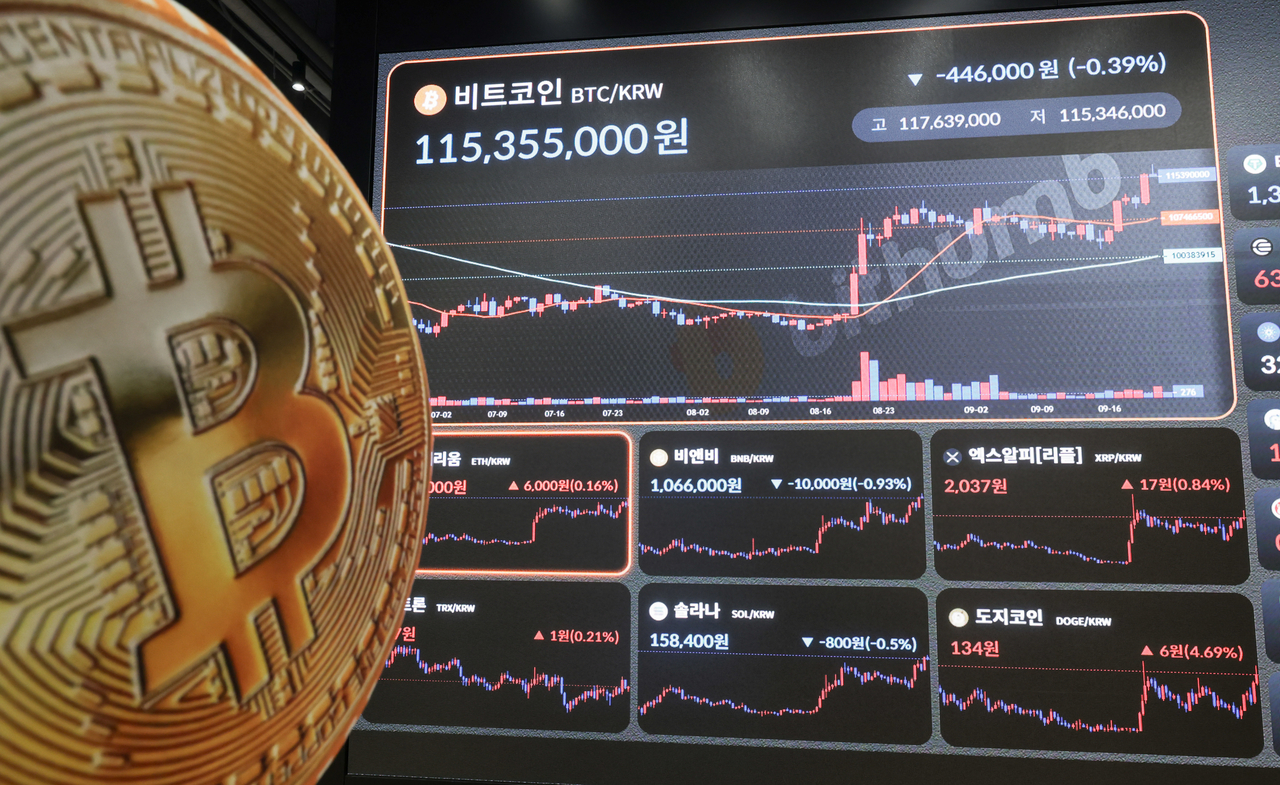
Legislation to delay virtual asset income taxation — scheduled to take effect in January next year — by two more years is now being pursued by a ruling party lawmaker for the first time. Calls to fix the regulatory framework before collecting taxes, citing difficulty in securing transaction records from overseas exchanges, are spreading across the political spectrum. Notably, demands for a tax deferral that had previously come mainly from the opposition party have now prompted legislative action from the ruling party as well.
Democratic Party of Korea lawmaker Park Min-gyu plans to introduce an amendment to the income tax act containing these provisions, according to political sources Thursday. The bill is currently collecting co-sponsorship signatures from fellow lawmakers through the National Assembly's bill management system and will be formally submitted once the required 10 signatures are gathered.
The amendment's core proposal is to replace a fixed implementation date with a floating one: taxation would begin on Jan. 1 of the second year after the year in which the first international exchange of crypto asset transaction data takes place. If the first data exchange under the OECD's Crypto-Asset Reporting Framework (CARF) proceeds as scheduled next year, the tax would take effect on Jan. 1, 2029.
Park said in the bill that implementing taxation before sufficient institutional preparation — including securing transaction data for tax purposes and building the necessary tax infrastructure — risks reducing effectiveness, undermining taxpayer predictability and causing confusion in the rollout of the regime. He particularly flagged the difficulty of obtaining transaction data from overseas exchanges, including those in the United States, warning that the tax burden could end up falling disproportionately on users of domestic exchanges.
The bill also cites the United States' expected CARF participation date of 2029 as grounds for the delay. The rationale is that taxation should begin only after conditions are in place to secure key overseas transaction data.
Behind the industry's growing calls for a deferral lies not only the problem of overseas exchanges but also the limitations of the current tax framework, under which tax liability varies depending on the type of transaction.
Under the current income tax act, income from the transfer or lending of virtual assets is classified as miscellaneous income. After a 2.5 million won ($1,870) annual deduction, the remaining amount is taxed at 22 percent, including local income tax. The problem is that while spot trading of virtual assets would be taxed, there is no legal basis for taxing gains from overseas derivatives such as futures and options.
This gap has prompted some investors to advocate taking long positions on perpetual futures at 1x leverage on overseas exchanges instead of buying spot assets — a strategy aimed at avoiding the tax burden altogether.
Park had said last month on social media that "taxing from January next year, when even a basic digital asset framework law has not been enacted, is premature," adding that "the priority now is not taxation but building the institutional foundation to support and grow the market."
On the People Power Party side, lawmaker Song Eon-seog introduced a bill in March to delete the virtual asset taxation provisions entirely, while lawmakers Kim Sang-hoon and Jeong Seong-guk separately introduced amendment bills in August to push back the implementation date.

kyoung@heraldcorp.com





