(109) Bangkok's Wat Phra Kaew, Wat Arun, Wat Saket and Wat Pak Nam
Thailand — a Buddhist nation 2
Walking the city of angels — golden temples and hidden legends of Bangkok
Among the most striking sights in Thailand are the countless Buddhist temples, golden stupas gleaming in the sun, and the monks who make their lives within them. Bangkok alone is home to some 3,000 temples, while across Thailand there are an estimated 30,000 temples of all sizes and more than 300,000 monks.
In Thai, a temple is called a "wat," a bell-shaped stupa a "chedi," and a spire-shaped tower a "prang." Bangkok, where royal culture and Buddhist tradition intertwine to showcase the essence of Buddhist civilization, is widely regarded as one of the world's great Buddhist cities.
Korean temples tend to feature many halls dedicated to various bodhisattvas — Avalokitesvara, Ksitigarbha, Amitabha — reflecting a rich tradition of bodhisattva veneration. Thai temples, by contrast, are simpler and more austere in spirit, expressing a distinctive architectural style rooted in Buddhist philosophy. The tiered roofs, meant to connect the heavens and the human world, sweep upward in long, curving lines, with sharp ornamental finials pointing toward the sky.
The main halls enshrining Buddha images are typically adorned with elaborate murals, gold leaf and glass mosaics. The statues themselves are characterized by oval faces, gentle smiles and slender proportions. At the center of Bangkok's temples, the first things to catch the eye are the bell-shaped golden stupas — chedi — housing relics of the Buddha, kings or revered monks.
The writer visited Bangkok in late May, just before the rainy season begins in July. With the fierce sun and temperatures climbing to 40 degrees Celsius, even a short walk leaves one drenched in sweat.
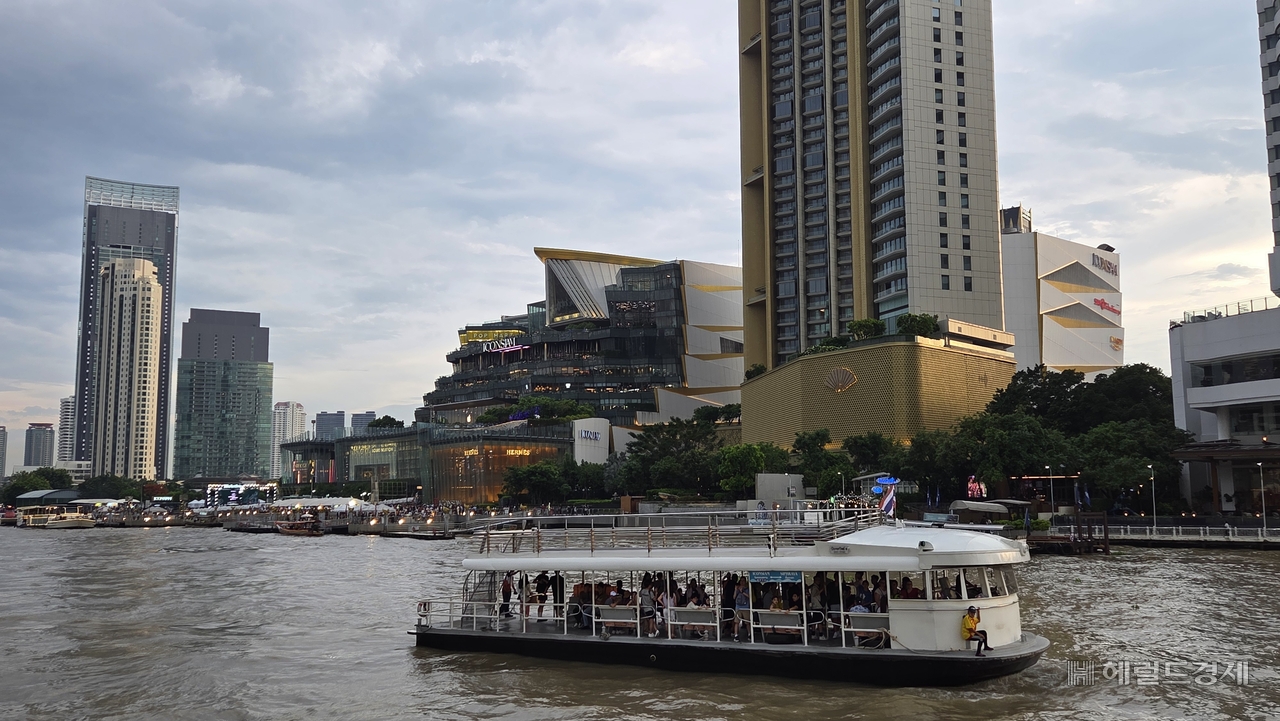
The best time to visit is during Korea's winter months, from November through February. Tourists explore Bangkok by hopping on river cruises or small boats that cross the muddy-looking Chao Phraya River, taking in the city's many faces, or visiting ICONSIAM — a massive mixed-use shopping and cultural complex on the riverbank — where they enjoy shopping and a wide variety of food.
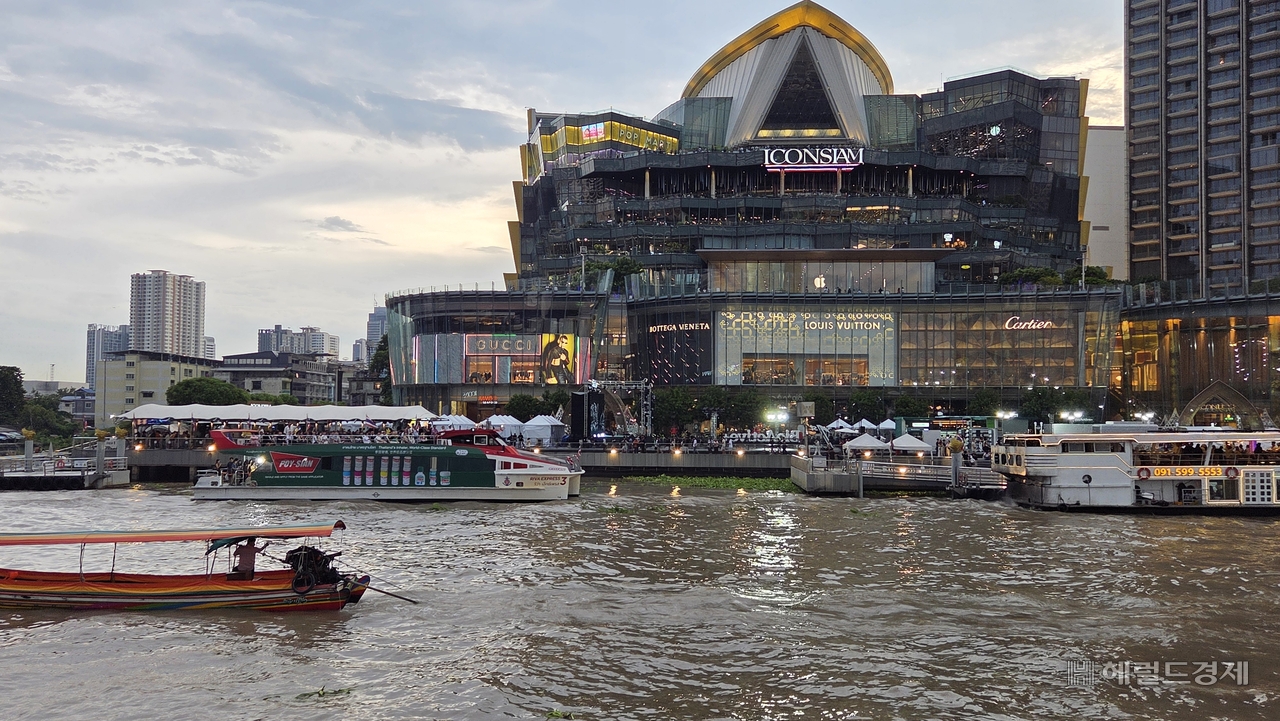
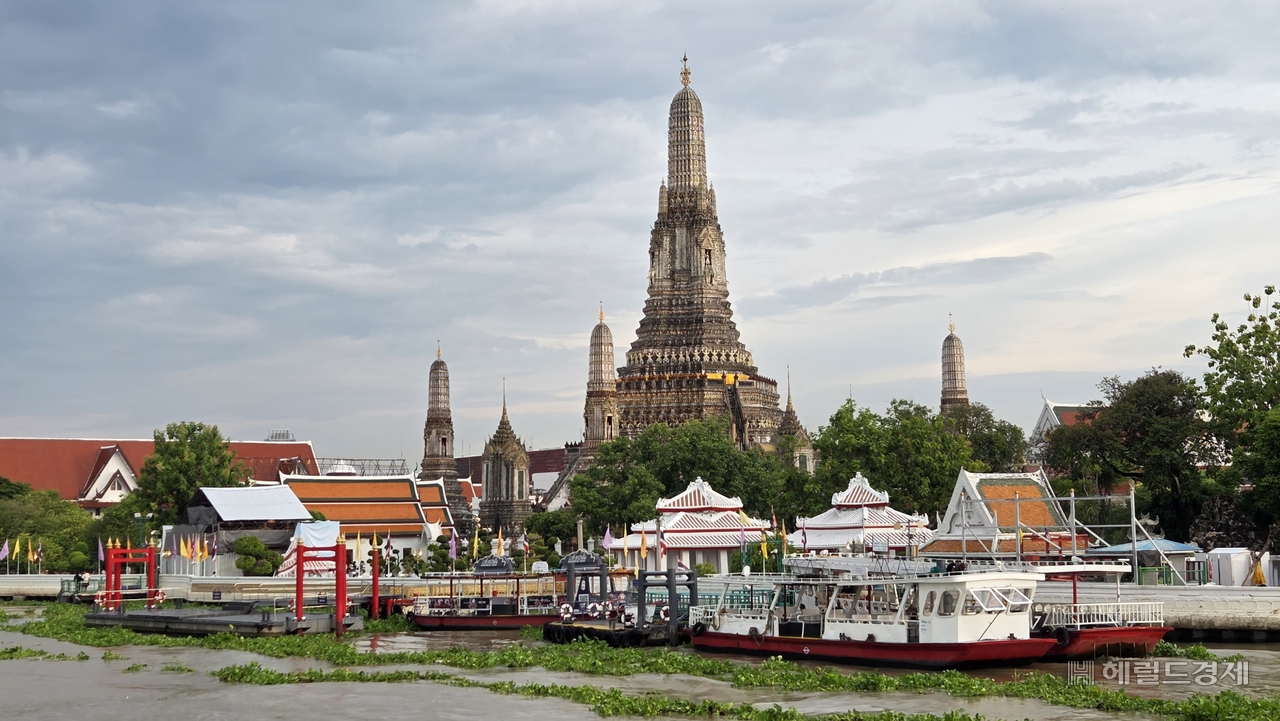
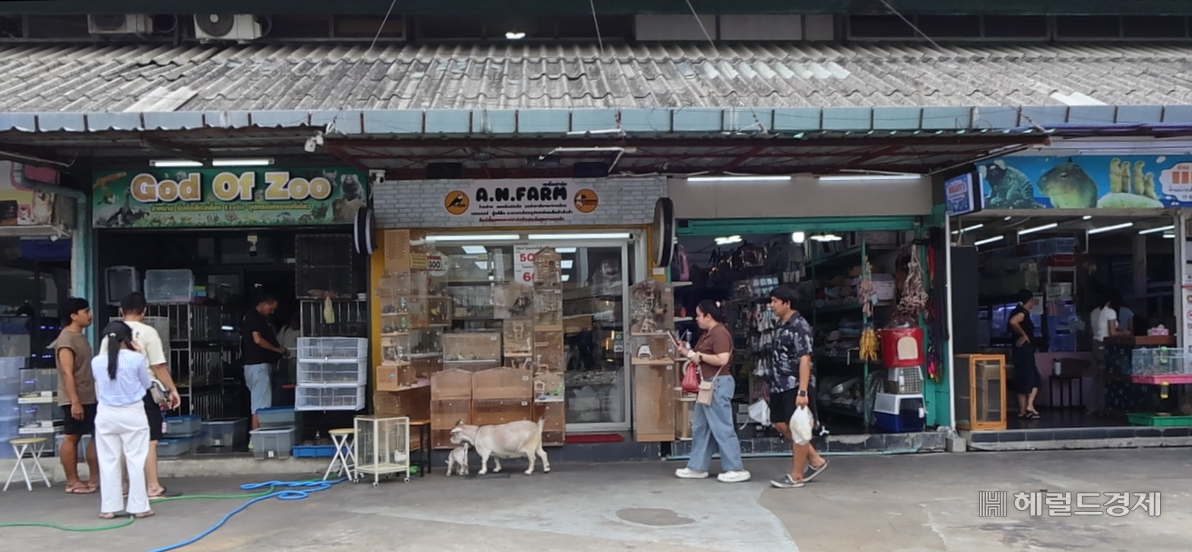
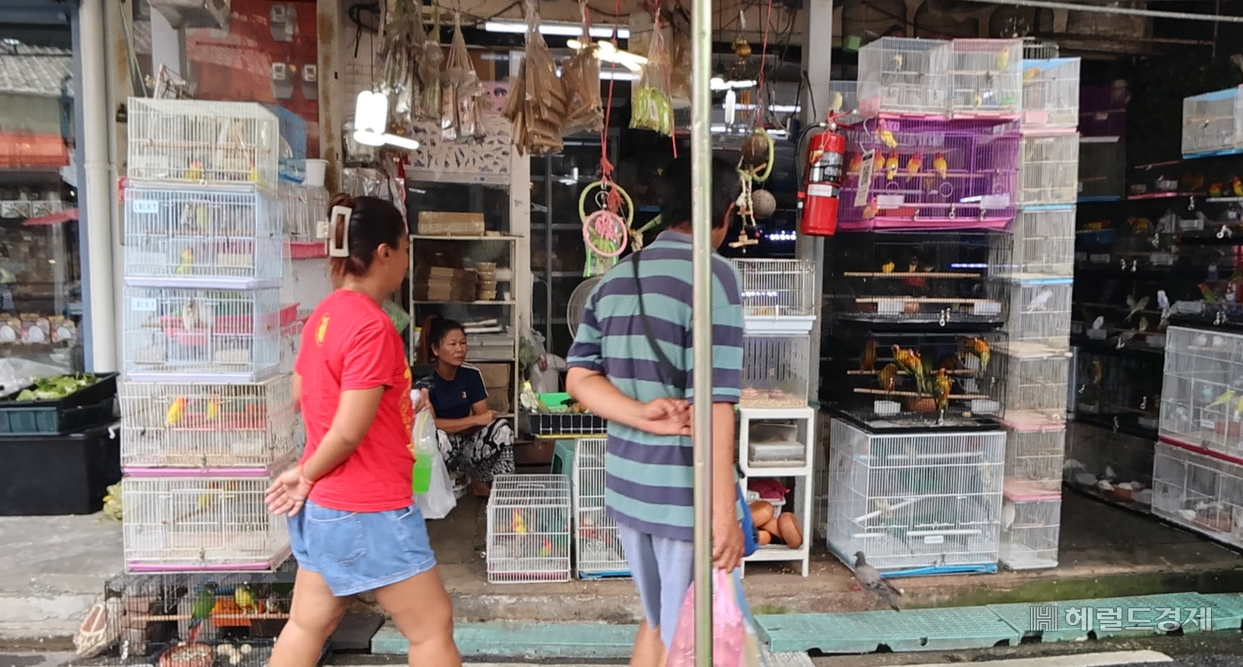
Browsing Chatuchak Market — Southeast Asia's largest weekend market, with more than 10,000 stalls — is another highlight. But no visit to Bangkok is complete without Wat Phra Kaew, considered the most sacred site in Thailand for housing the Emerald Buddha within the Royal Palace complex, and Wat Arun, the city's iconic Temple of Dawn on the Chao Phraya's western bank.
The two temples — one the royal temple of the current Chakri dynasty (1782–present) and the other of the Thonburi dynasty (1767–1782) — face each other across the Chao Phraya River, which divides Bangkok from east to west, and both can be admired from the water.
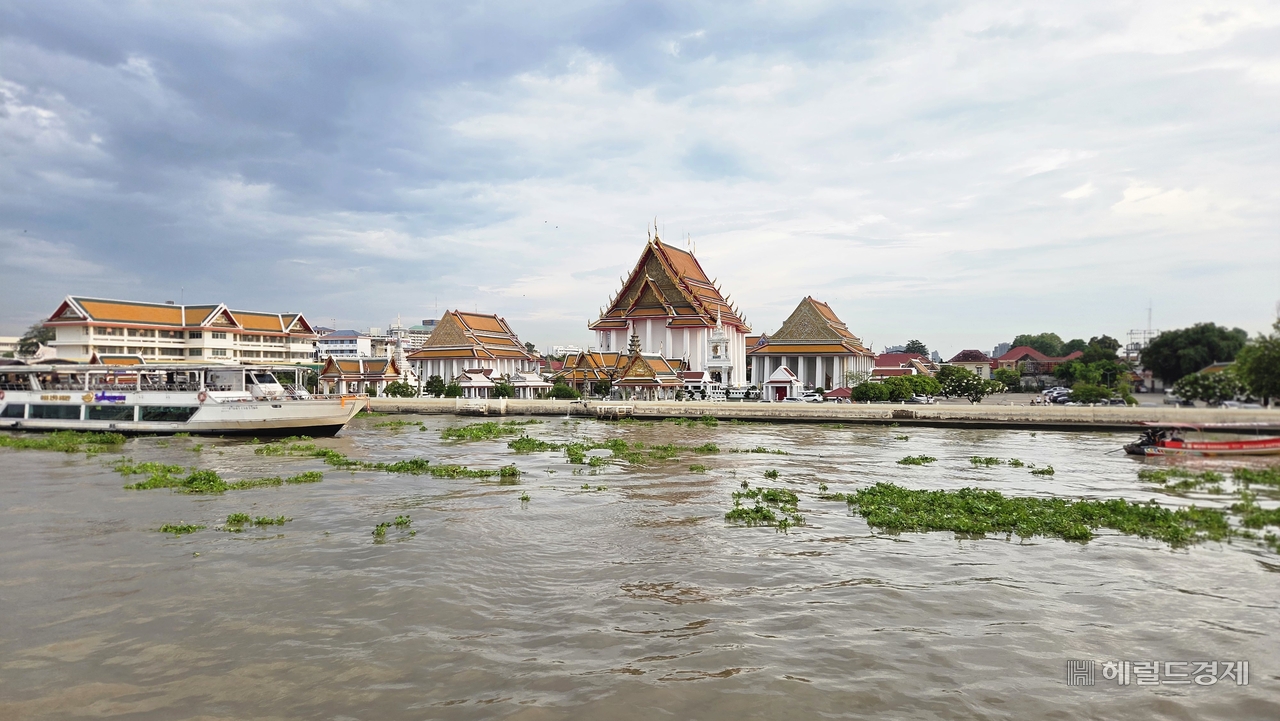
Other temples that draw many Buddhist visitors from abroad include Wat Pho, famous for its enormous reclining Buddha; Wat Ratchanatdaram, known as the "Iron Castle" for its 37 pointed metal spires; and Wat Traimit, near Chinatown, which houses what is said to be the world's largest solid-gold Buddha image.
Bangkok's royal temple: Wat Phra Kaew (the Emerald Temple)
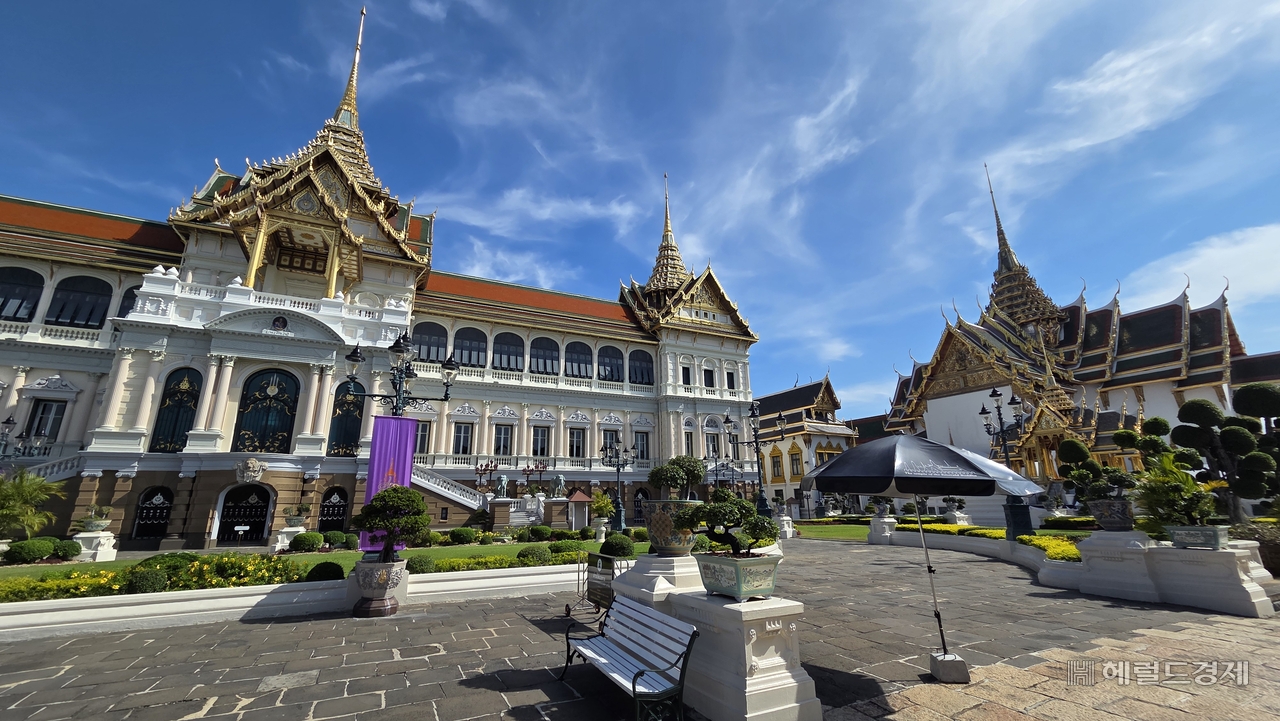
No king resides in the Grand Palace today, but the surrounding area remains congested and bustling, with extensive traffic controls in place. Thailand's most prestigious university, Chulalongkorn University, is said to be located within a royal temple precinct. The broader Thai tradition places major primary, secondary and university institutions inside temple grounds, with temples serving as centers of education and culture.
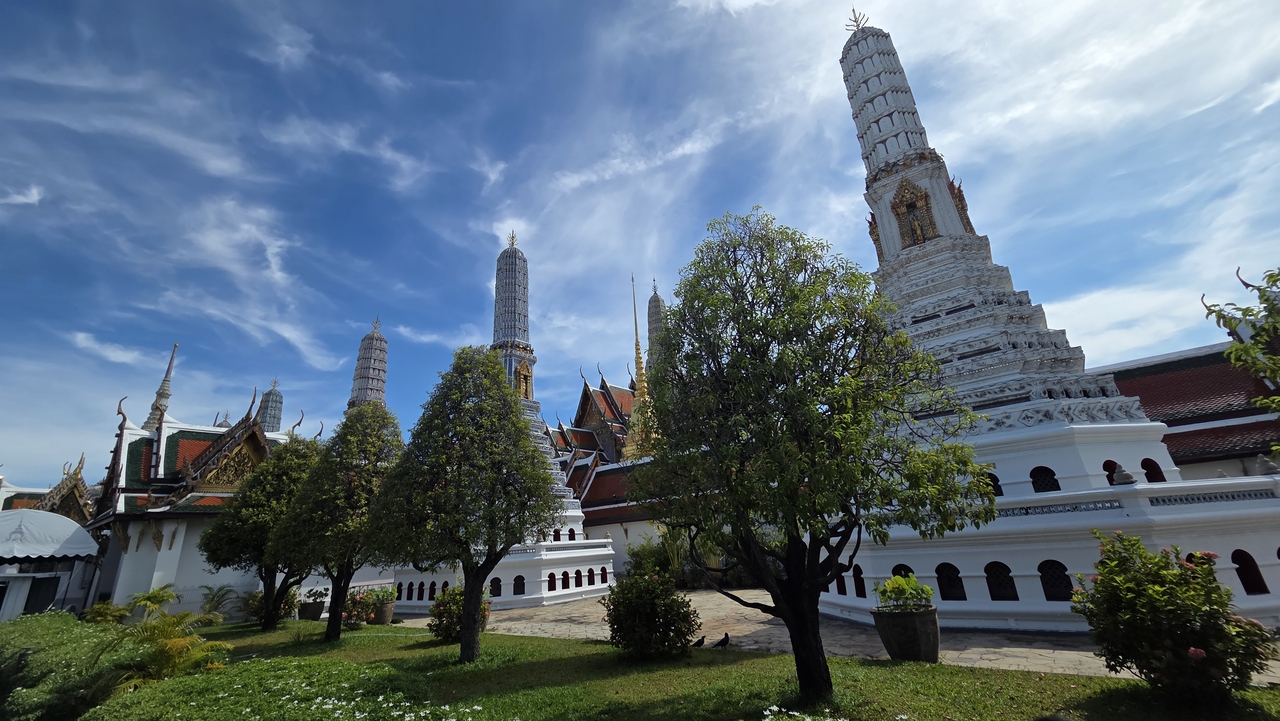
The writer gave the Grand Palace only a passing glance and made straight for the Emerald Temple, which Thais regard as the most sacred place in the country. The complex is a labyrinth of royal buildings, towers, corridors and plazas, but the ordination hall housing the Emerald Buddha is the largest and most imposing of them all — and easy to find, given the crowds pressing toward it.
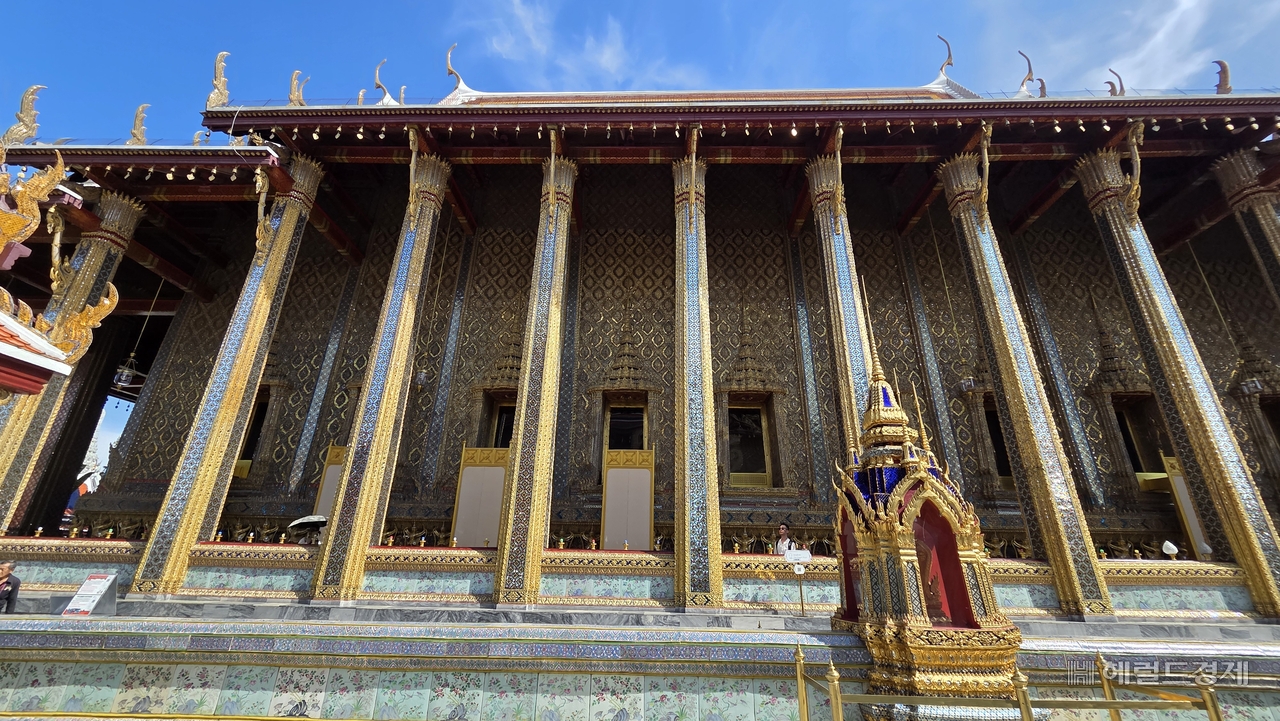
The interior is so vast and so densely packed with ornate decorations that the modest 66-centimeter Buddha image at the very center is surprisingly easy to miss at first glance.
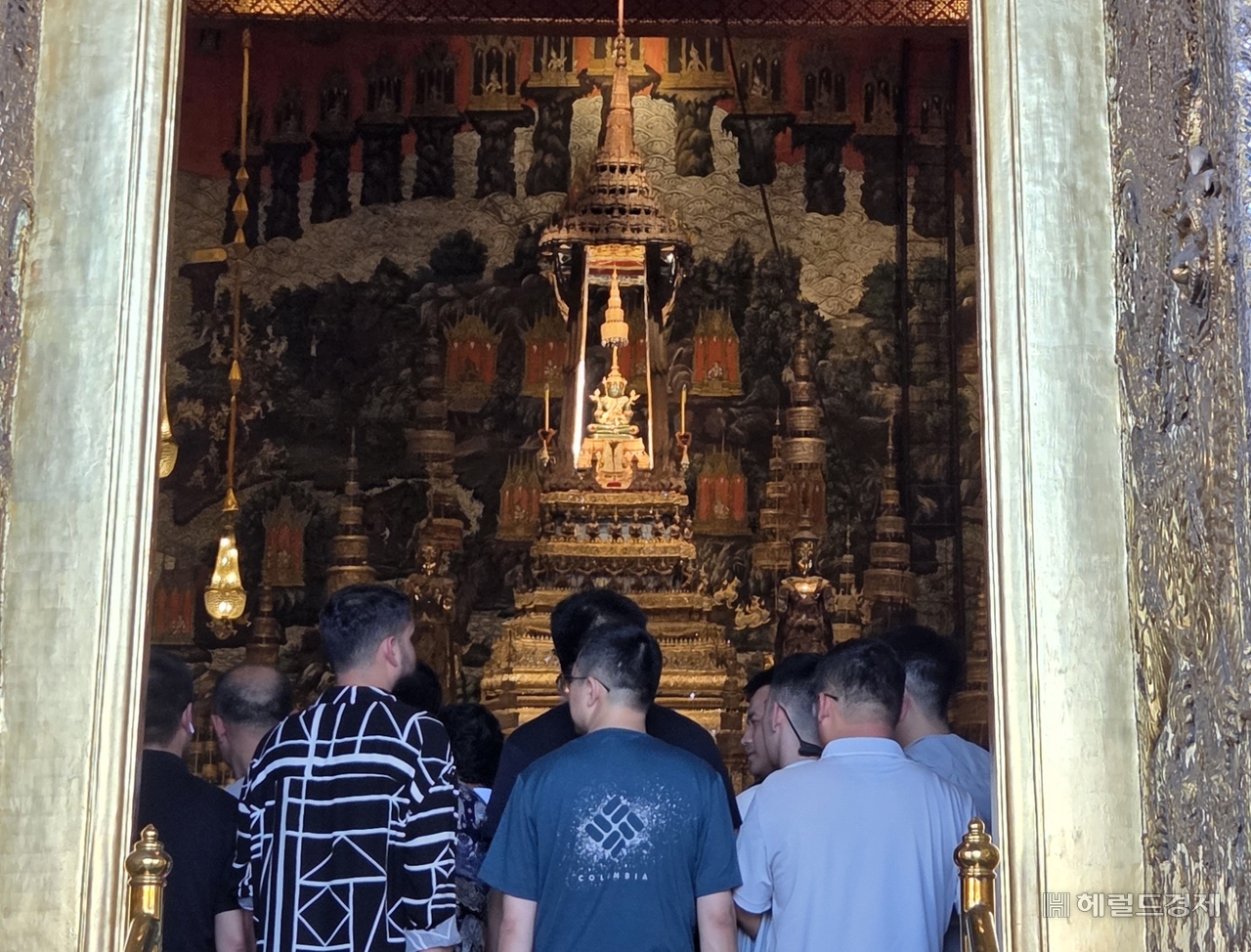
The Emerald Buddha is venerated as the guardian deity of the royal family and the nation — so much so that the king himself performs a ceremony to change its ceremonial robes three times a year. Photography inside the hall is strictly prohibited.
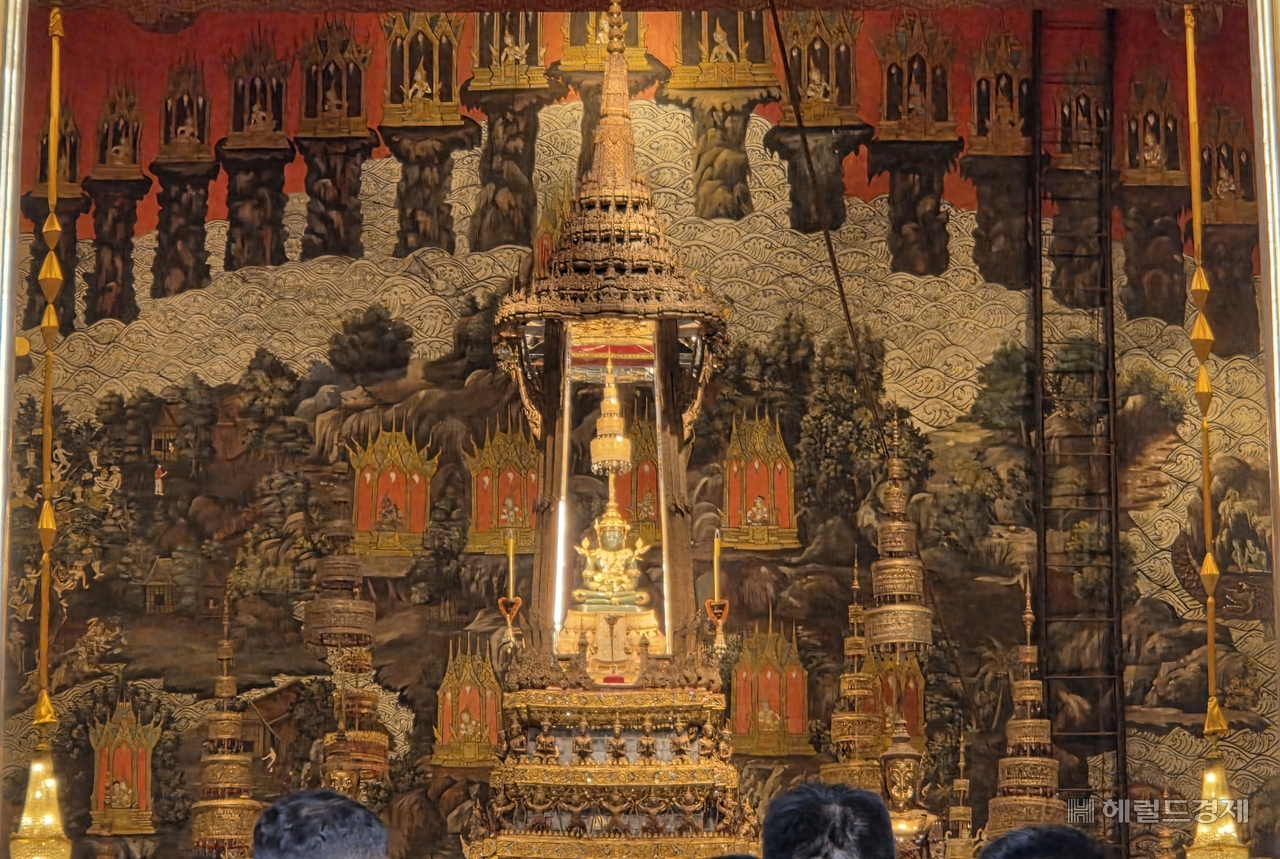
The statue is not carved from actual emerald but from green jasper. Visitors must content themselves with photographs taken from a distance outside the hall, through the open doors.
Inside the grand hall — where not even monks reside — the only figures to be seen are several police officers stationed there to watch for unauthorized photography.
According to legend, the image was crafted in India more than 2,000 years ago, made its way to Southeast Asia via Sri Lanka, and was concealed inside a plaster Buddha. It was only in 1434, when lightning shattered the plaster, that the Emerald Buddha was revealed.
The statue was moved to Chiang Mai, then the capital of the Lanna Kingdom, before spending more than 220 years in Laos. During the Thonburi dynasty it was transferred to Bangkok's Temple of Dawn, and it has stood in its present home since 1784 — more than 240 years ago.
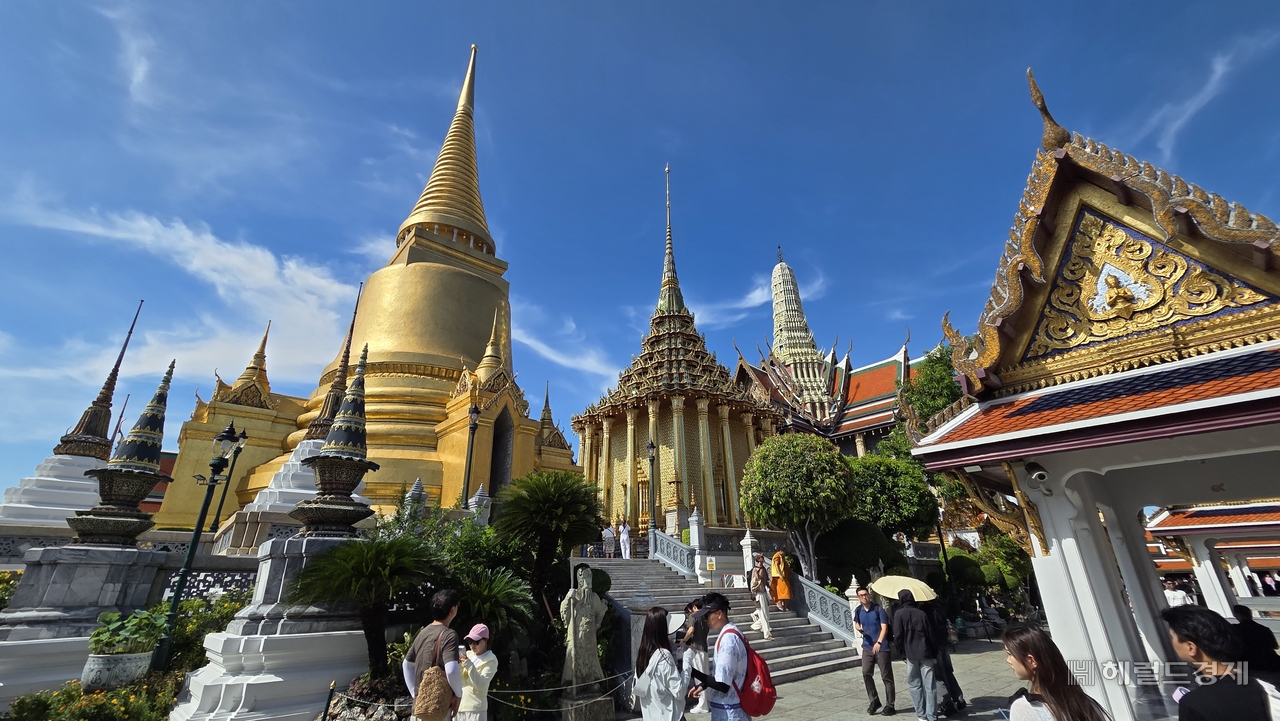
Every structure and stupa at the Emerald Temple — one of Thailand's foremost cultural treasures — dazzles with gold ornamentation and glass mosaics. The golden stupa said to enshrine a breastbone relic of the Buddha draws a constant stream of worshippers.
More than 170 mural scenes depicting Hindu mythology reinterpreted through Thai Buddhist values, along with various guardian figures, together symbolize the fusion of royal power and Buddhist faith that defines Thai civilization.
Bangkok's landmark: Wat Arun, the Temple of Dawn
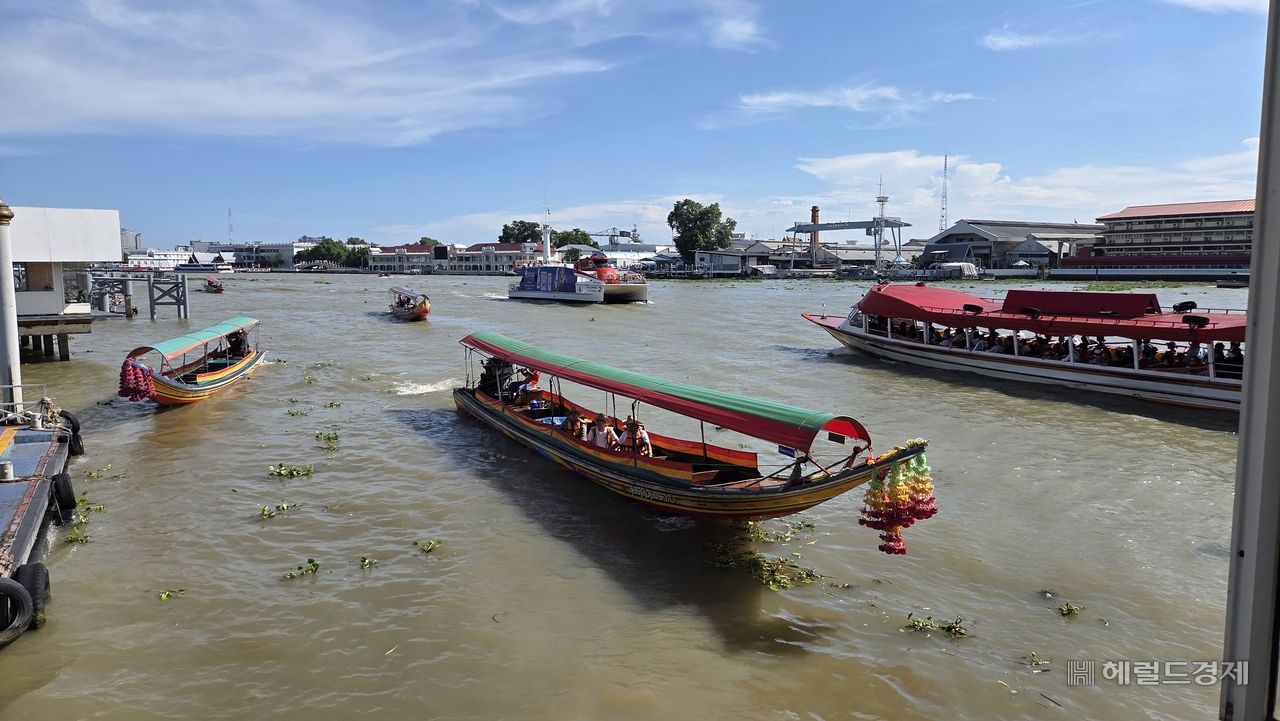
Leaving the Emerald Temple and boarding a small boat at a nearby pier, the writer crossed the Chao Phraya River to find Wat Arun — a temple of striking beauty and singular architecture — standing on the western bank directly opposite the Grand Palace.
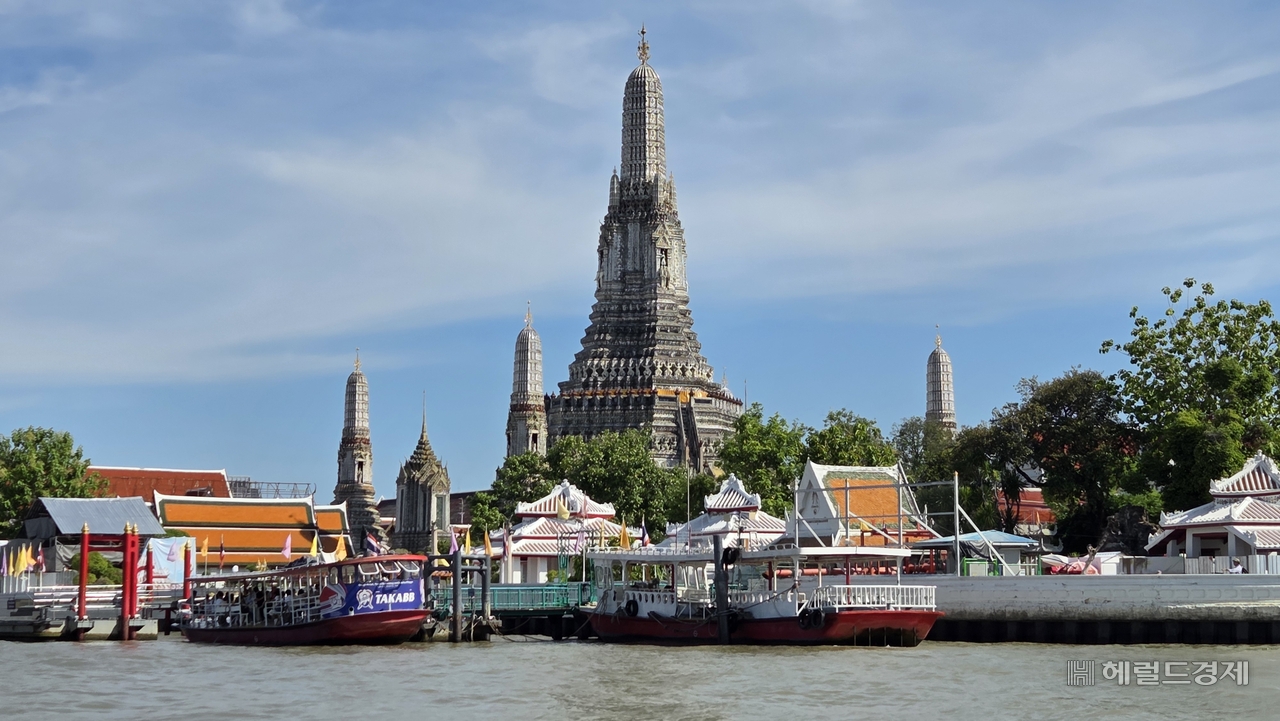
The temple takes its name — "Temple of Dawn" — from the fact that the first light of the sun strikes the Thonburi side of the river, west of Bangkok. At its center rises a prang soaring some 80 meters, encrusted with fragments of Chinese porcelain in an extraordinarily beautiful mosaic.
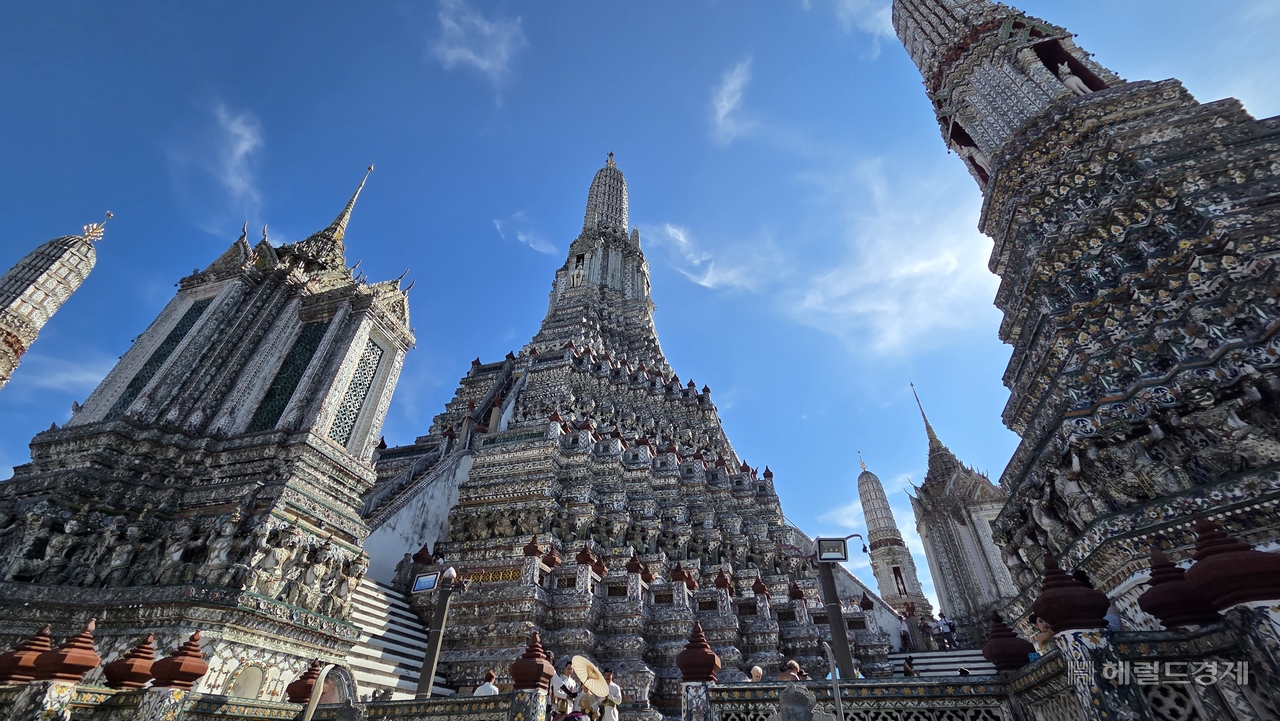
At dawn, the porcelain decoration catches the light and shimmers in many colors — an image so iconic it appears on the Thai 10-baht coin. The temple is equally celebrated for its nighttime beauty, and the opposite bank draws crowds of tourists who gather to watch the sunset and the illuminated skyline. The writer took a river cruise hoping to catch the sunset view, but the timing did not align, leaving only a lingering sense of regret.
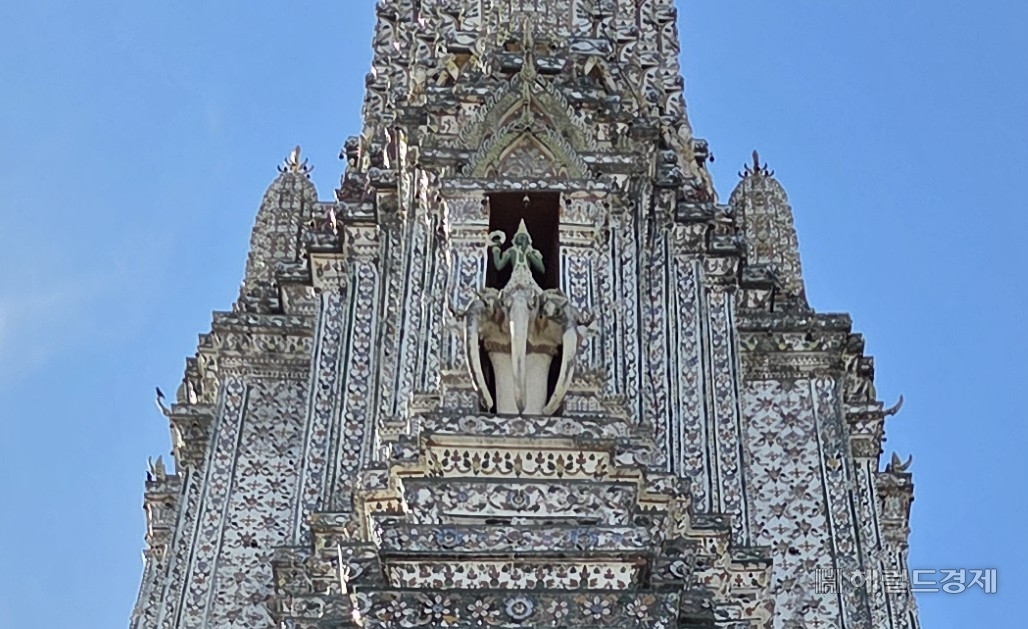
The towering central prang represents Mount Sumeru, the axis of the Buddhist universe, while the four smaller prangs surrounding it symbolize the mountain ranges around Sumeru, together expressing the Buddhist cosmological worldview. Near the top of the central prang, a sculpture of a three-headed elephant represents Erawan, the sacred mount of Indra, king of the gods in Hindu tradition.
The finial at the very top of the prang marks the realm of the heavens and the domain of the gods. The two six-meter demon statues in front of the main hall derive from the yaksha, guardian spirits of Hindu origin. Thai Buddhist temples, one comes to feel, are deeply interwoven with the Hindu cosmological imagination.
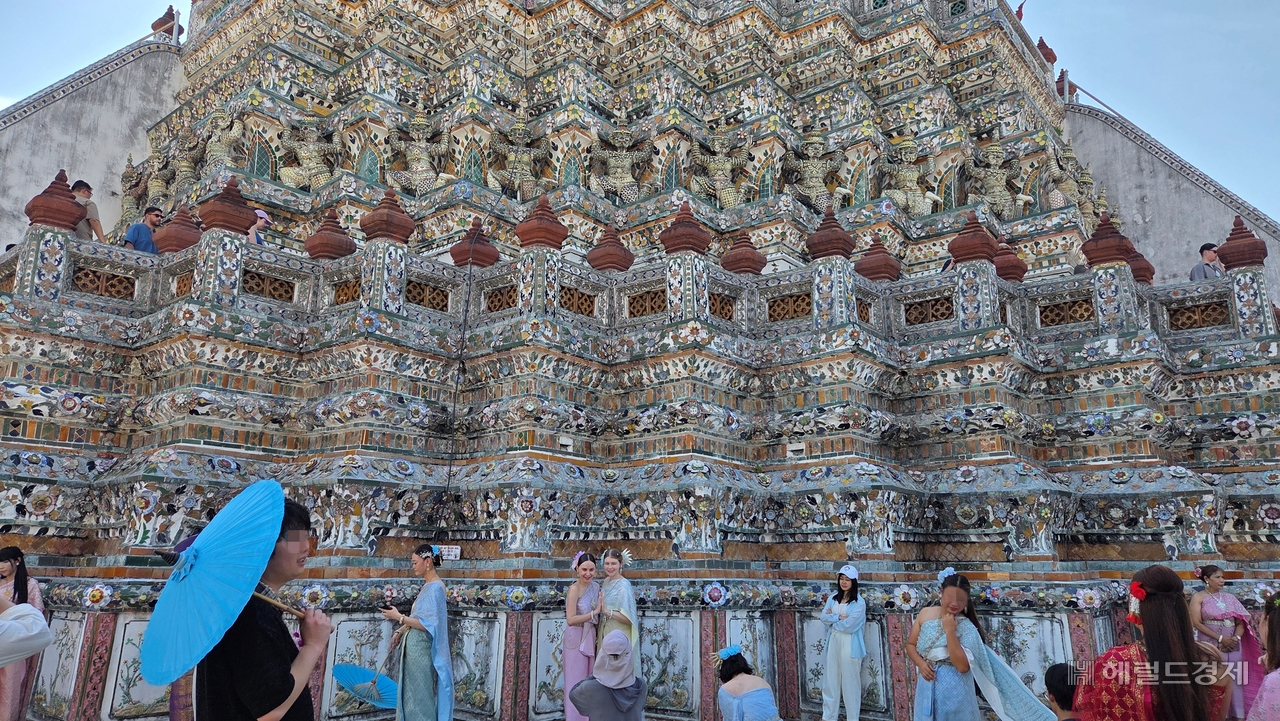
Beyond the magnificent stupa, more than 120 Buddha images symbolizing episodes from the life and teachings of the Buddha surround the main hall. Throughout this beautiful temple, newlyweds and local residents in traditional costume are absorbed in capturing the perfect photograph.
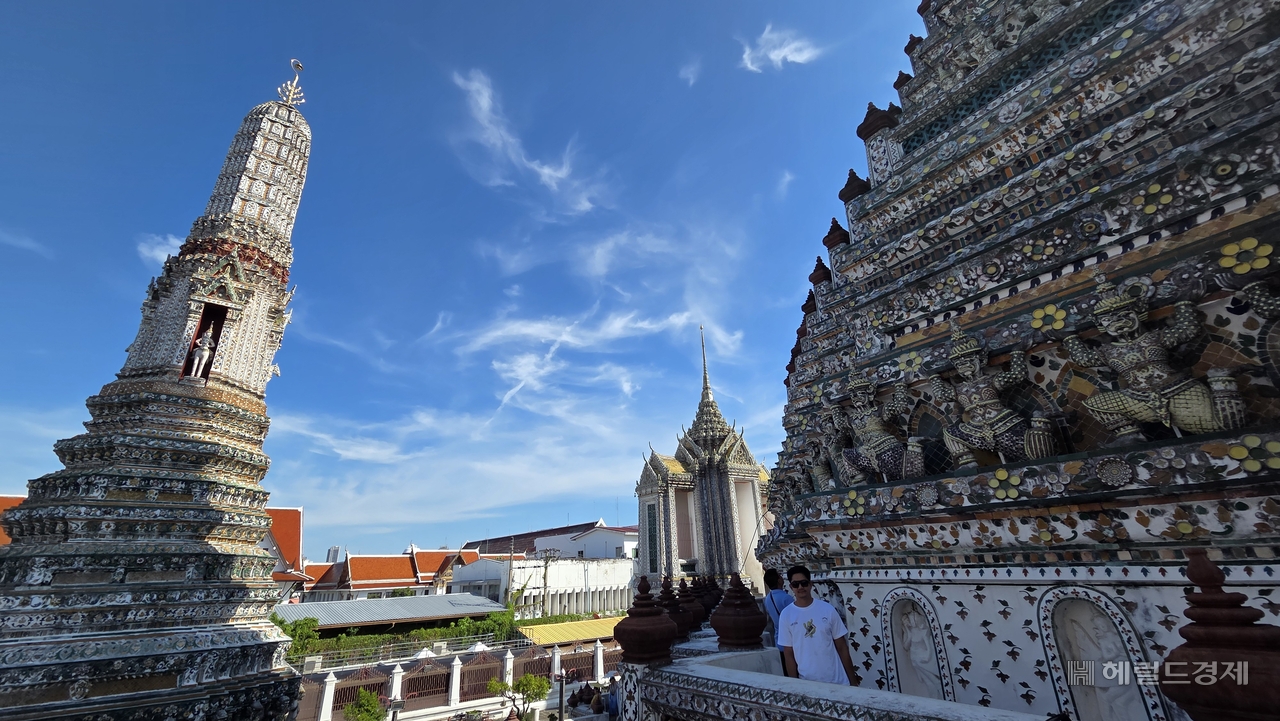
The central prang has steep stairs that visitors can climb partway, but access above the second level was restricted — apparently due to ongoing construction work.
Wat Arun is a royal temple built in the 17th century during the Thonburi dynasty, Thailand's short-lived third dynasty that lasted only 15 years. The Emerald Buddha was temporarily enshrined here as well. The tower's white color, rather than gold, reflects Hindu influence.
Wat Saket: the Golden Mount temple and its tragic history
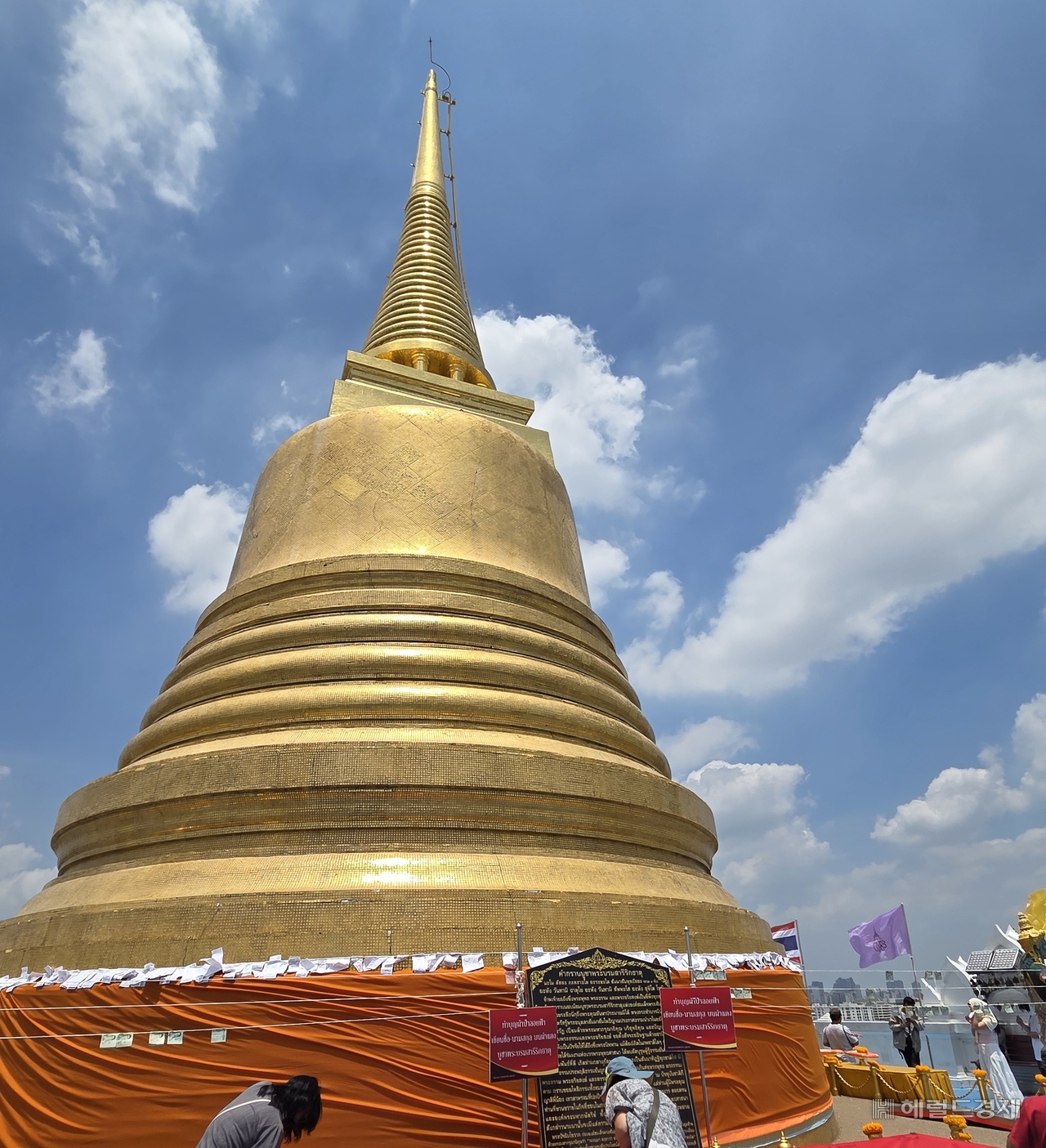
Bangkok sits on a flat plain with no natural hills, yet a golden stupa rises from the top of a 77-meter artificial mount. This is Wat Saket — Bangkok's highest temple — built by King Rama III on a man-made hill to enshrine relics of the Buddha.
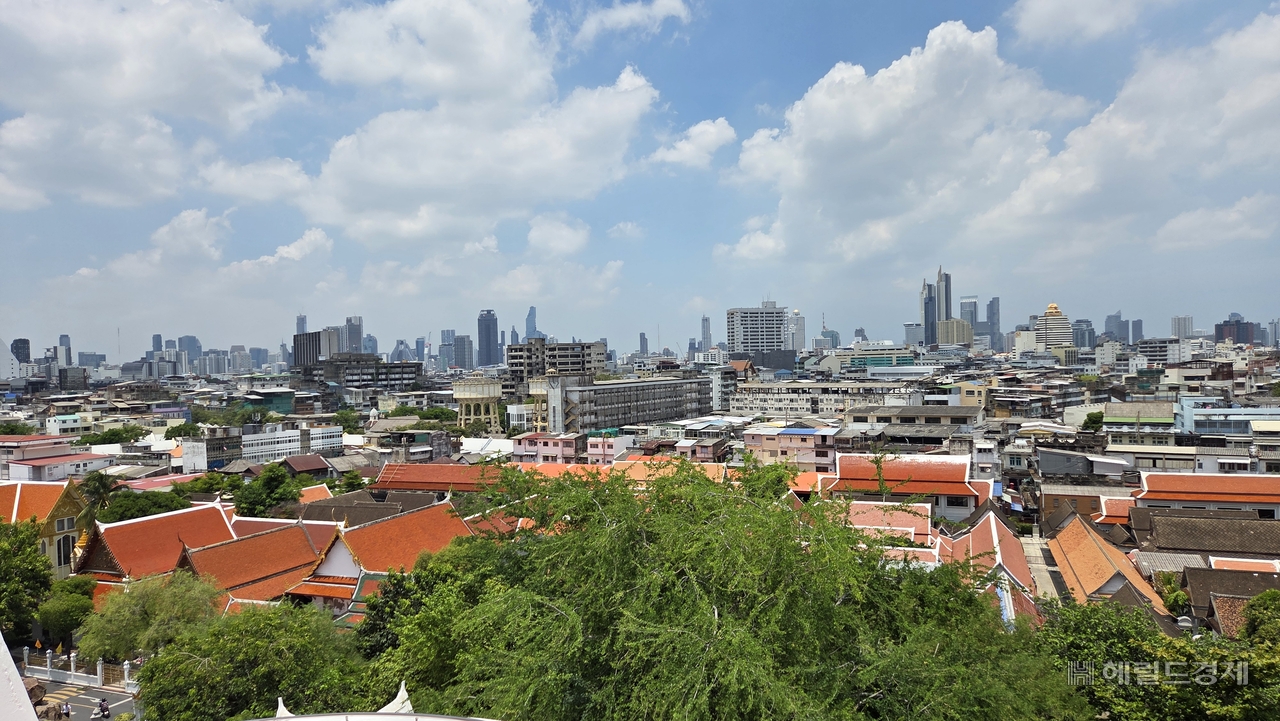
Known as the "Golden Mount" for the gleaming stupa crowning its summit, the temple offers a panoramic view of Bangkok's old city and the Grand Palace from the top.
Rama III began construction of the stupa, but the soft ground caused it to collapse repeatedly, and the accumulating rubble of earth and brick gradually hardened into the hill-like mound seen today. The structure was finally completed under Rama V.
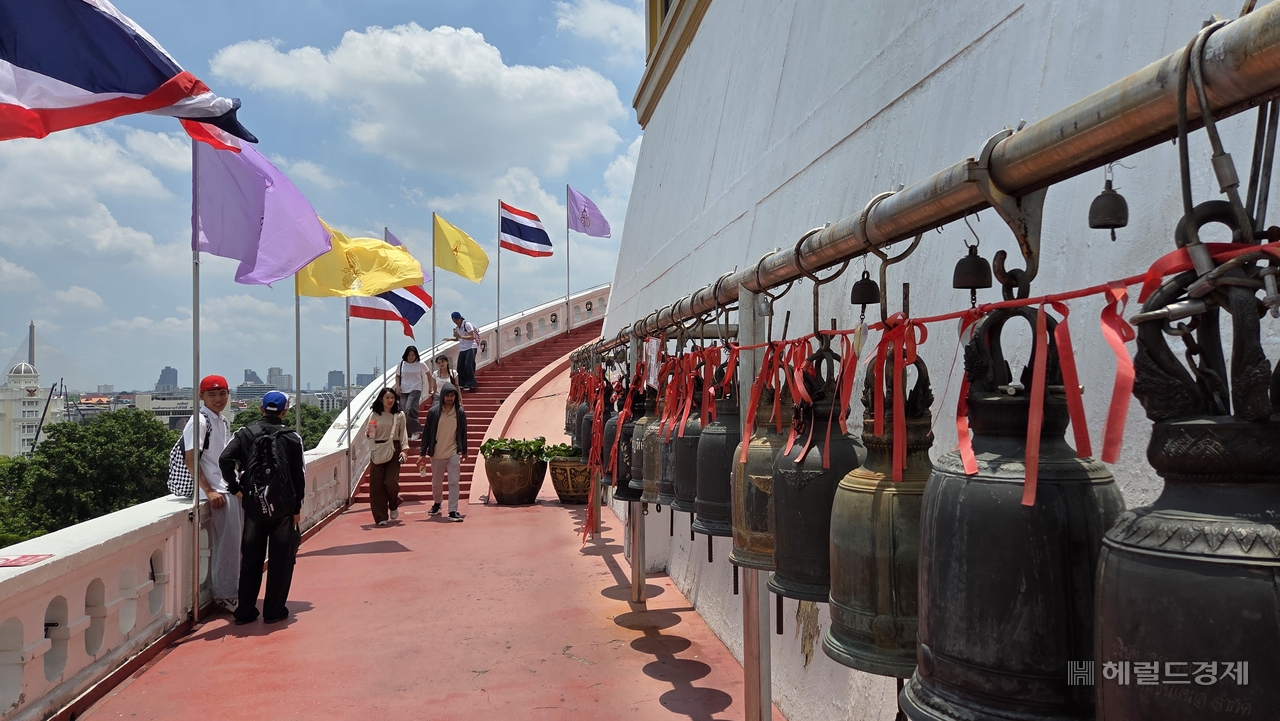
Bells hang along the spiral staircase leading to the summit, and visitors ring them as they climb, each toll carrying a personal wish or aspiration.
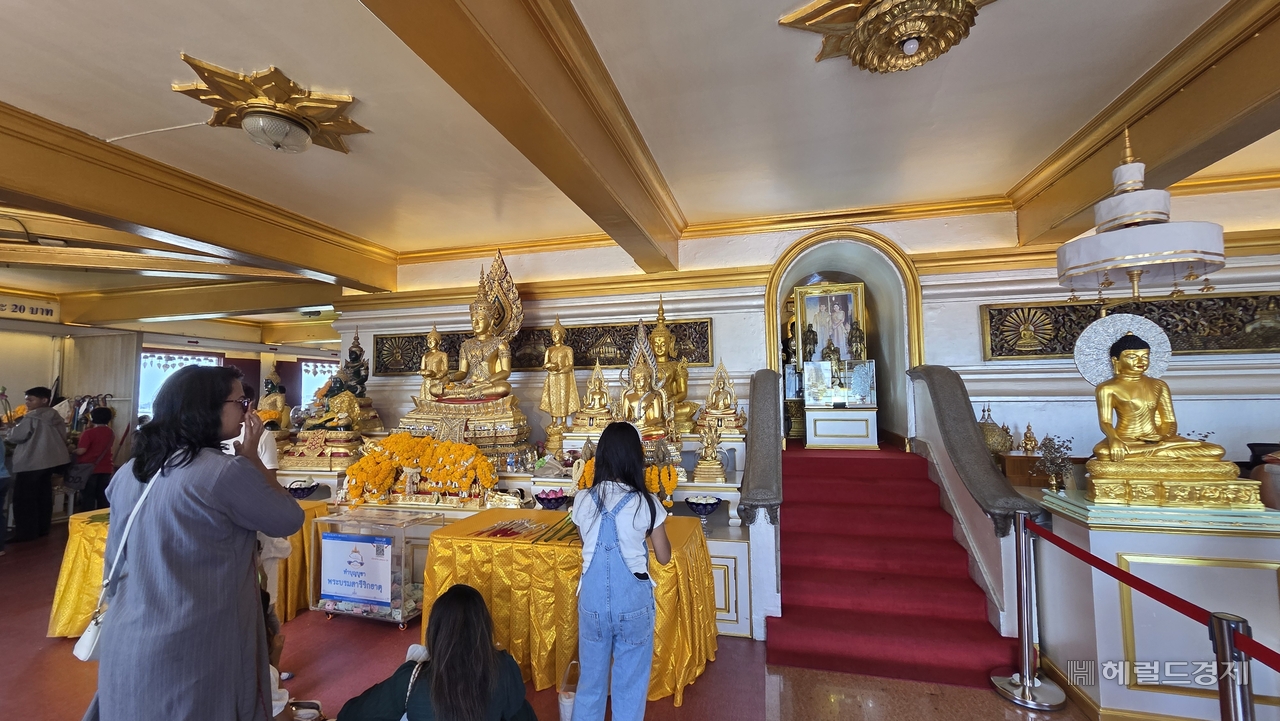
Inside the stupa is a modest ordination hall, and cave-like prayer niches open on all four sides at mid-level, drawing many visitors who come to pray.
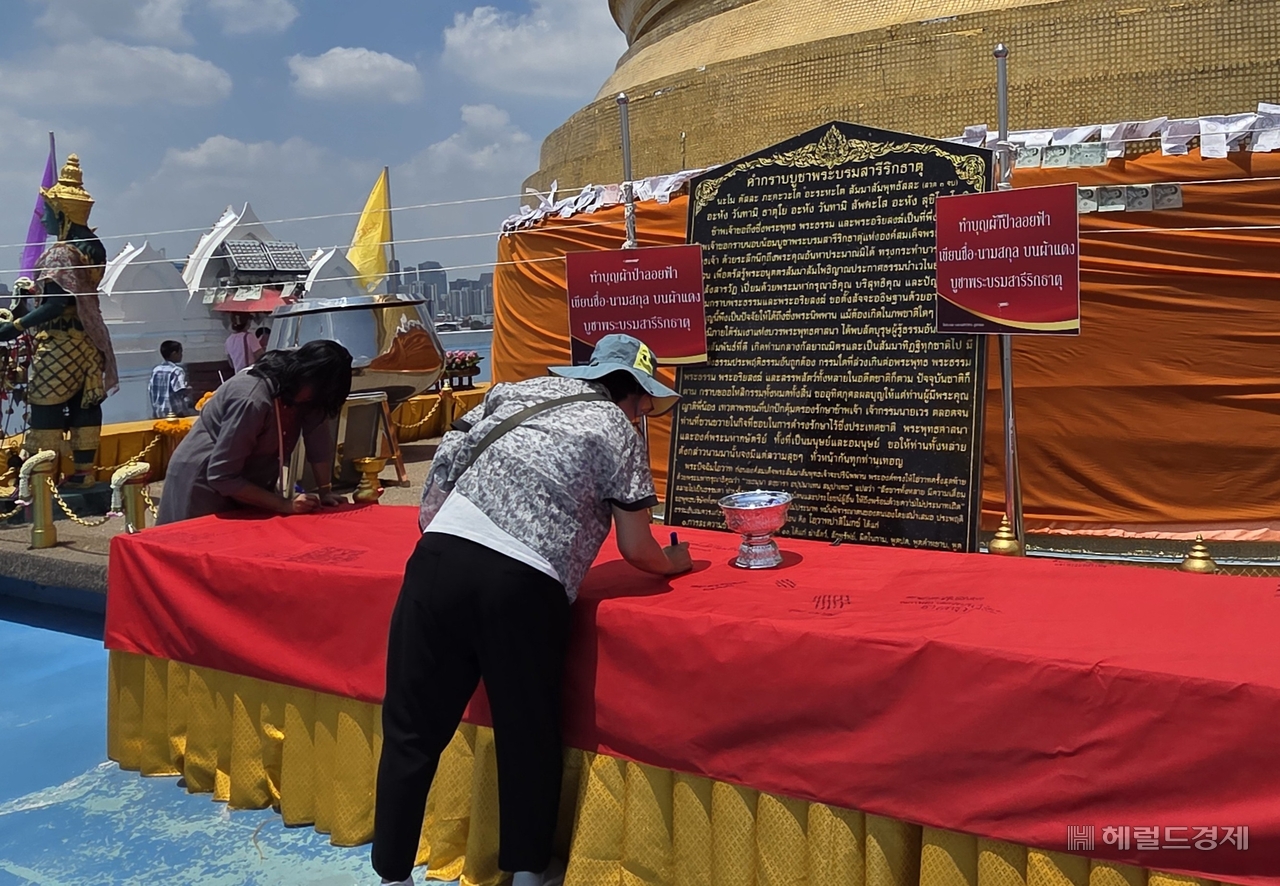
In front of the stupa stands an inscription bearing a prayer of veneration for the Buddha's sacred relics enshrined within. Beside it, a cloth is laid out for visitors to write their wishes with a marker — and the writer joined in.
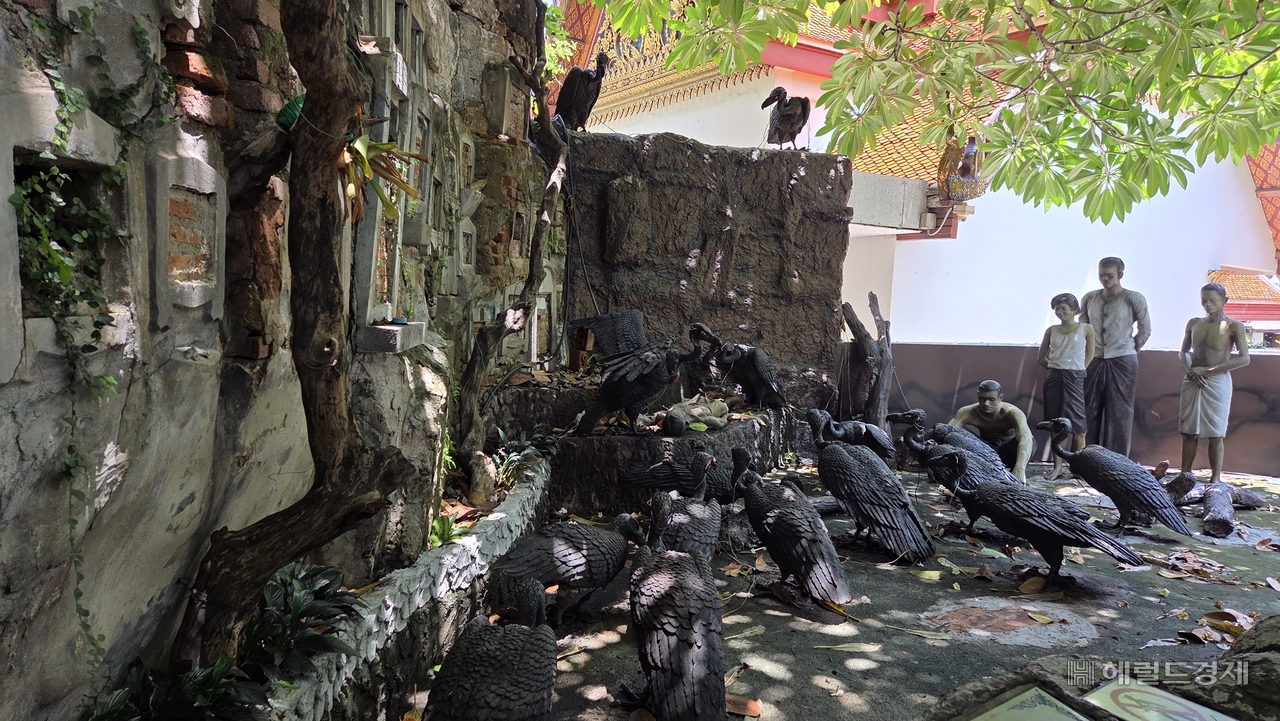
At the foot of the path leading up the Golden Mount stand sculptures of vultures and corpses that call to mind the Tibetan funerary practice of sky burial. Around 1820, a cholera epidemic swept through Bangkok, killing more than 30,000 people. This site, outside the city walls, served as a cremation ground, but so many died that bodies piled up faster than they could be burned — and vultures descended to feed on the dead, a scene of horror that has never been forgotten.
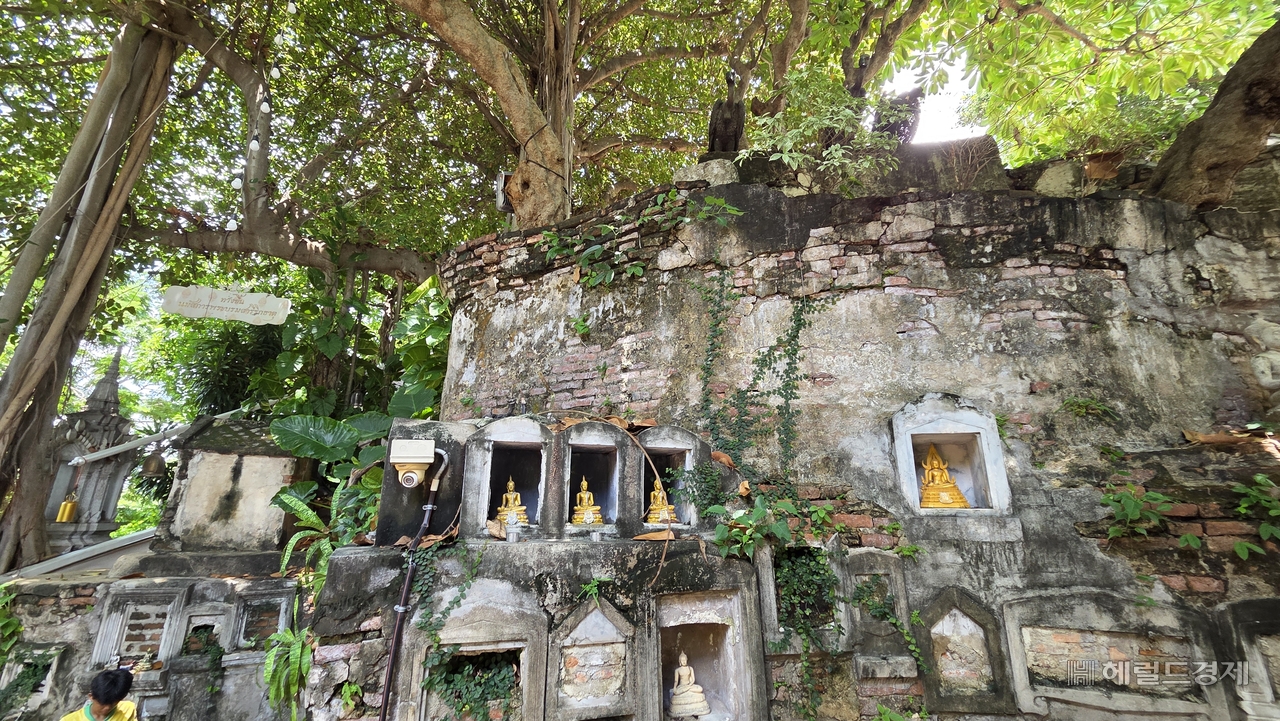
The sculptures and memorial space were created to preserve the memory of that tragedy and to honor the cholera victims.
Wat Saket is celebrated for its views and its beautiful golden stupa, but it is also a temple that holds the collective memory of Bangkok's citizens — a place marked by death and disaster.
Wat Pak Nam: a leading temple of Thai Theravada Buddhism
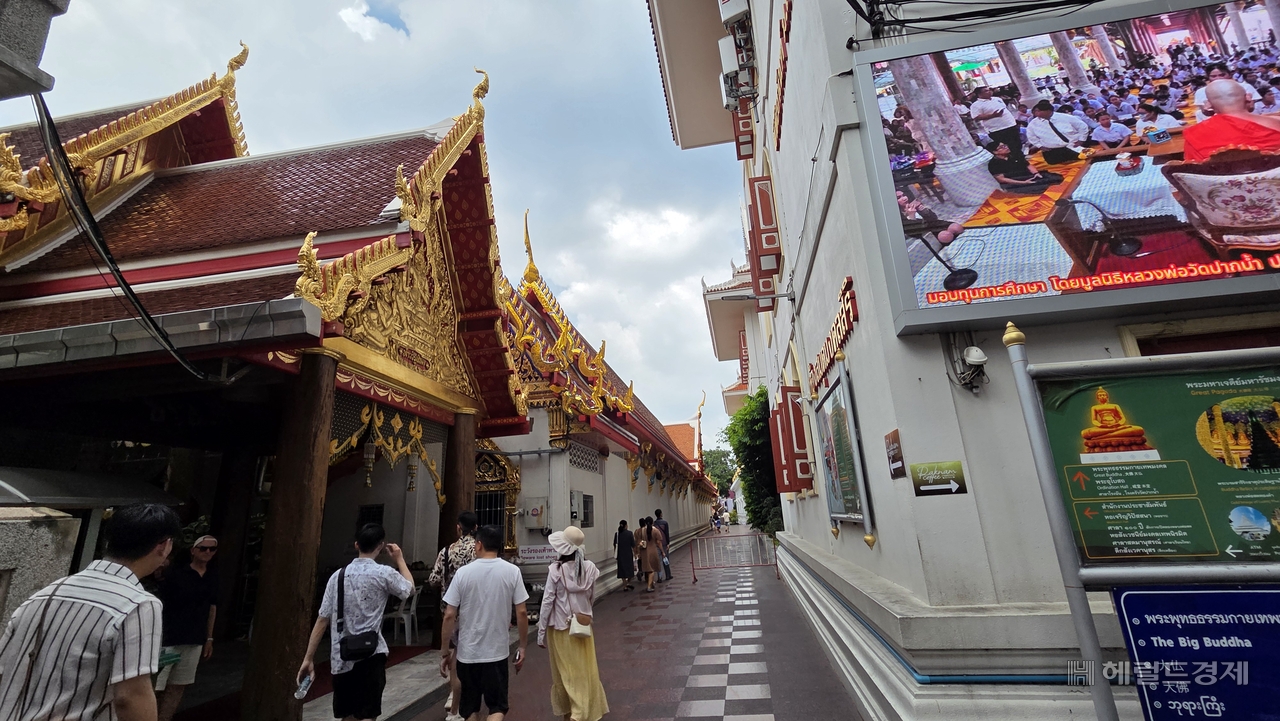
Thailand is widely regarded as the world's center of Theravada Buddhism. Theravada — meaning "the teaching of the elders" — is the branch of Buddhism that adheres to a conservative and traditional interpretation of early Buddhist doctrine, with individual enlightenment (liberation) as its highest goal. Transmitted through Sri Lanka, it has taken root across the southern Buddhist world: Thailand, Myanmar, Laos and Cambodia. It places great emphasis on scriptures recorded in Pali, on monastic discipline and practice, and on meditation and the accumulation of personal merit.
The ideal practitioner in Theravada is the arahant — one who attains enlightenment through personal effort and severs all defilements. This sets it apart from Korean Mahayana Buddhism, which holds up the bodhisattva as the ideal: a being who vows to lead all sentient beings to enlightenment, not just oneself.
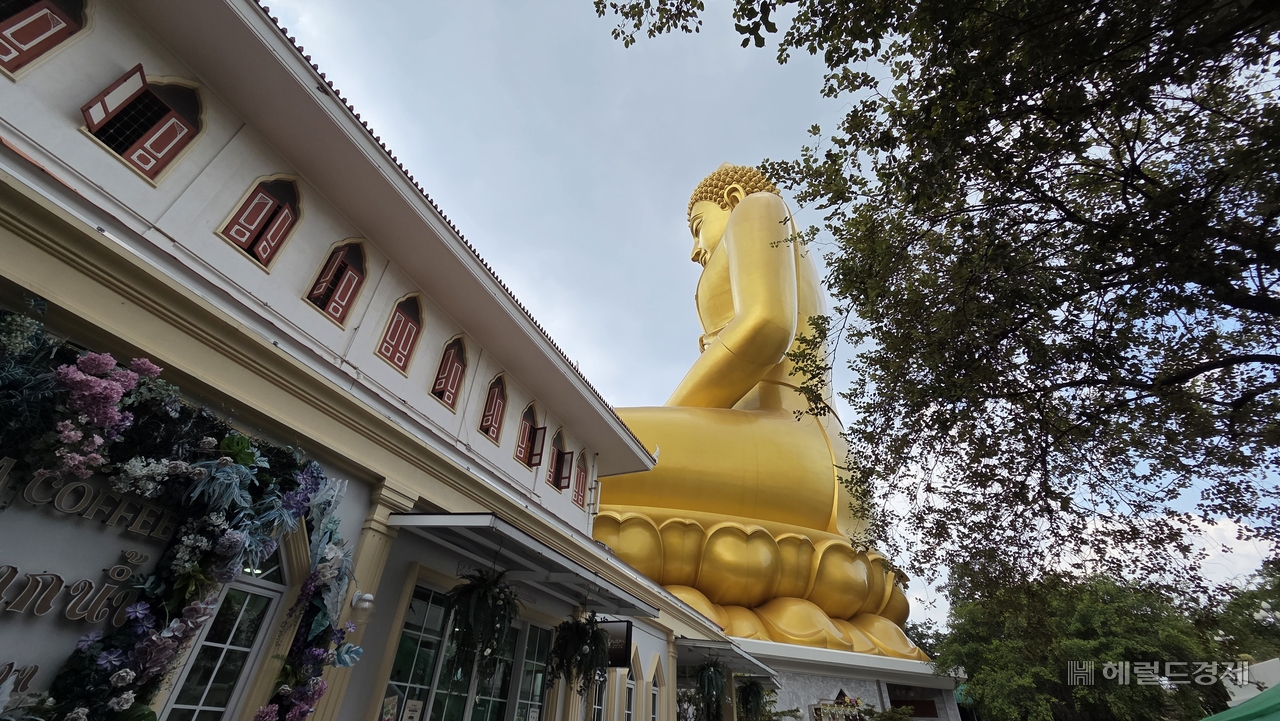
In the Thonburi district of Bangkok stands Wat Pak Nam, the temple where Luang Pho Sot — a revered Thai monk who systematized the Dhammakaya meditation method of Theravada Buddhism — practiced and taught. A major center of the modern Thai Buddhist meditation movement, the temple is a vast complex of dozens of halls devoted to meditation practice, Buddhist education and international outreach.
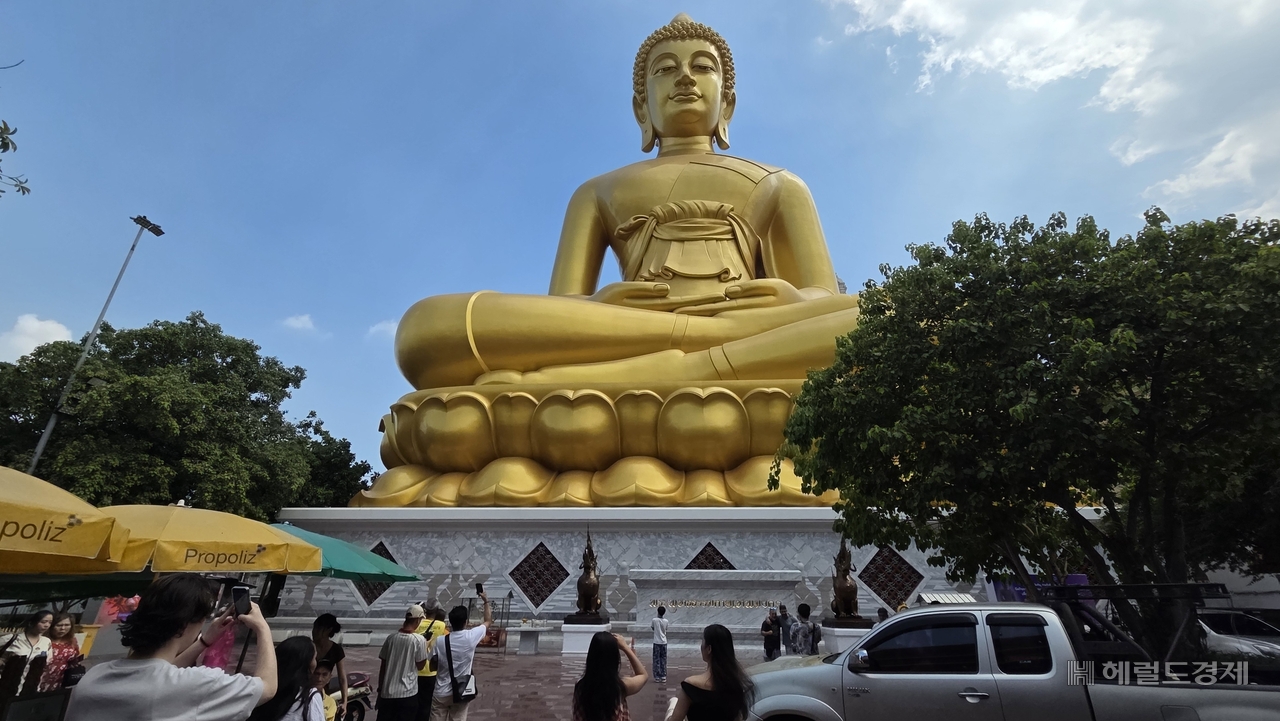
Founded during the Ayutthaya period in 1610, the temple completed Bangkok's largest seated Buddha — a 69-meter meditation-posture image — in 2021, making it a new landmark of the city.
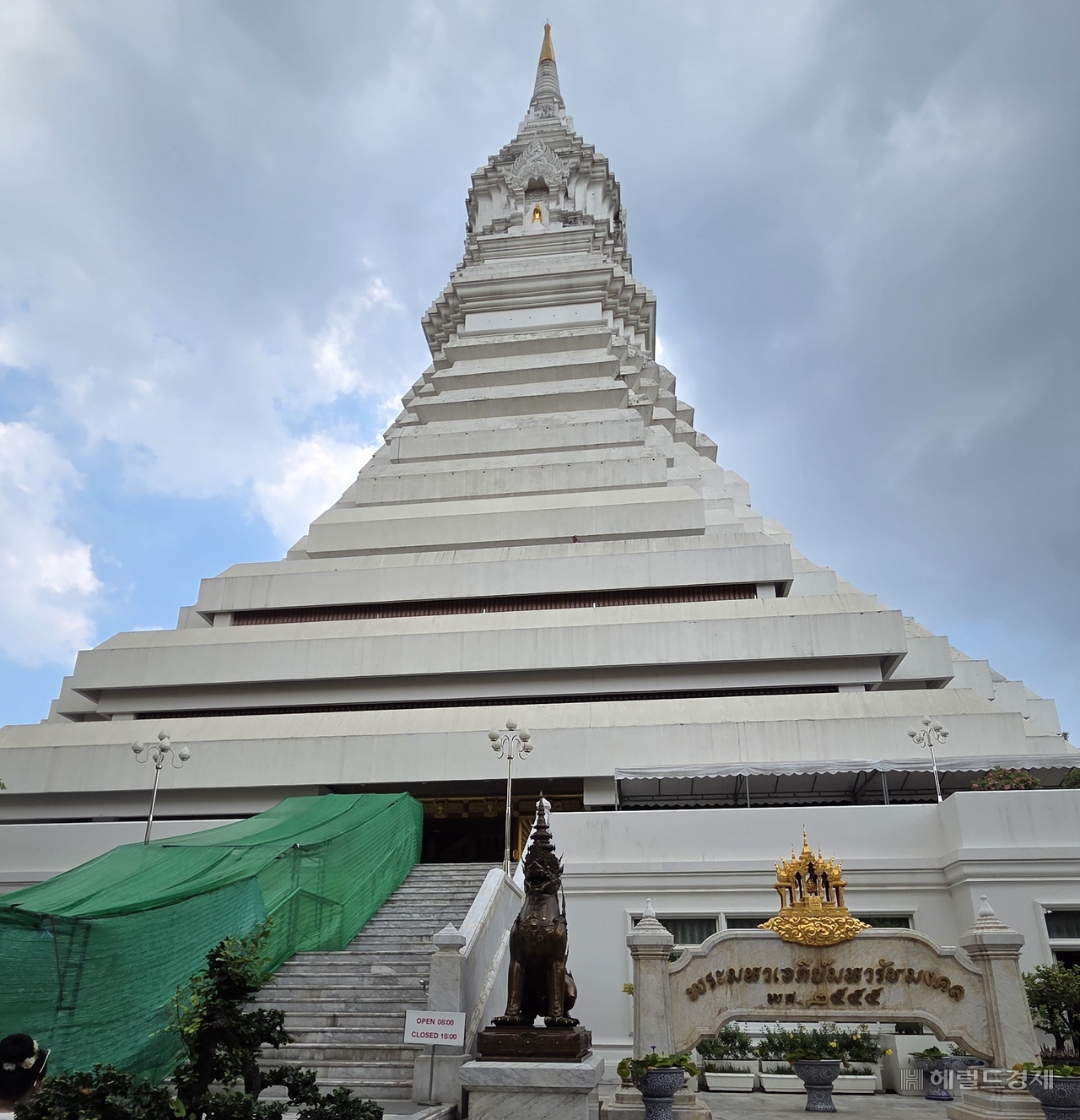
Behind the great Buddha image stands an 80-meter, five-story stupa.
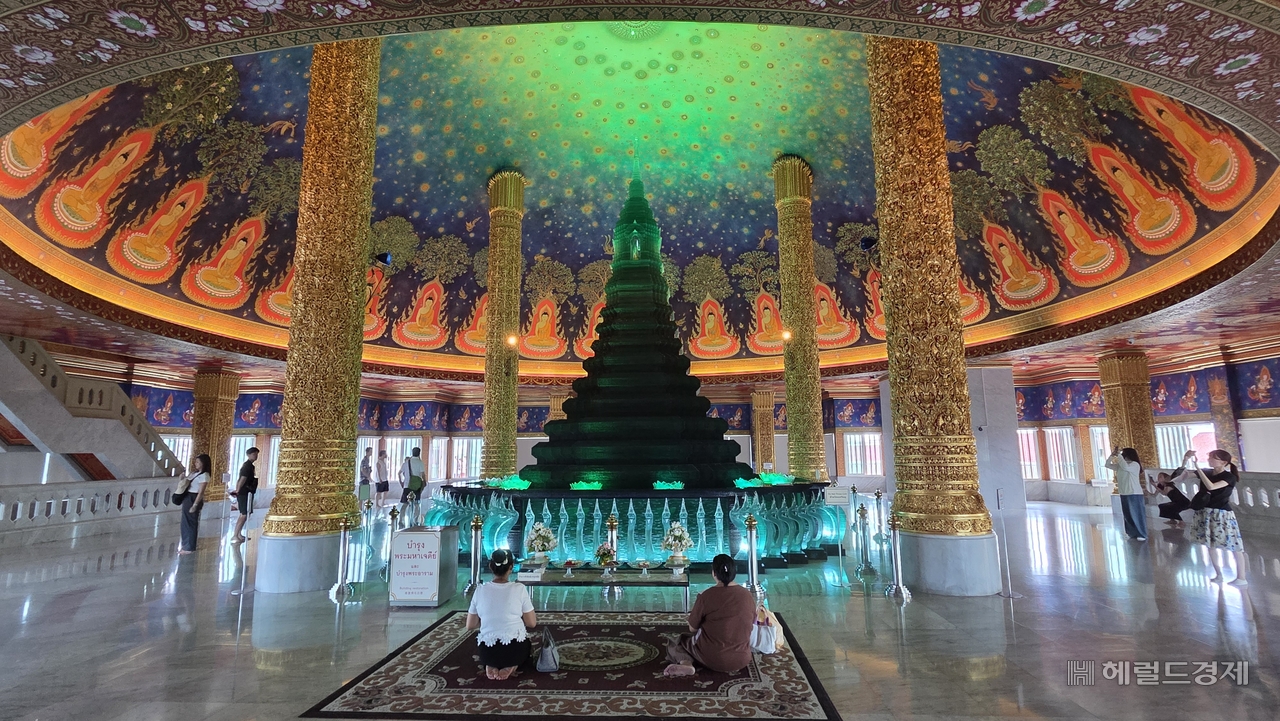
Taking the elevator to the fifth floor, visitors find a ceiling of glass art evoking the cosmos and an emerald-green glass stupa installed at the center. It is said to be the most beautiful indoor Buddhist space in Thailand.
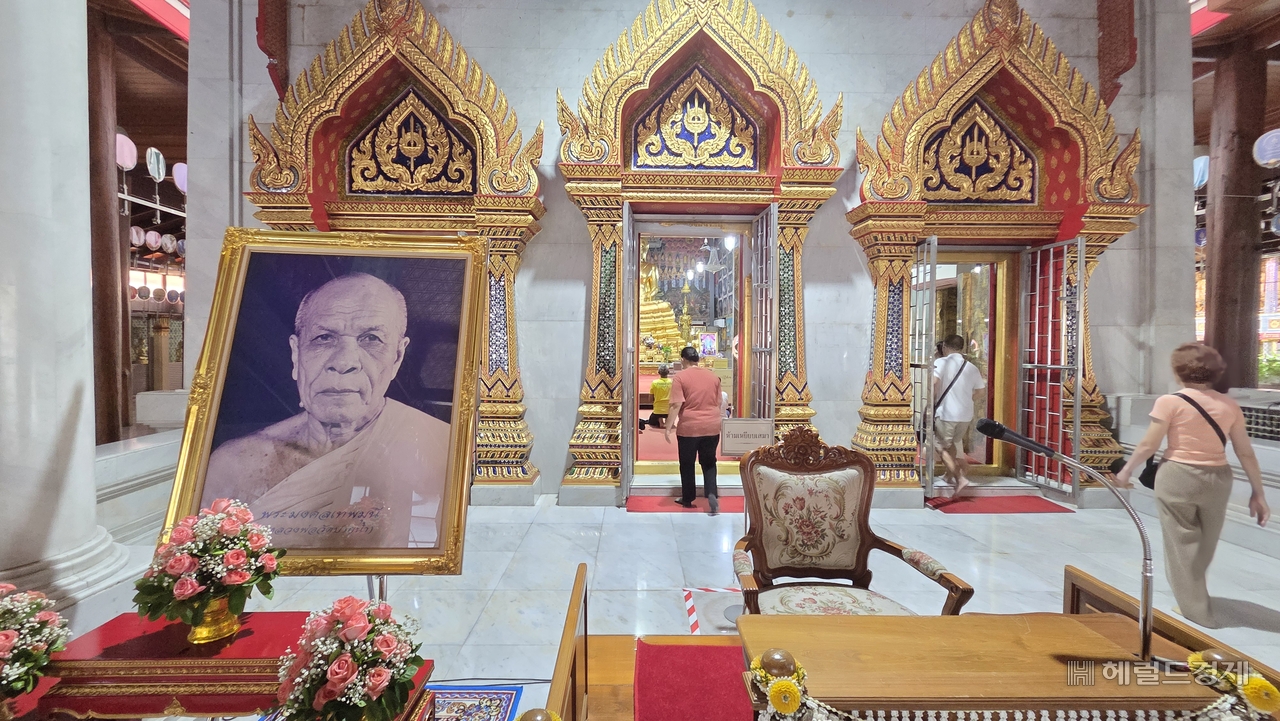
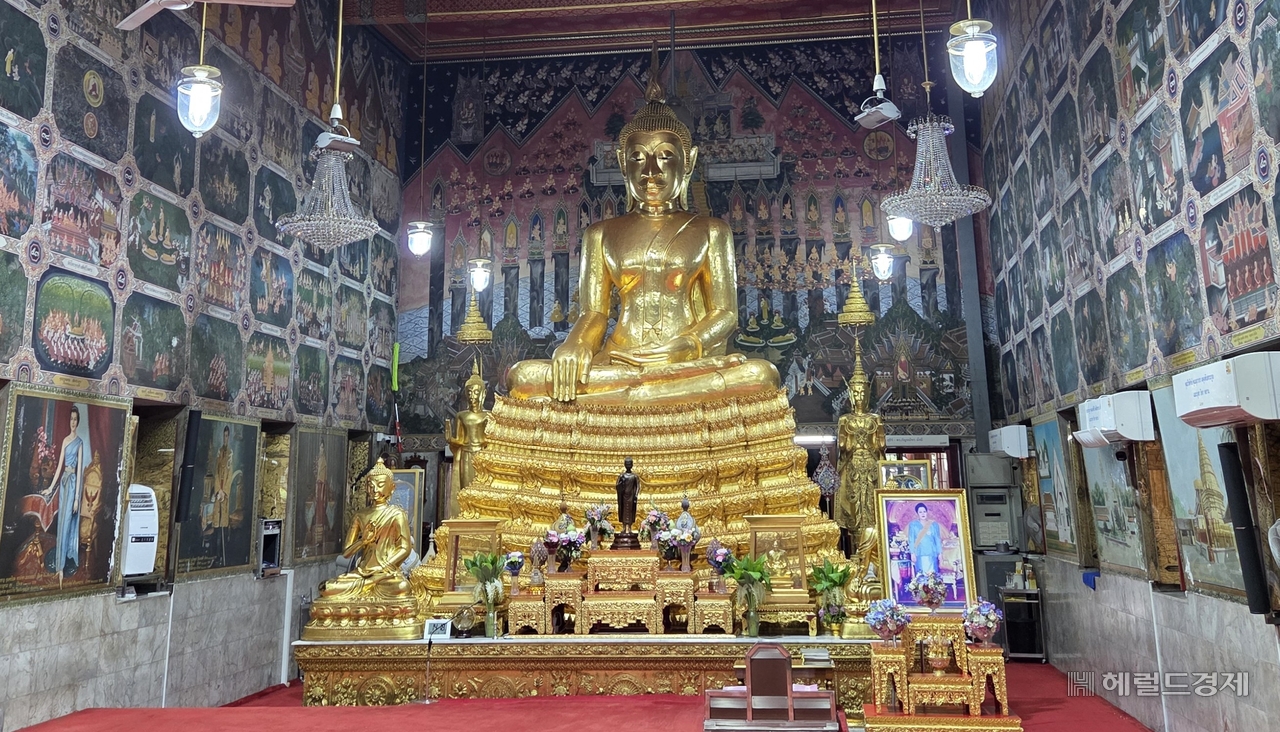
On the second floor of the large offering hall in front of the great seated Buddha is a memorial dedicated to Luang Pho Sot, the monk who systematized Theravada Buddhist meditation.
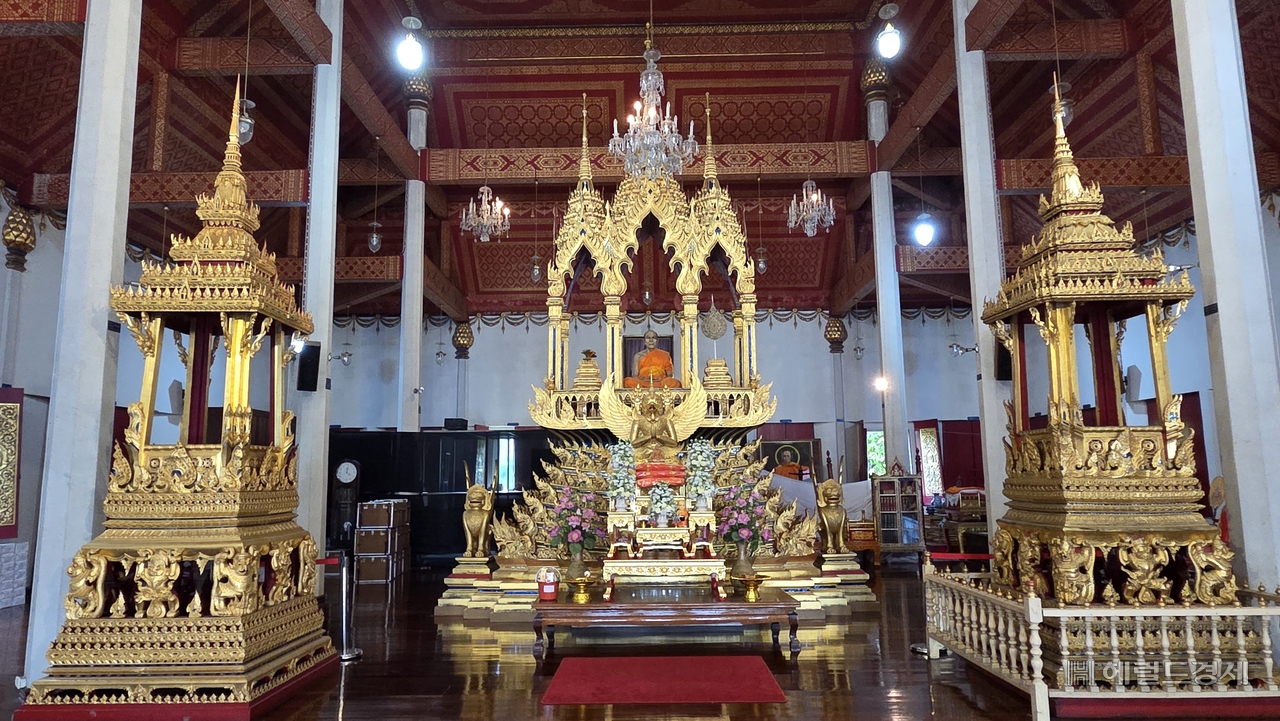
The wooden bust of the monk, set on a tall pedestal at the center of the hall, has eyes so lifelike that the writer found it impossible to look away.
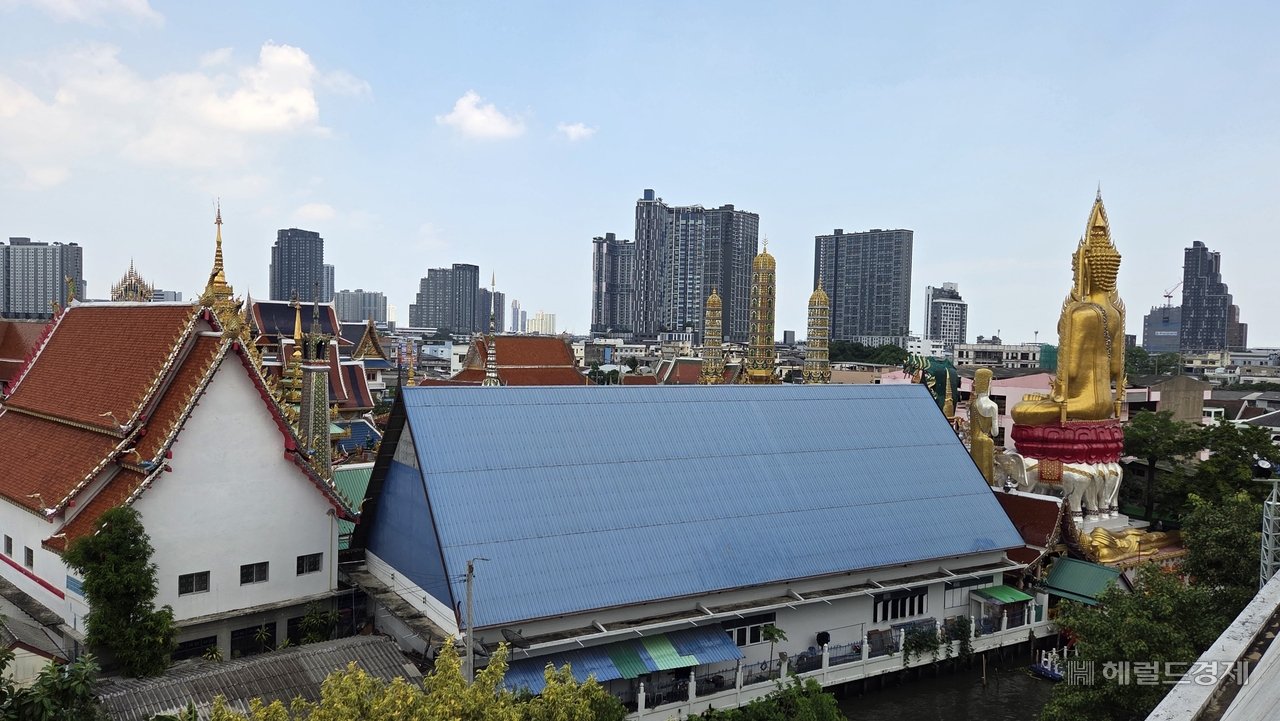
Canals and traditional residential neighborhoods surround the temple, lending it a distinctive atmosphere. From the top of the great stupa, the golden reclining Buddha of an adjacent temple makes a striking impression.
Drawn by a crowd gathered in another hall, the writer stepped inside to find devotees engaged in a variety of earnest acts of worship: applying gold leaf to a meditation bust of Luang Pho Sot, pouring melted candle wax over it, and sitting before it in silent meditation.
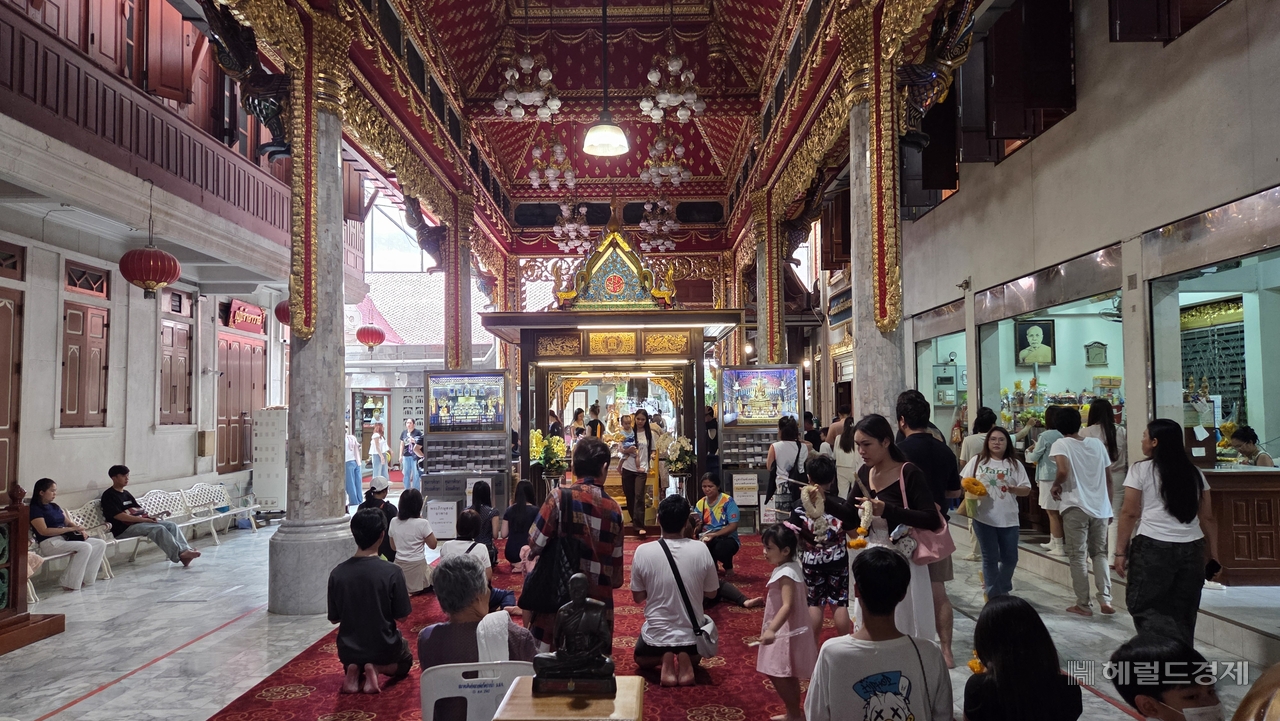
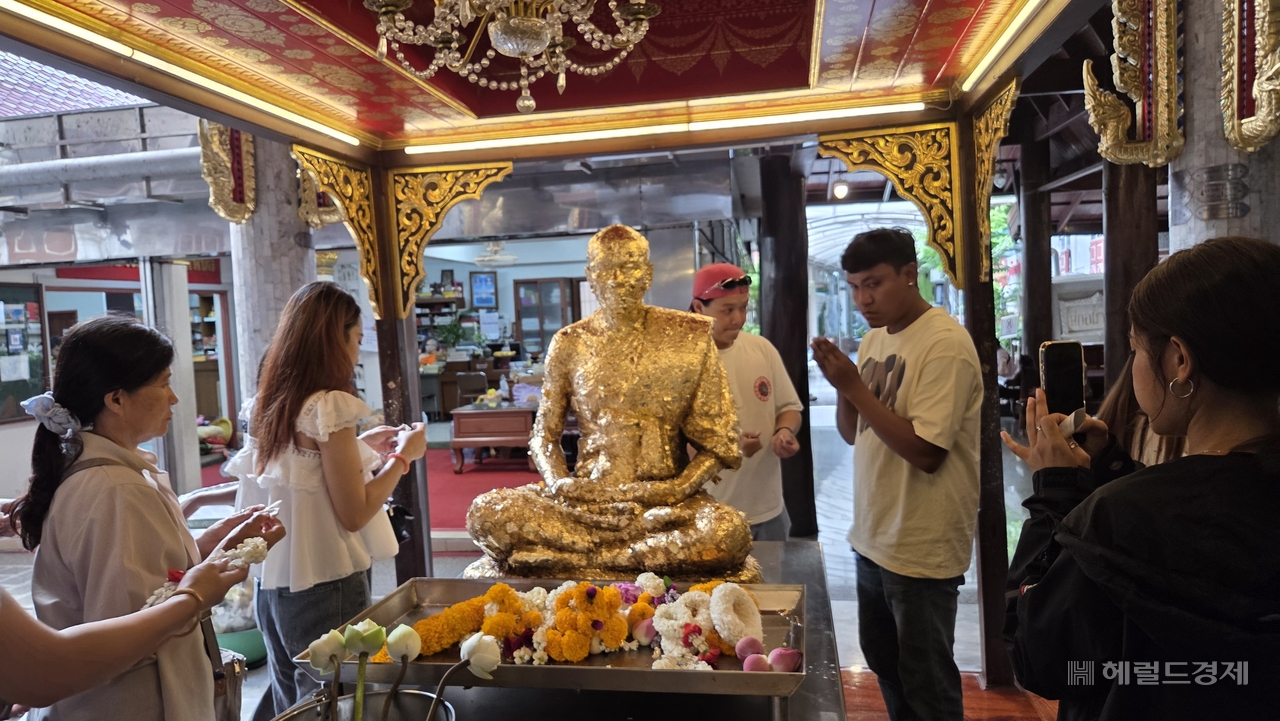
Theravada Buddhism served as Thailand's state religion until 1997, when the designation was removed to guarantee freedom of religion — though small Muslim and Christian communities exist in the country. The constitution still explicitly states that the Thai king must be a Buddhist and a protector of religion, and Buddhism, centered on the royal institution, is the force that binds the nation together.
Thai Buddhism has built a distinctly Thai religious culture in which folk beliefs and Hinduism coexist alongside the Buddhist tradition. Bangkok holds the distinction of having the world's longest official city name, meaning "city of angels." The Thonburi Kingdom rebuilt the capital on the western bank of the Chao Phraya in 1767, and in 1782 the Chakri dynasty established the present capital on the eastern bank — giving rise to today's Bangkok, a city of 10 million people covering an area twice the size of Seoul, with a history of 240 years.
Wat Pho, the reclining Buddha temple, traces its roots to 1793, making it Bangkok's oldest temple. It also houses a traditional massage school — the birthplace of Thai massage — and a 46-meter-long, 15-meter-high reclining Buddha representing the Buddha's entry into nirvana.
Near Chinatown, Wat Traimit — the "Golden Buddha Temple" — enshrines what is said to be the world's largest solid-gold Buddha, standing about three meters tall. Wat Ratchanatdaram, built in 1846 by King Rama IV for his consort, features 37 pointed metal spires representing the 37 virtues said to lead to enlightenment.
With temples scattered throughout the city, Bangkok is without question a Buddhist city that draws the faithful from around the world.
Next: the temples of Ayutthaya — a region whose entire city has been designated a UNESCO World Heritage Site, preserving the painful scars of a kingdom destroyed by war.
Text and photos by Jung Yong-sik, managing director of Herald Corp.
Edited by Min Sang-sik
mss@heraldcorp.com