Pan-government body promised monthly meetings but went dark for months; emergency sessions called only after employment figures deteriorated
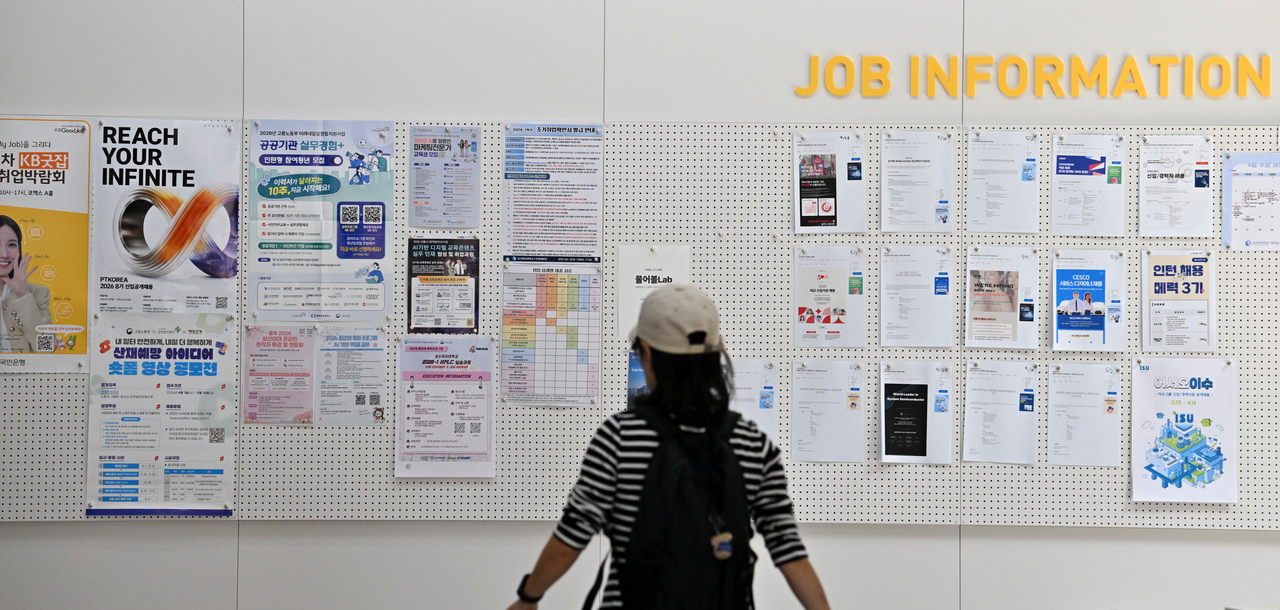
A pan-government jobs task force designed to monitor the labor market on an ongoing basis has met only once this year, it has been confirmed. Despite a pledge at its launch to convene monthly, the body went without meetings for stretches of several months — and on at least one occasion, the vice minister of the Ministry of Employment and Labor, the agency responsible for employment policy, did not attend.
Critics say the government's employment control tower has failed to function as intended, with an emergency meeting chaired by the deputy prime minister called only after data showed the number of employed people had begun to fall.
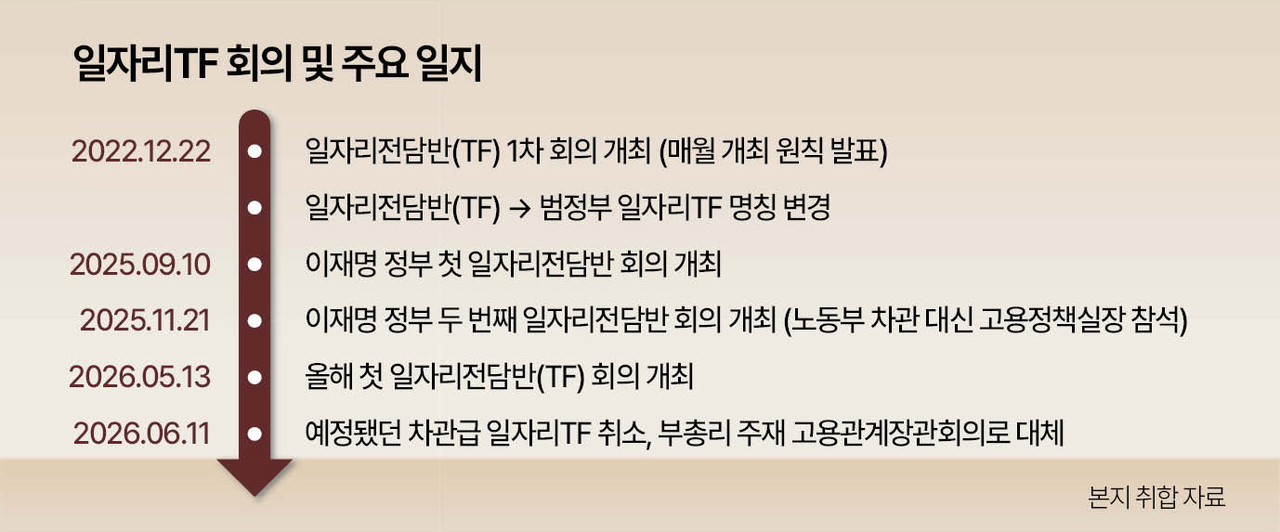
According to the Ministry of Employment and Labor, the pan-government jobs task force was established in December 2022 as a vice-ministerial body co-chaired by the first vice minister of the Ministry of Finance and Economy and the vice minister of the Ministry of Employment and Labor. At the time, the government said it would hold monthly meetings "to respond preemptively to uncertainty in the labor market."
In practice, the task force did not operate as planned. After the new administration took office, the first meeting — billed as the "new government's inaugural jobs task force session" — was not held until September last year, roughly three months after the administration launched.
At the second meeting, held in November of the same year, the Finance and Economy vice minister attended, but the Labor Ministry sent Lim Young-mi, director general of employment policy, in place of Vice Minister Kwon Chang-jun. The vice minister of the agency at the center of employment policy was absent from a pan-government vice-ministerial meeting convened to discuss jobs.
In government meetings, the seniority of attendees signals policy priorities. Analysts say the vice minister's absence carries particular symbolic weight given that the jobs task force is meant to serve as a coordinating control tower for employment issues across ministries.
The task force's first meeting of this year was not held until May 13. The "monthly meeting" commitment made at the body's launch has in effect become a dead letter, critics say.
Clear warning signs have recently emerged in the labor market.
According to the Ministry of Statistics' "May 2026 Employment Trends" report, the number of employed people last month stood at 29.12 million, down 40,000 from a year earlier — the first year-on-year decline since December 2024. Youth employment was particularly hard hit: the number of employed people aged 15 to 29 fell by 255,000, and the youth employment rate dropped 2.4 percentage points to 43.8 percent. The extended youth unemployment rate — a broader measure that includes discouraged and underemployed workers — reached 16.6 percent, meaning more than one in six young people was in effect unemployed or underemployed.
The government moved belatedly to step up its response. Rather than convening the originally scheduled jobs task force meeting, it called an emergency ministerial roundtable on employment on June 11, chaired by Deputy Prime Minister and Finance and Economy Minister Koo Yun-cheol. The following day, June 12, the government held an emergency economic headquarters meeting and economic ministers' meeting to discuss youth employment measures, and the Labor Ministry convened its own emergency employment review meeting chaired by Vice Minister Kwon Chang-jun.
The jobs task force — the standing monitoring body — had in effect been dormant, and it was only after the decline in employment became a reality that a series of emergency ministerial and vice-ministerial meetings followed.
A Labor Ministry official pushed back on the characterization, saying the government had "continuously monitored the employment situation through emergency economic ministers' meetings and other channels beyond the jobs task force." The official added that the ministry had been holding regular regional employment review meetings chaired by the minister since the outbreak of the war in the Middle East, and had pursued necessary measures including easing eligibility requirements for employment retention subsidies and designating preemptive employment crisis response zones.
fact0514@heraldcorp.com