Policy forum on rationalizing eco-friendly railway electricity tariff reform in the era of carbon neutrality
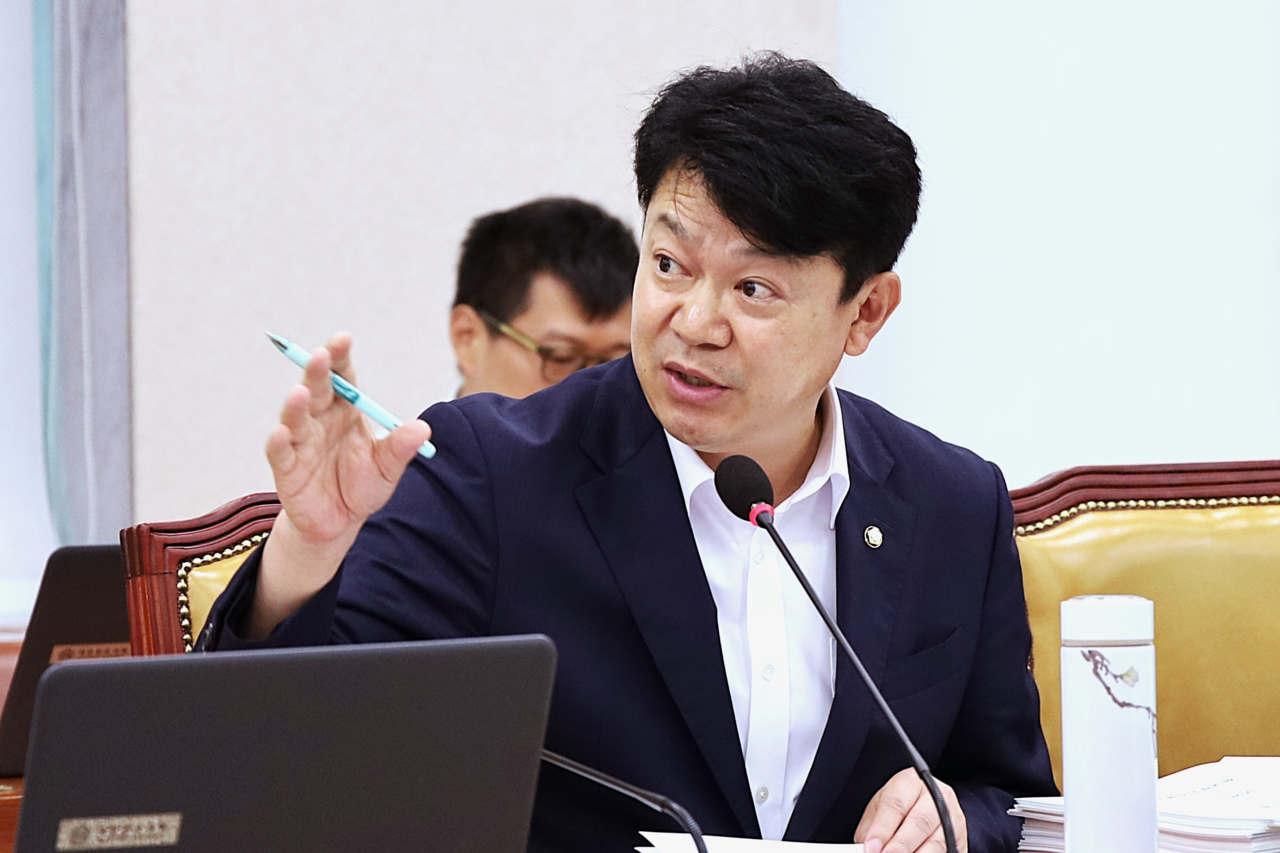
Democratic Party of Korea lawmakers Bok Ki-wang (Asan, South Chungcheong Province; National Assembly Transportation Committee) and Kim Jeong-ho (Gimhae, South Gyeongsang Province; Climate, Energy, Environment and Labor Committee) jointly hosted a policy forum at the National Assembly on Tuesday on rationalizing eco-friendly railway electricity tariff reform in the era of carbon neutrality.
The two lawmakers said the forum was organized to examine the potential for utilizing regenerative braking energy — electricity generated when trains decelerate — and to discuss reform tasks related to electricity tariffs, metering and settlement systems.
Discussion centered on how to build the institutional framework needed to improve energy efficiency in the railway sector and advance carbon neutrality goals.
"Regenerative braking energy holds significant value in terms of energy efficiency and carbon reduction, but the current system does not adequately reflect that value," Bok said. "We must move beyond the interests of individual agencies and, from the perspective of the national interest, develop practical reform measures to reduce wasted energy."
Kim said regenerative braking energy is "a resource whose utility will only grow in the future eco-friendly transportation system," but added that current laws, regulations, and metering and settlement frameworks have not kept pace. "The Ministry of Land, Infrastructure and Transport, the Ministry of Climate, Energy and Environment, and related agencies must work together to accelerate reform that meets global standards," he said.
The two lawmakers said expanding the use of regenerative braking energy "is directly linked to improving national energy efficiency, reducing carbon emissions and strengthening the competitiveness of the future transportation system — going well beyond the interests of any single agency." They also agreed that regulatory reform can no longer be delayed as the expansion of the national rail network and the shift to an eco-friendly transportation system gain momentum.
The forum was moderated by Park Yeong, vice president of the Korean Society for Railway. Presentations were delivered by Jeon Yong-ju, a senior official at Korea Railroad Corporation, on proposals for reforming railway electricity tariff systems, and by Lee Cheol-gyu, a researcher at the Korea Railroad Research Institute, on railway carbon neutrality and electricity tariffs.
A panel discussion followed, with participants including Kang Uk, head of the railway operations division at the Ministry of Land, Infrastructure and Transport; Choi Seung-hyo, a senior official at the energy transition policy bureau of the Ministry of Climate, Energy and Environment; Jeong Hak-geun, a division head at the Korea Institute of Energy Technology; Song Gil-mok, a program director at the Korea Institute of Energy Technology Evaluation and Planning; and Park Yeong-sik, head of the electrical division at Korea Railroad Corporation. Korea Electric Power Corporation was also represented by Im Jin-han, head of the sales planning department; Lee Seung-hun, deputy head of the tariff systems division; and Kim Tae-hyo, head of the energy metering division. All took part in in-depth discussions on the rational use of regenerative braking energy and related reform measures.
bigroot@heraldcorp.com