
Intellectual Property Office announces expanded tech-security enforcement plan, launches dedicated investigative unit
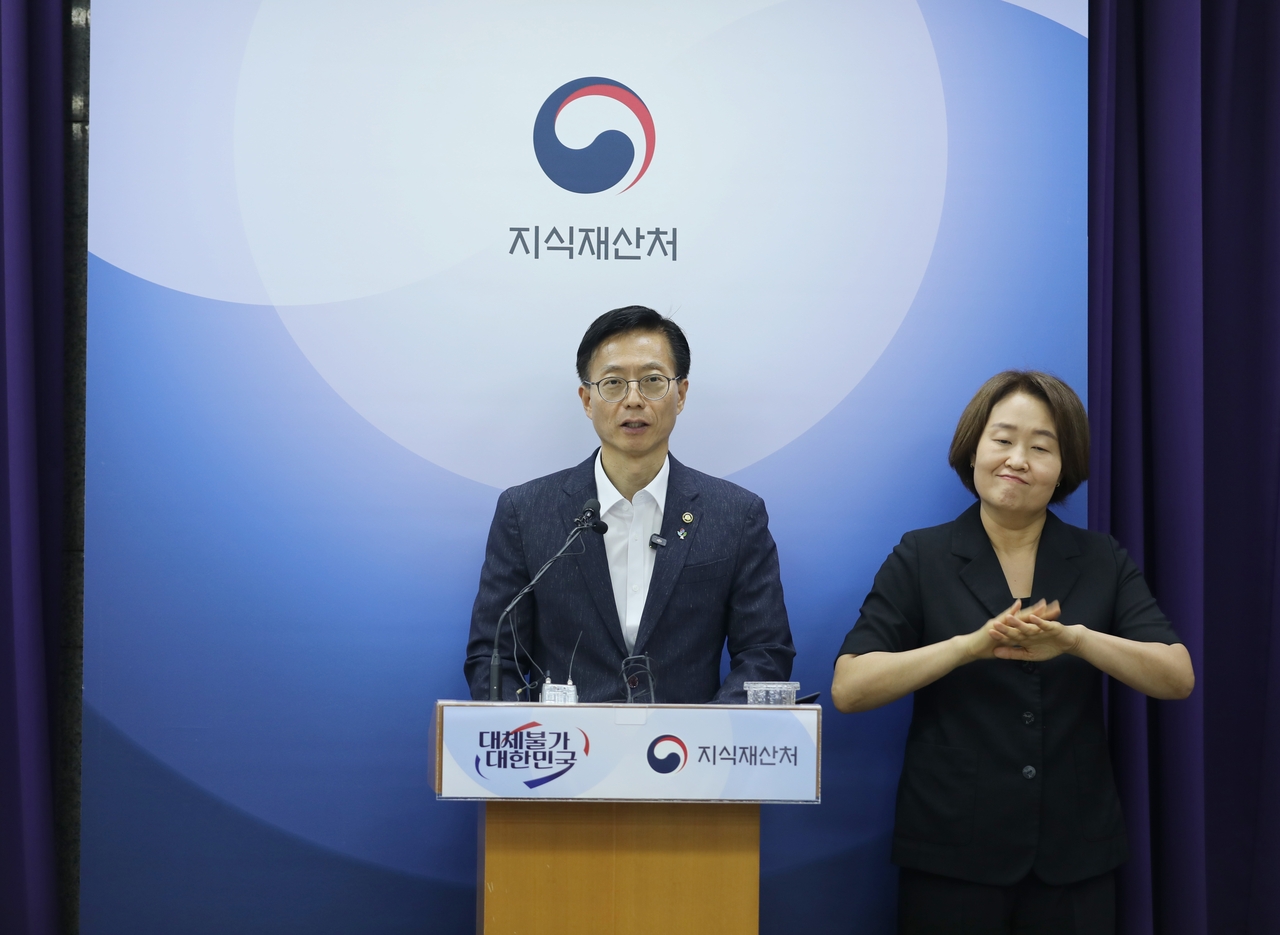
South Korea has established a new organization tasked with preventing leaks of advanced technologies — including semiconductors and AI — and safeguarding national technology security.
The Intellectual Property Office announced Monday its "Plan for the Expanded Reorganization of the Technology Leak and Theft Response System," outlining a sweeping overhaul of the country's enforcement apparatus.
The centerpiece of the plan is the creation of a dedicated investigative track — anchored by a new Special Judicial Police Division for Technology Leak Investigations — to handle advanced technology leak cases exclusively.
Expanding the tech-crime response organization — technology police to grow from 27 to 61 officers
Since the Intellectual Property Office's technology police gained investigative authority over patents and trade secrets in 2019, and a dedicated unit — the Special Judicial Police Division for Technology and Design — was established in 2021, the force has built up the highest level of technical expertise among agencies specializing in technology crime.
Through active investigations, the unit has already prevented more than 10 trillion won ($6.48 billion) in potential damages — arresting suspects involved in overseas leaks of secondary-battery national advanced strategic technologies (in July 2025 and February 2026) and semiconductor national core technologies (in January 2023), as well as design-imitation offenders (in March 2026).
Despite the growing sophistication of technology leak and theft crimes, the limited size of the investigative workforce has led to prolonged case processing times, and calls to strengthen response capacity have consistently grown louder.
President Lee Jae Myung underscored the severity of technology crime and directed the agency to expand its technology police force during a work briefing in December 2025. The current reorganization is a follow-up measure that flows directly from those discussions.
Under the plan, three new divisions will be established within the Intellectual Property Protection Cooperation Bureau — the Intellectual Property Protection Analysis Division, the Special Judicial Police Division for Technology Leak Investigations, and the Intellectual Property Protection Standards Team — with 28 additional personnel added. The dedicated technology-crime response organization will expand from one division to four, and through reallocation of existing positions and additional special judicial police designations, the technology police force will grow from 27 to 61 officers.
Dedicated unit and investigators to focus on leaks and theft of advanced technologies and trade secrets
The previous structure, in which trade secret, patent and design cases were all handled by the same investigative division, will be completely overhauled. Trade secret investigations — which frequently involve national core and advanced strategic technologies and are particularly difficult to prove — will be separated into the newly created Special Judicial Police Division for Technology Leak Investigations, staffed with 21 investigators who will focus exclusively on advanced technology leak and theft crimes.
To enable swift assessment and evidence-gathering in cases involving semiconductor, AI and other advanced technology leaks, the agency will strengthen specialist expertise in electrical engineering, chemistry and mechanical engineering, and will actively assign investigators with backgrounds in patent examination and adjudication, doctoral-level researchers, and attorneys and patent attorneys. Building on this expertise, the agency also plans to pursue amendments to the Judicial Police Duties Act to extend investigative authority beyond trade secrets to cover violations involving national core and advanced strategic technologies.
Detecting warning signs early to prevent technology leaks and theft before they occur
The Intellectual Property Protection Analysis Division will focus primarily on national core and advanced strategic technologies, using patent big data to proactively identify high-risk areas for technology leaks — including key technologies and institutions — and will develop policy measures to prevent technology leaks and theft through technology protection and economic security analysis.
The agency will also operate an industrial espionage tip-off reward program — introduced under the Unfair Competition Prevention Act, which took effect in May 2026 — and will activate a public-private cooperation framework through standing networks with companies and research institutes to detect anomalies early and convert findings into planned, intelligence-led investigations. Trade secret protection and security education programs targeting small and medium-sized enterprises and venture companies with weaker security capabilities will also be expanded.
Strengthening independent investigative capacity and establishing standards and institutional safeguards for human rights protection
The Intellectual Property Protection Standards Team will systematically refine and detail investigative guidelines and coercive investigation standards to build an institutional foundation ensuring the legality, fairness and accountability of the entire investigative process. Through this, the agency aims to proactively address concerns about a decline in investigative quality and gaps in oversight that could arise from changes in the command structure between prosecutors and special judicial police.
In addition, a new Investigation Review Committee will be established to allow external experts to advise on coercive investigations that carry a high risk of infringing on fundamental rights. Human rights protections during investigations will also be strengthened through measures including substantive guarantees of the right to counsel, expanded mandatory video recording and the introduction of a case-progress notification system. The agency also plans to work closely with the Korean National Police Agency to upgrade investigative manuals and pursue joint education and personnel exchange programs.
"By expanding and reorganizing the technology leak and theft response system, we will secure the 'golden time' for detecting technology crimes and maximize the expertise and speed of investigations to protect the technologies of our companies — solidifying the foundation for South Korea's path to becoming a nation of unrivaled technological supremacy," Intellectual Property Office Commissioner Kim Yong-seon said.
kwonhl@heraldcorp.com





