South Chungcheong Province's coastal dunes — the largest in Korea — draw visitors seeking barefoot healing, ancient pine forests and local flavors just two hours from Seoul
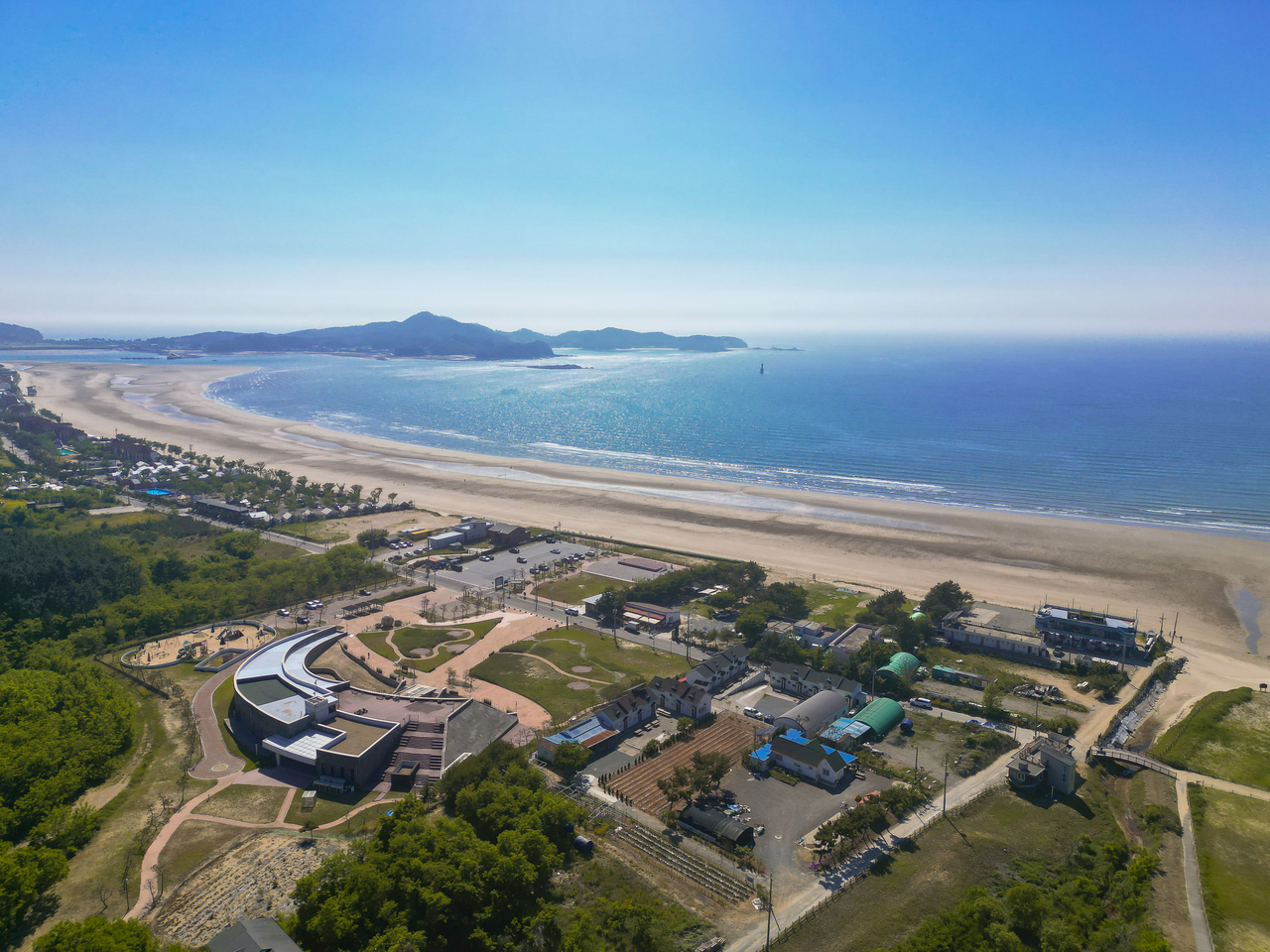
With the heat of concrete cities and the weight of daily life bearing down, Taean in South Chungcheong Province offers a welcome escape — just over two hours by car from Greater Seoul.
The Taean Peninsula greets weary visitors with exotic sand dunes shaped over 10,000 years, a natural pine forest once sealed off by the royal court, and the gentle coastline of the West Sea. Here, where the rhythms of nature drown out the noise of modern life, even the most restless mind finds stillness.
Sinduri coastal dunes: 15,000 years in the making
![Sinduri coastal dunes [Korea Tourism Organization]](https://wimg.heraldcorp.com/news/cms/2026/06/29/news-p.v1.20260626.cf456bc7abdb440496a72bd864160e4b_P1.jpg)
At the northwestern tip of the Taean Peninsula, in the village of Sinduri in Wonbuk-myeon, the landscape shifts into something almost unrecognizable for a West Sea shoreline. The scene feels more like a desert than a Korean coast, and even a single grain of sand here carries the weight of deep time.
The Sinduri coastal dunes are Korea's largest sand dune system, sculpted by the wind over roughly 15,000 years since the end of the last ice age. The dunes cover about 1.7 million square meters — equivalent to more than 240 soccer fields. Recognized for their scientific and ecological value, they were designated Natural Monument No. 431 in 2001 and are protected as a national natural heritage site.
![Sinduri Dune Center [Korea Tourism Organization]](https://wimg.heraldcorp.com/news/cms/2026/06/29/news-p.v1.20260626.b1574a20b8154d168b20c2674e159c76_P1.jpg)
A visit to the dunes begins at the Sinduri Dune Center near the entrance, where a three-dimensional film traces the dunes' formation since the ice age. Free guided tours, available to those who book in advance, run three times a day.
"The Sinduri coastal dunes are not simply a sand hill. They are a record built grain by grain over millennia by the wind that blew after the last ice age ended."
The guide's words linger. As sea levels stabilized after the ice age, the broad tidal flats of the West Sea were exposed, and the northwest monsoon winds began carrying sand relentlessly inland. Each grain settled and accumulated — and over 15,000 years, the sand held. Dune plants such as Carex kobomugi and Elymus mollis took root, anchoring the windblown grains in place, and that cycle of accumulation repeated until it produced the sweeping landscape visible today.
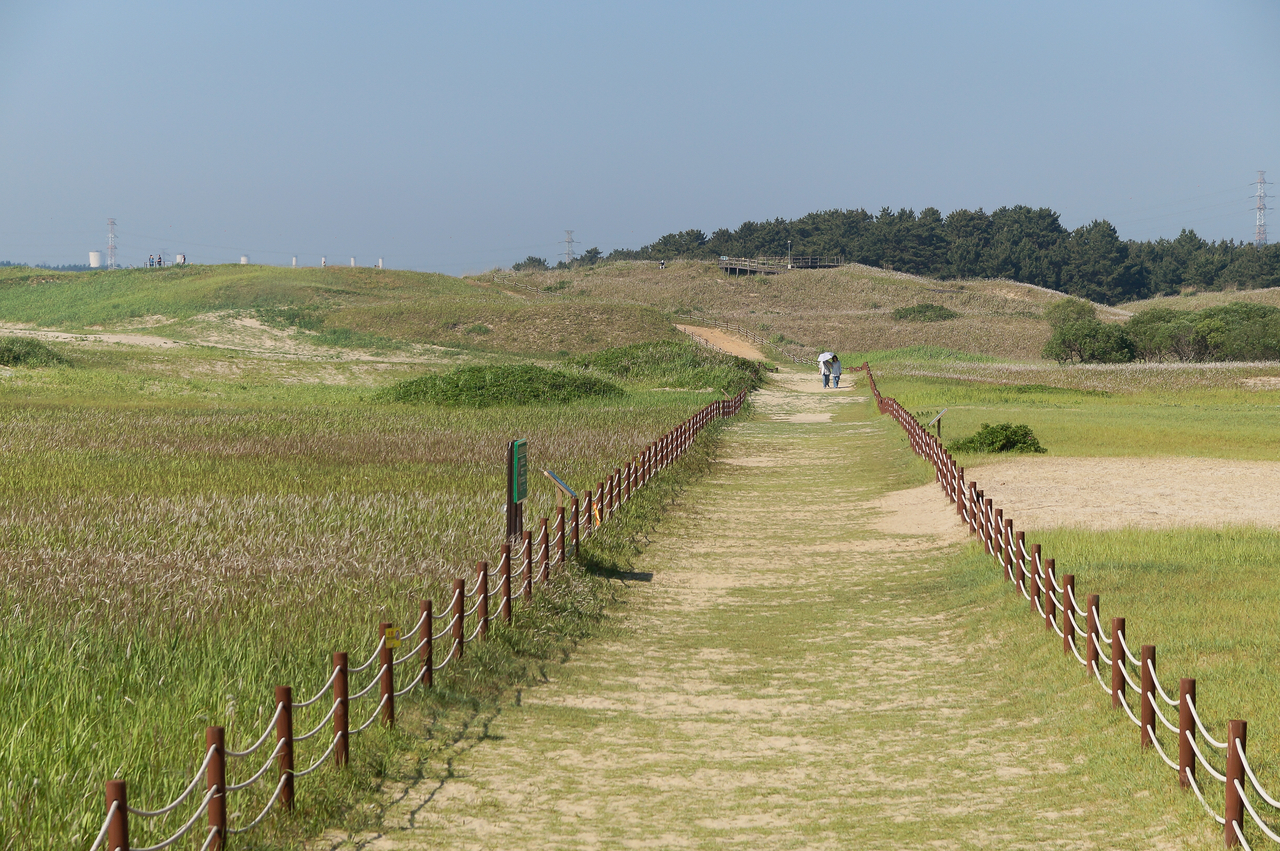
Beyond the center and through the dune entrance, the trail opens onto a surprisingly lush green meadow — a far cry from the barren winter landscape, as summer fills the dunes with vegetation. The ecosystem here is equally remarkable: the Sinduri dunes are home to endangered wildlife including the leopard gecko, salamander, narrow-mouthed toad and gold-spotted pond frog, as well as the country's largest colony of rugosa roses and rare plants such as Glehnia littoralis.
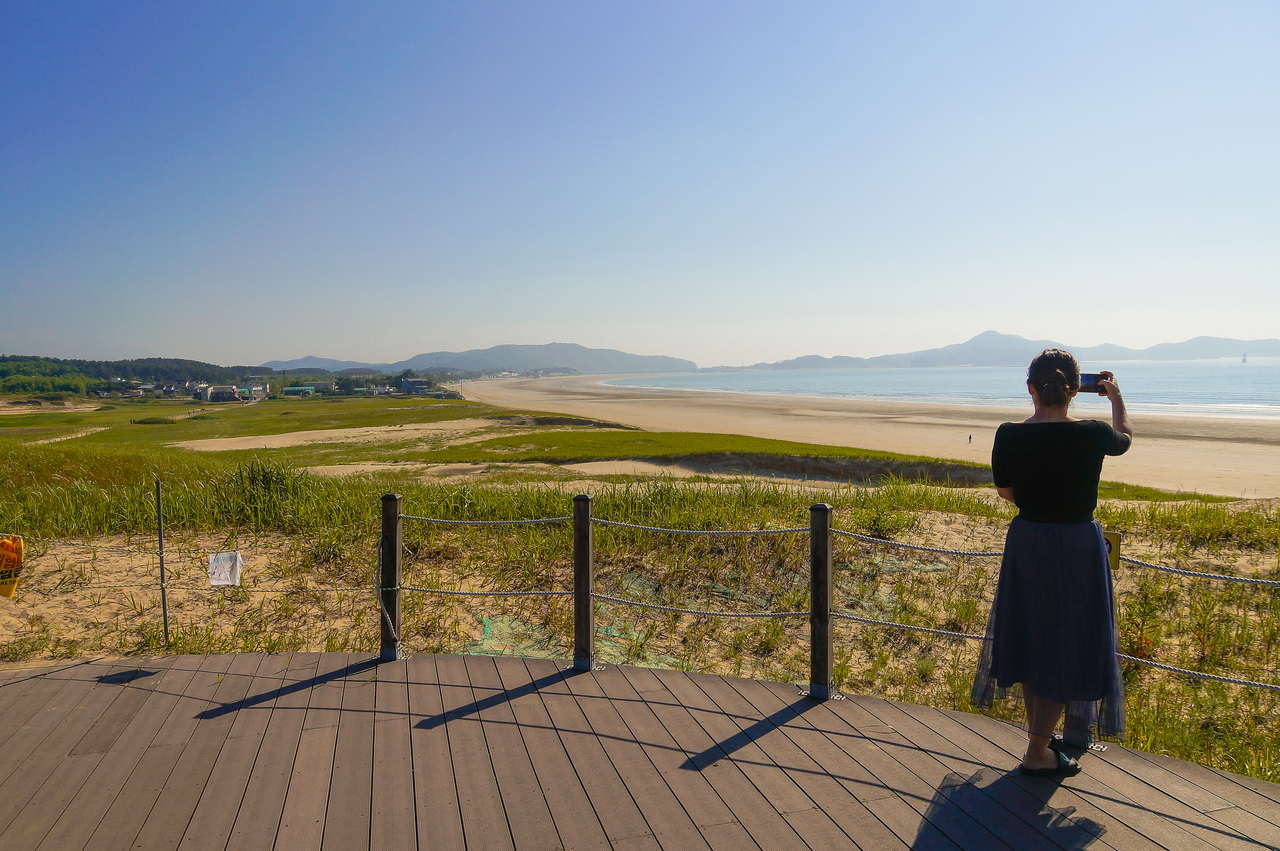
Access into the protected dune area is strictly controlled to prevent damage to the sand. Along the trail, visitors reach Sunbigi Hill, a popular photo spot where the vast blue horizon of the West Sea stretches beyond the sand flats. Continuing along the path, the dunes gradually reveal their true character: the green grass gives way as the slope gentles out, and the full expanse of bare sand hills unfolds.
![An aerial view of the Sinduri coastal dunes [Korea Tourism Organization]](https://wimg.heraldcorp.com/news/cms/2026/06/29/news-p.v1.20260626.f69e8de8809a4dec8b646d61b4f4c2d4_P1.jpg)
It feels almost surreal that a desert landscape most people assume requires a long-haul flight exists right here in South Chungcheong Province. As the sun descends, light and shadow trade places across every ripple pressed into the sand, and the entire dune seems to breathe in a slow, even rhythm. Standing still and watching the light move across the surface, a visitor begins to sense the deep time of the earth — something rarely felt in the rush of daily life.
Earthing: healing through bare feet
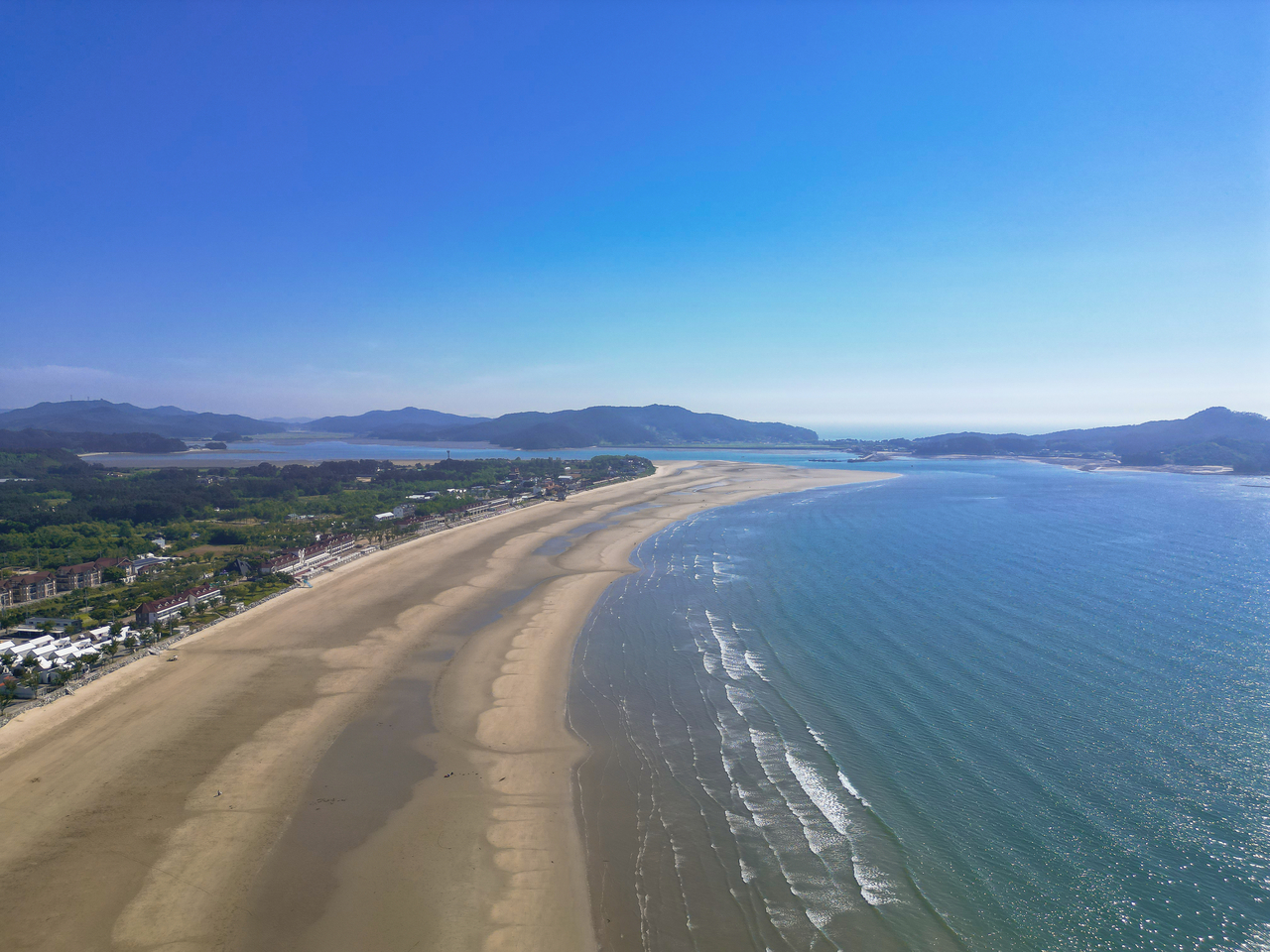
Just beside the dunes lies a wide stretch of white sand — Sinduri Beach, increasingly recognized as an ideal spot for earthing. The practice involves direct physical contact with the ground to discharge static electricity from the body and absorb the earth's natural energy, restoring physical balance.
A beach, rich in moisture and salt, conducts electricity far better than an ordinary dirt path, making it what practitioners call a "super earthing" environment — one said to offer a stronger grounding effect than inland surfaces.
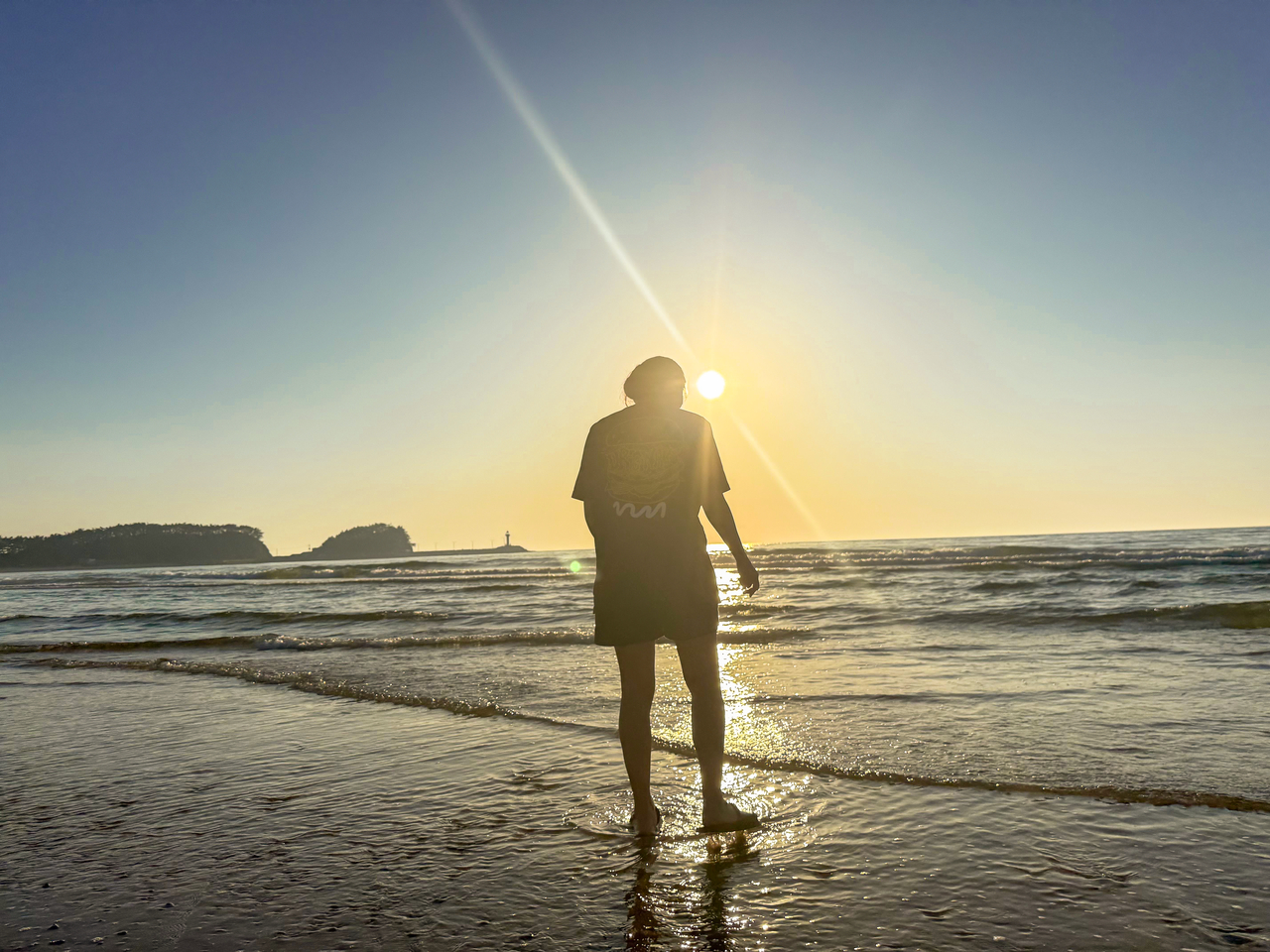
The sand at Sinduri Beach has been refined by strong West Sea winds over countless years, leaving it fine-grained and gentle underfoot with little risk of cuts or abrasions. Stepping barefoot to the water's edge, waves wrap softly around the ankles before retreating in a trail of foam. The cushioned give of sand between the toes, the steady rhythm of the West Sea surf and the cry of black-tailed gulls overhead combine to awaken all the senses. Walking across the ridged imprints left by the tidal flats delivers a subtle acupressure effect with every step, as if the blood is moving more freely through the feet.
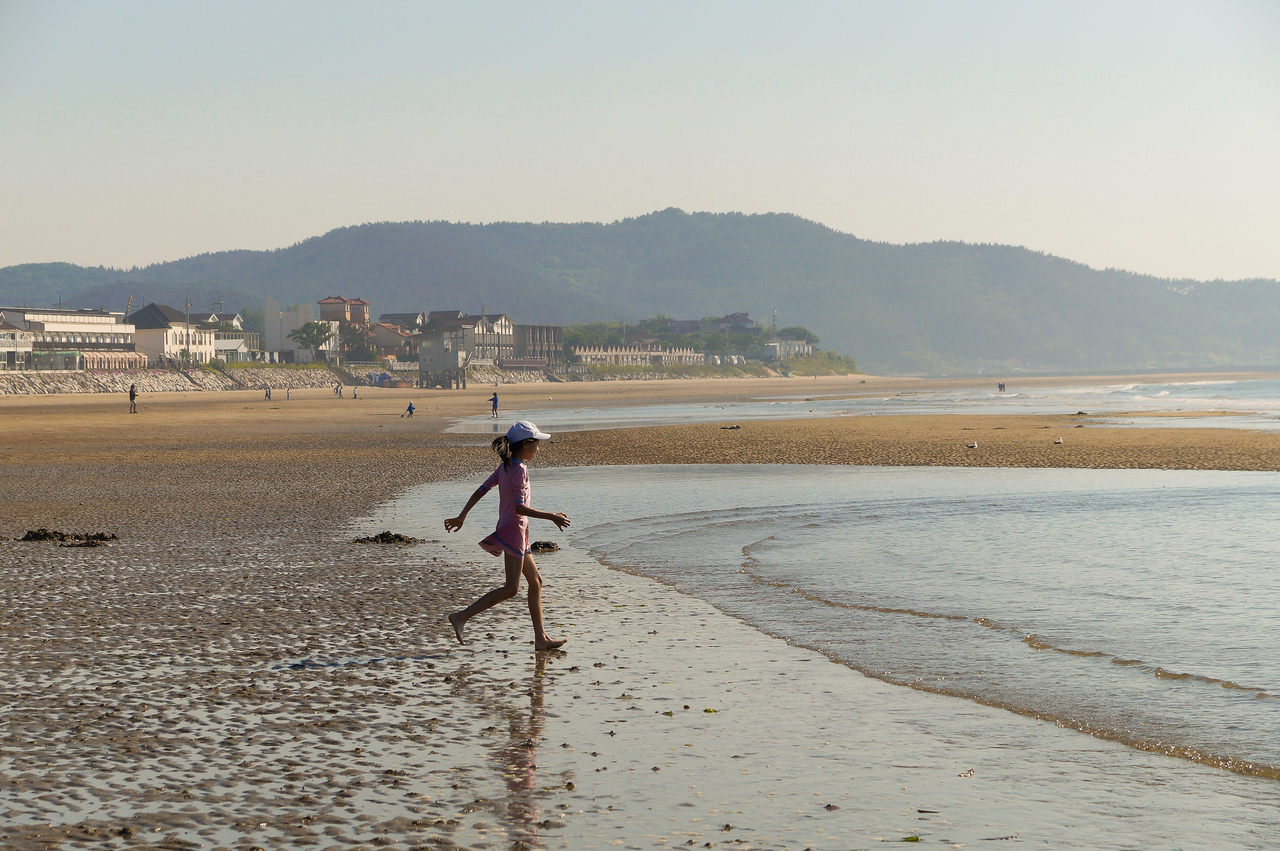
As evening approaches, the West Sea sunset washes the water and the white sand in a watercolor of indigo and crimson. The intense orange afterglow the sun leaves across the wide tidal flats inspires a quiet sense of awe. Footprints pressed deep into the sand vanish without a trace as the tide rolls in, and nature quietly prepares a fresh canvas for the next day's earthing.
Reconnecting with the ground after years of walking on asphalt and concrete feels like becoming a child again. That moment of pure, unguarded wonder stirs something like genuine psychological wellbeing.
Anmyeondo Natural Recreation Forest: a pine grove preserved by the Joseon royal court
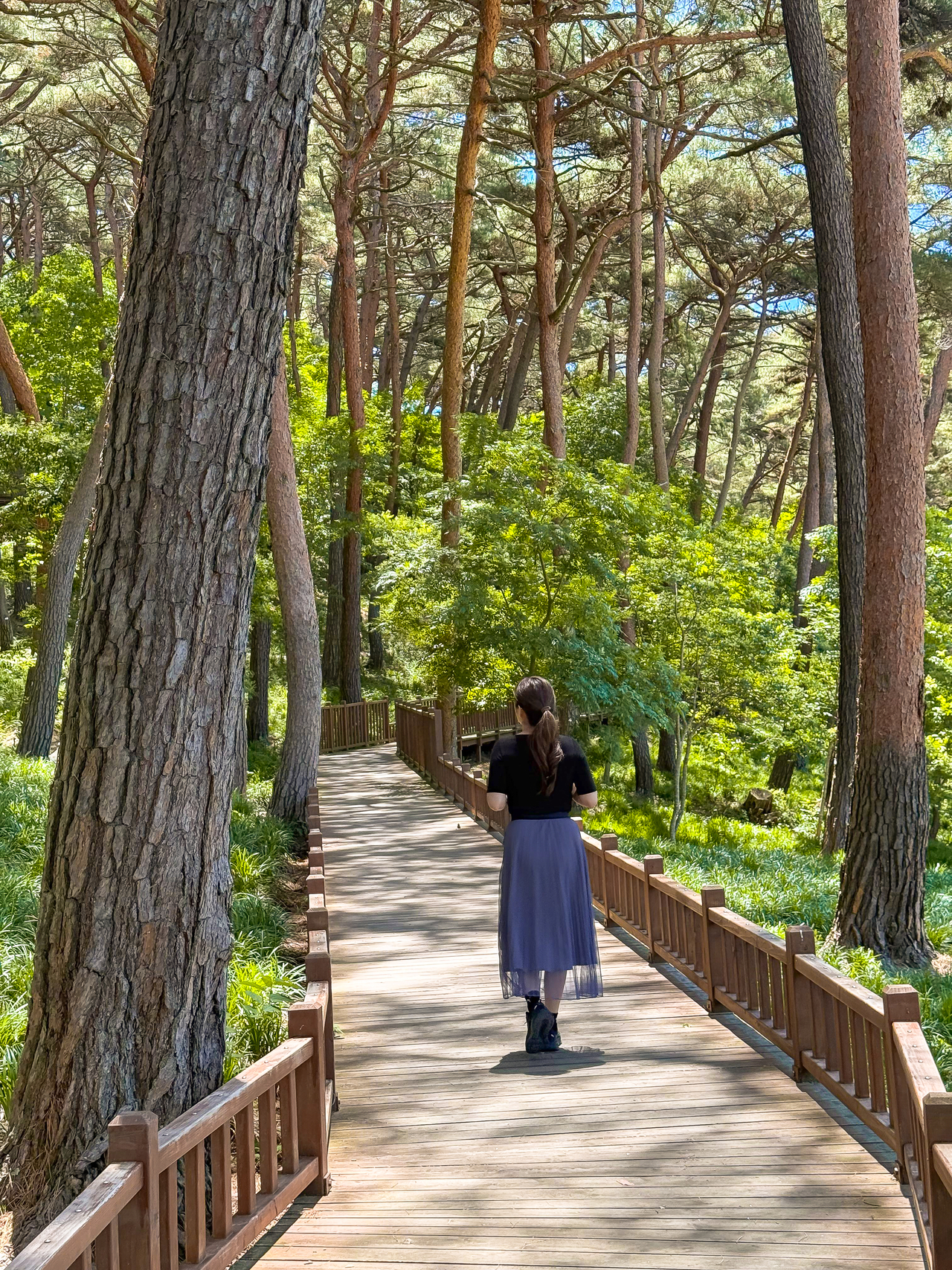
Heading south along Anmyeondo, the road eventually gives way to a wall of green — the Anmyeondo Natural Recreation Forest, home to Korea's only natural pine grove. Stepping out of the car, a deep resinous fragrance and a cool forest breeze instantly clear the lungs of city air.
The forest is densely packed with Anmyeon pine, a native species averaging around 100 years old. The trees' straight, sturdy trunks made them prized timber for palace construction and shipbuilding as far back as the Goryeo period. During the Joseon Dynasty, the royal court designated the area a "bongsan" — a protected zone where logging was strictly forbidden.
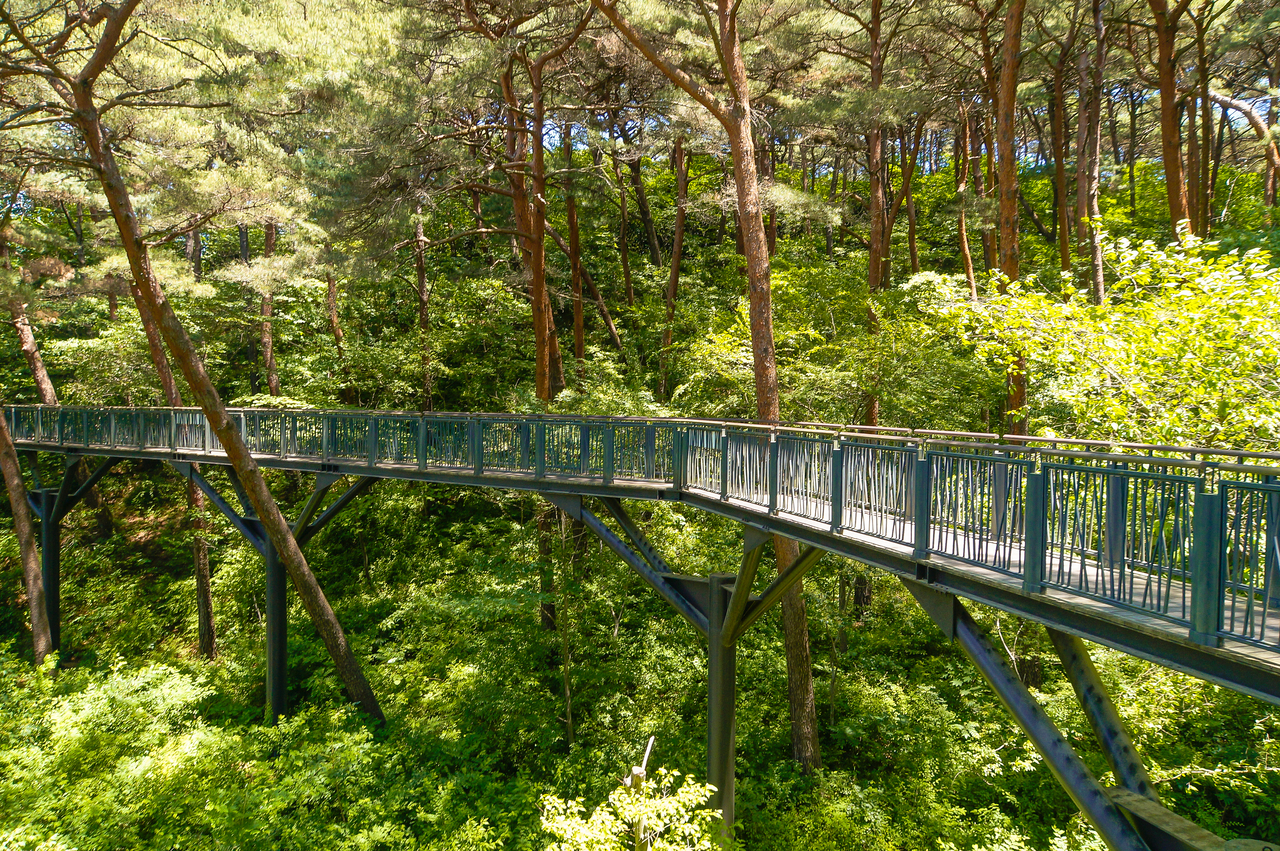
Inside the recreation forest, a barrier-free skywalk stretches roughly 280 meters through the air above the pine canopy. An ordinary forest path keeps the eye at root level; the elevated walkway puts visitors face-to-face with the mid-section of the pines, several meters above the ground. Even in midsummer, the dense canopy filters out the sun so effectively that the air beneath feels like natural air conditioning. Sunlight breaking through the branches in scattered shafts, and the calls of mountain birds drifting through the trees, refresh both sight and hearing.
Not all of the trees here carry an unblemished past. The bases of some old-growth pines approaching 150 years of age bear scarred, stripped bark — the mark of resin extraction carried out during the Japanese colonial period, a quiet reminder of a painful chapter in history.
Where to stay and what to eat
Taean, where millennia of sand and a century of pine-scented breezes have layered into something irreplaceable, is a destination that always leaves a day-tripper wanting more. To fully absorb its restorative qualities, staying at least one night is well worth it.
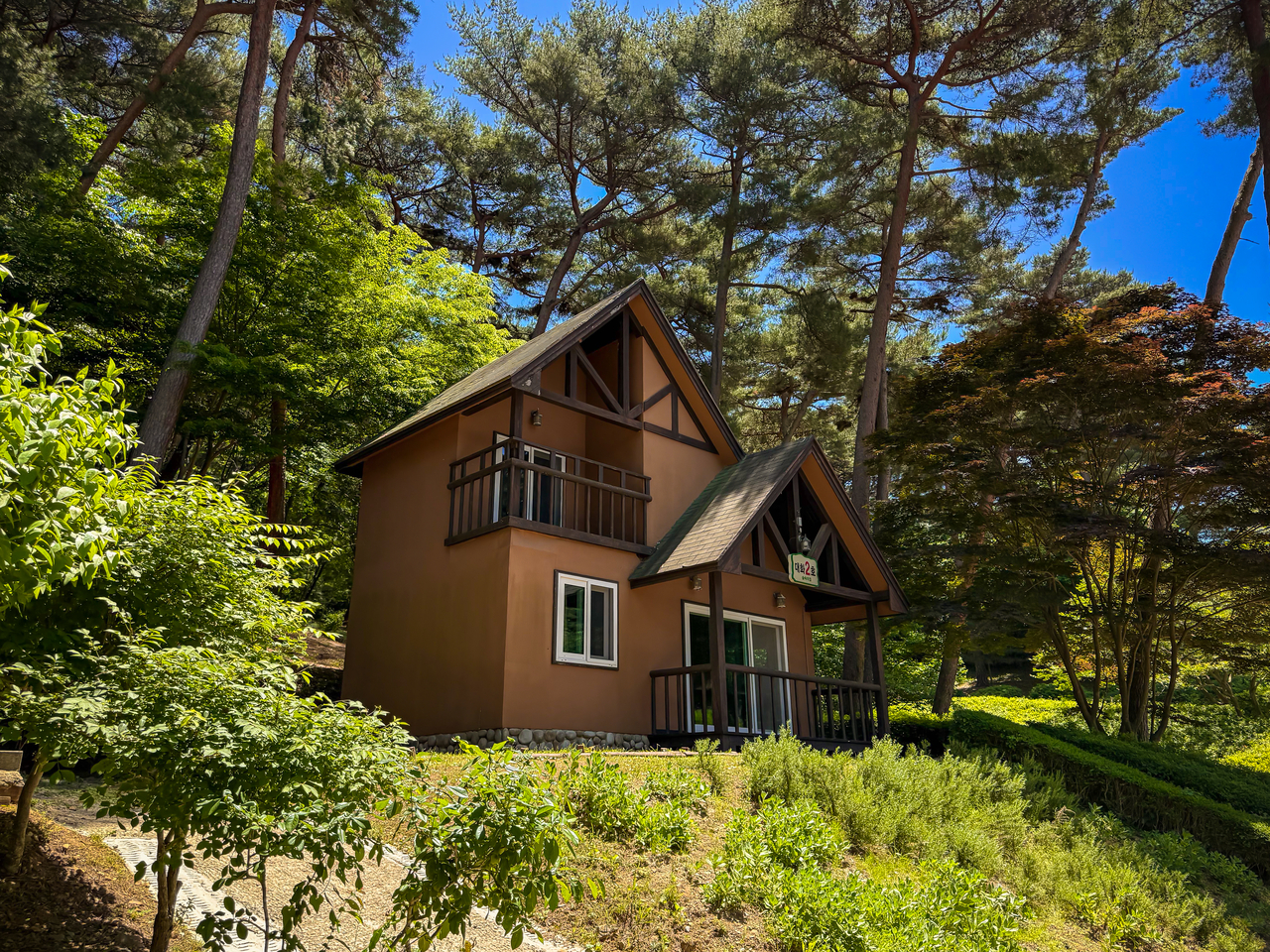
Anmyeondo Natural Recreation Forest operates its own standalone accommodation units — known as Forest Houses — within the grounds. Opening the door means stepping straight into the scent of pine and the sound of birdsong. The cabins are spread individually along the hillside, minimizing noise and contact between guests and offering a deeper, quieter rest within nature.
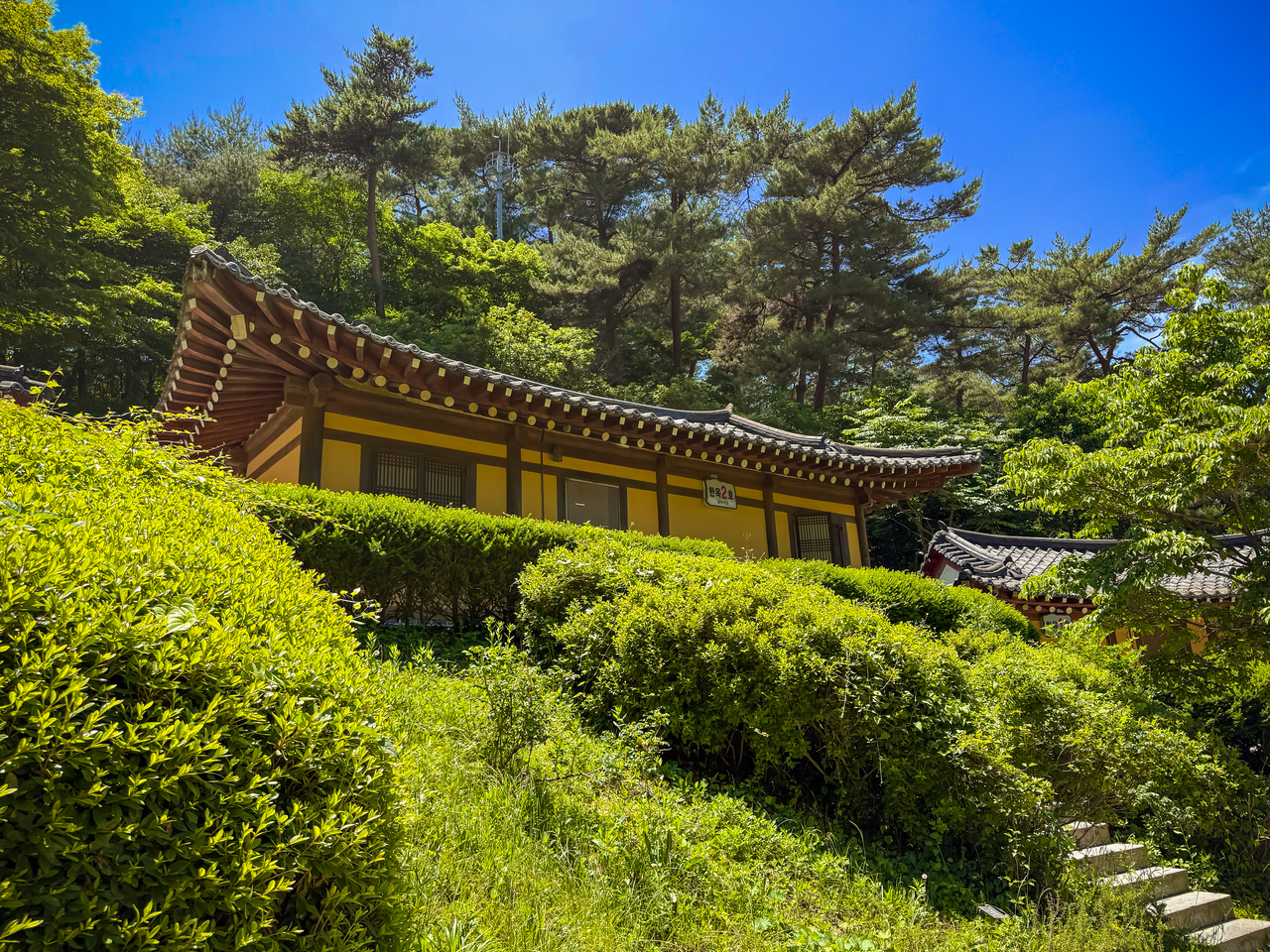
The accommodations come in several styles — hanok, log cabin and clay-room units. Competition for reservations is fierce at this popular retreat, and the hanok units, of which only three exist, are particularly sought after. They are worth trying for, even against the odds. Bookings go through the Korea Forest Service's integrated platform, Sunnadeul-e, via a monthly lottery: applications are accepted from the 1st to the 4th of each month, with winners announced on the 5th.
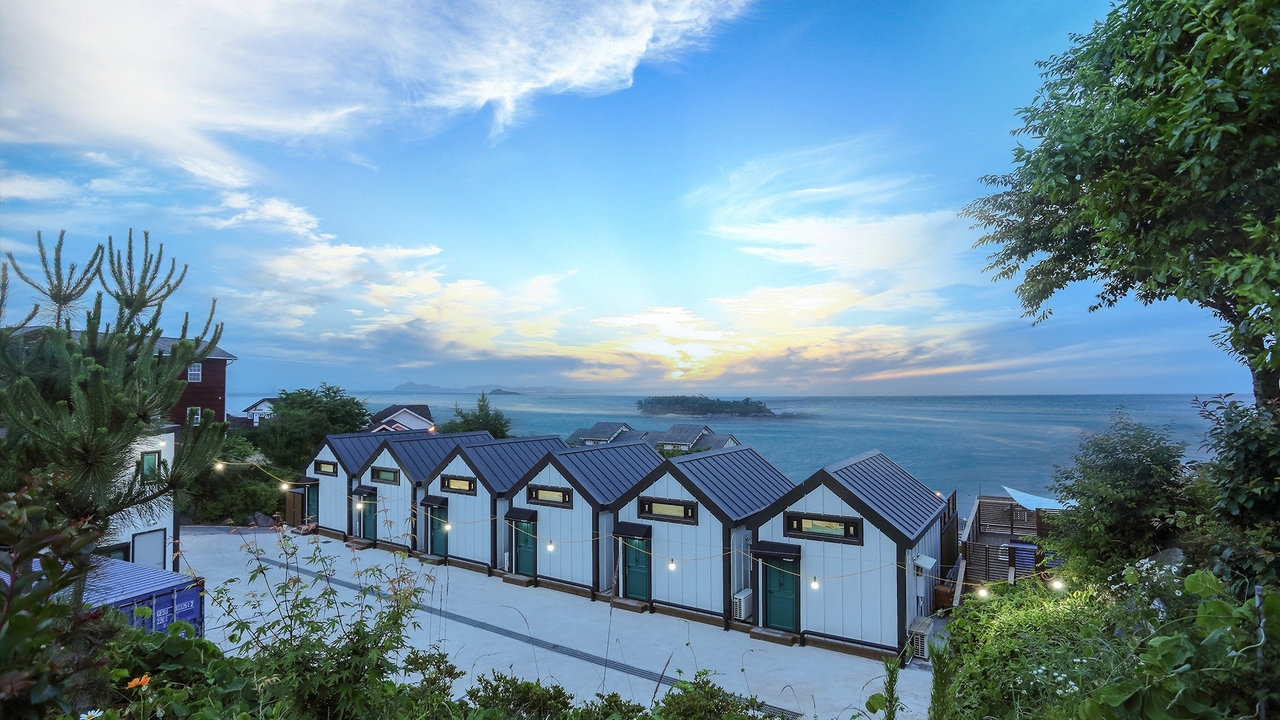
Missing the lottery is no cause for disappointment — Taean has no shortage of distinctive guesthouses to suit different tastes. Hwangdo, a small island off the eastern coast of Anmyeondo connected by a bridge and accessible by car, is relatively quiet and well suited to those seeking a calm, unhurried stay. For couples looking for a private retreat, August Pension fits the bill. All rooms are designed for two adults, and a no-children policy ensures a peaceful, noise-free stay away from tour groups and families.
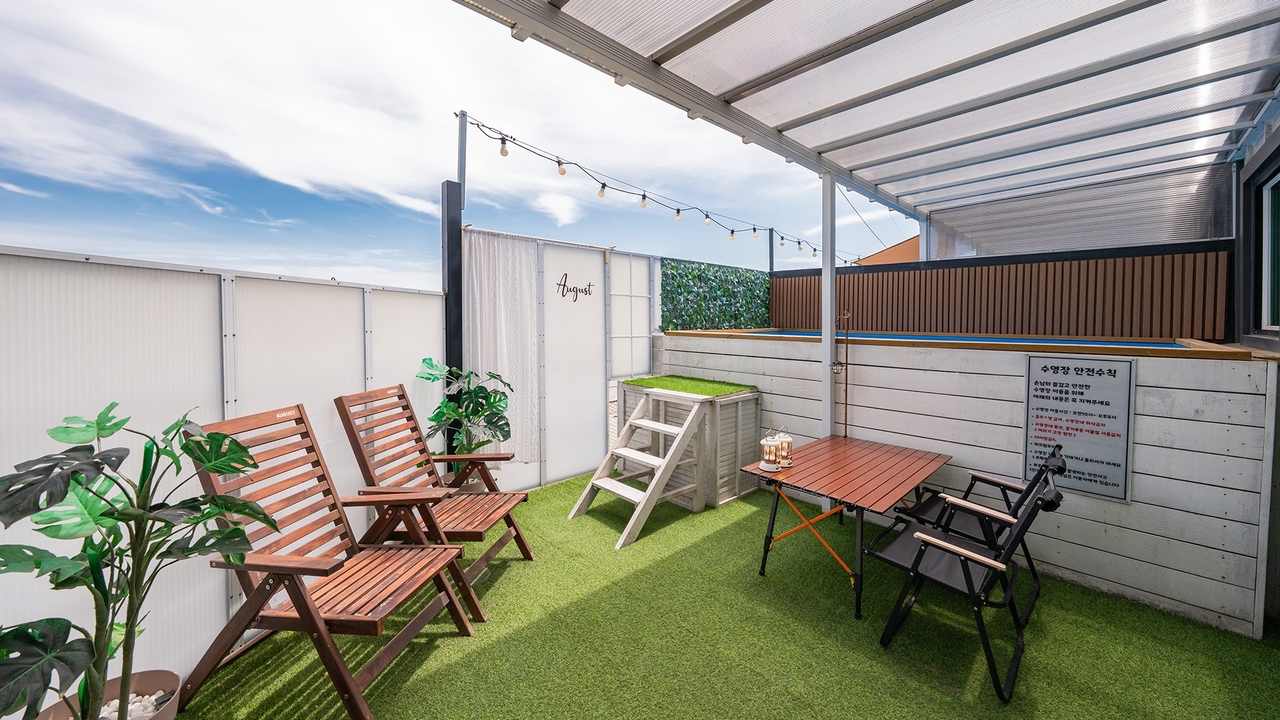
The guesthouse has six units in total, available only through small-group reservations. Each private terrace comes with a dedicated pool and individual barbecue facilities, shielded from outside view for complete privacy. The bedroom windows of the duplex-style rooms look out over Cheonsu Bay, and guests can watch the West Sea sunrise from bed. With ambient music, a lantern casting a warm glow and the sound of evening waves as a backdrop, dinner on the terrace gently dissolves the fatigue of travel.
![Geukji, a Taean regional dish made with blue crab [Korea Tourism Organization]](https://wimg.heraldcorp.com/news/cms/2026/06/29/news-p.v1.20260626.f1e094f610ce4333b7902237e2480e3b_P1.jpg)
The culinary journey finds its fitting conclusion in geukji, Taean's signature local dish. The dish traces its origins to leaner times, when the soy sauce brine left over from marinating blue crabs was combined with leftover cabbage kimchi or dried radish greens and simmered into a hearty stew — a dish born of necessity among ordinary people. Ddanttuktongnamujip Restaurant in Anmyeondo, credited with first developing and popularizing geukji on the island, has been serving its version since 2012: a harmonious blend of the natural sweetness of blue crab, the clean freshness of vegetables and the deep, tangy complexity of kimchi.
terry@heraldcorp.com